Understanding the Levator Scapulae
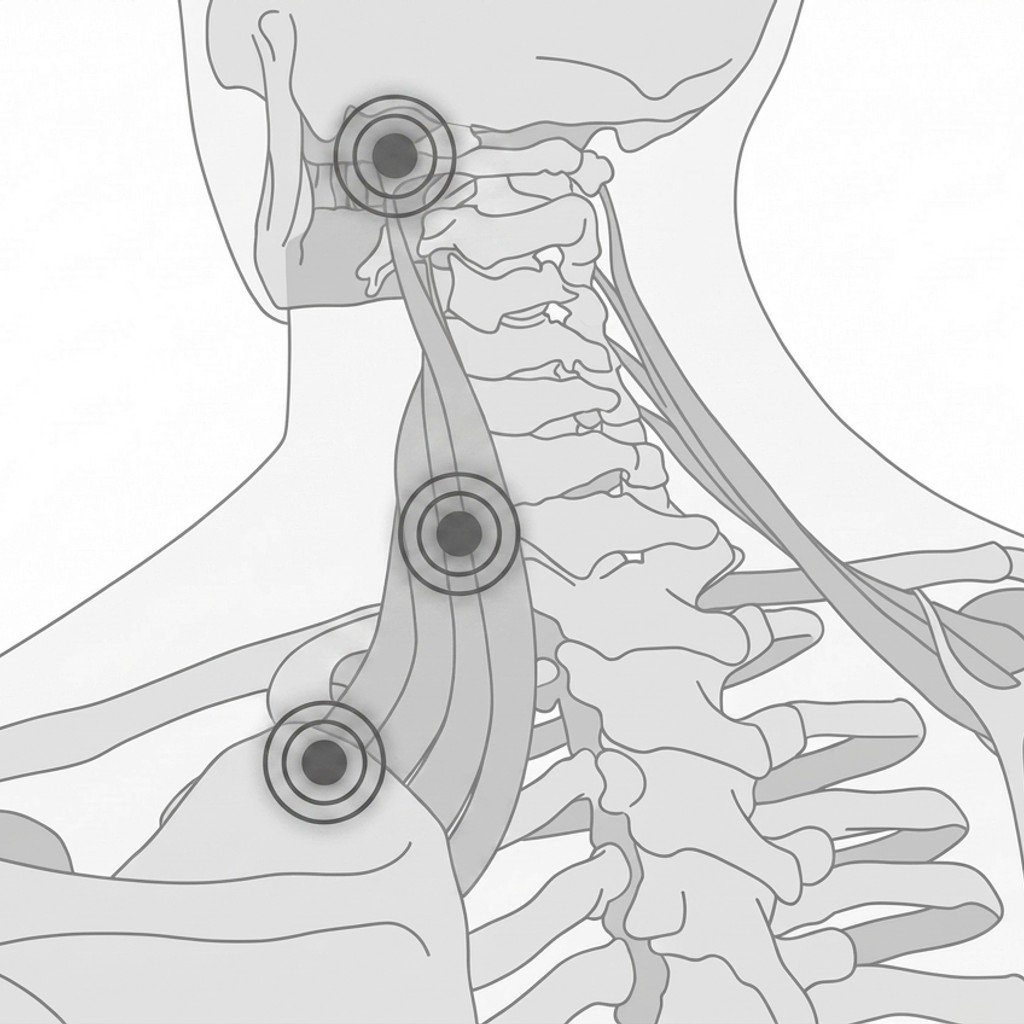
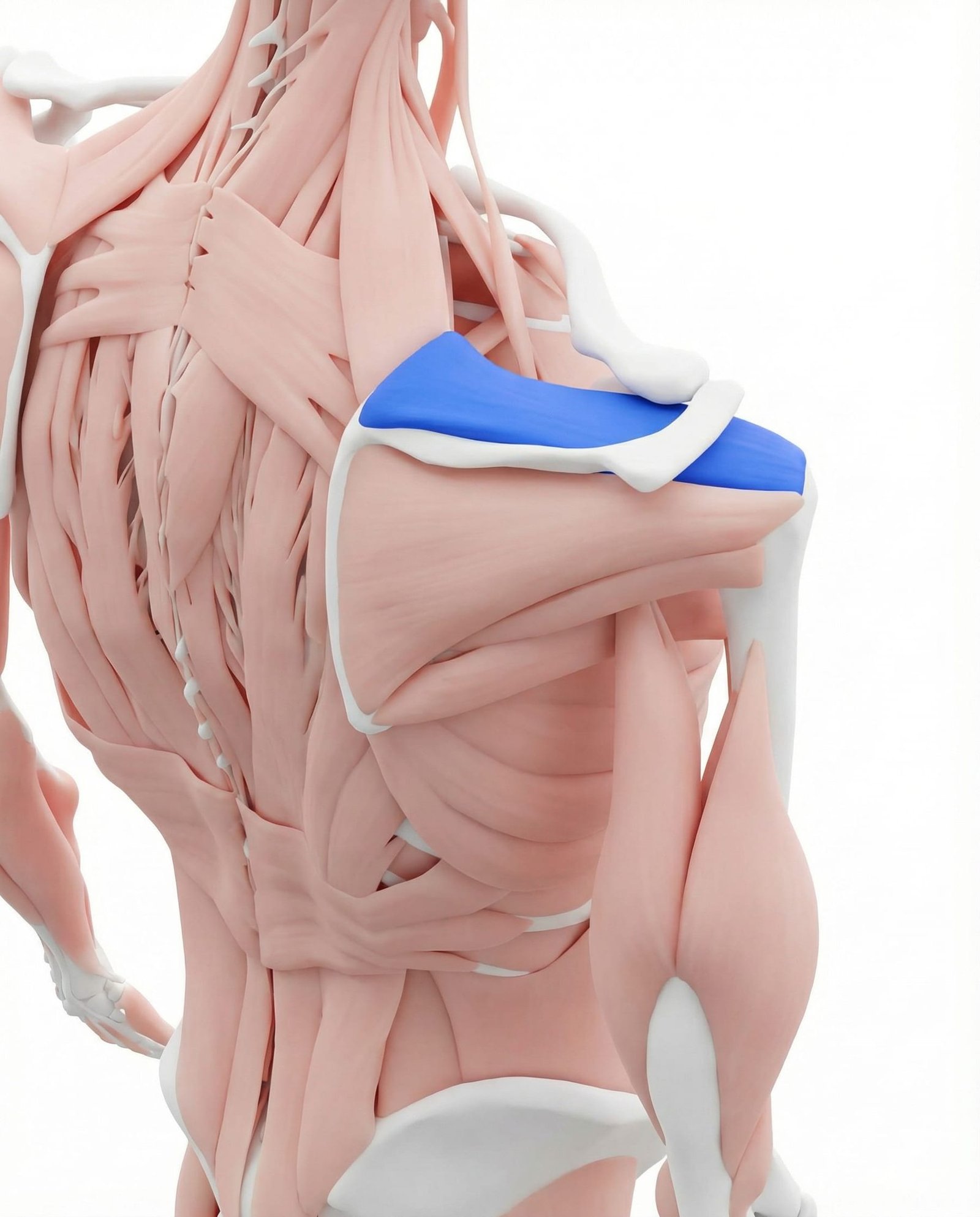
Levator Scapulae Muscle Anatomy Posterior View
The levator scapulae is a strap-like muscle running from the transverse processes of the upper cervical spine (C1-C4) to the superior medial angle of the scapula. Because it connects the neck to the shoulder blade, it can influence both cervical movement and scapular resting posture.
Its main actions include scapular elevation, downward rotation of the scapula, and assistance with cervical side-bending and rotation when the scapula is relatively fixed. This combination is one reason the muscle is so often involved in painful neck-shoulder movement patterns.
Common aggravating factors include sustained awkward sleeping position, prolonged desk posture, phone cradling, stress-related shoulder elevation, and sudden overload such as a startle or awkward turn. In chronic cases, the levator often remains part of a larger upper-quarter pattern rather than acting alone.
A clinically useful pattern is neck-shoulder angle pain plus painful or restricted cervical rotation or side-bending. That pattern can make the levator scapulae an important contributor to consider, but it still needs to be distinguished from joint, disc, nerve, and other muscular causes of neck pain.
Anatomy & Trigger Points
The most clinically useful trigger-point or tenderness region is often near the superior medial angle of the scapula, though tenderness can also be found in the muscle belly and near the upper cervical attachments. What matters most is whether the pain pattern and movement findings fit.
Levator Scapulae Trigger Point Locations and Referral Zones
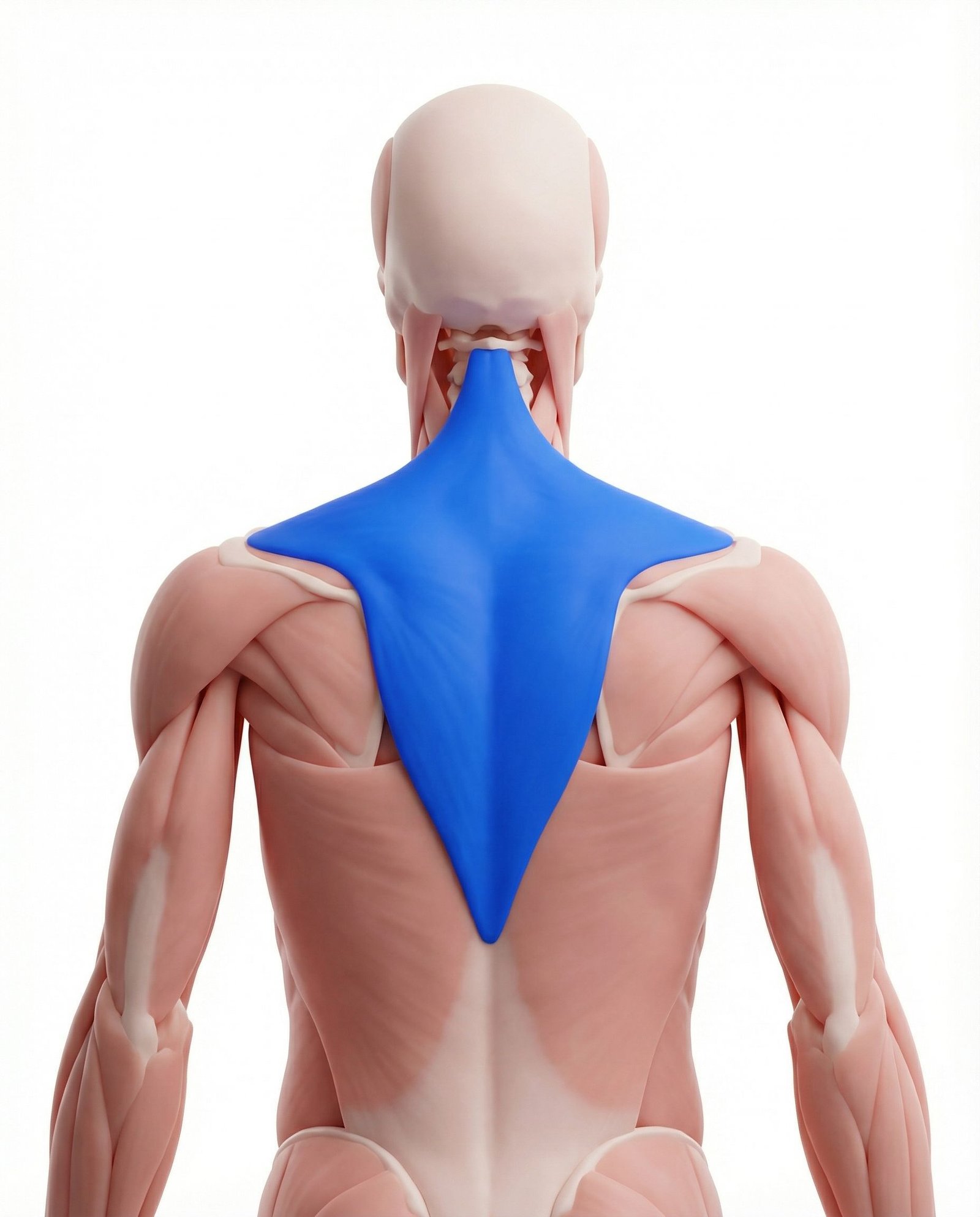
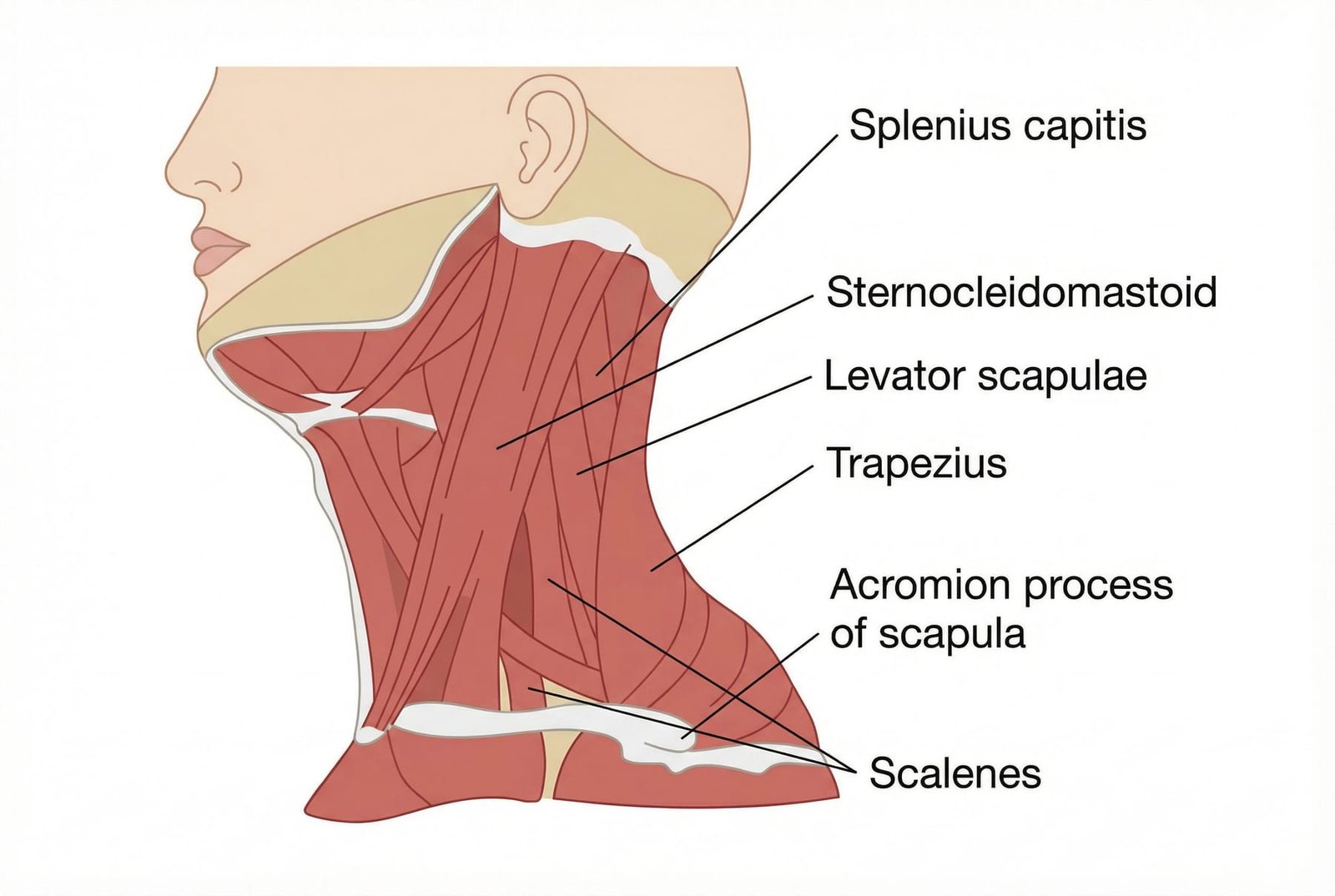
May contribute to unilateral temporal headache, posterolateral neck pain, and shoulder heaviness. Upper trapezius and levator scapulae findings commonly coexist in patients with chronic neck-shoulder pain, which is one reason treating only one muscle often gives incomplete relief.
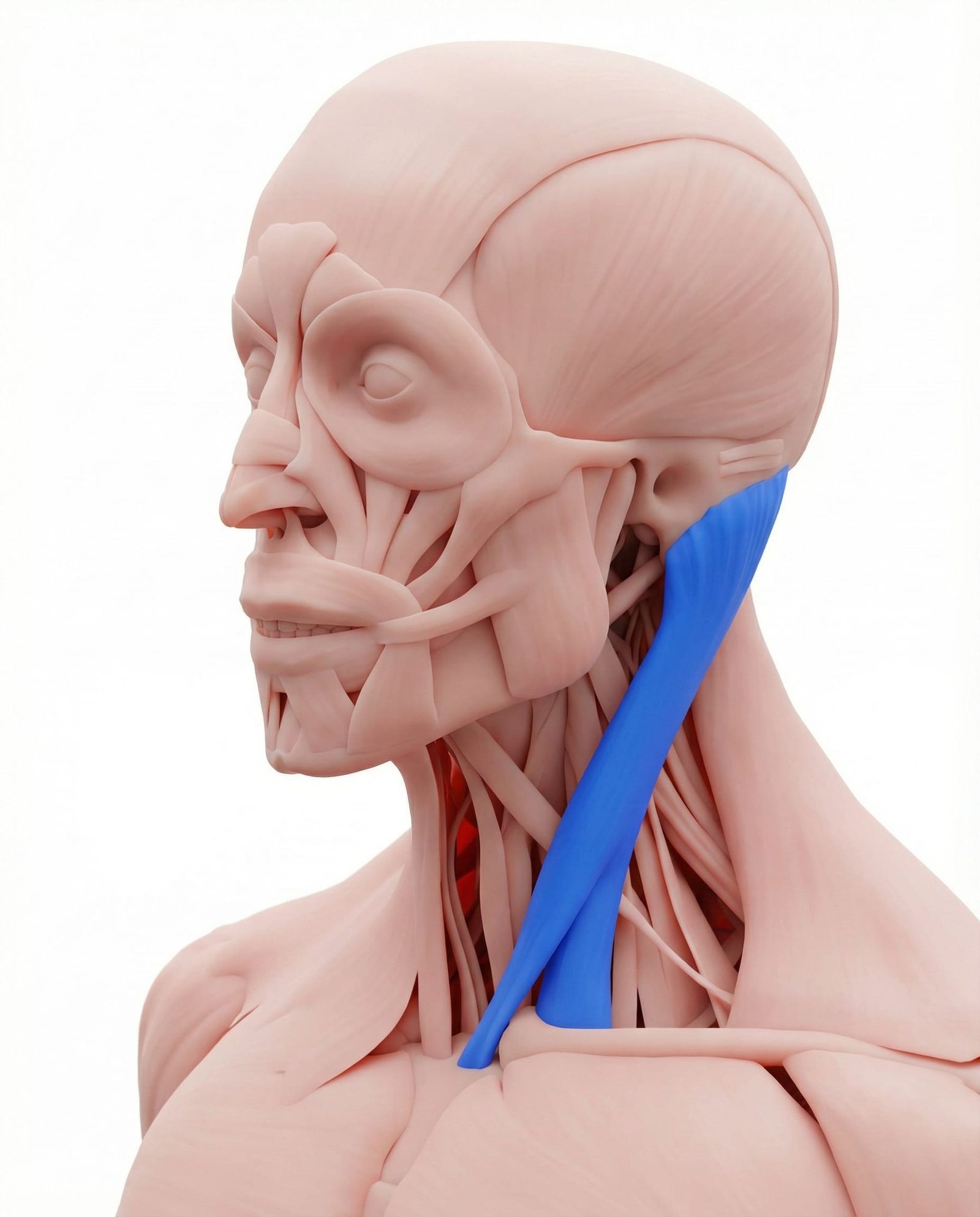
May contribute to facial pain, dizziness, head pressure, or tension-type headache patterns. SCM and levator findings often coexist in forward-head posture, whiplash, and mixed anterior-posterior cervical pain presentations.
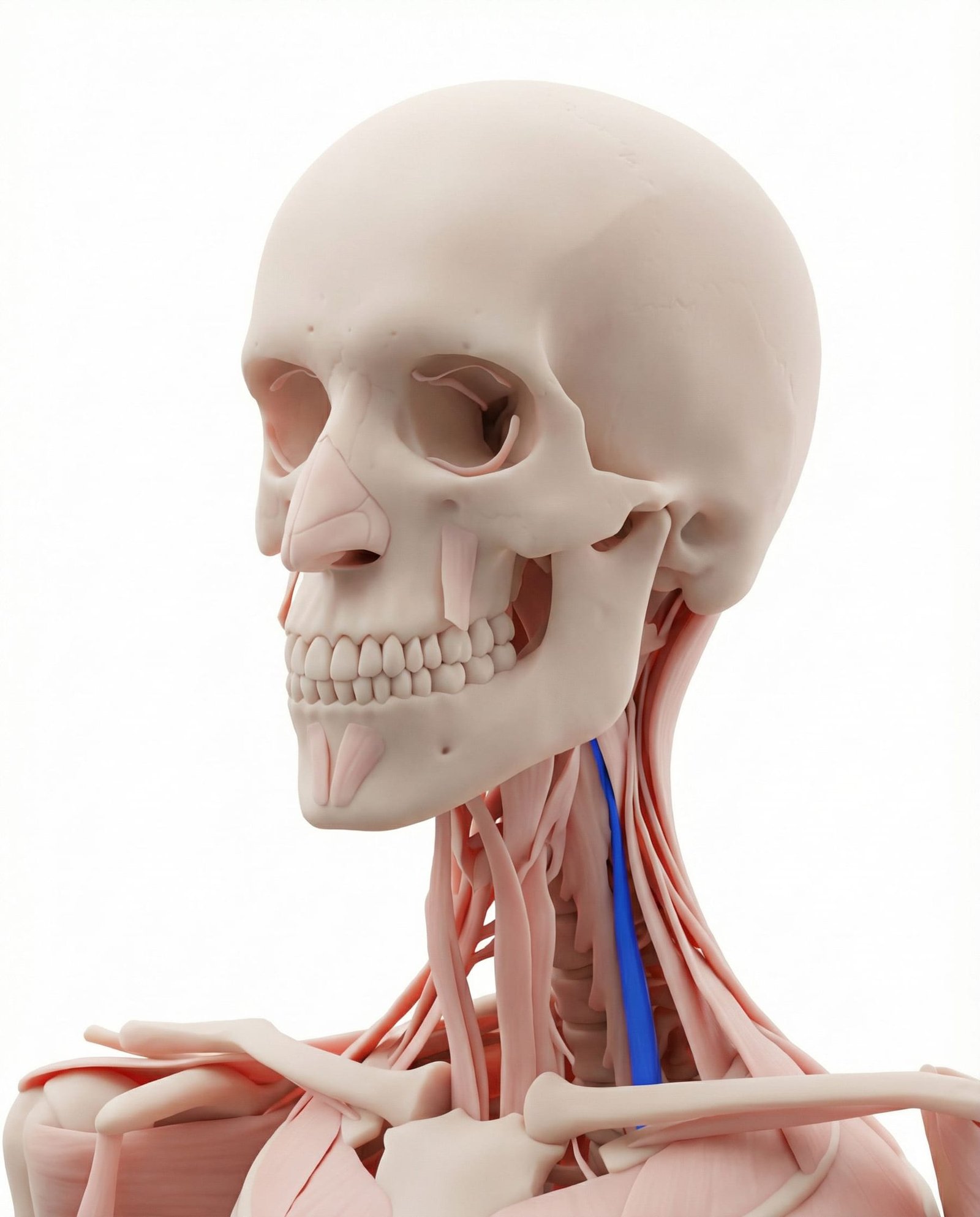
May contribute to deep anterior chest discomfort, arm aching, or paresthesia-like symptoms in some patients. Scalene irritability may overlap with levator dysfunction in chronic cervical overload, especially when sustained side-bending or phone cradling habits are present.
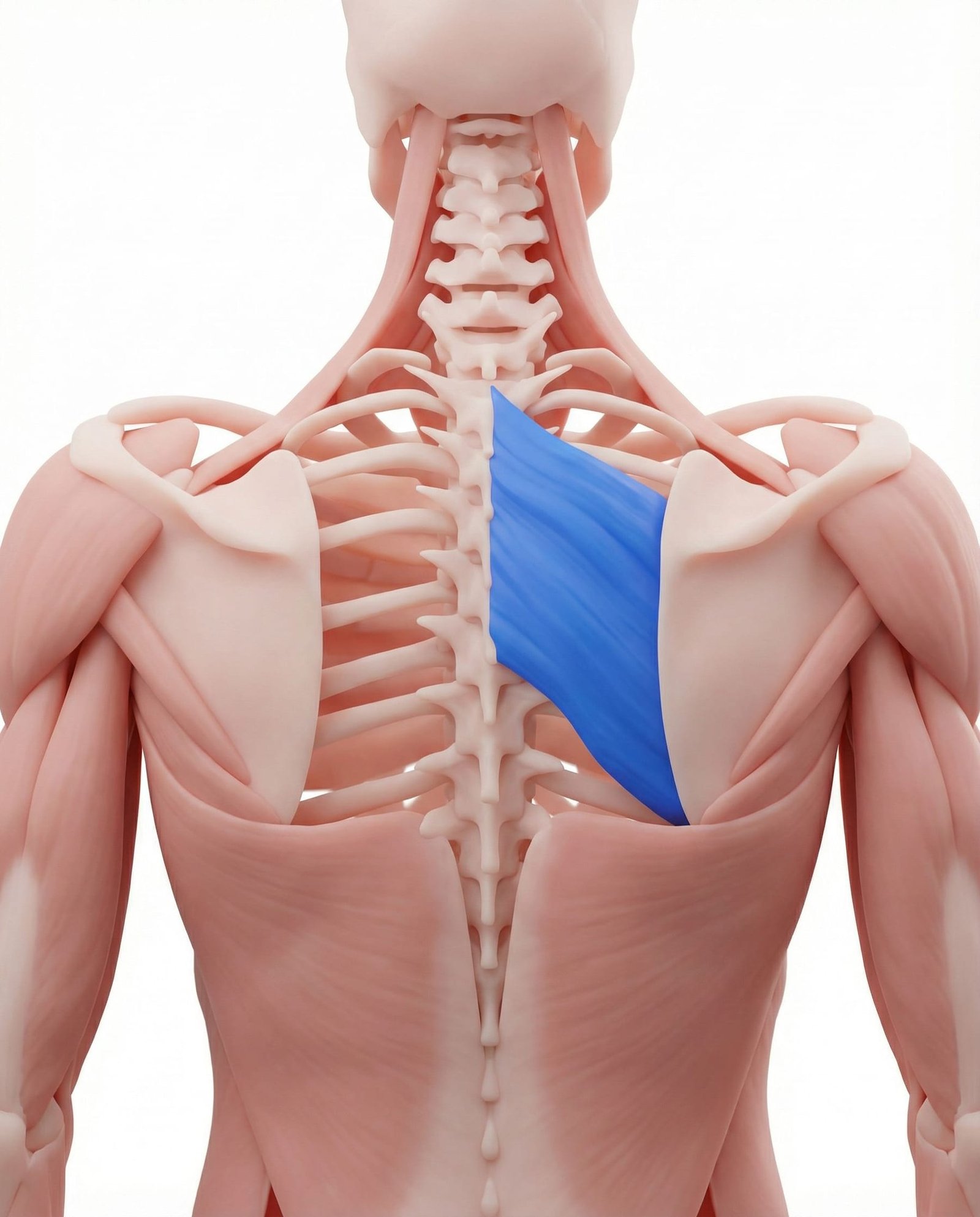
May contribute to deep interscapular burning or medial scapular border pain. Rhomboid symptoms often develop secondarily when scapular position and load sharing are altered by chronic upper-quarter muscle imbalance.
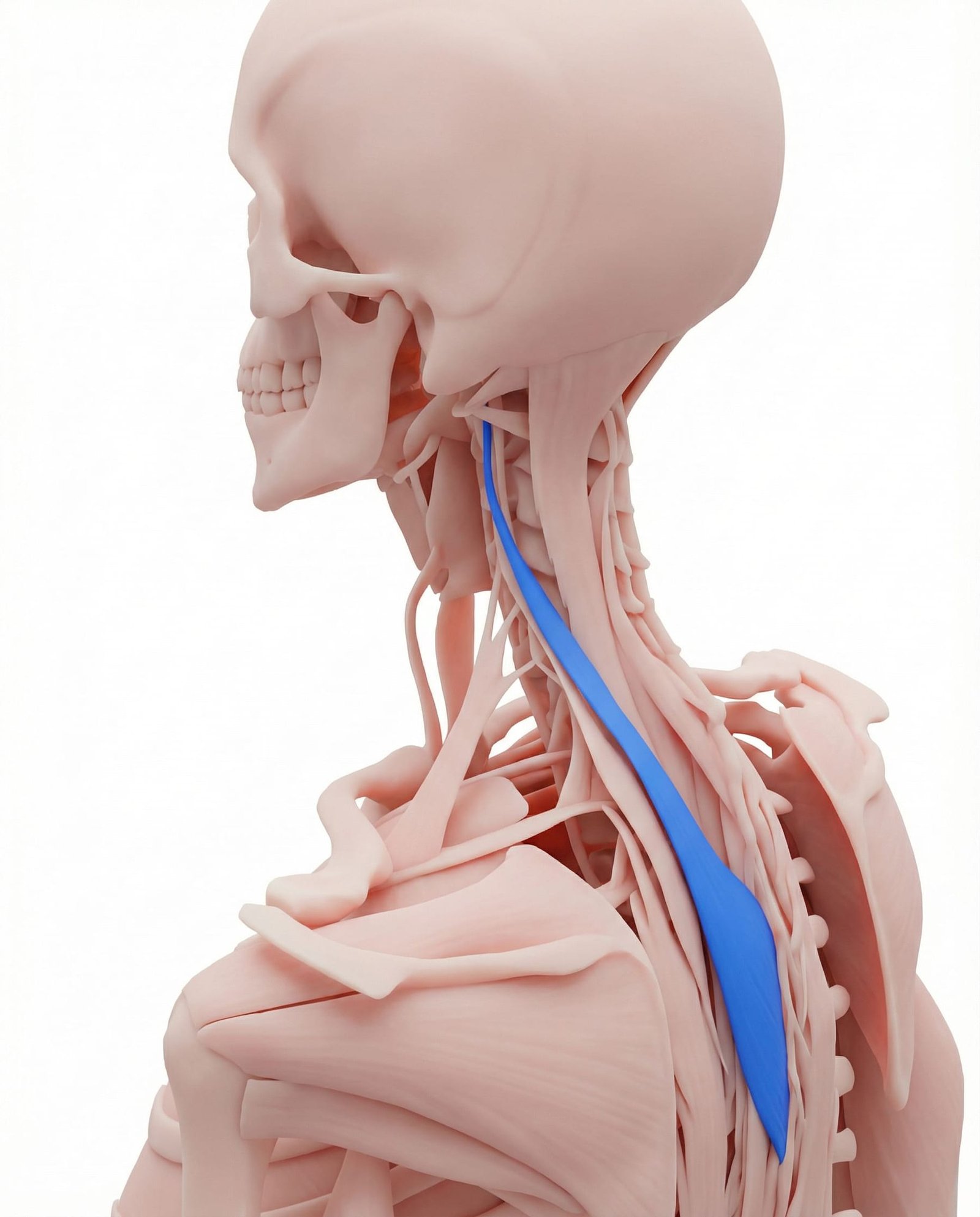
May contribute to diffuse pain at the angle of the neck radiating upward toward the head. Because this muscle lies deeper than the levator and upper trapezius, it is sometimes part of the reason symptoms improve only partially with superficial treatment.
May contribute to lateral deltoid aching and shoulder pain during abduction. Shoulder symptoms can coexist with chronic levator scapulae dysfunction when scapular mechanics remain altered for long periods.
Referral Patterns: The Stiff-Neck Signature
Levator-related pain is often felt at the neck-shoulder angle and may extend along the medial scapular border. Patients often point with one finger to the upper-inner corner of the shoulder blade or the angle where the neck meets the shoulder.
Symptoms can also broaden upward into the posterolateral neck or coexist with headache, scapular aching, and shoulder heaviness when neighboring muscles are involved. This is one reason neck pain patterns often feel larger than one isolated muscle would suggest.
The levator scapulae often acts less like an isolated pain source and more like part of a larger stress-posture-scapular control pattern.
Neck Angle
Scapula
Restricted Rotation
Self-Assessment Tests
These tests assess common levator scapulae pain and movement patterns. They help generate a hypothesis, but they are not stand-alone proof of one diagnosis.
Levator Angle Palpation
Cervical Rotation Test
Shoulder Height / Shrug Assessment
Lateral Flexion Screen
Treatment Pathways
Effective levator scapulae treatment usually combines direct symptom relief with reduction of aggravating habits and better scapular control. Lasting improvement rarely comes from pressure, stretching, or needling alone.
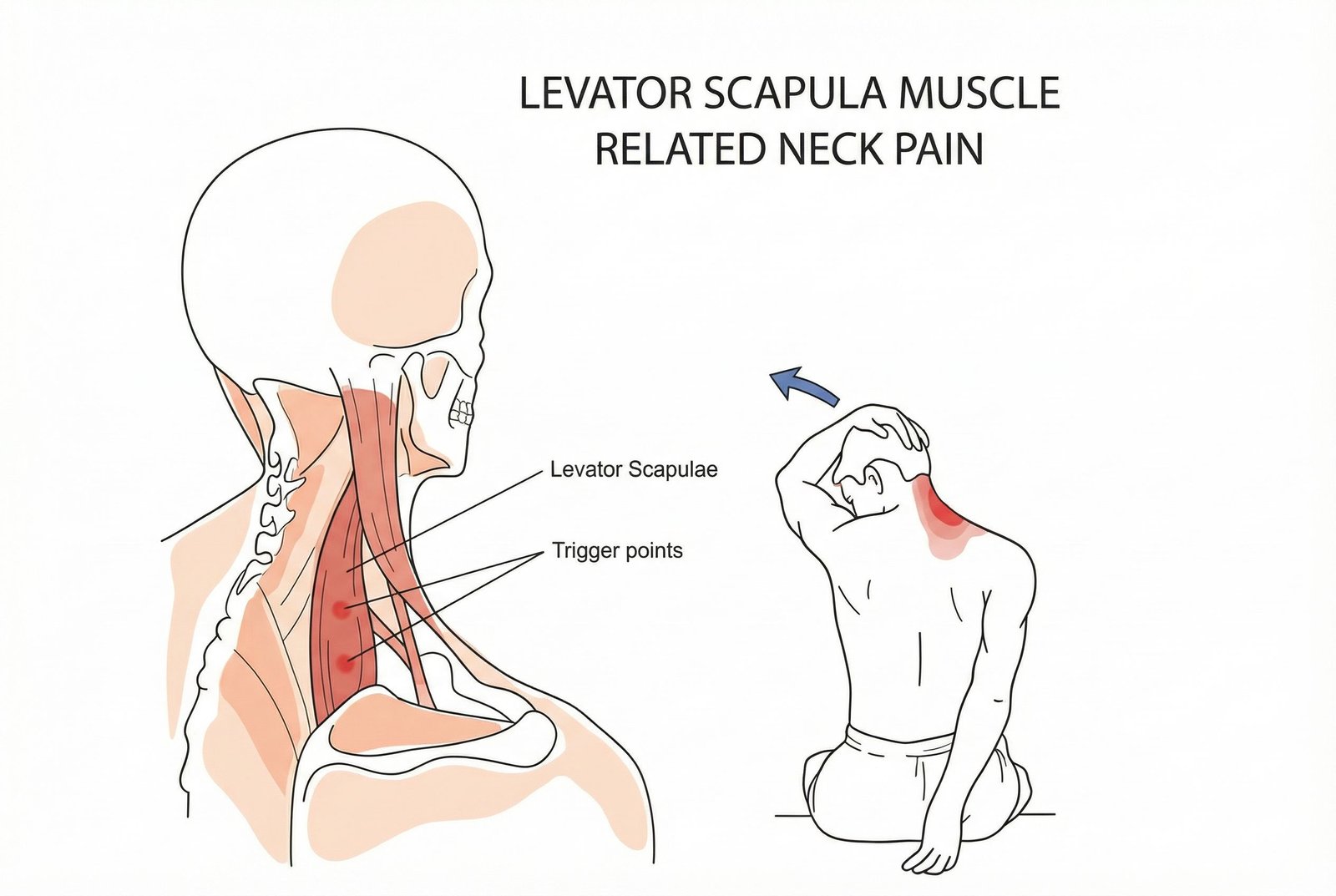
Levator Scapulae Stretch Technique and Pressure Release Methods
Targeted Stretching Protocol
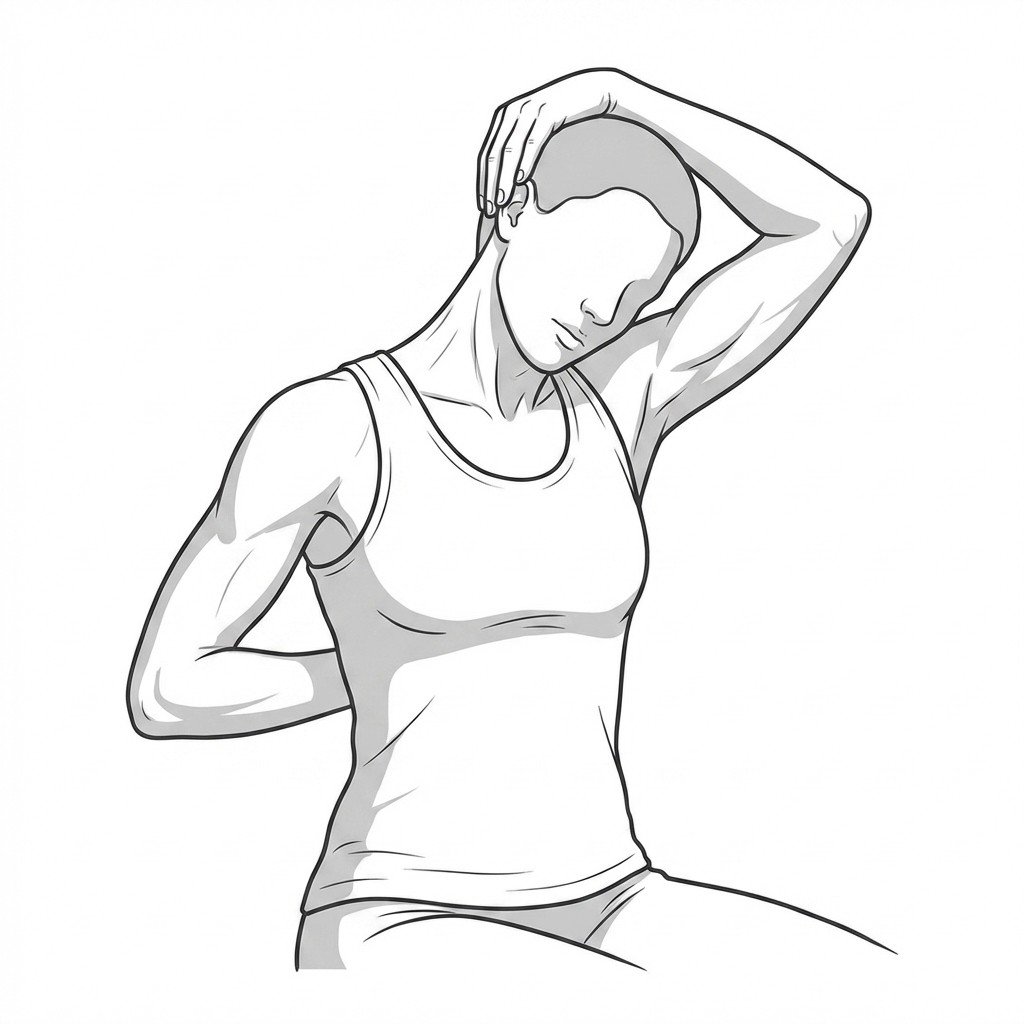
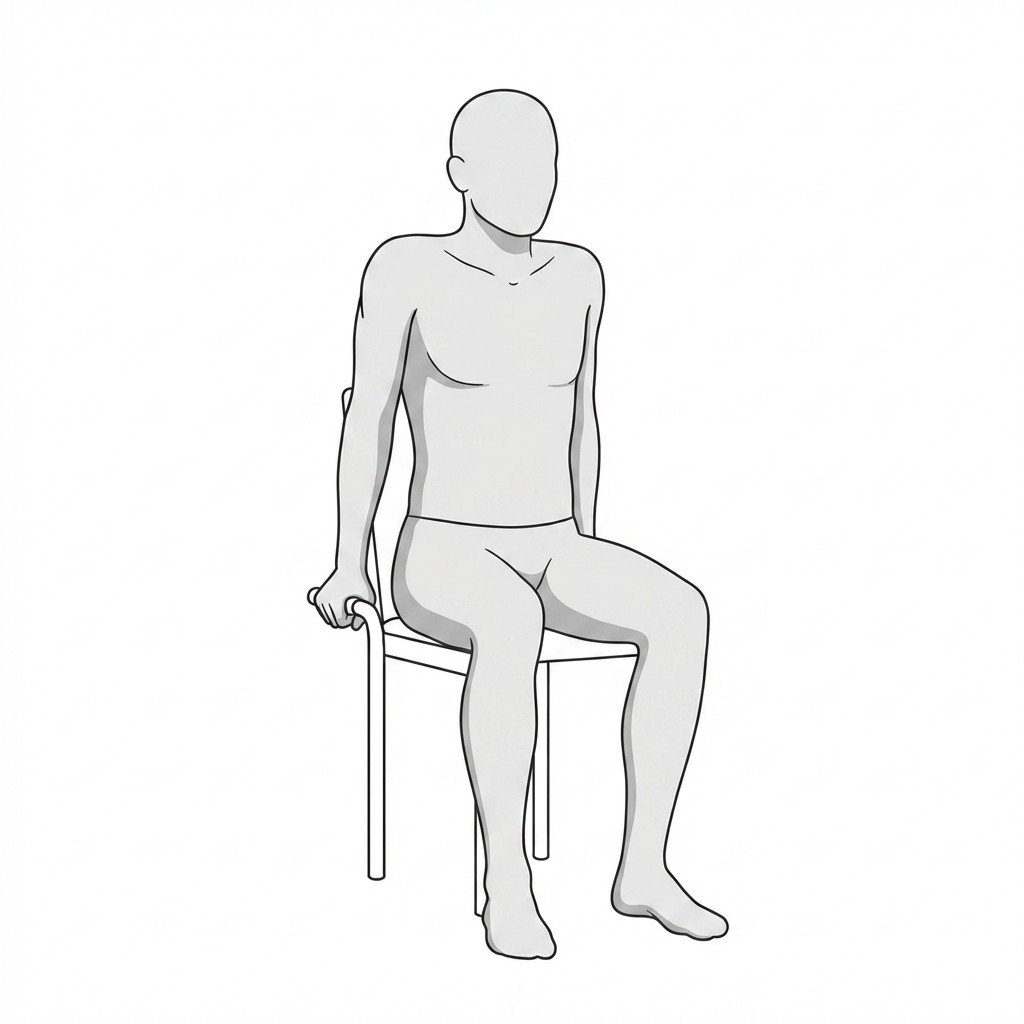
A levator-focused stretch usually combines cervical flexion, contralateral rotation, and lateral flexion rather than a simple side bend. The goal is gentle symptom-guided lengthening, not forcing range.
- Sit on the hand of the affected side if that helps keep the shoulder down
- Rotate the chin partly toward the opposite armpit, then flex the neck gently
- Apply light overpressure only if comfortable and only after finding the basic stretch position
- Use sustained, tolerable holds rather than ballistic stretching
- Moist heat beforehand may help some patients tolerate stretching better
Pressure Release & Self-Massage
The levator attachment near the superior medial scapular angle is often accessible to self-release. The goal is symptom reduction and improved movement tolerance, not aggressive pain-provoking pressure.
- Tennis ball or lacrosse ball against a wall over the neck-shoulder angle
- Sustained pressure on a tolerably tender spot for a short period, followed by reassessment
- Percussive therapy can be used conservatively over the upper shoulder region if well tolerated
- Cross-fiber or fingertip massage may help some patients, especially at the scapular attachment
- Keep sessions short and symptom-guided rather than trying to “flatten” the muscle
Dry Needling: Scapular Attachment Focus
Dry needling of the levator scapulae may be useful in selected patients, particularly around the scapular attachment or muscle belly. Needling near upper cervical attachments requires greater caution because of the regional anatomy.
- The scapular attachment is often the most practical and accessible target
- Muscle belly needling may be used when the painful region sits above the scapular attachment
- Upper cervical attachment treatment requires high anatomical skill and careful depth control
- Local twitch responses may occur but are not required to judge whether treatment is appropriate
- Session spacing and number should depend on irritability and response rather than a fixed universal series
Scapular Stabilization Training
Longer-term improvement usually depends on changing the upper-quarter load pattern. Lower trapezius, serratus anterior, and broader scapular control work often matter as much as direct levator treatment.
- Lower trapezius Y-raise or related lower-scapular-strengthening work
- Serratus-focused wall push-plus or similar protraction control exercises
- Scapular setting and awareness drills in sitting or standing
- Rows, pull-aparts, or other retraction work once symptom tolerance allows
- Progress toward loaded exercises only when baseline pain and scapular control improve
Scapular Attachment
Mid-Belly
Upper Cervical Attachment
Combined Pattern
Red Flags — When to See a Doctor
While many stiff-neck episodes are musculoskeletal, neck pain still requires red-flag screening before being attributed to a simple muscle problem.
The levator scapulae is a very common contributor to neck-shoulder junction pain and “stiff neck” presentations, but it is not the only possible cause.
Its pain pattern is often centered near the angle of the neck and the superior medial scapular region, sometimes with associated restriction of neck movement.
Poor sleeping position, phone cradling, prolonged desk posture, and stress-related shoulder elevation are common aggravating factors.
Levator symptoms often coexist with upper trapezius, scalene, SCM, or deeper cervical muscle findings, which is why a broader upper-quarter exam matters.
Treatment usually works best when direct symptom relief is paired with scapular stabilization and better movement habits.
A recurrent “stiff neck” often points to unresolved perpetuating factors rather than a completely new injury each time.
Movement therapy
Exercises for Levator Scapulae Syndrome
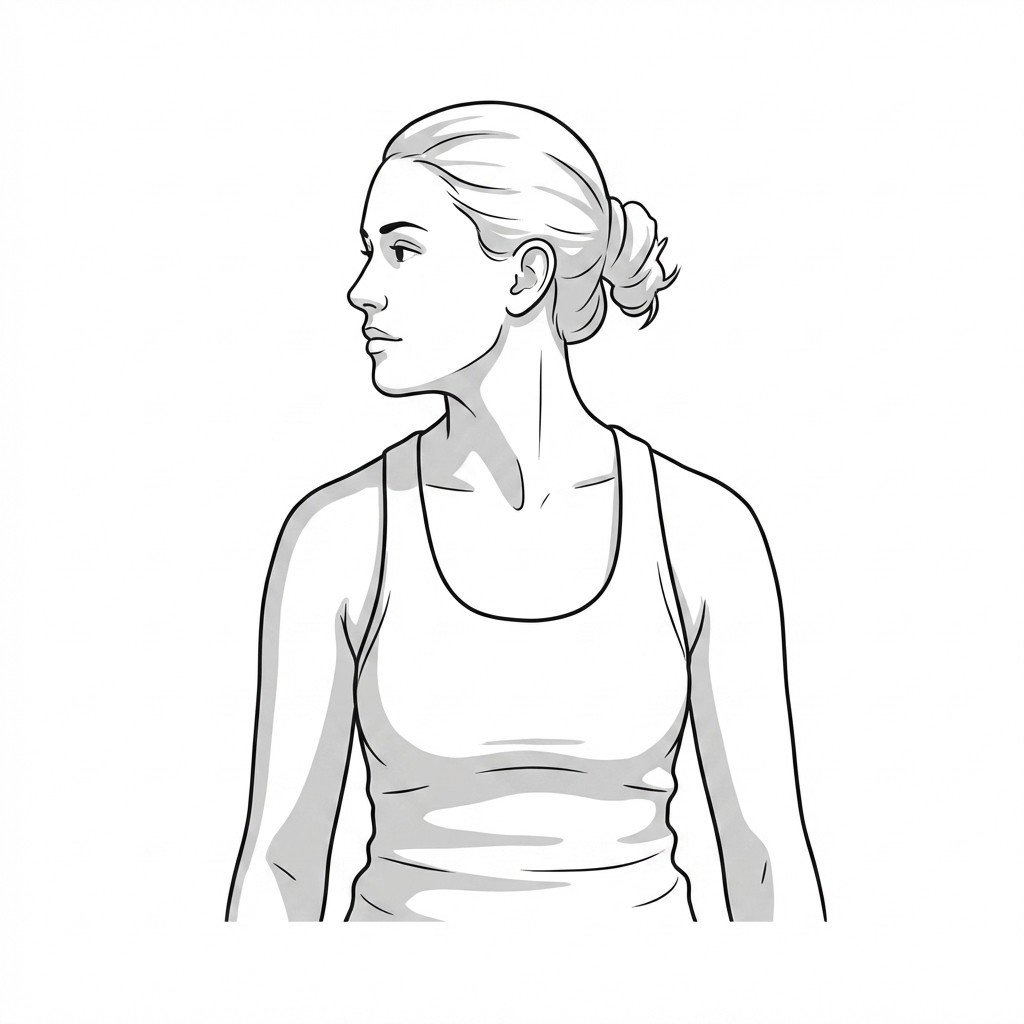
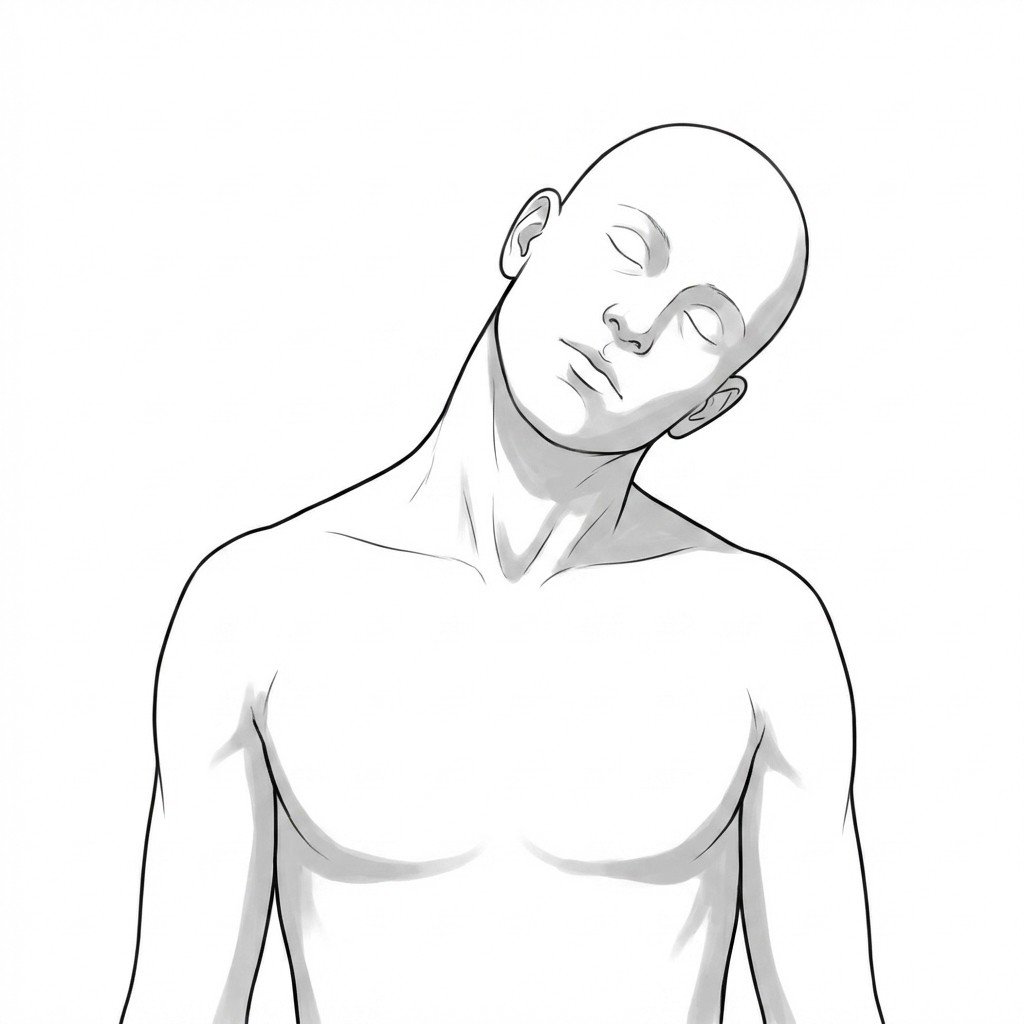
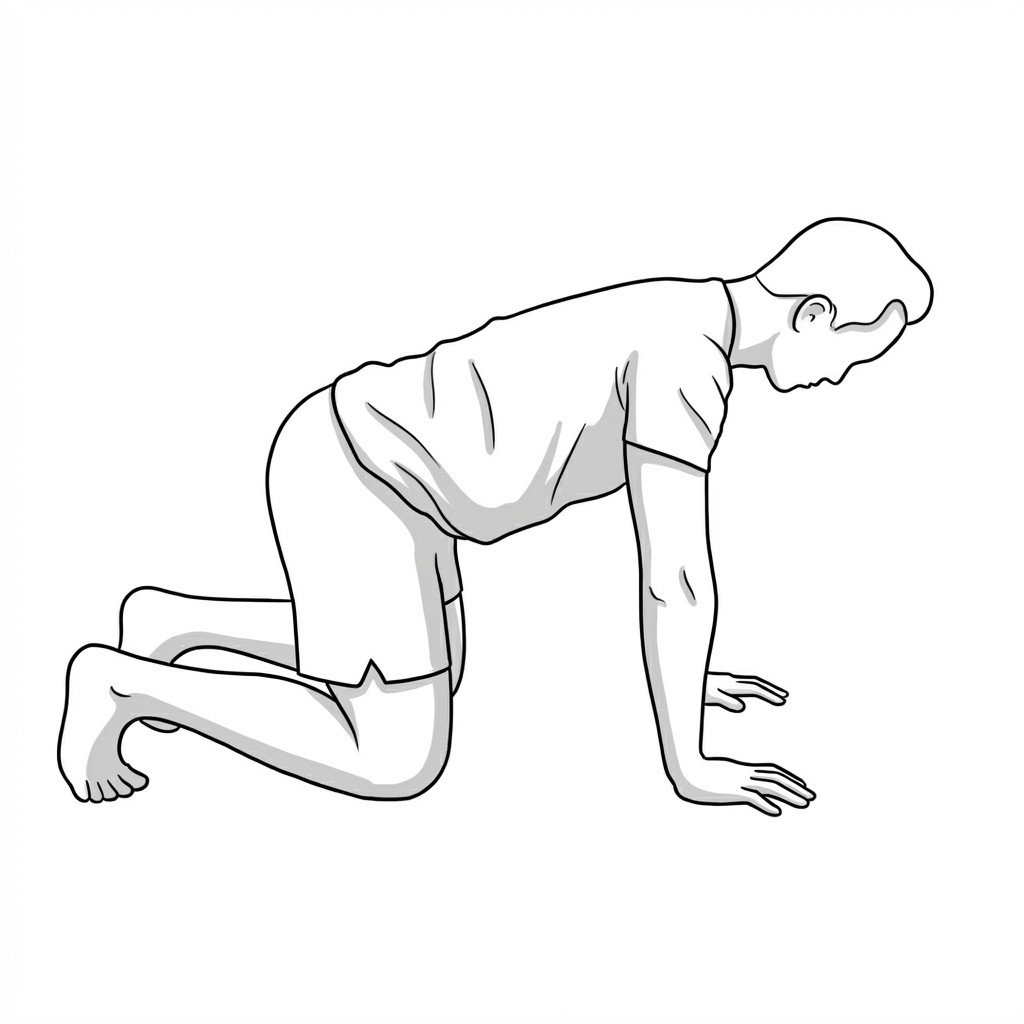
These exercises combine gentle cervical rotation and side-bending to restore neck mobility with scapular depression and stabilization work to take strain off the levator's scapular attachment — the site most responsible for the familiar neck-crook pain. Start with 2–3 and progress as tolerated.