Deep Dives
Long-form anatomy primers on the muscles most commonly implicated in chronic pain.
Anatomical Guides
Muscle Deep Dives
Comprehensive anatomical guides for the muscles most commonly involved in chronic myofascial pain.
Body Region
Head, Neck & Face
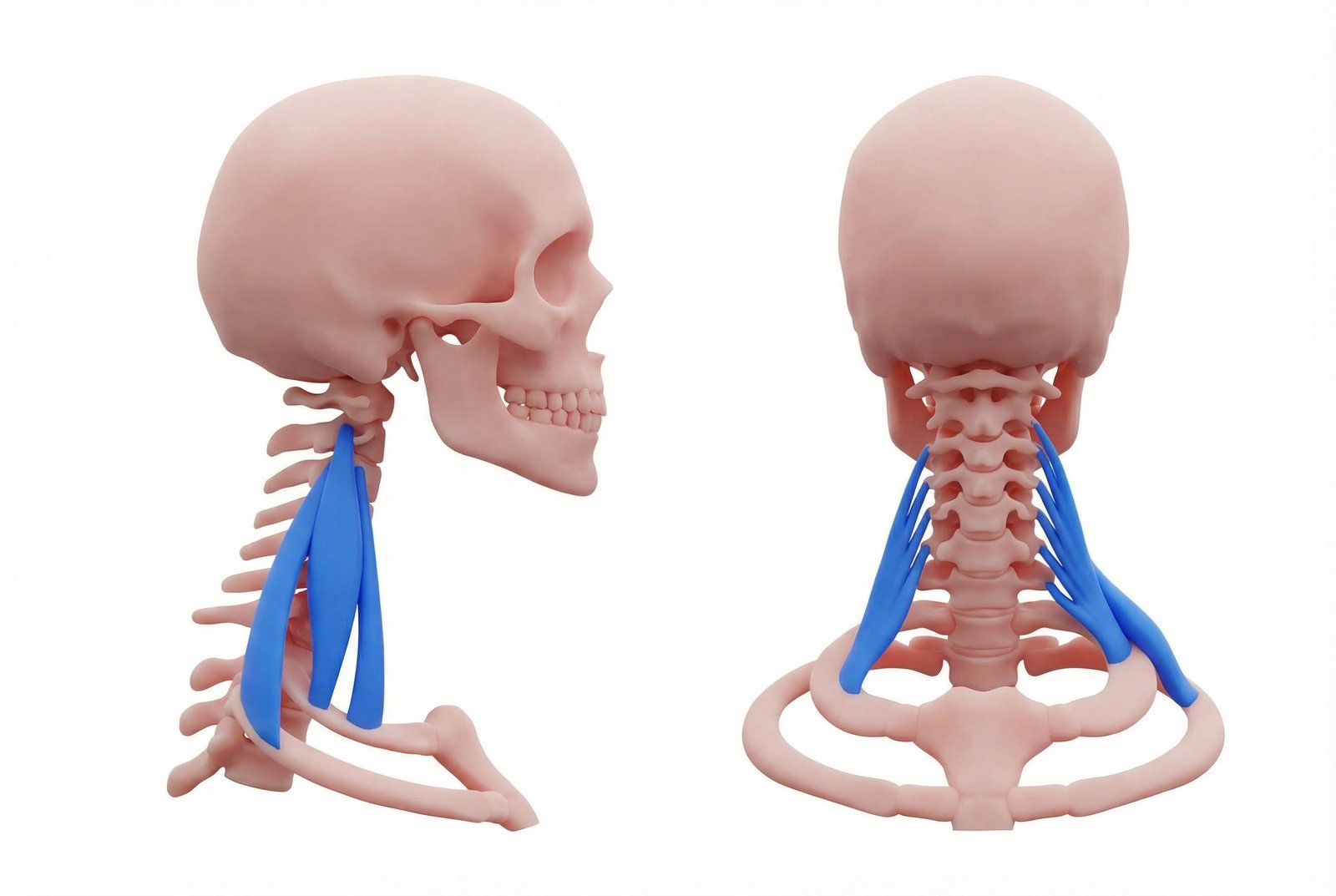
Scalenes — Neck, Arm & Chest Symptoms
Examine scalene tenderness, breathing and neck function while distinguishing muscular referral from cervical nerve and true neurovascular compression findings.
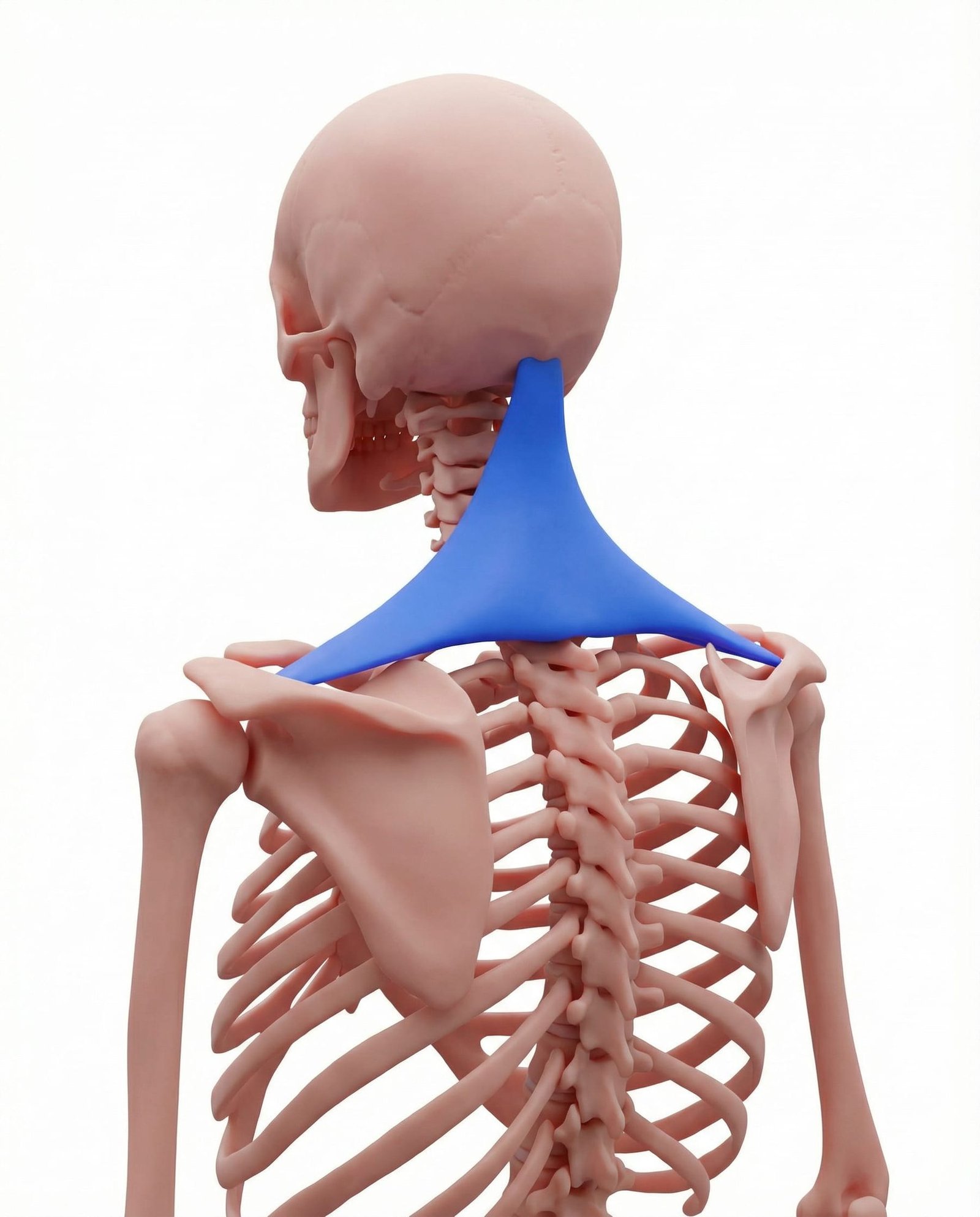
Trapezius — Neck, Shoulder & Headache Patterns
Upper, middle and lower fiber anatomy, familiar-pain reproduction, scapular control assessment, and management within a broader neck and headache evaluation.
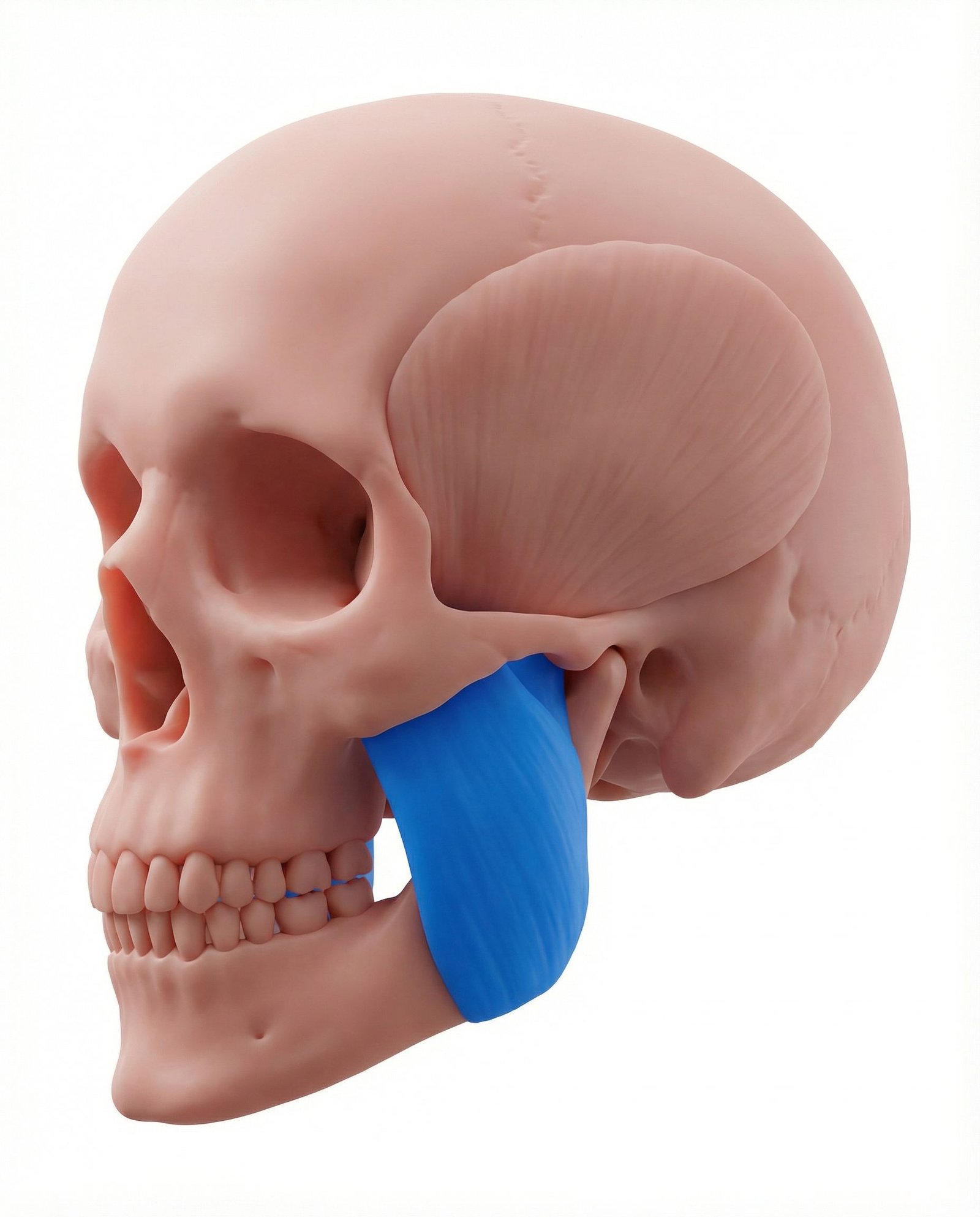
Masseter — Jaw, Facial & Dental-Like Pain
Assess familiar jaw or facial pain alongside opening, joint and dental findings, with options for habit change, self-management and clinician-guided care.
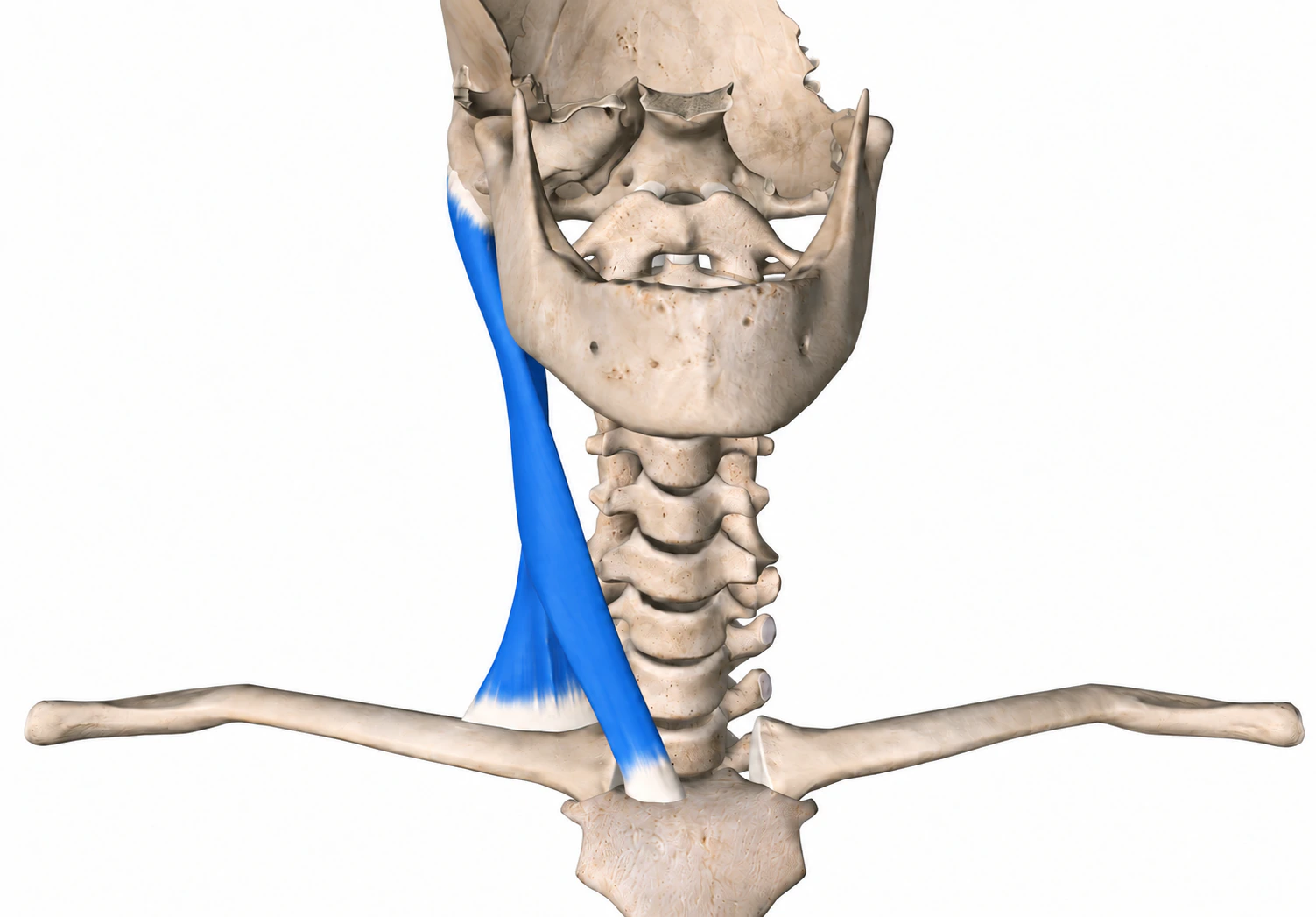
Sternocleidomastoid — Neck, Head & Balance-Related Symptoms
Assess SCM tenderness and neck movement when symptoms include head or facial pain, while dizziness, vertigo and ear symptoms receive their own differential evaluation.
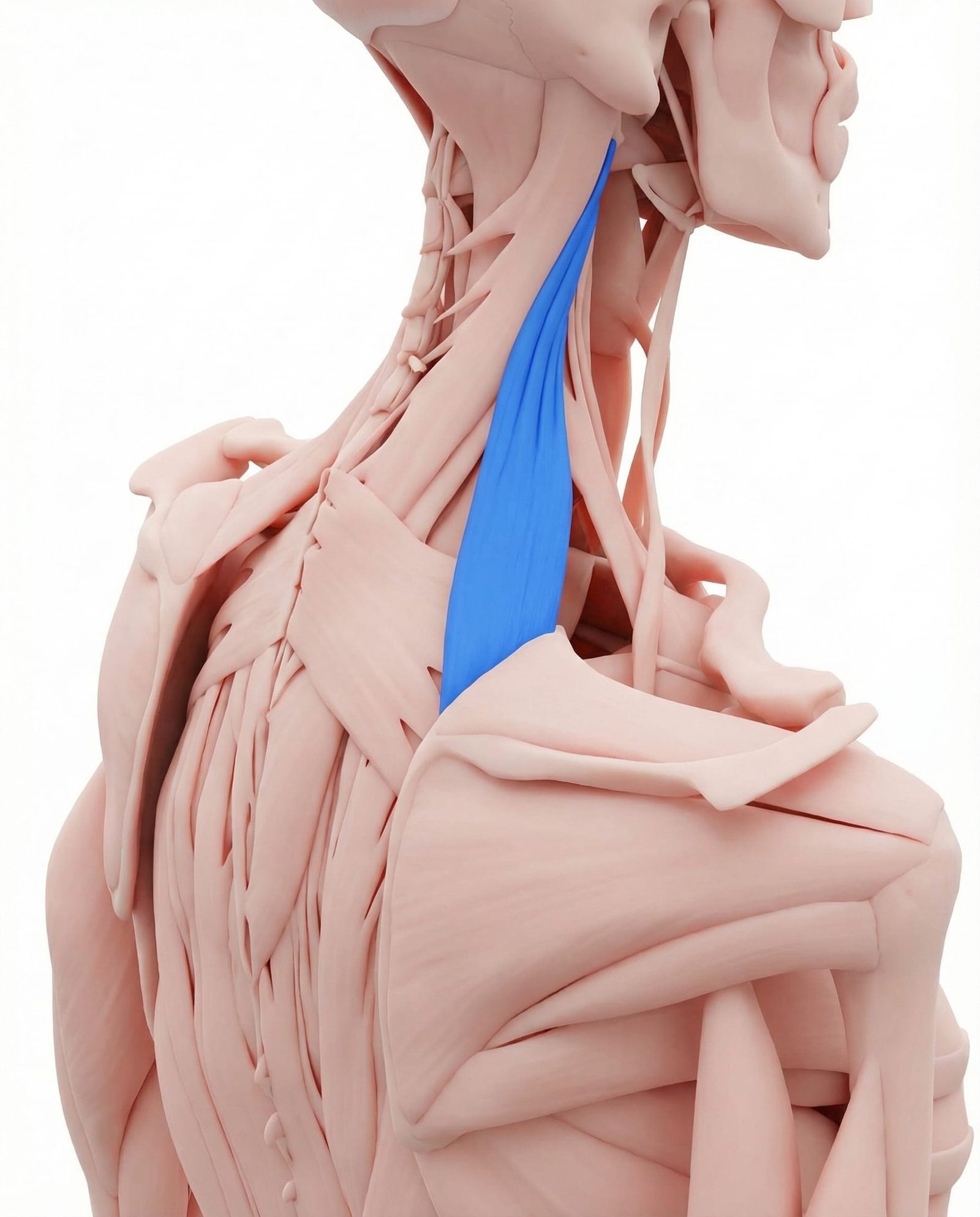
Levator Scapulae — Neck Rotation & Shoulder-Blade Pain
Anatomy and examination for a common neck-shoulder contributor, including cervical and scapular differentials, stretching, local care and motor control.
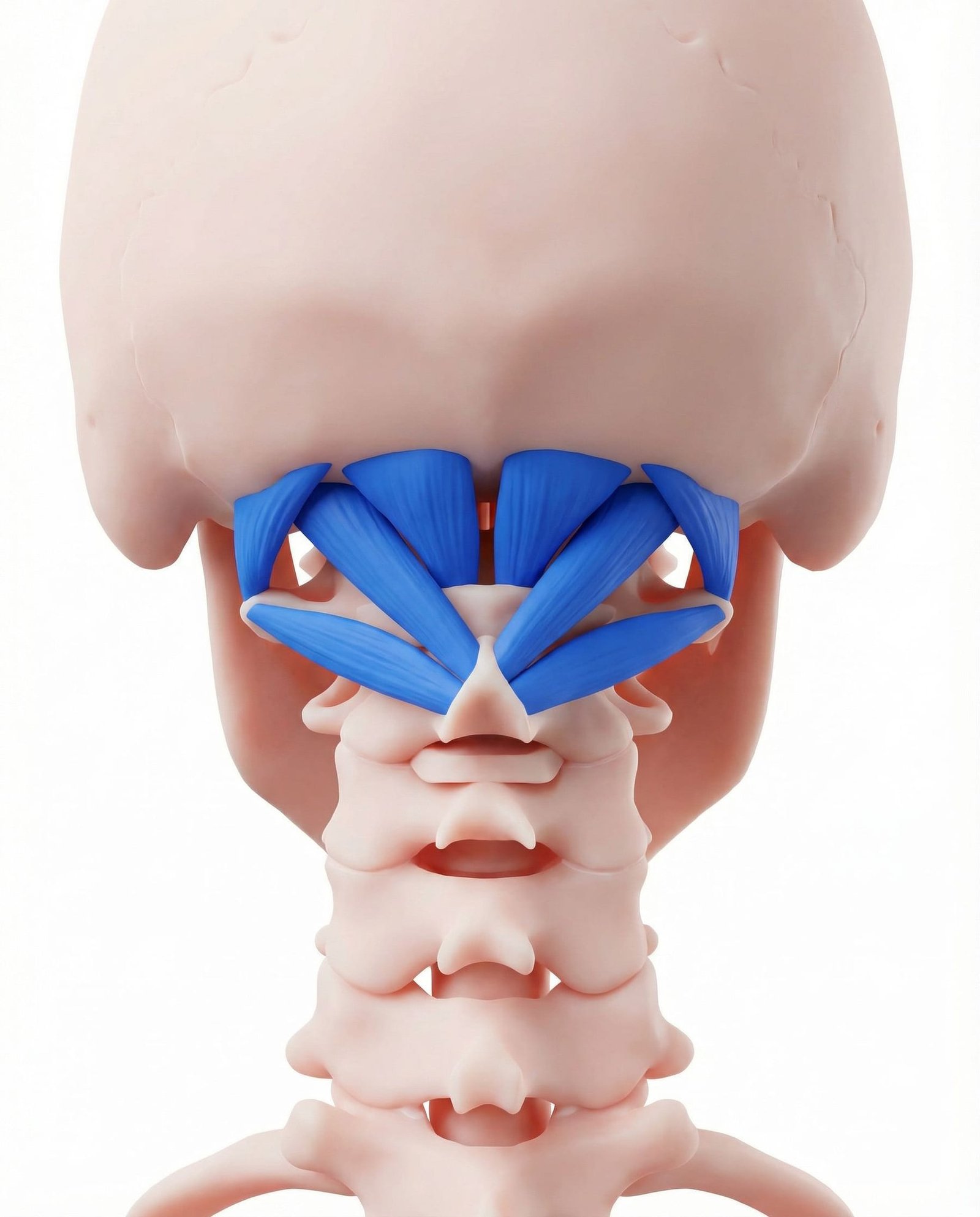
Suboccipitals — Skull-Base Headache & Eye-Region Pain
Review skull-base muscle findings and upper-cervical control while screening headache, neural, vascular and eye-related causes that need separate assessment.
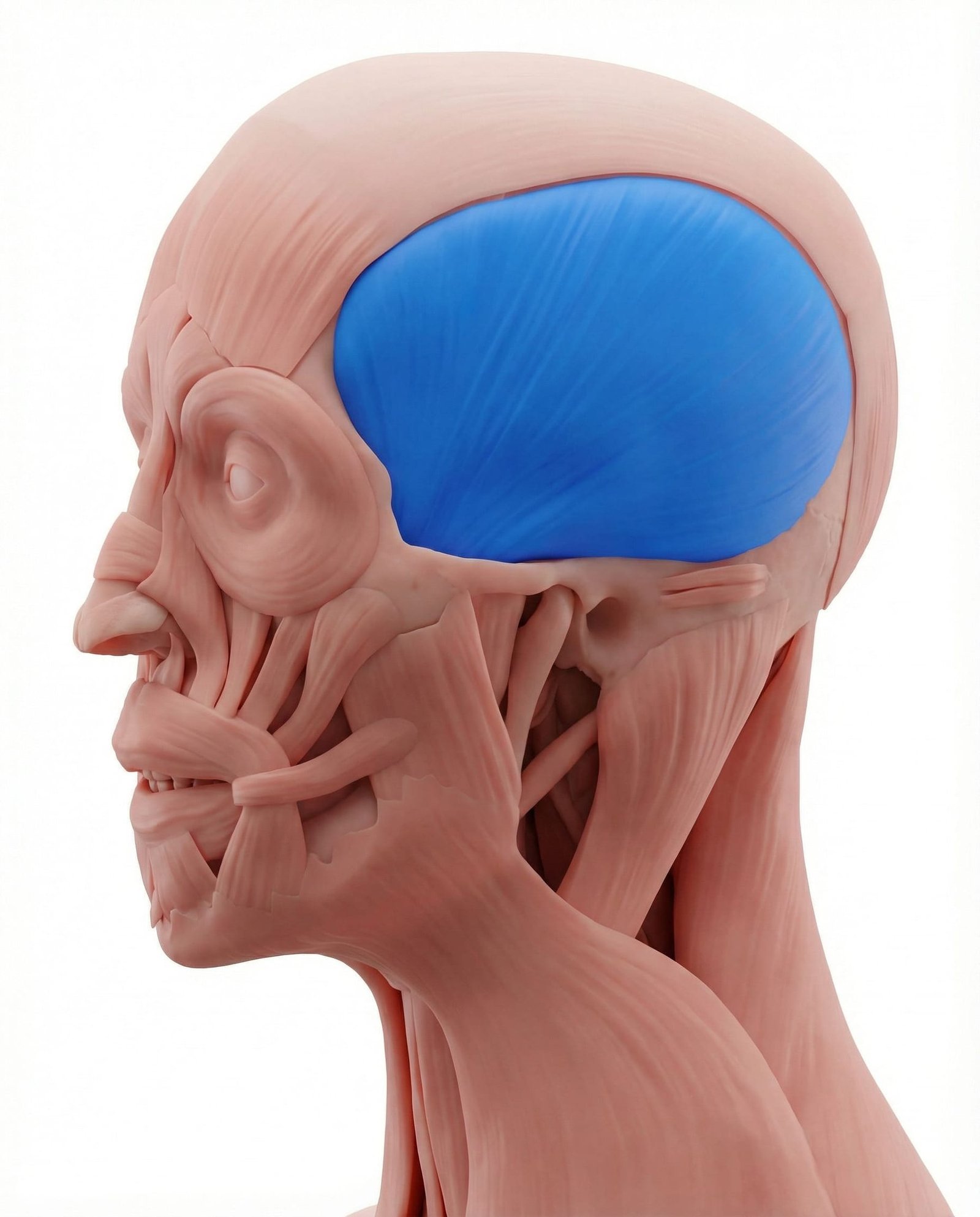
Temporalis — Temple, Jaw & Tooth Pain
Assess familiar temple or upper-tooth pain alongside jaw motion, dental findings and primary-headache features, then consider habit and load management.
Upper Trapezius Trigger Points: Neck Pain and Headache
A guide to upper trapezius anatomy, referred pain and treatment evidence. Muscle tenderness can accompany a headache; assessment considers the full symptom pattern.
Body Region
Shoulder, Chest & Upper Limb
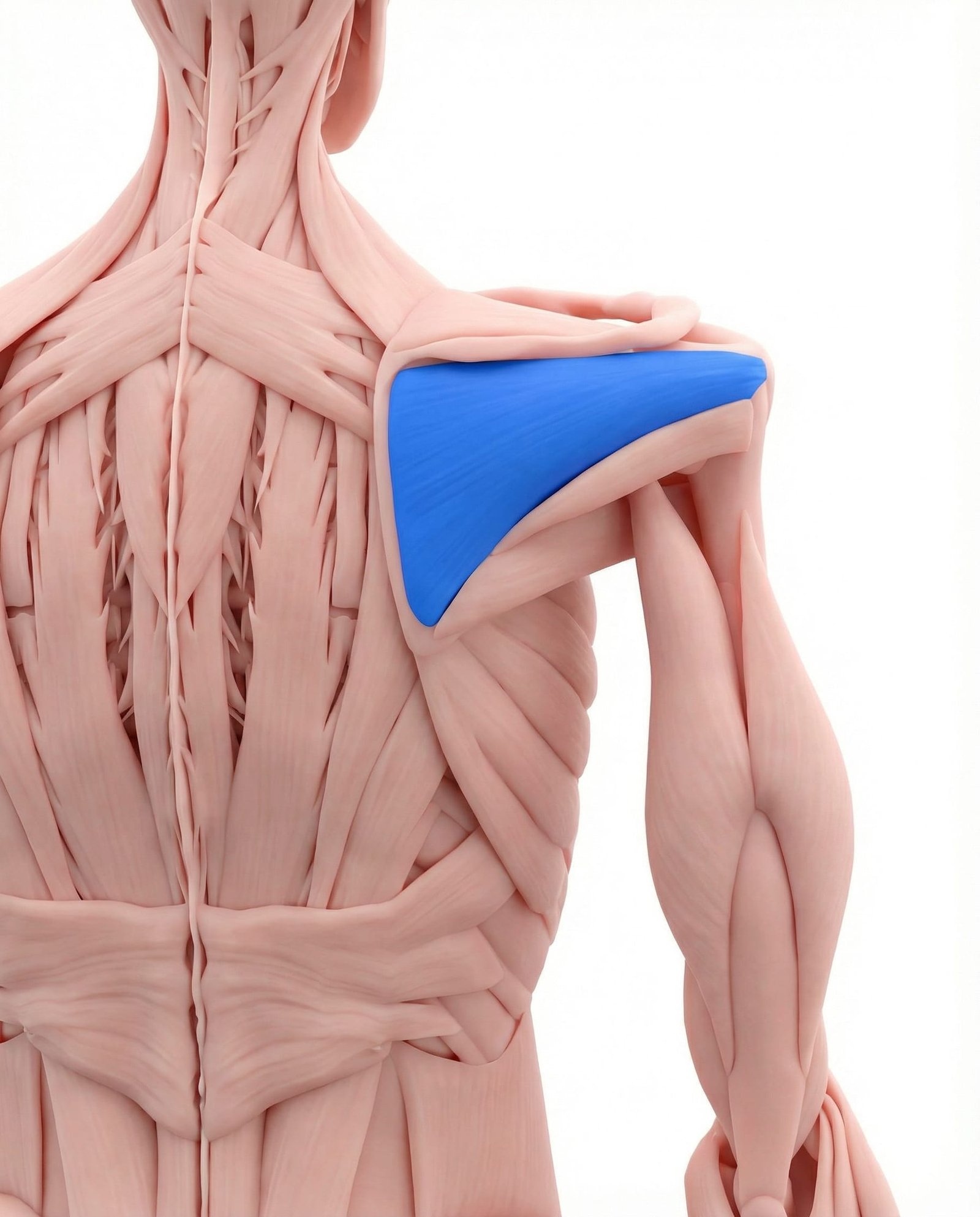
Infraspinatus — Posterior Cuff & Anterior Shoulder Pain
Posterior cuff anatomy, familiar anterior-shoulder referral, rotation testing and comparison with tendon, biceps, joint and cervical causes.
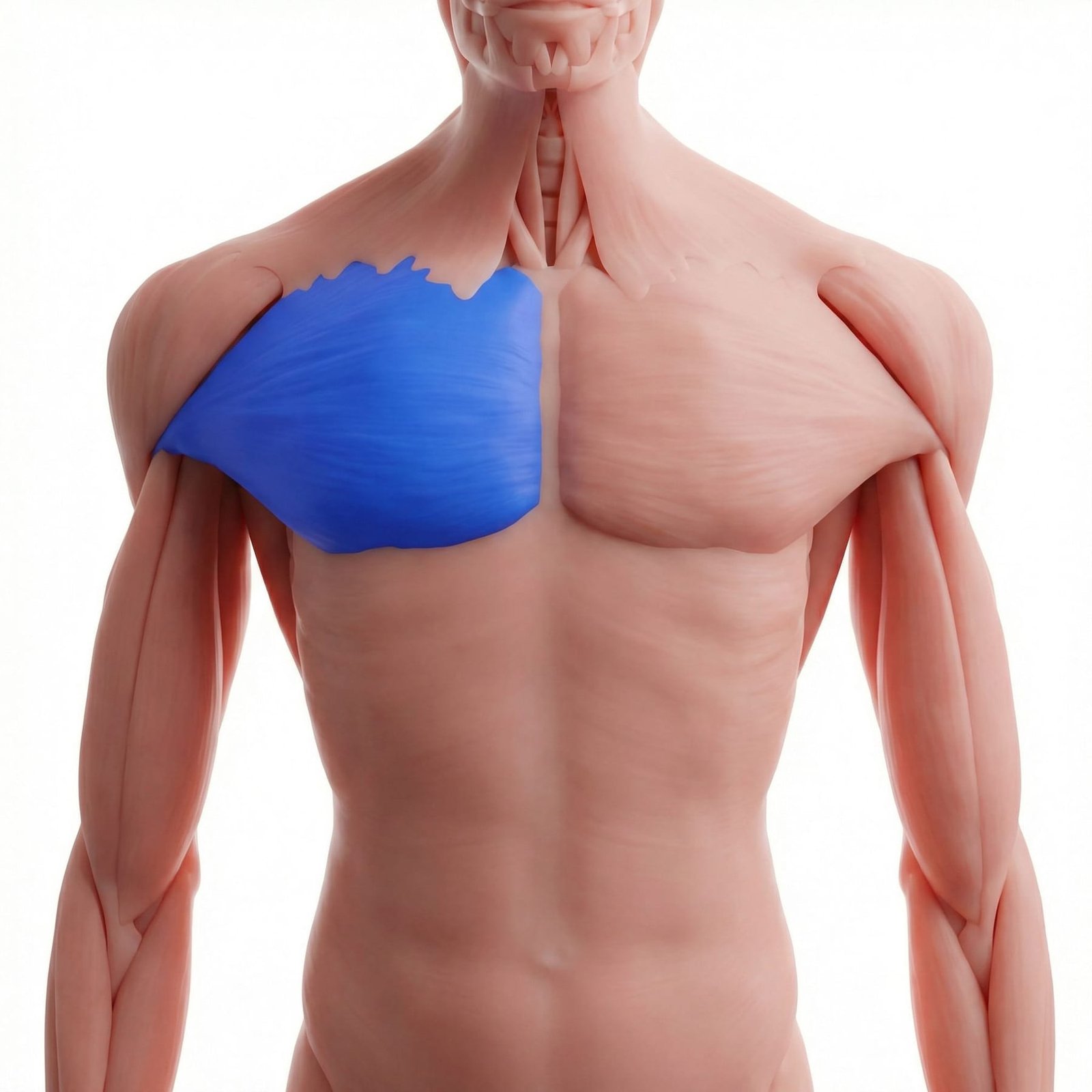
Pectoralis Major & Minor — Chest Wall & Thoracic Outlet-Type Symptoms
Chest-wall and shoulder assessment after urgent causes are excluded, with separate evaluation of muscular referral and possible neurovascular compression.
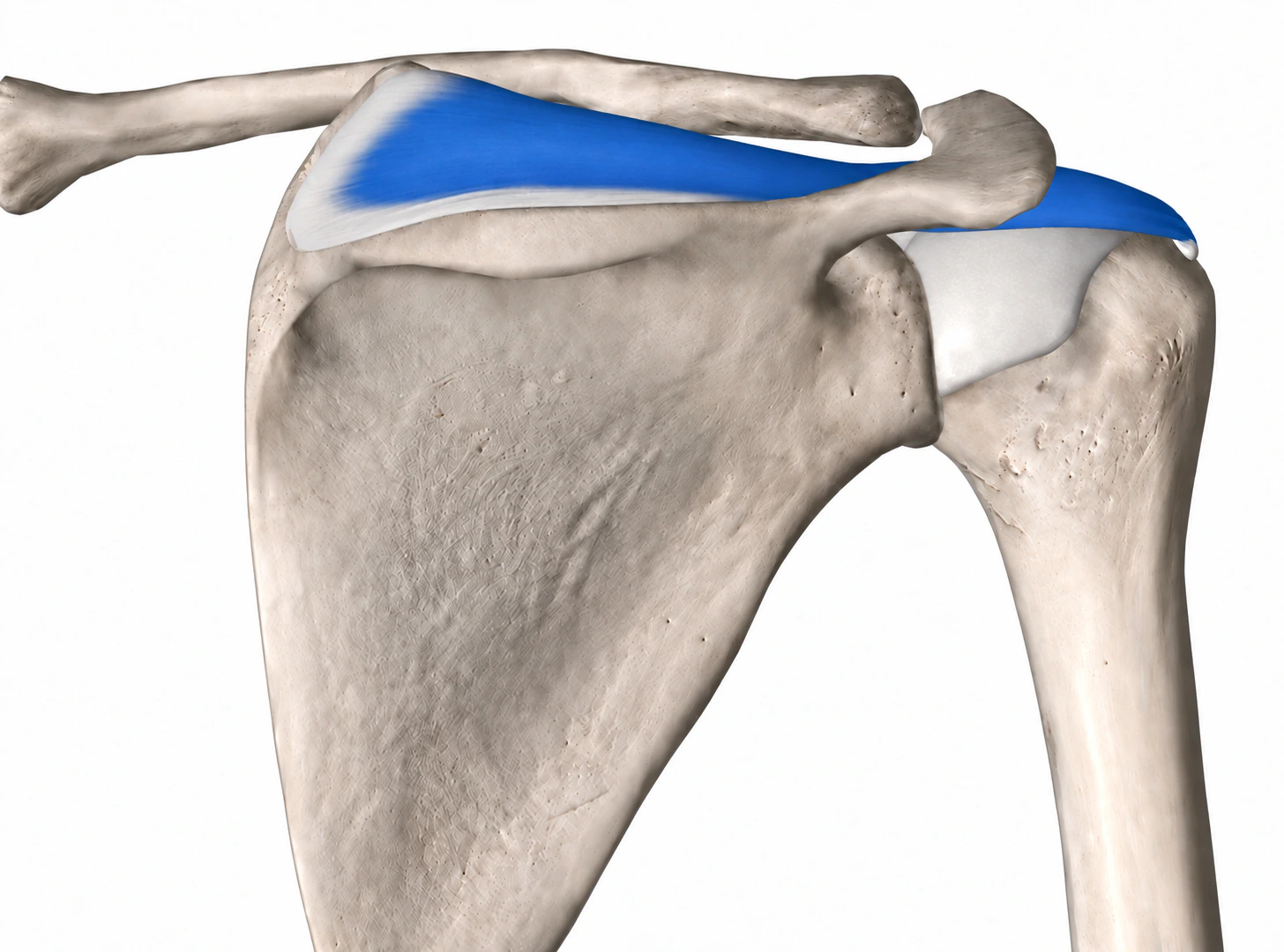
Supraspinatus — Lateral Shoulder Pain
Compare supraspinatus tenderness and load response with rotator-cuff tendon, bursal, joint and cervical findings before choosing rehabilitation or local care.
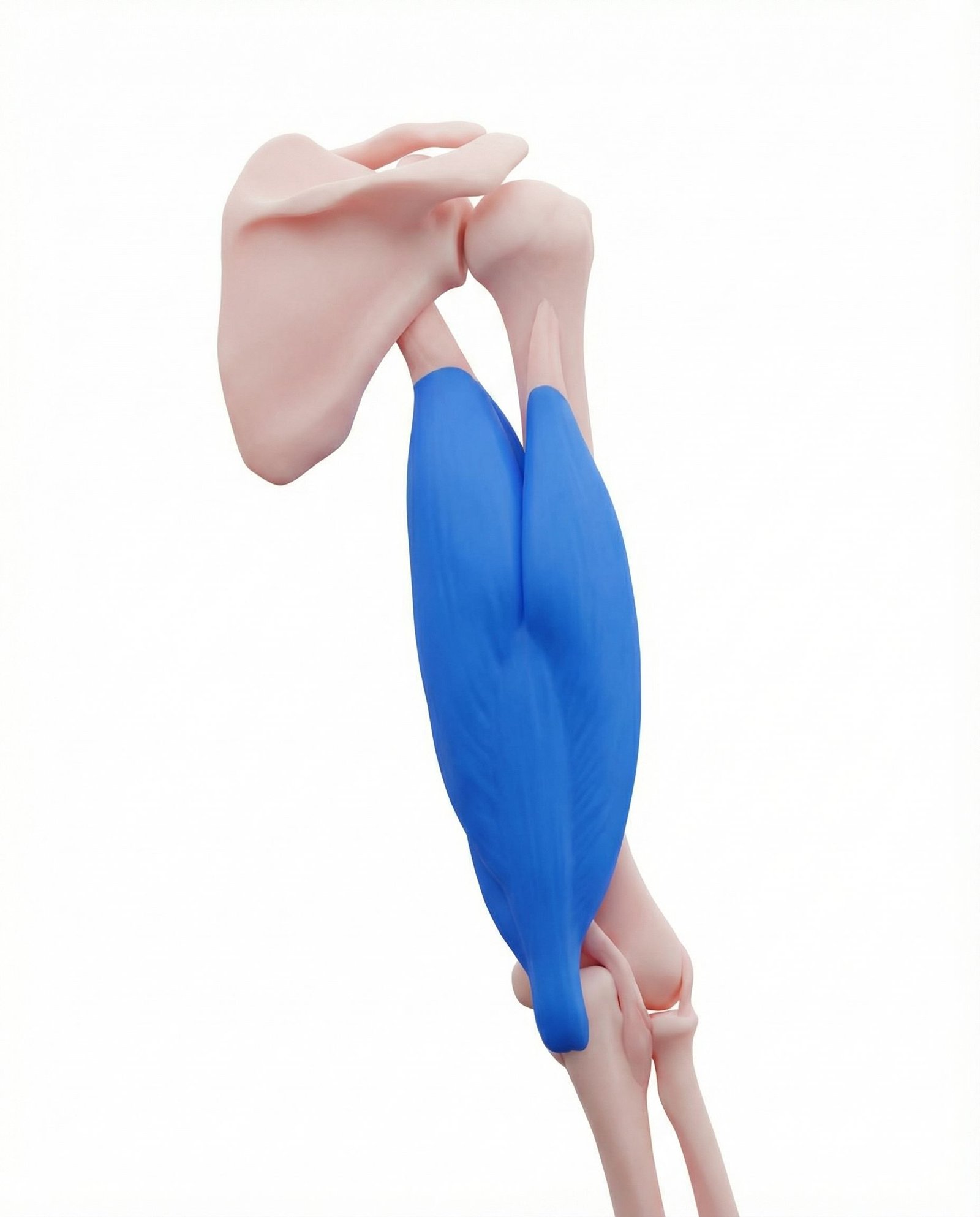
Triceps Tendinopathy & Posterior Arm Myofascial Pain — Differential Diagnosis
Distinguishing load-related distal triceps pain from rupture, bursitis, joint symptoms and regional arm pain
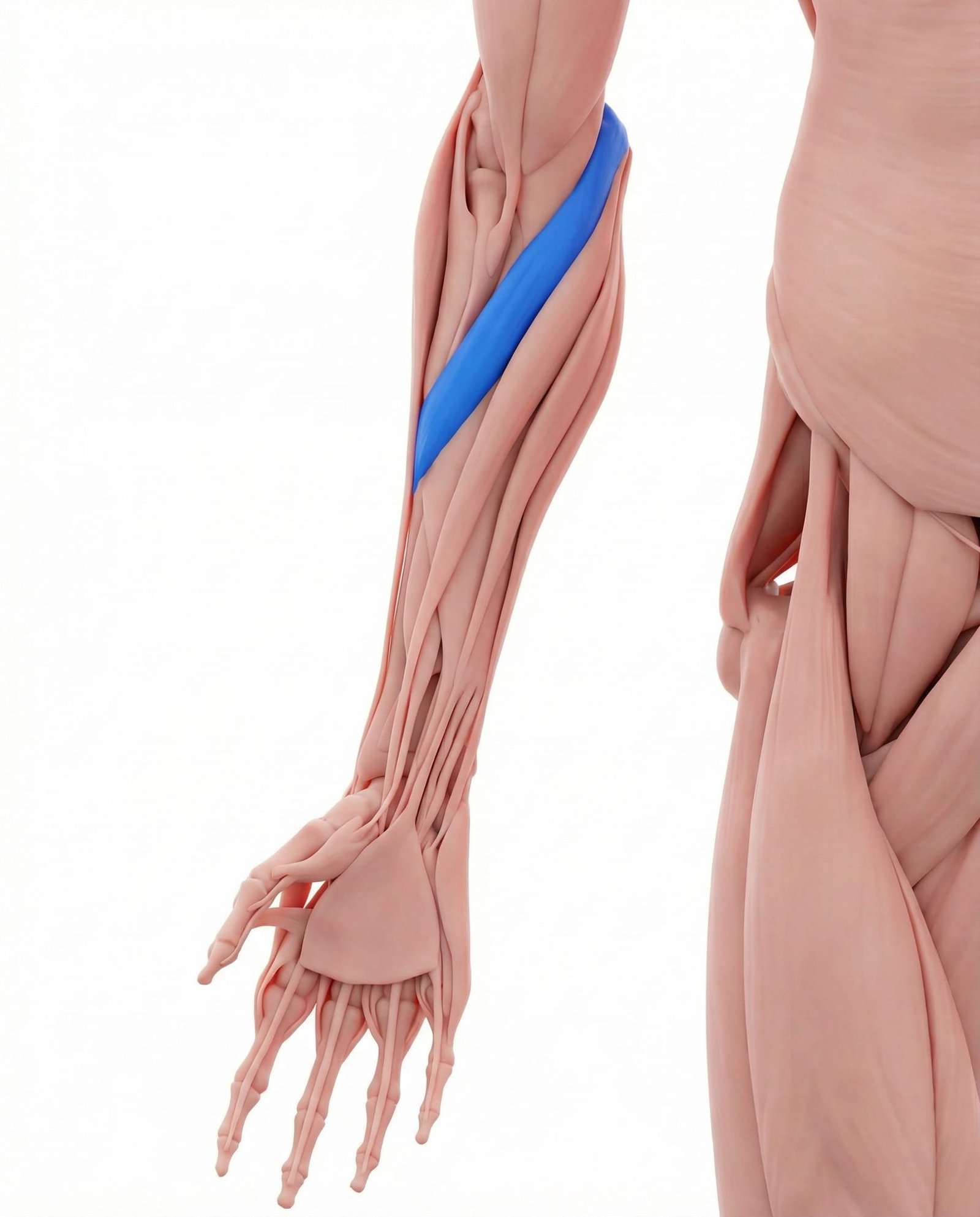
Medial Epicondylalgia & Medial Elbow Myofascial Pain — Differential Diagnosis
Assessing flexor-pronator tendon pain alongside muscle, ulnar nerve, ligament and referred symptoms
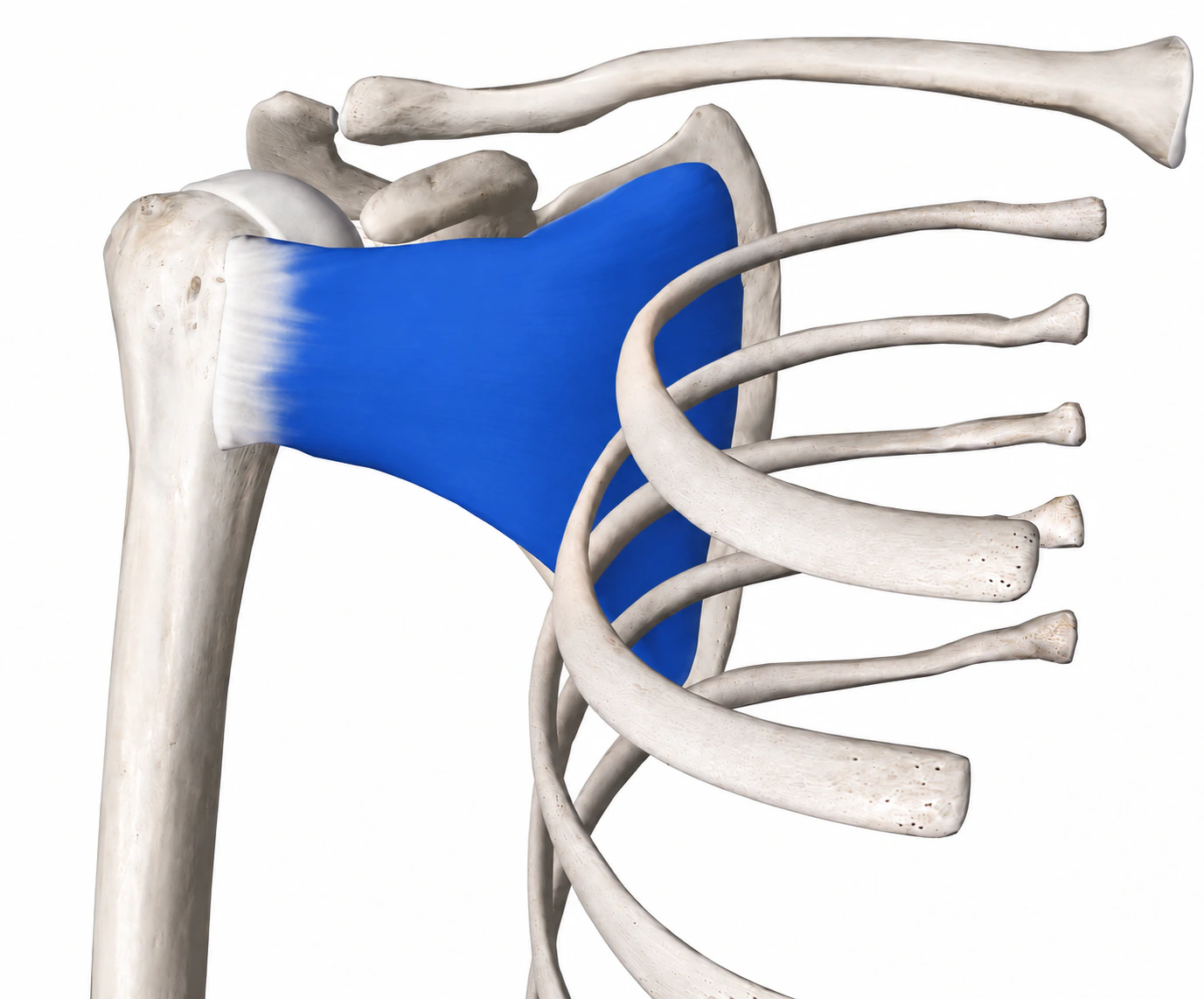
Subscapularis
The anterior rotator-cuff muscle, with examination of painful rotation, tendon weakness and restricted shoulder movement.
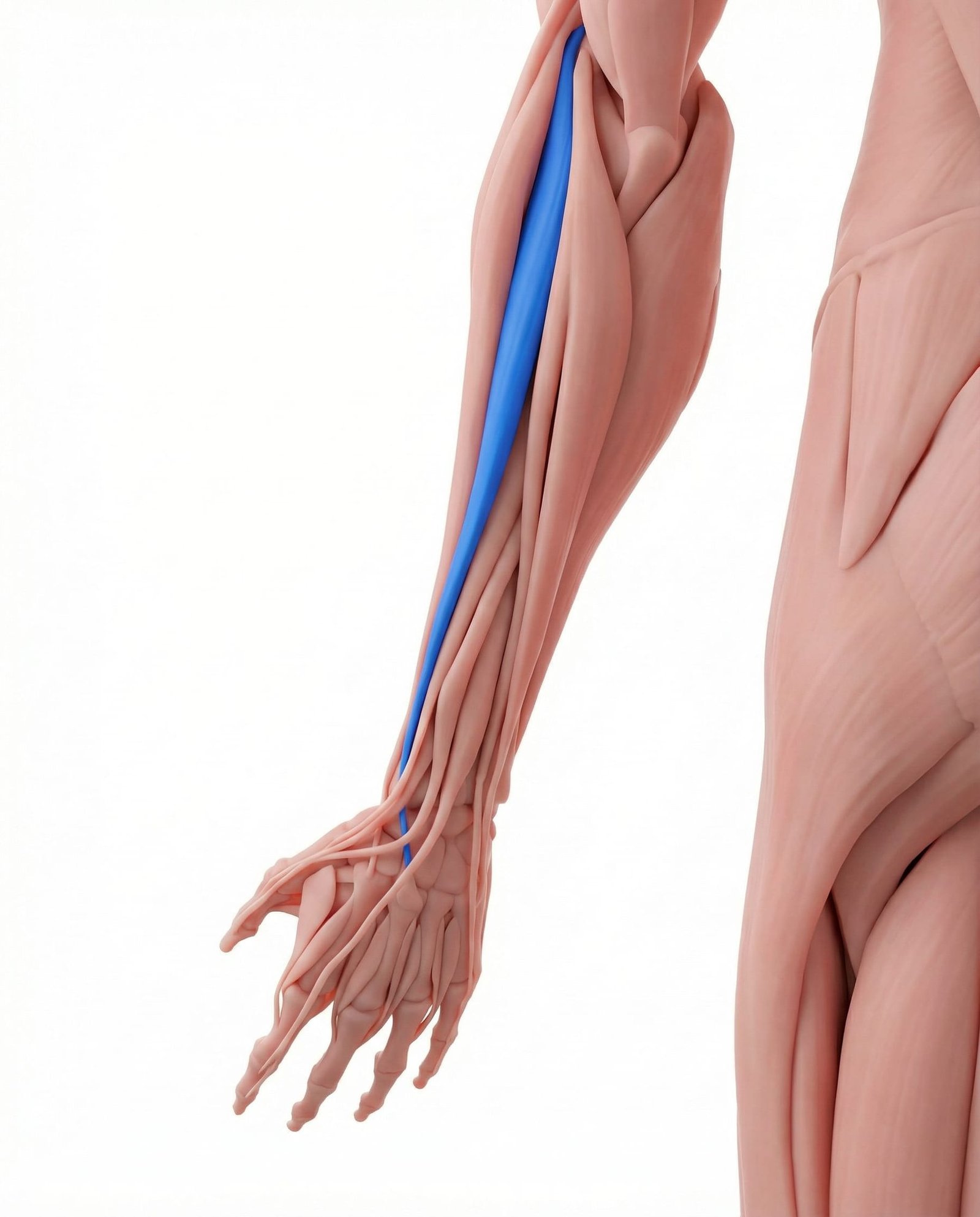
Forearm Extensors & Supinator
Extensor carpi radialis longus and brevis, extensor digitorum and supinator — with separation of muscle, tendon and radial-nerve findings.
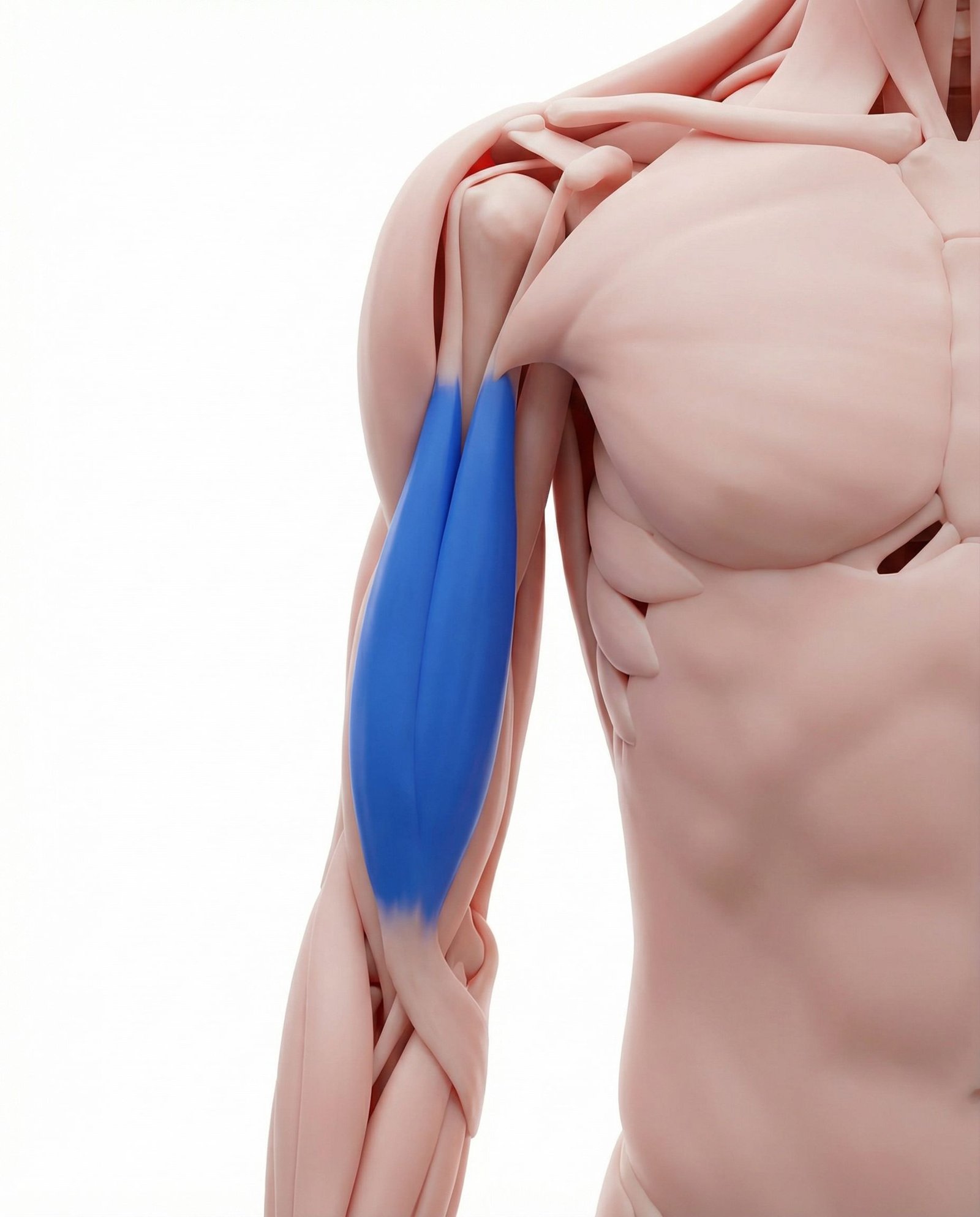
Biceps Brachii
Distinguishing muscle-belly symptoms from proximal and distal biceps tendon problems, with practical assessment of elbow flexion and supination.
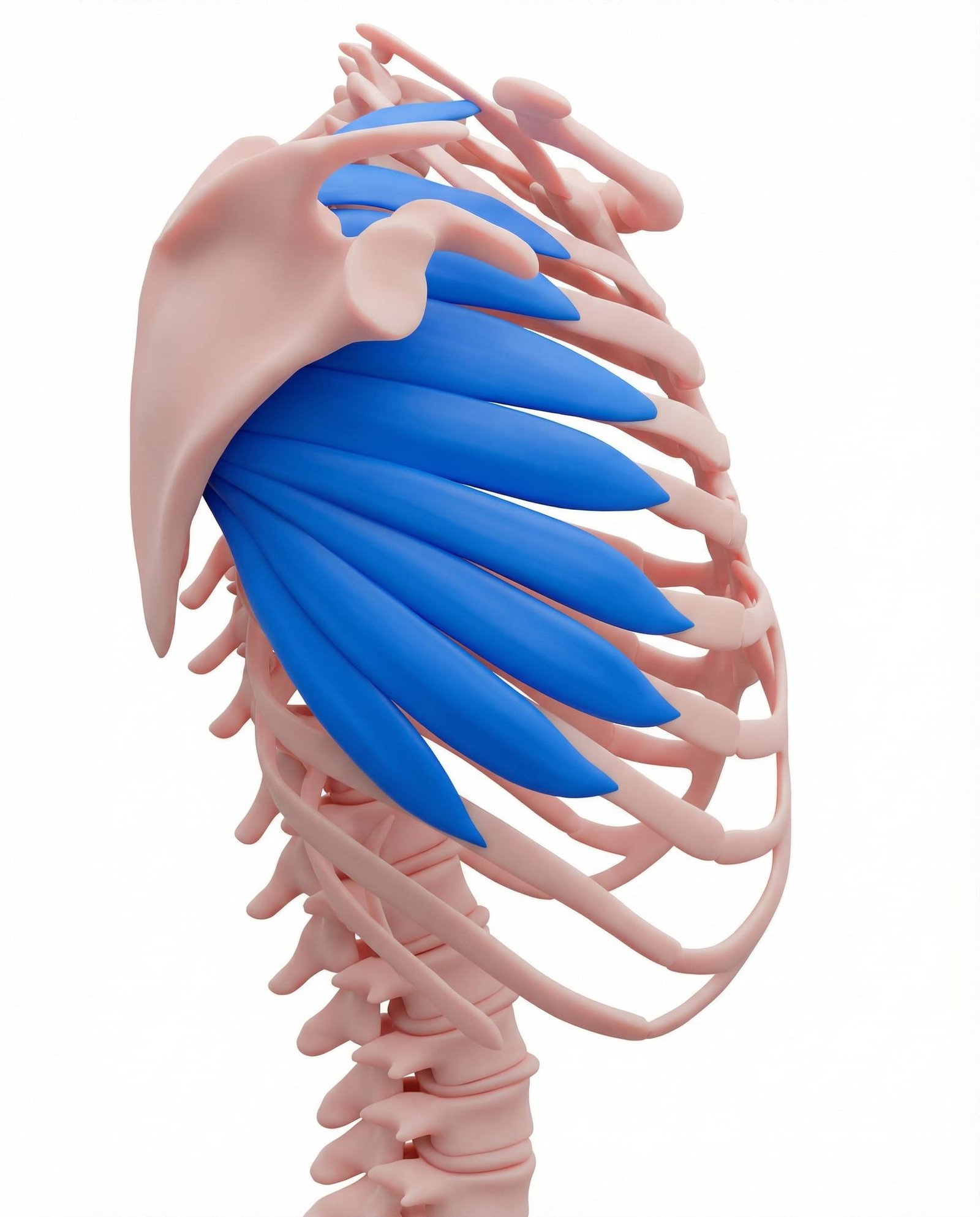
Serratus Anterior
The muscle wrapping from the ribs to the scapula, with assessment of useful movement, winging and possible long-thoracic nerve involvement.
Body Region
Back & Spine
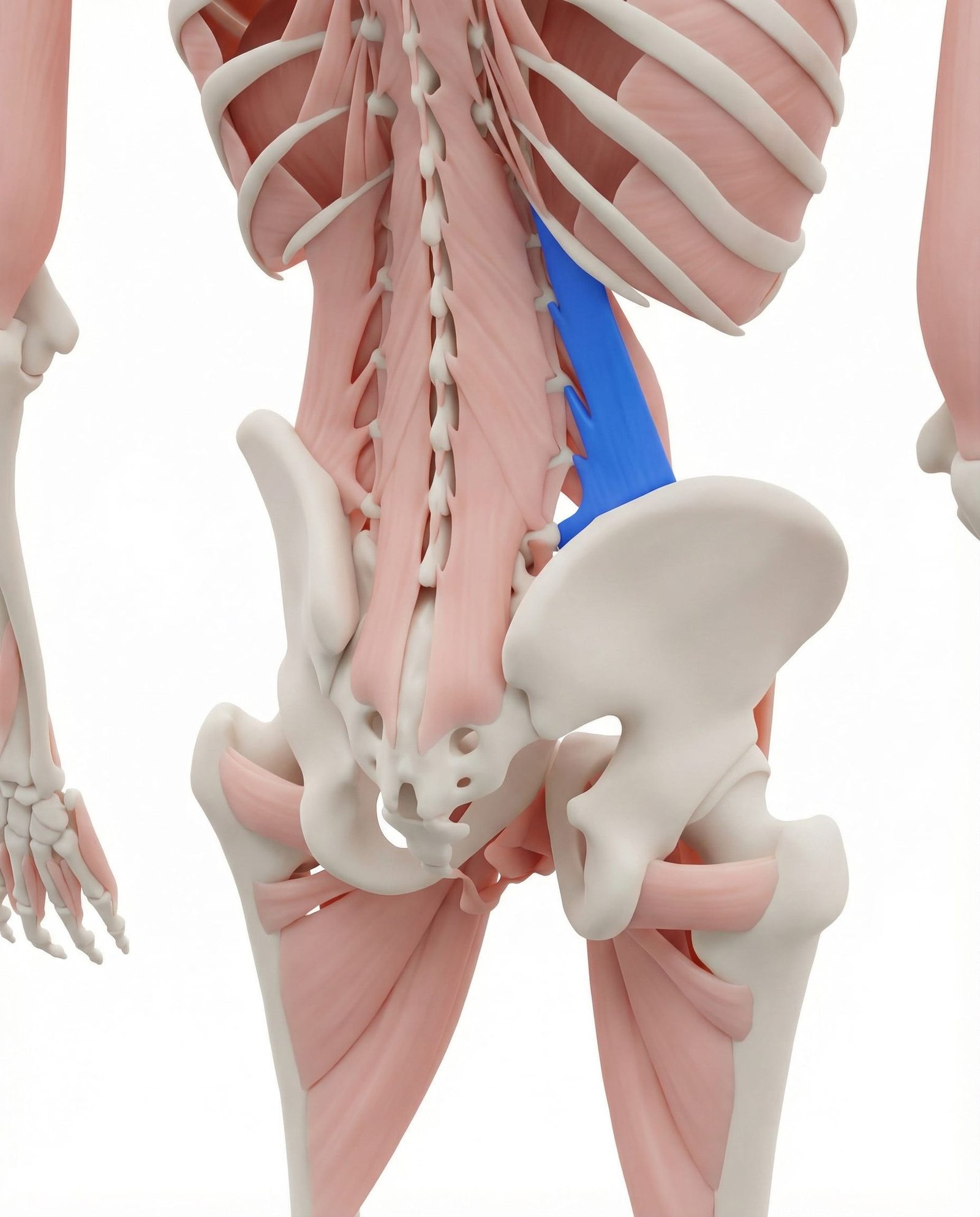
Quadratus Lumborum — Low Back, Hip & Pelvic-Rim Pain
Anatomy, palpation and movement assessment for a deep trunk muscle whose pain patterns can overlap with lumbar, hip, sacroiliac and visceral conditions.
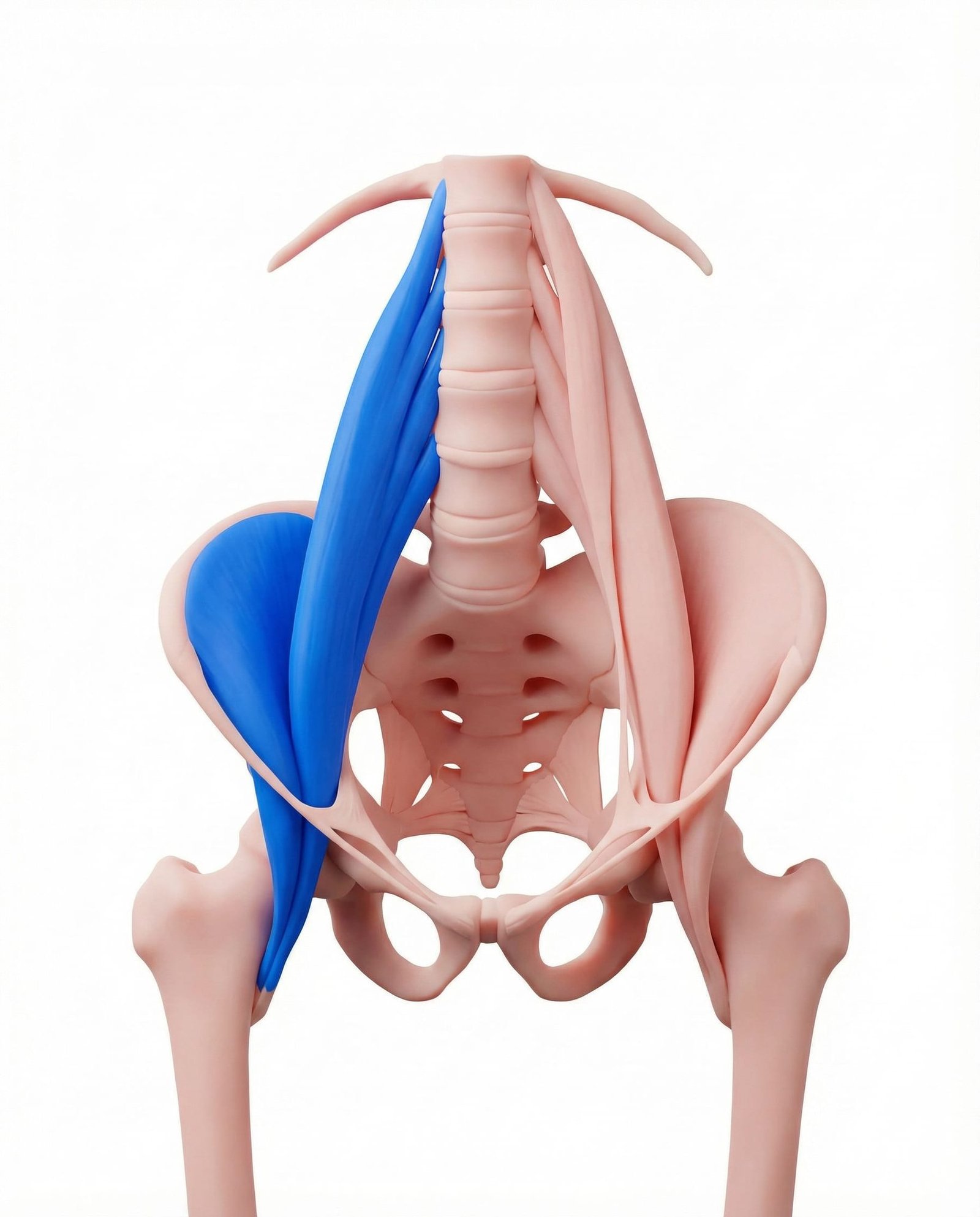
Iliopsoas — Deep Hip Flexor & Groin Pain
A guide to iliacus and psoas anatomy, cautious deep-region assessment, lumbar and hip differentials, and mobility and strengthening options.
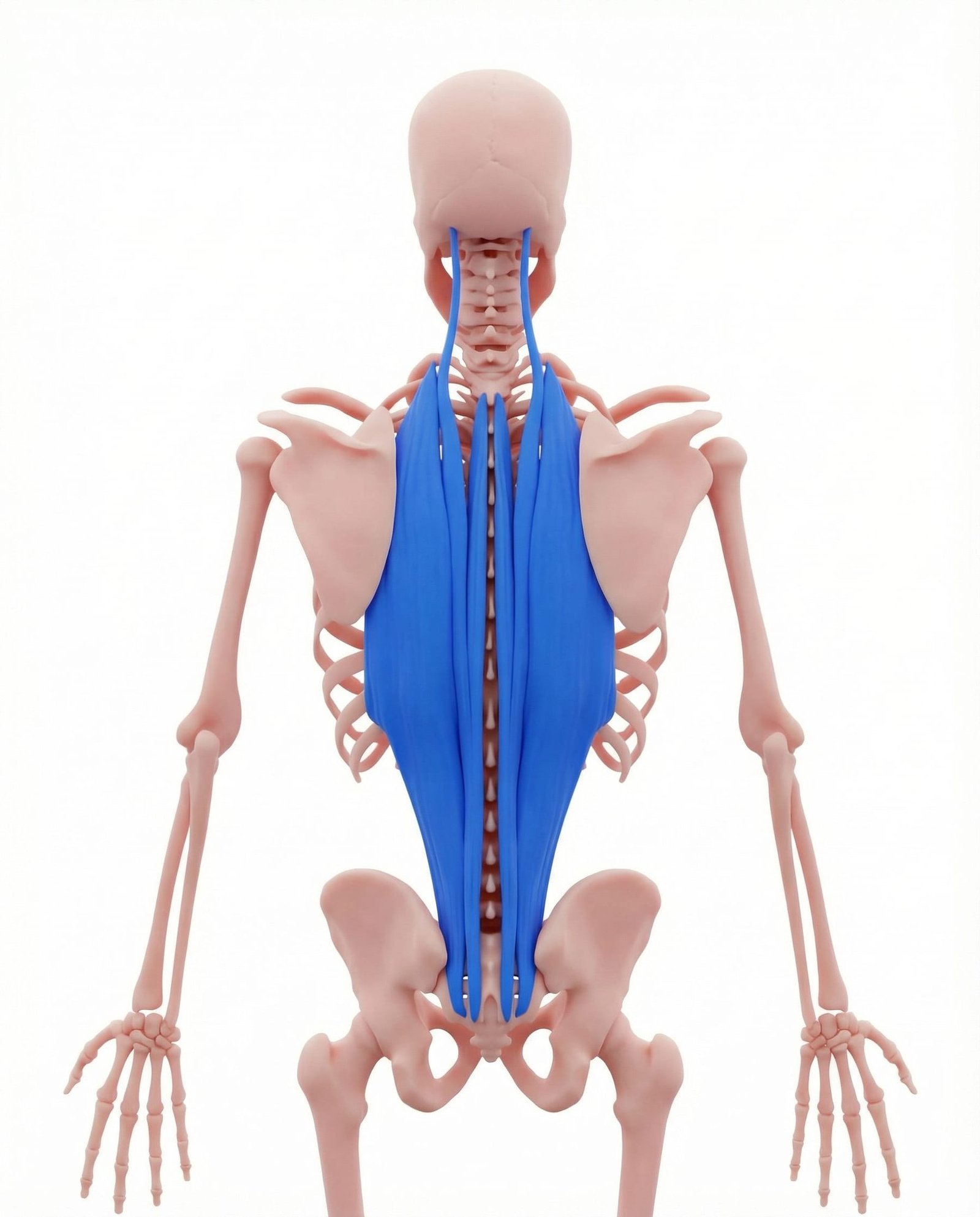
Erector Spinae — Thoracic & Lumbar Pain
Iliocostalis, longissimus and spinalis anatomy with regional palpation, movement assessment, important back-pain differentials and progressive management.
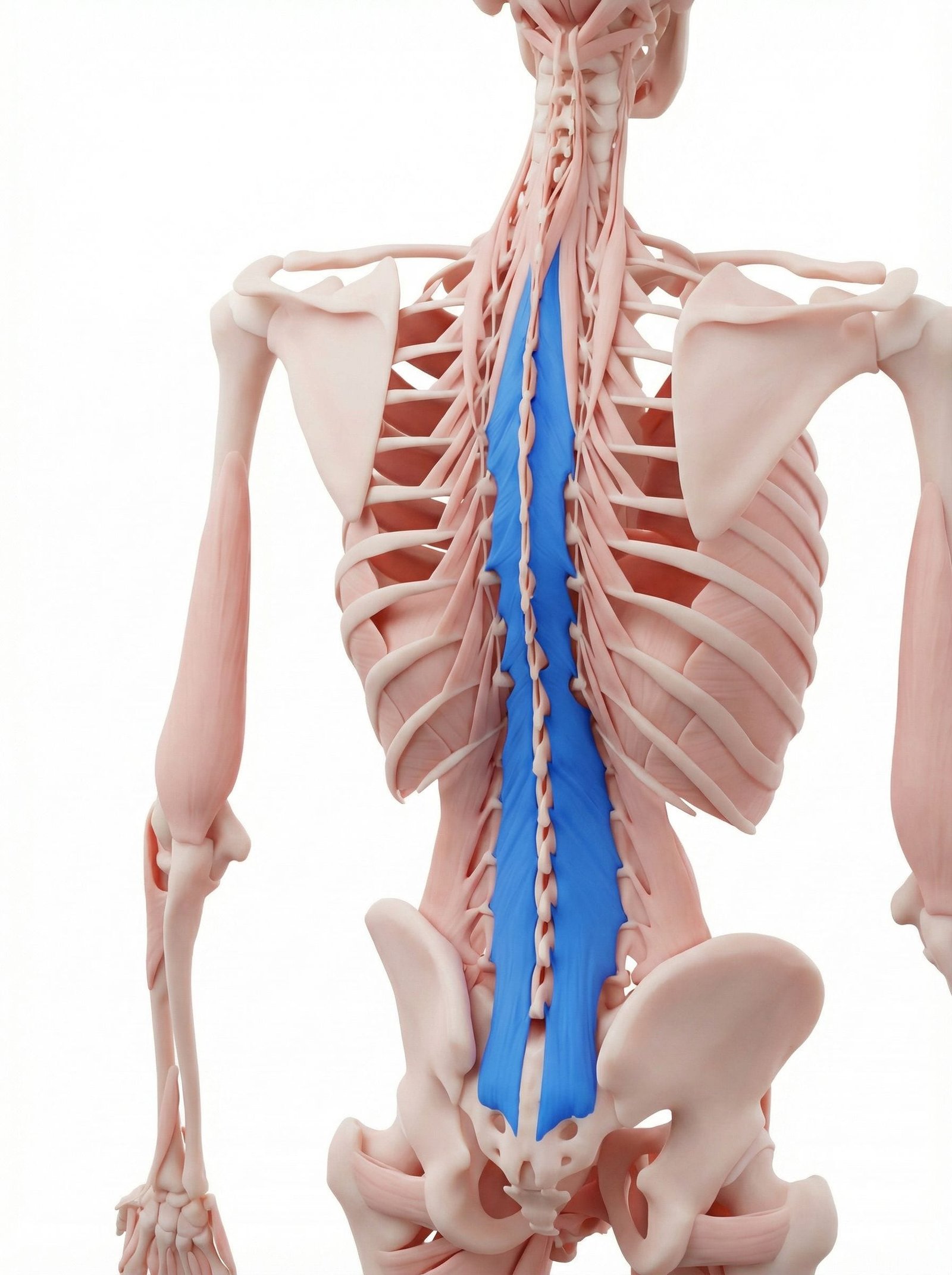
Multifidus
A practical guide to paraspinal symptoms, movement assessment and progressive trunk exercise without assumptions about a damaged or unstable spine.
Body Region
Hip, Pelvis & Lower Limb
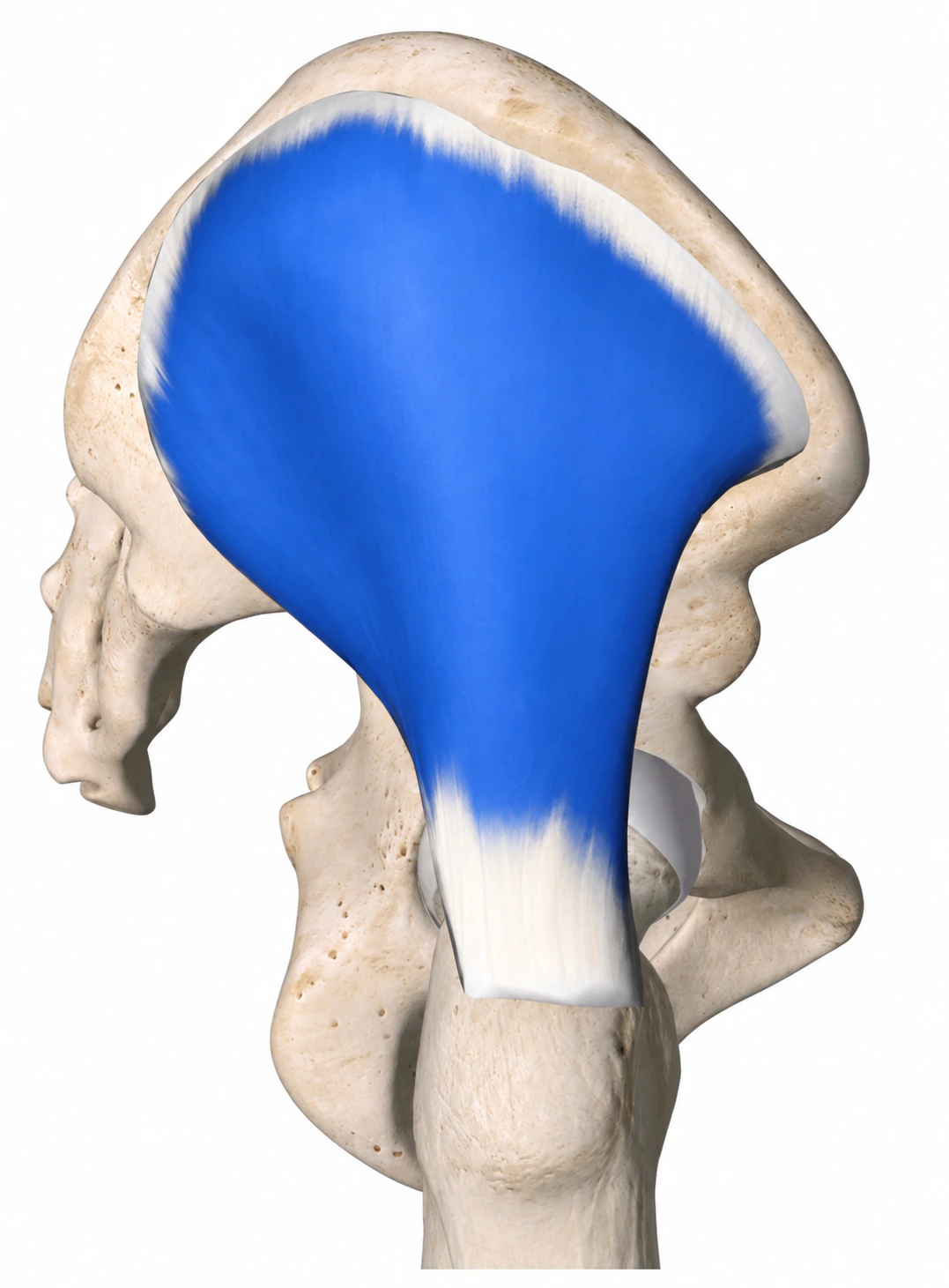
Gluteus Medius & Minimus
Compare hip-abductor muscle findings with gluteal tendon, hip-joint, lumbar and nerve-related causes, then review graded mobility and strengthening options.
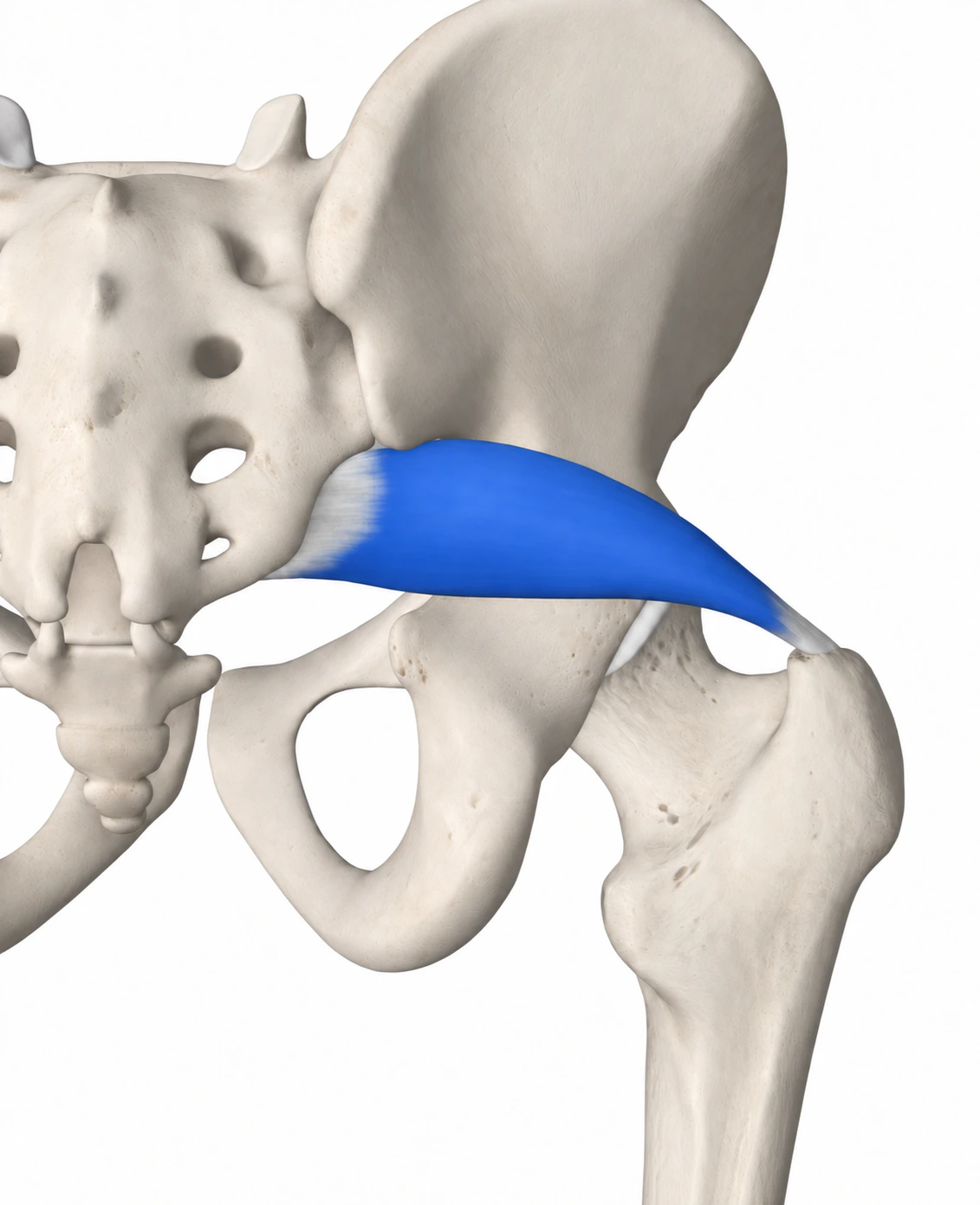
Piriformis — Deep Hip & Sciatic-Like Pain
Deep-hip anatomy and adjunct clinical tests, with attention to lumbar, hip, tendon and sciatic-nerve differentials before treatment selection.
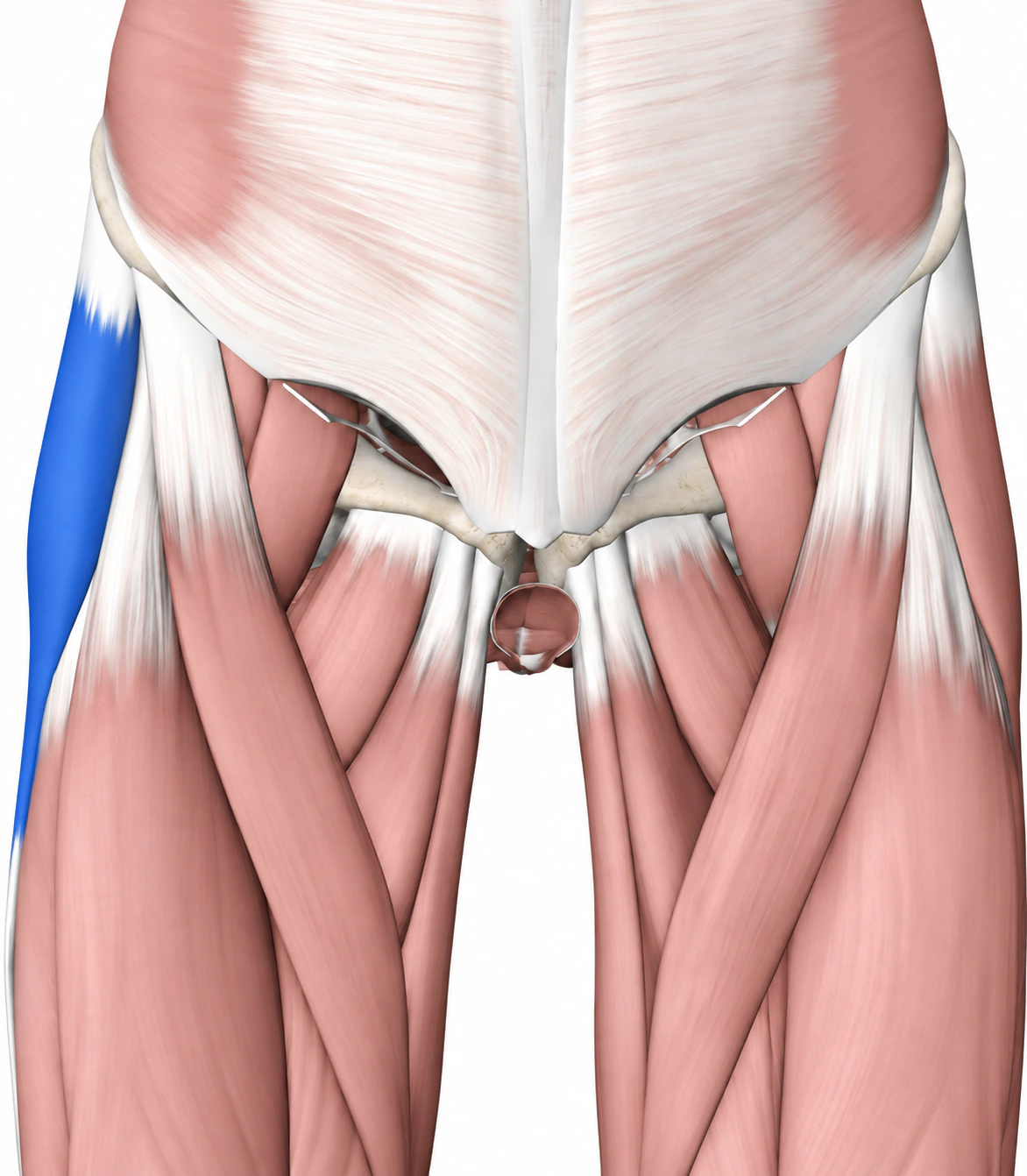
Tensor Fasciae Latae — Outer Hip & Thigh Pain
Assess TFL and lateral-thigh symptoms alongside gluteal tendons, the greater trochanteric region, hip joint, lumbar spine and sensory nerves.
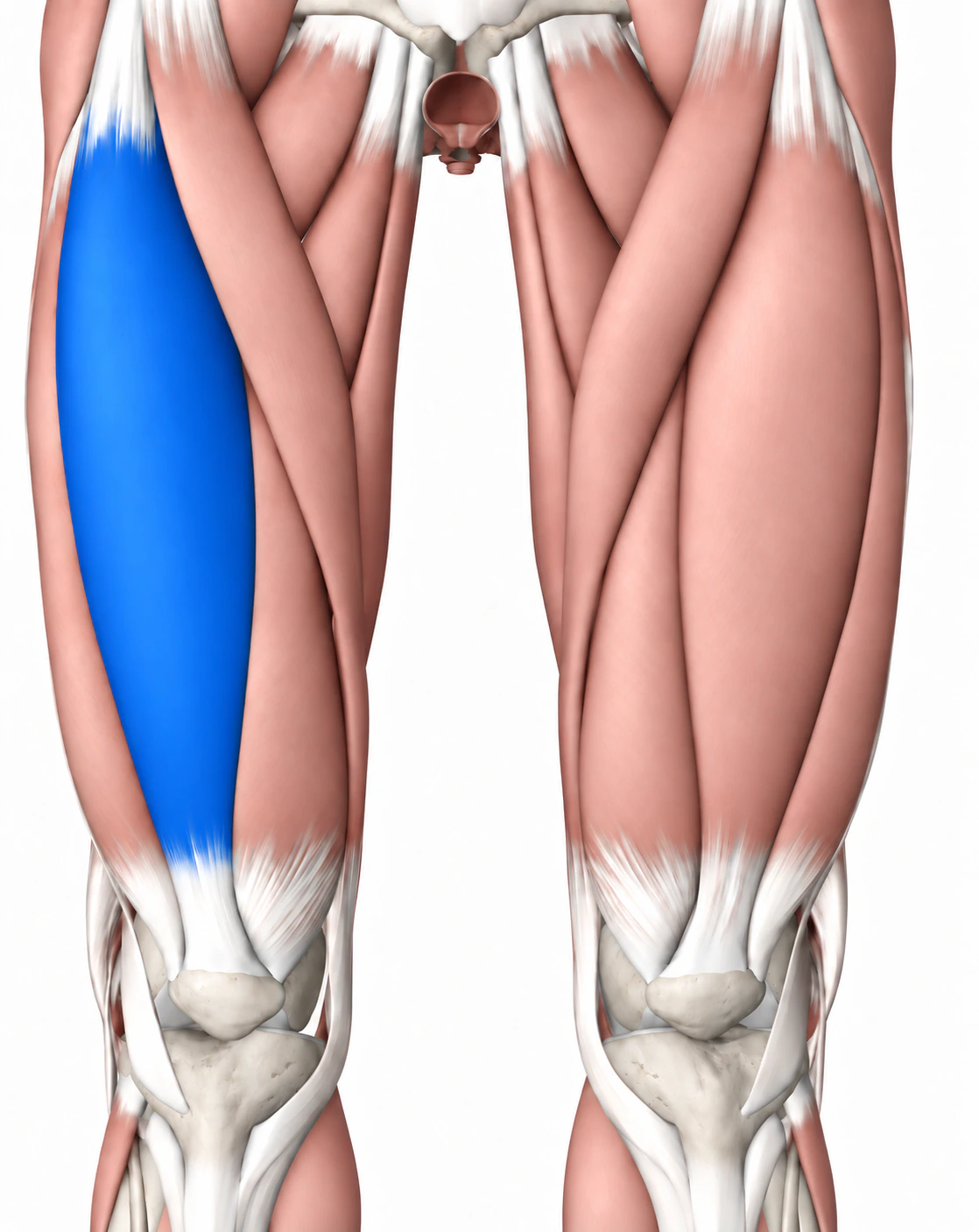
Quadriceps — Thigh & Knee Pain Patterns
Examine the four-part knee extensor group, familiar pain patterns and functional control while considering tendon, patellofemoral, meniscal and joint causes.
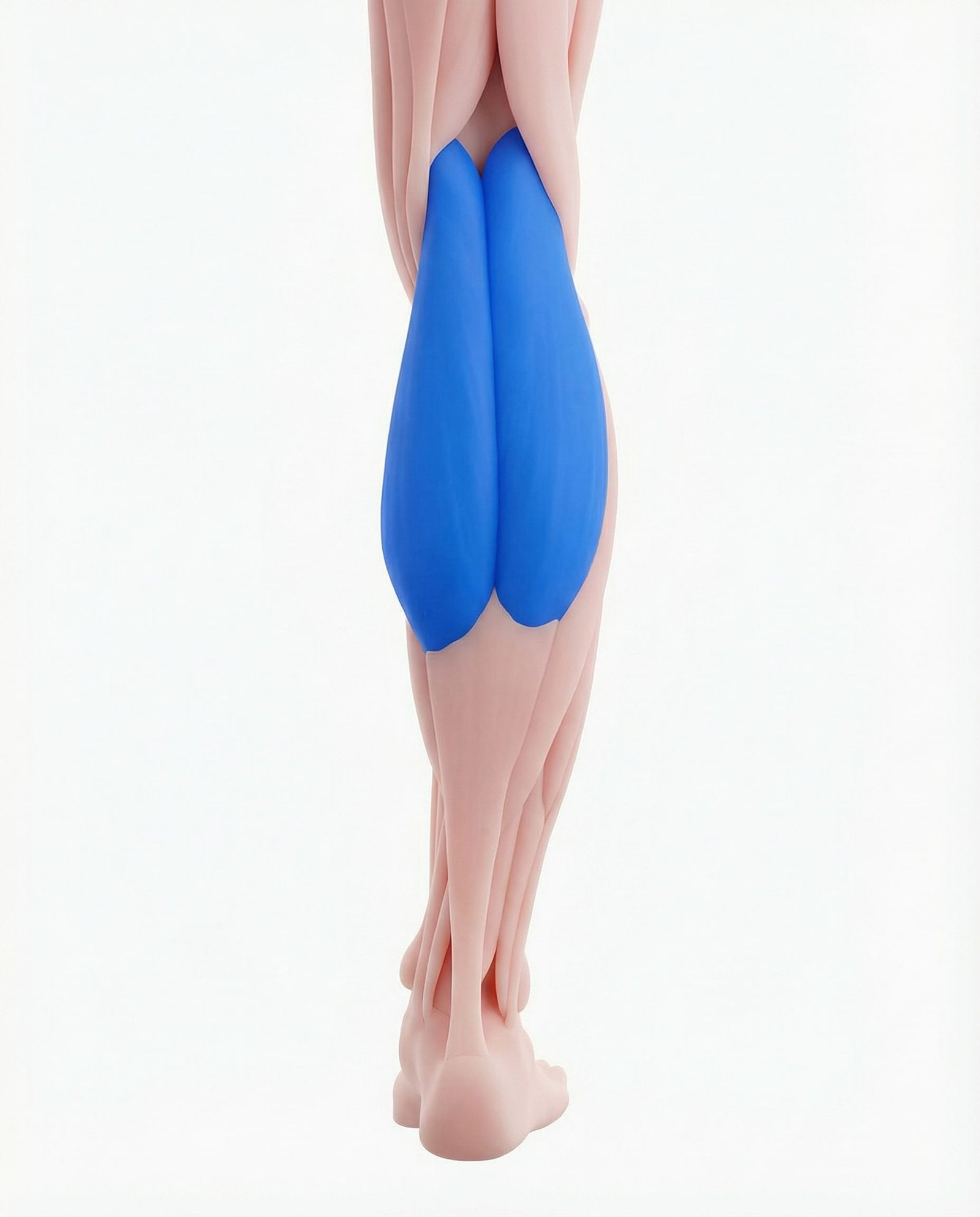
Gastrocnemius & Soleus — Calf, Cramp & Heel Pain
Calf anatomy and assessment for cramps, heel or lower-leg pain, with Achilles, plantar, vascular and neurologic differentials and graded loading options.
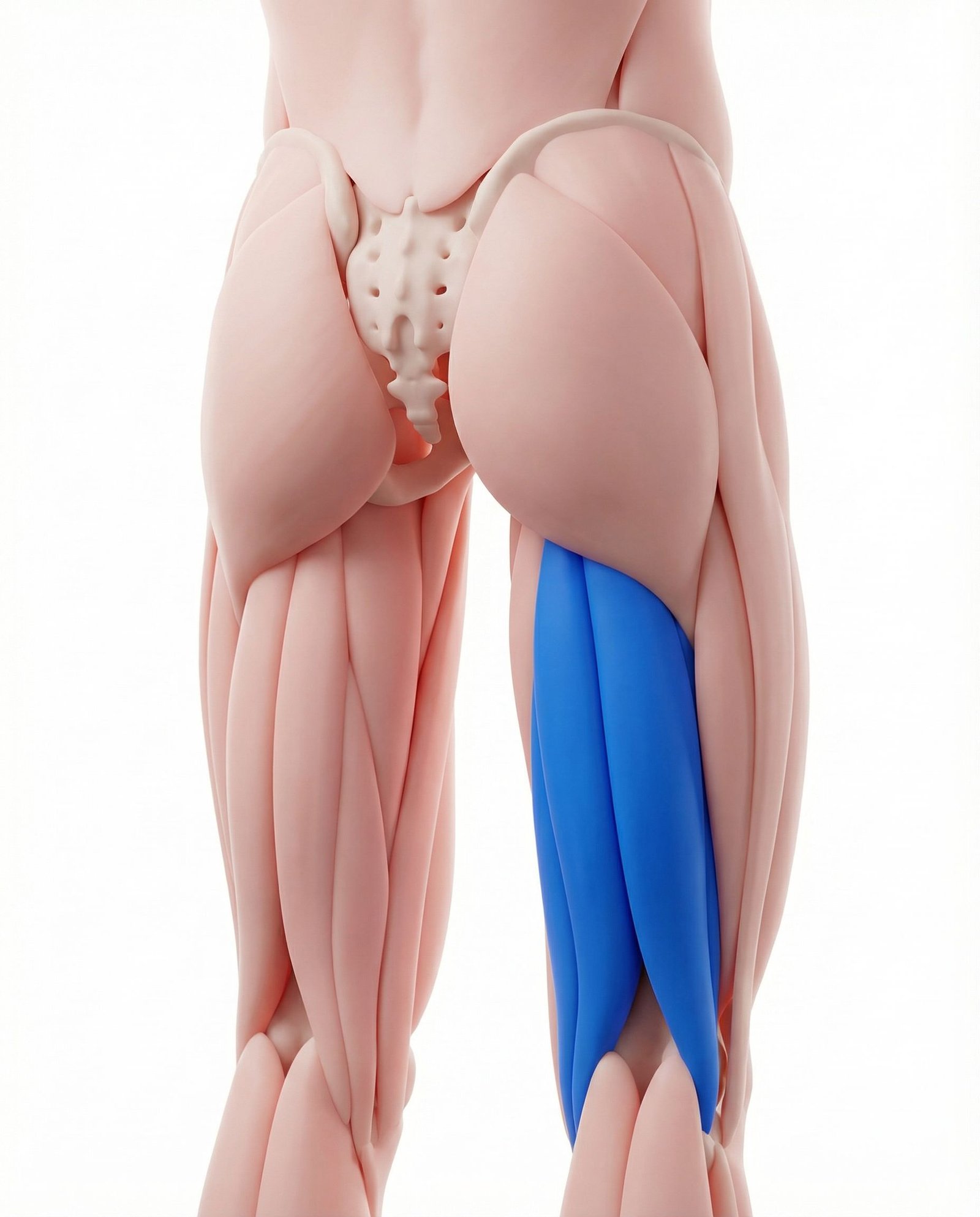
Hamstrings
Biceps femoris, semitendinosus and semimembranosus — separating muscle loading, acute strain, proximal tendon pain and lumbar referral.

Hip Adductors
Adductor longus, brevis and magnus, gracilis and pectineus — with a clinical approach to squeezing, side-stepping and groin symptoms.
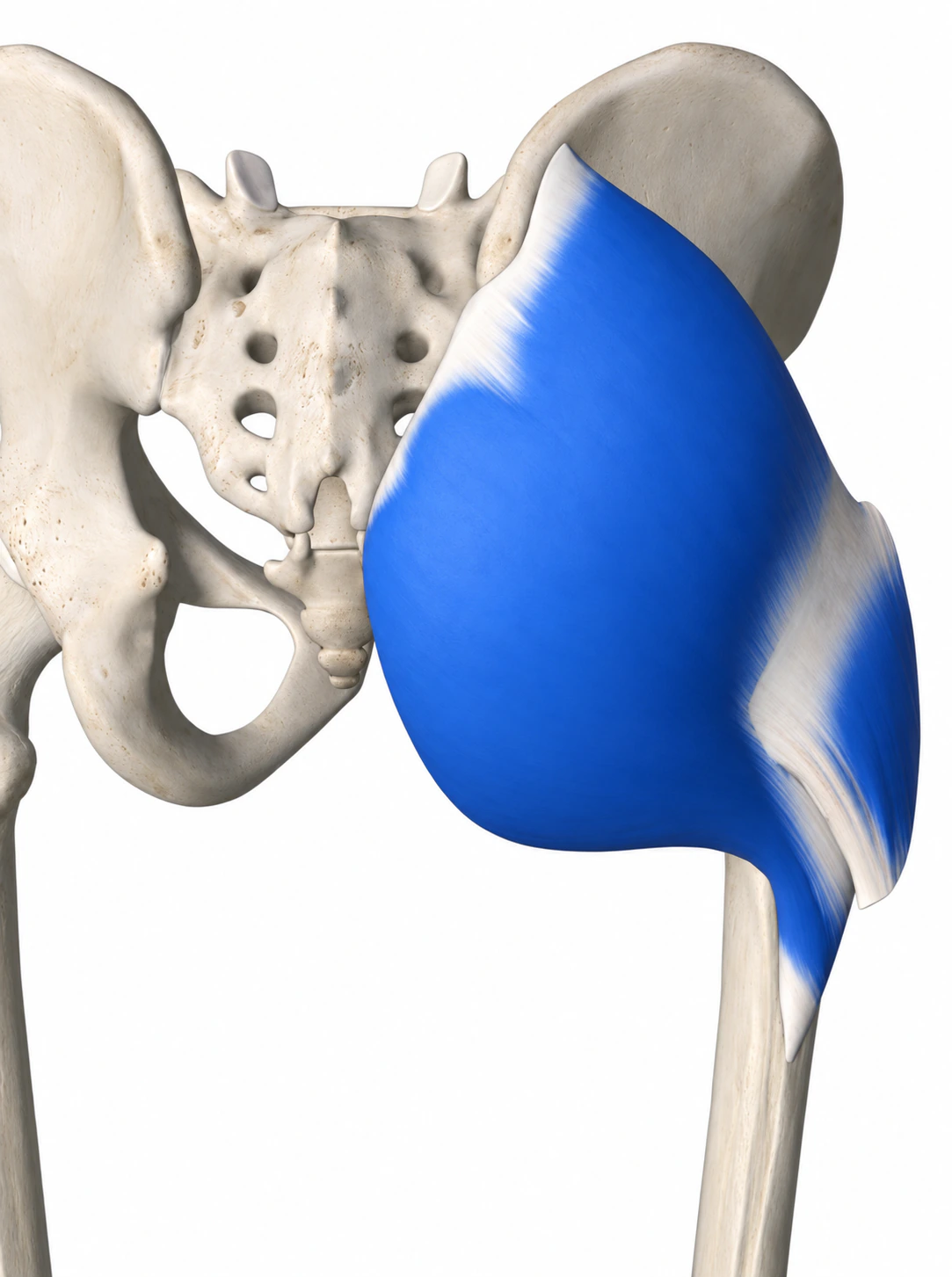
Gluteus Maximus
Assessing the main hip extensor while considering proximal hamstrings, lateral hip tendons, the lumbar spine and sitting-related pain.
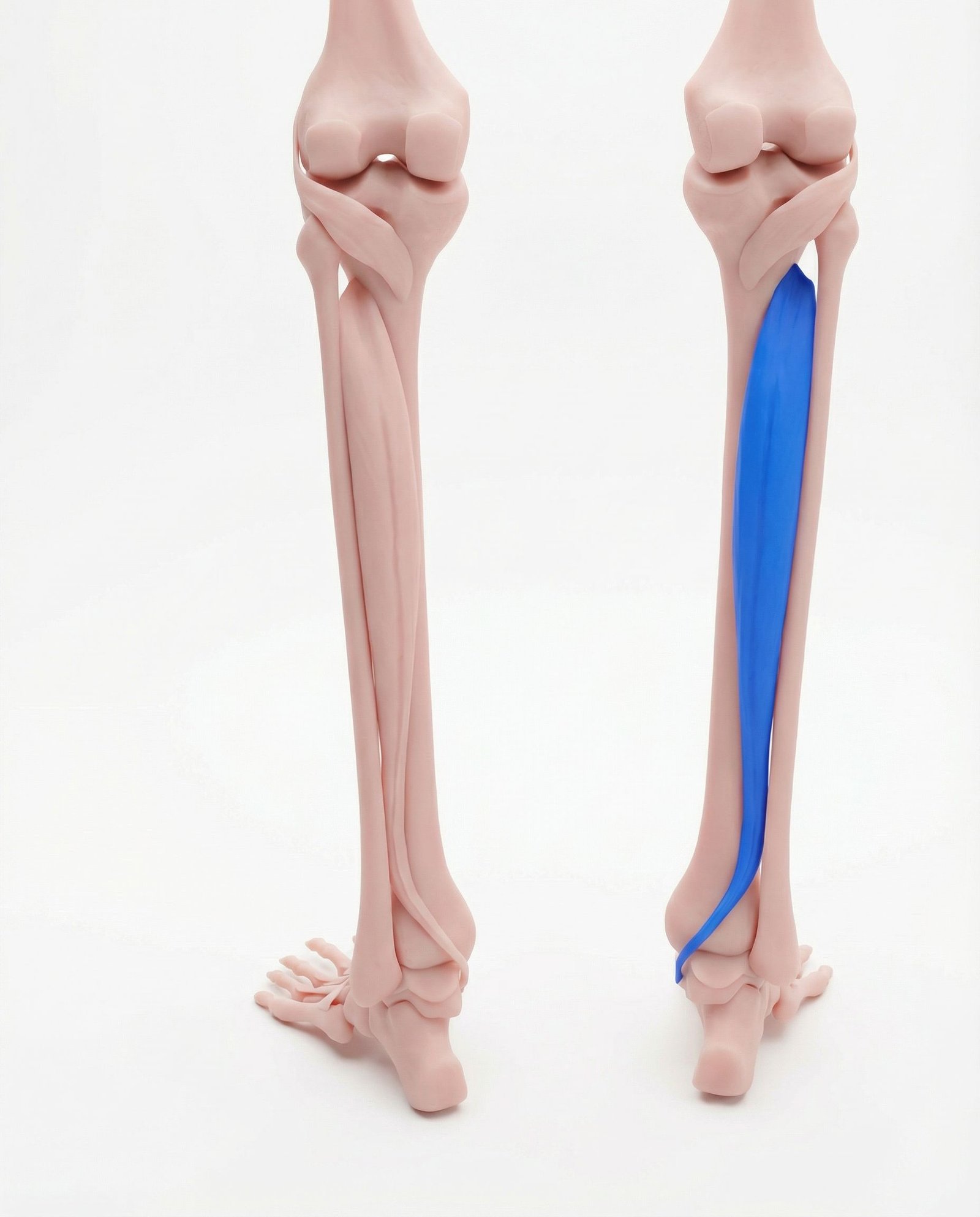
Tibialis posterior
Locate the familiar symptom, assess tendon and foot function, and build walking and heel-rise capacity with an appropriate level of support.
Looking for a specific muscle?
Browse all 119 muscles in the Atlas