Understanding the Temporalis
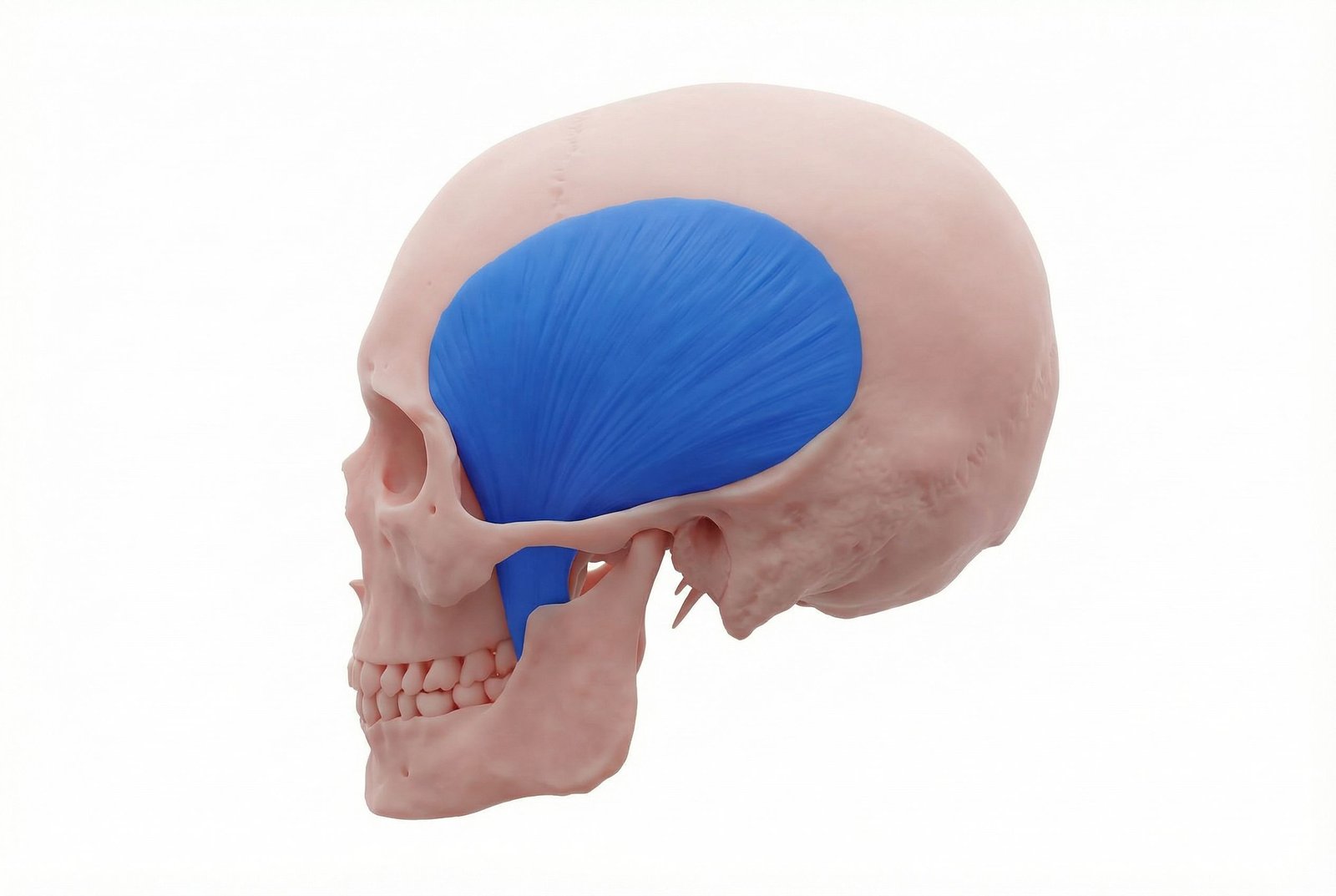
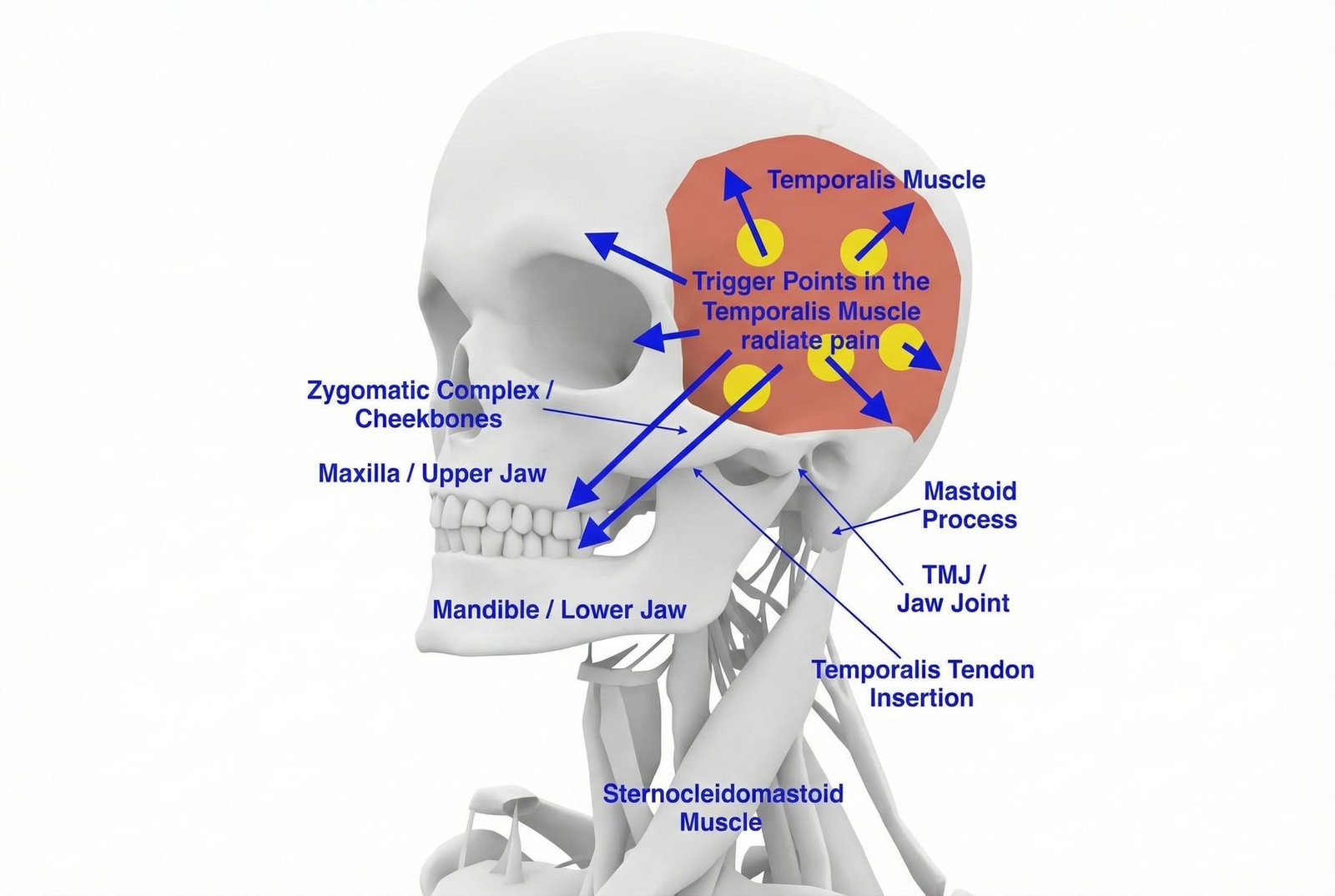
Temporalis Muscle Anatomy Lateral View of Skull
The temporalis is a large, flat, fan-shaped muscle filling the temporal fossa above the ear. It is one of the main jaw-closing muscles and works closely with the masseter during chewing and clenching.
Different regions of the temporalis contribute somewhat differently to jaw mechanics, which may help explain why patients describe different temple and tooth referral patterns depending on where the trigger point is located.
In practice, temporalis trigger points are strongly associated with bruxism, daytime clenching, TMJ dysfunction, stress-related jaw loading, and prolonged concentration tasks.
The clinical importance of the temporalis is not just headache. It can also create referral into the upper teeth, which is why persistent temple pain and unexplained upper-tooth ache often need to be considered together.
Anatomy & Trigger Points
The temporalis is broad, thin, and regionally organized. That makes it both clinically important and sometimes easy to overlook if the exam focuses only on the TMJ itself.
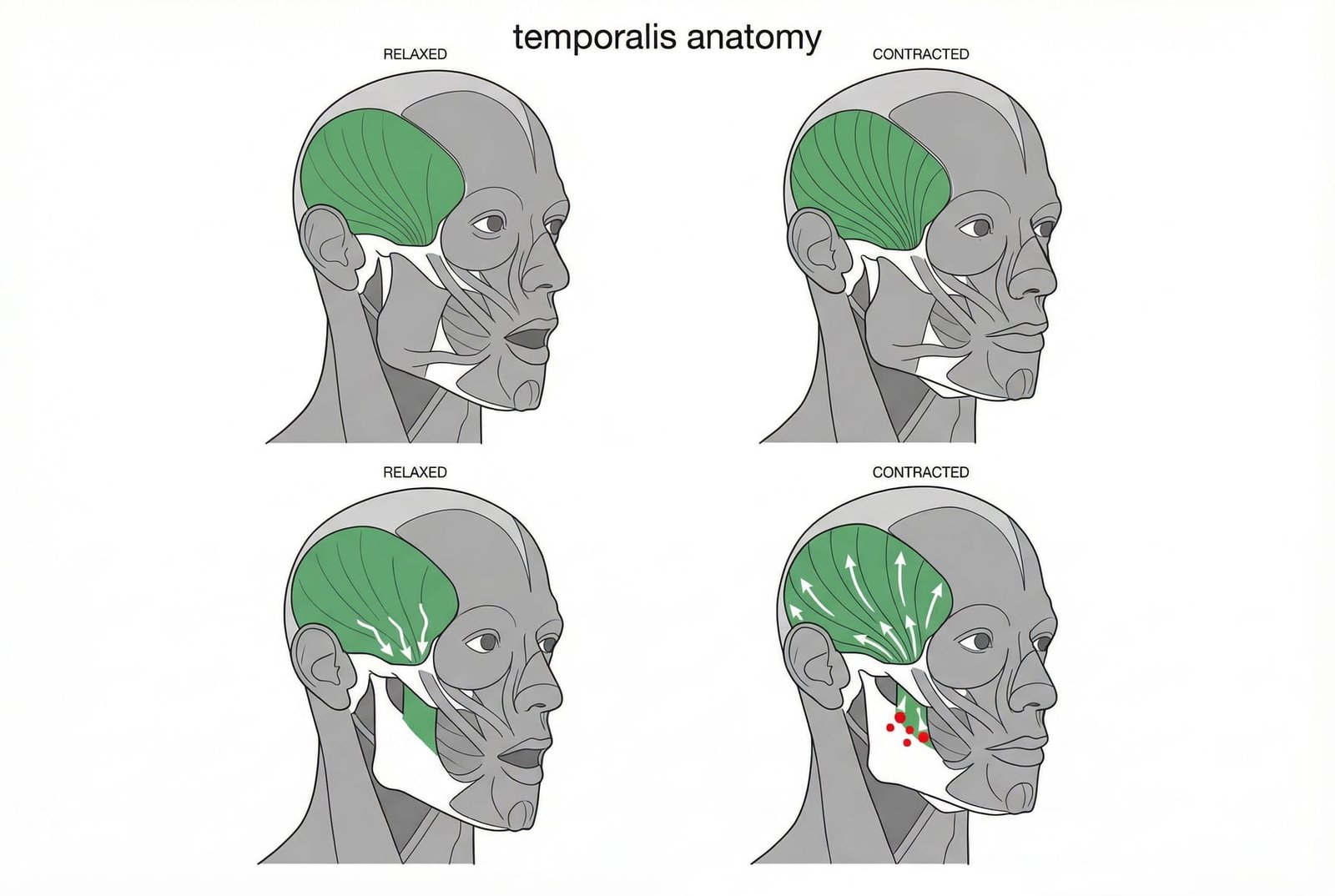
Temporalis Trigger Point Locations and Referral Zones
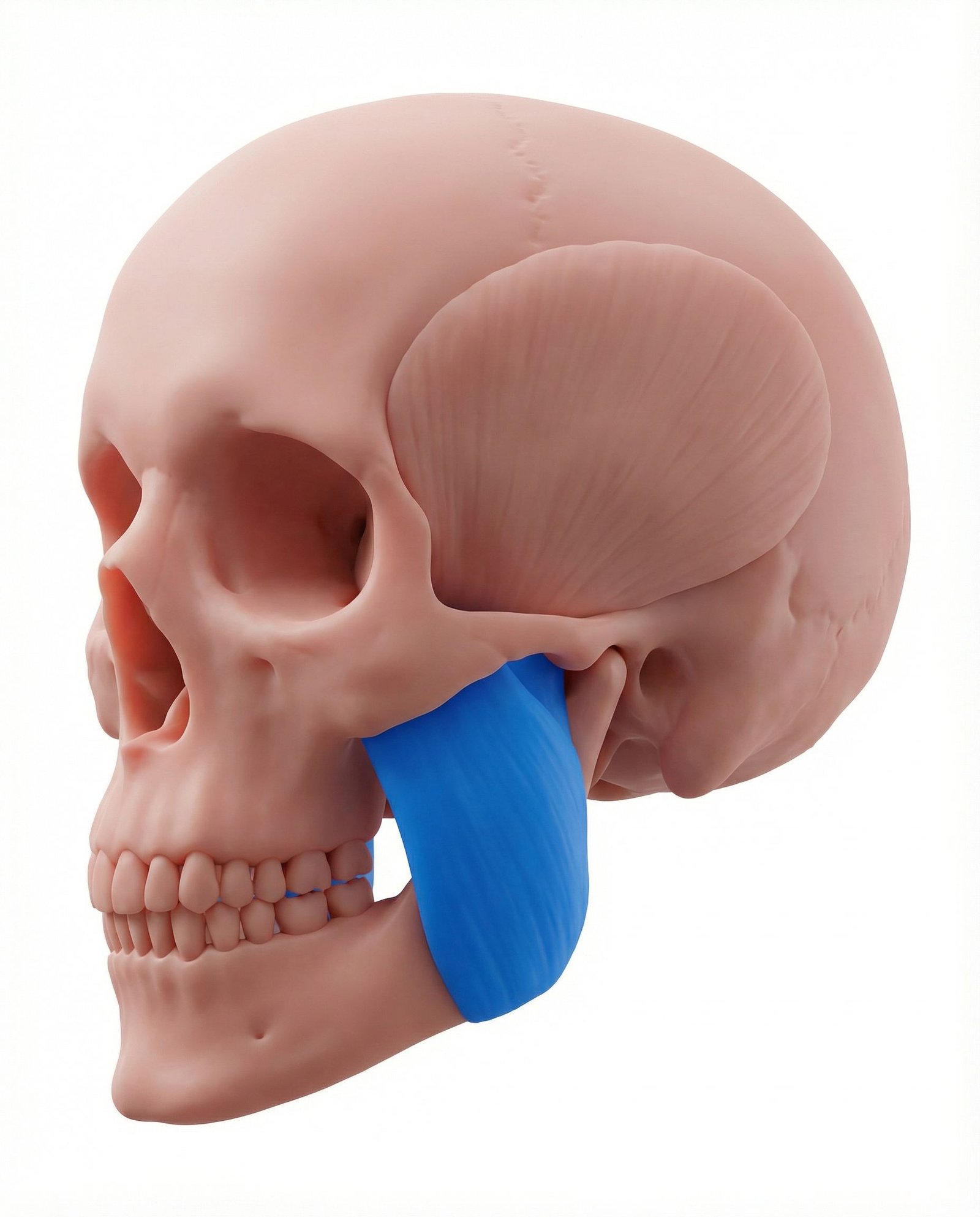
The masseter is the temporalis’s most important partner muscle. It may contribute to jaw pain, ear-area pain, and toothache-like referral into the molar region. In patients with bruxism or TMD, masseter and temporalis trigger points commonly coexist and together can create a broad facial pain pattern.
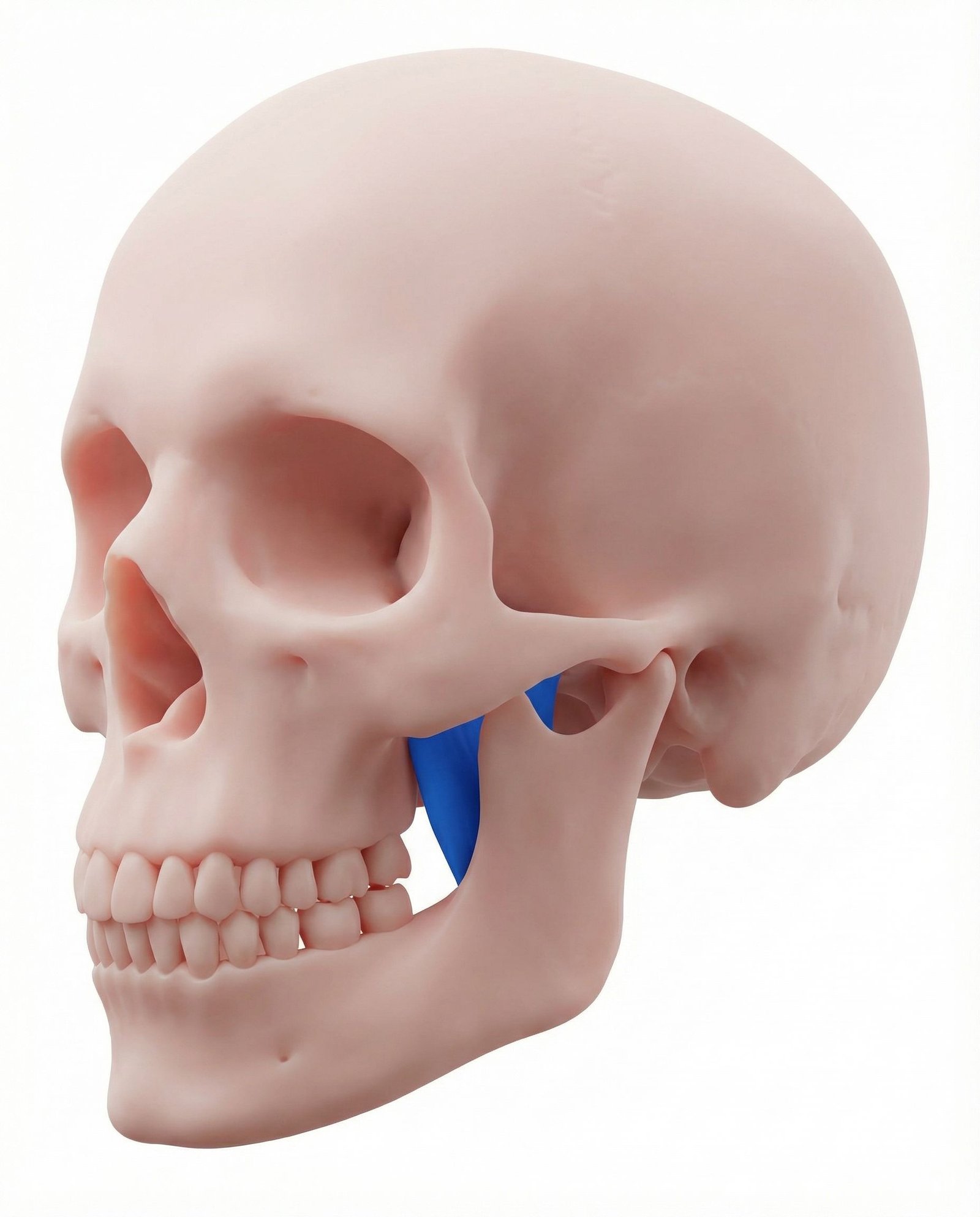
A deep jaw muscle on the inner side of the mandible. It can contribute to deep jaw pain, ear-area discomfort, throat-adjacent referral, and jaw stiffness, often in combination with temporalis and masseter overactivity.
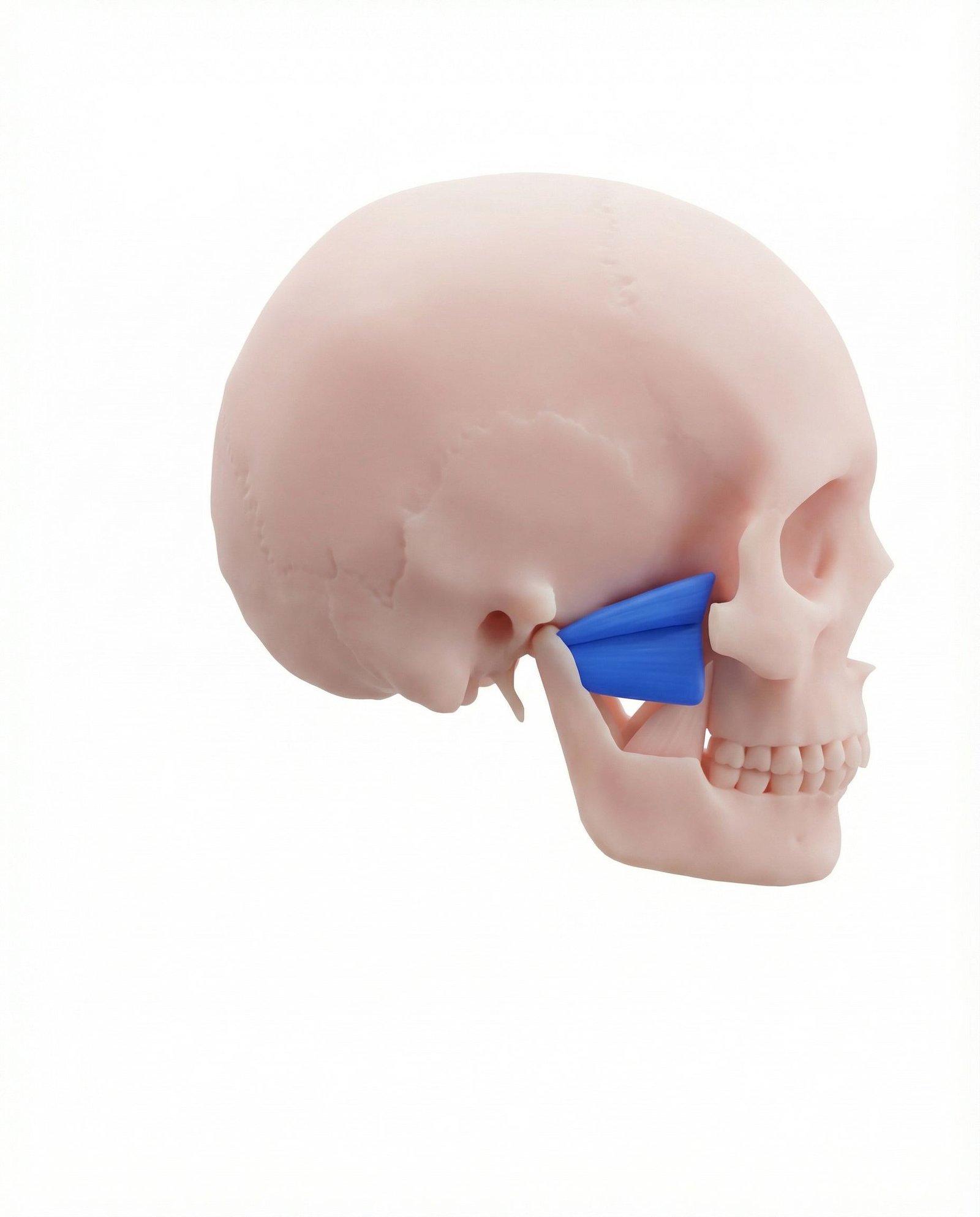
Often discussed in painful opening, clicking, and certain internal derangement patterns. It should be considered in the differential, but not treated as the sole explanation for every clicking or locking jaw.
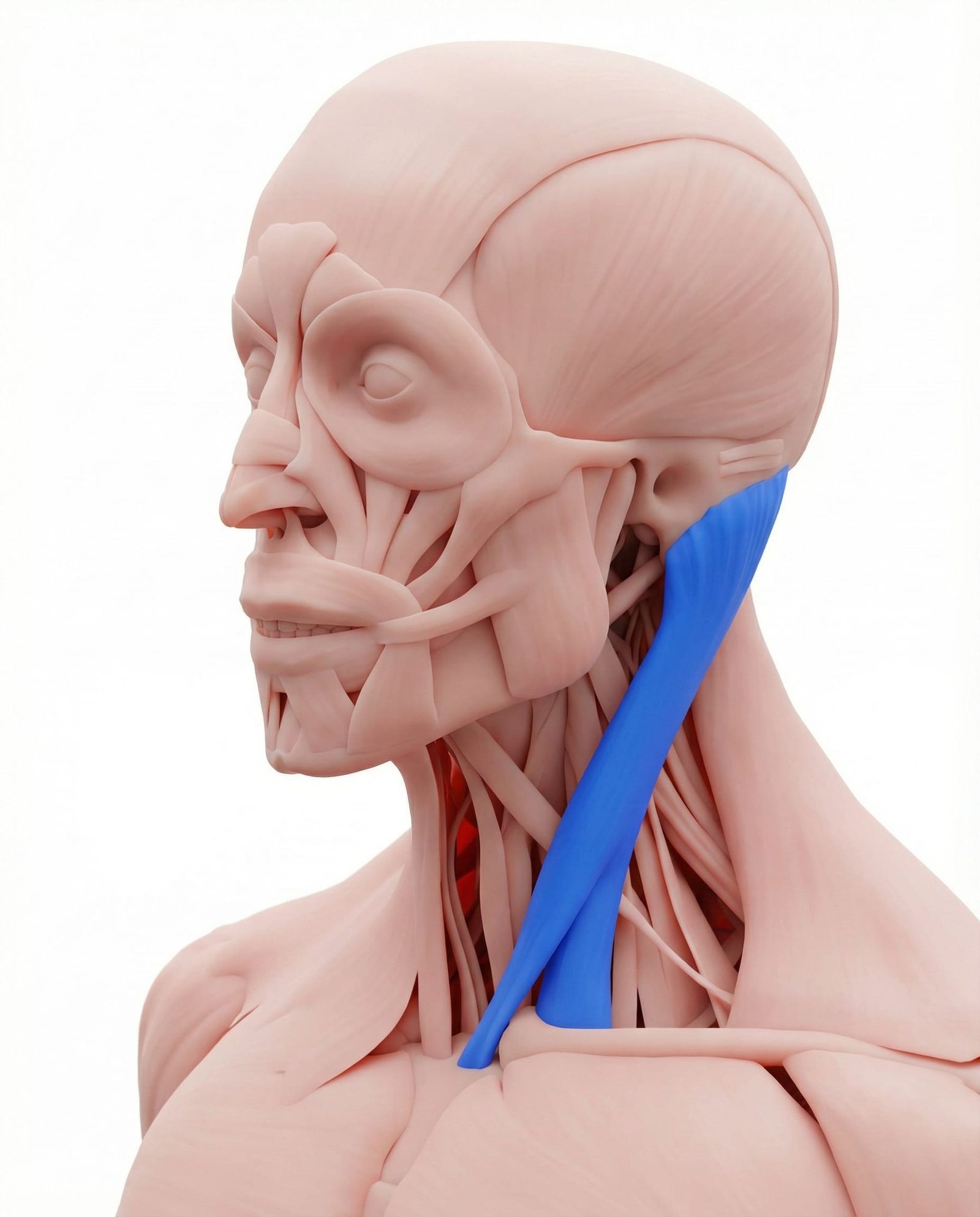
The SCM can refer into the face, forehead, ear, and temporal region. When temporalis pain overlaps with dizziness, ear symptoms, or broader cervical complaints, the SCM often deserves parallel assessment.
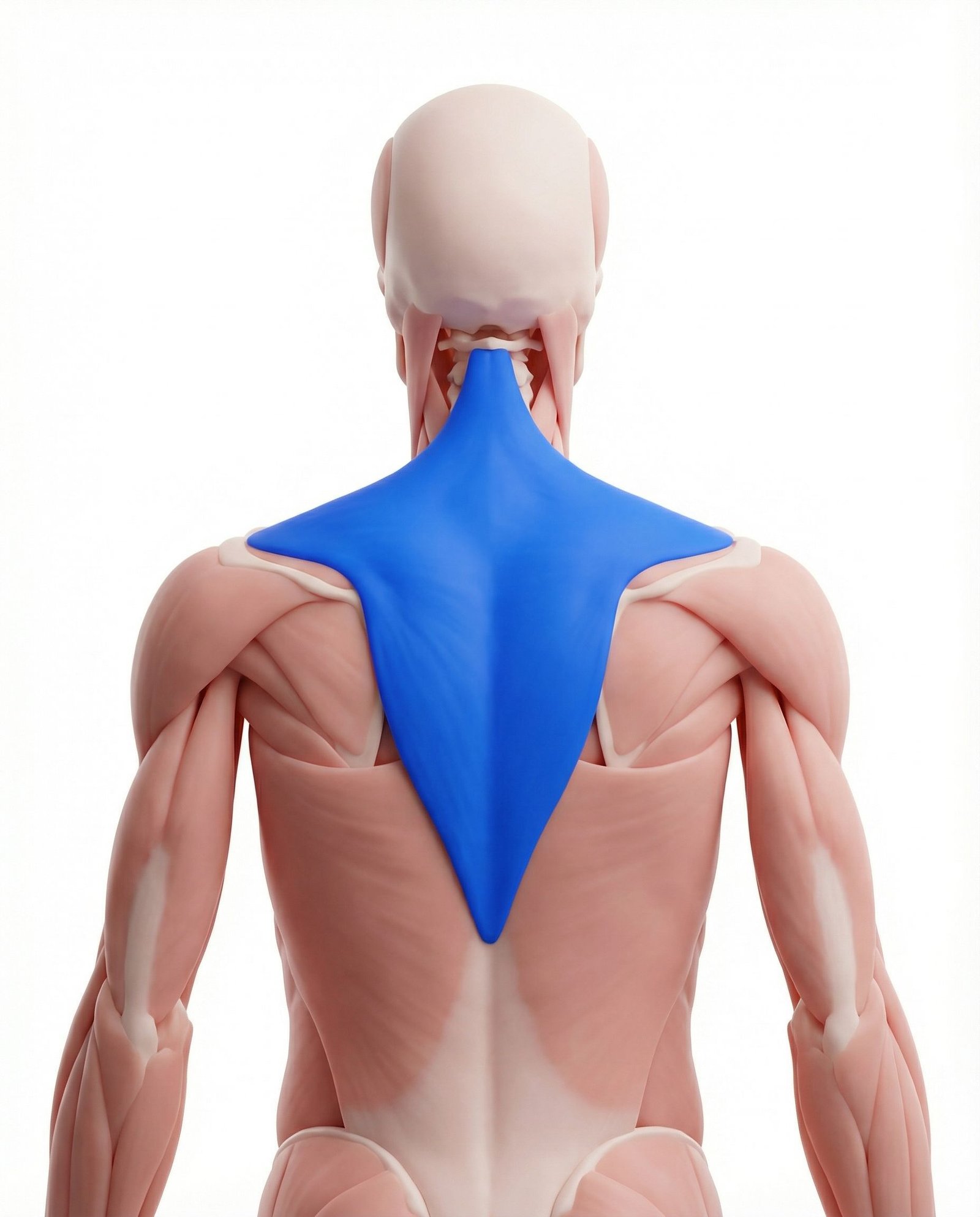
Upper trapezius can contribute to unilateral temporal headache patterns, especially when the pain begins more clearly in the neck and then wraps forward. It often coexists with temporalis symptoms in stress- and posture-driven cases.
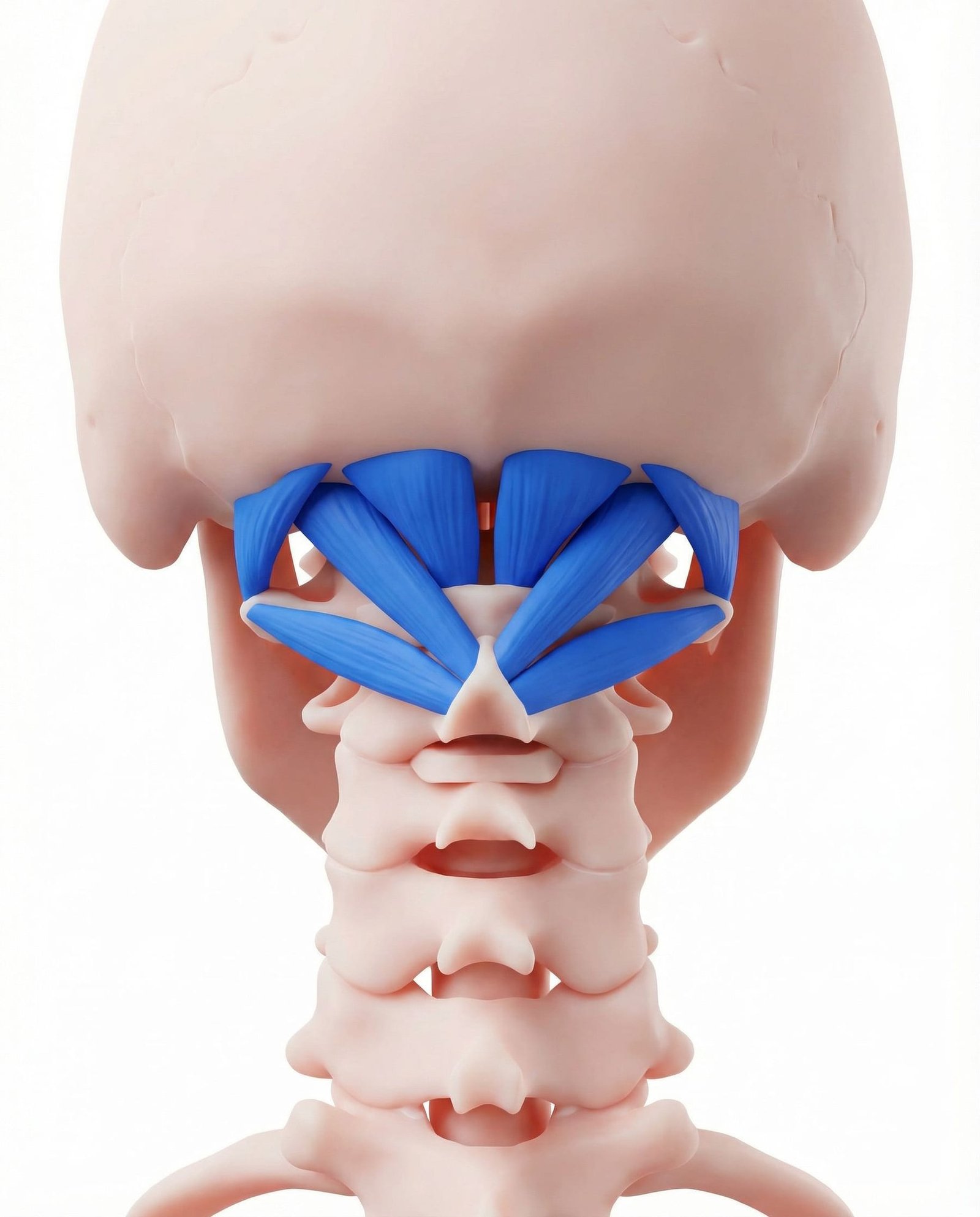
Suboccipital dysfunction commonly overlaps with temporalis-related temple pain in cervicogenic headache presentations. Together they can create a broader side-of-head pattern that feels both posterior and temporal rather than purely jaw-based.
Referral Patterns: The Headache & Toothache Signature
Temporalis trigger points most often contribute to temple headache, side-of-head ache, and upper-tooth referral. In some patients the referral is fairly localized; in others it feels broad and difficult to map clearly.
A useful practical clue is that the upper-tooth pain often feels diffuse or poorly localized and is more clearly reproduced by palpation of the muscle than by dental percussion.
When temple pain, jaw clenching, and unexplained upper-tooth ache travel together, the temporalis often belongs in the differential.
Temple
Upper Teeth
Jaw Clenching
Self-Assessment Tests
These tests help identify whether the temporalis is clinically relevant. They are most useful when they reproduce the patient’s familiar pattern rather than simply causing general discomfort.
Temporalis Palpation
Temporal fossa trigger point assessment
Jaw Opening Range
Active mandibular opening assessment
Clenching Provocation Test
Voluntary jaw-clenching symptom reproduction
Dental Differentiation Test
Tooth percussion vs muscular referral
Treatment Pathways
Temporalis treatment tends to work best when local release, clenching reduction, and jaw rehabilitation are combined rather than separated.
Temporalis Self-Massage Technique and Jaw Stretching Exercises
Jaw Habit Awareness & Modification
Jaw clenching is one of the most important perpetuating factors for temporalis trigger points. Many patients do it unconsciously during stress, concentration, or sleep. Awareness and habit change are often the foundation of durable treatment.
- Practice the relaxed jaw position: lips together, teeth apart
- Use visual reminders during work, driving, or screen time
- Reduce gum chewing and other repetitive jaw loading during active flares
- Notice whether stress consistently increases tooth contact or temple tension
- Consider splint therapy when a dental clinician believes it is appropriate
Temporalis Self-Massage & Release
The temporalis is accessible because it lies directly beneath the skin of the temporal fossa. That makes it one of the easier facial muscles for self-treatment when the patient is taught to be gentle and systematic rather than forceful.
- Use flat fingertip pressure rather than poking one tiny spot aggressively
- Work the muscle from anterior to posterior in a slow sequence
- Combine with a relaxed jaw rather than clenching while treating
- Use short regular sessions rather than one intense session
- Reassess headache or tooth referral afterward to judge whether it helped
Dry Needling: Temporalis Region
Dry needling in the temporalis region can be useful in selected cases and is often more straightforward anatomically than deeper masticatory muscles, but it still requires proper training and conservative judgment.
- Treat only when the temporalis is clearly clinically relevant
- Use region-specific placement guided by symptoms and anatomy
- Reassess headache, jaw pain, and tooth referral after treatment
- Combine with habit work and jaw rehabilitation rather than relying on needling alone
- Avoid overpromising rapid cure from a single intervention
TMJ Rehabilitation Protocol
When temporalis pain occurs in a broader TMD pattern, rehabilitation usually needs to address jaw opening control, clenching behavior, cervical posture, and coordination between the closing and opening muscles.
- Gentle jaw-opening control drills rather than forceful stretching
- Lateral-control and coordination exercises when deviation is present
- Isometric jaw stabilization in selected cases
- Postural correction when forward-head posture is clearly contributing
- Stress and sleep support when bruxism is part of the picture
Anterior Fibers
Often associated with brow / anterior temple pain and possible upper-incisor or canine referral.
Middle Fibers
Often associated with classic temple pain and possible premolar-region referral.
Posterior Fibers
May contribute to pain behind and above the ear and sometimes upper molar-area referral.
Combined Pattern
When several regions are active, the patient may describe a broad temporal headache with diffuse upper-tooth aching.
Red Flags — When to See a Doctor
Most temple and jaw pain is benign and mechanical, but vascular, infectious, dental, and neurological causes must still be screened for carefully.
Key Takeaways
The temporalis is a large fan-shaped jaw-closing muscle that commonly contributes to temple headache and upper-tooth referral.
Its symptoms often overlap with masseter, pterygoid, SCM, upper-trapezius, and suboccipital patterns rather than occurring in isolation.
Jaw clenching and bruxism are among the most important perpetuating factors, especially when stress and sleep problems are also present.
Upper-tooth referral from the temporalis can mimic dental pain, which is why the jaw muscles should be considered when dental findings are unclear.
The temporalis usually responds best when local treatment is paired with habit change, jaw rehabilitation, and broader management of stress and posture.
Temple pain is common, but it is not always benign — vascular, dental, infectious, and intracranial red flags still matter.