What Are Trigger Point Injections?
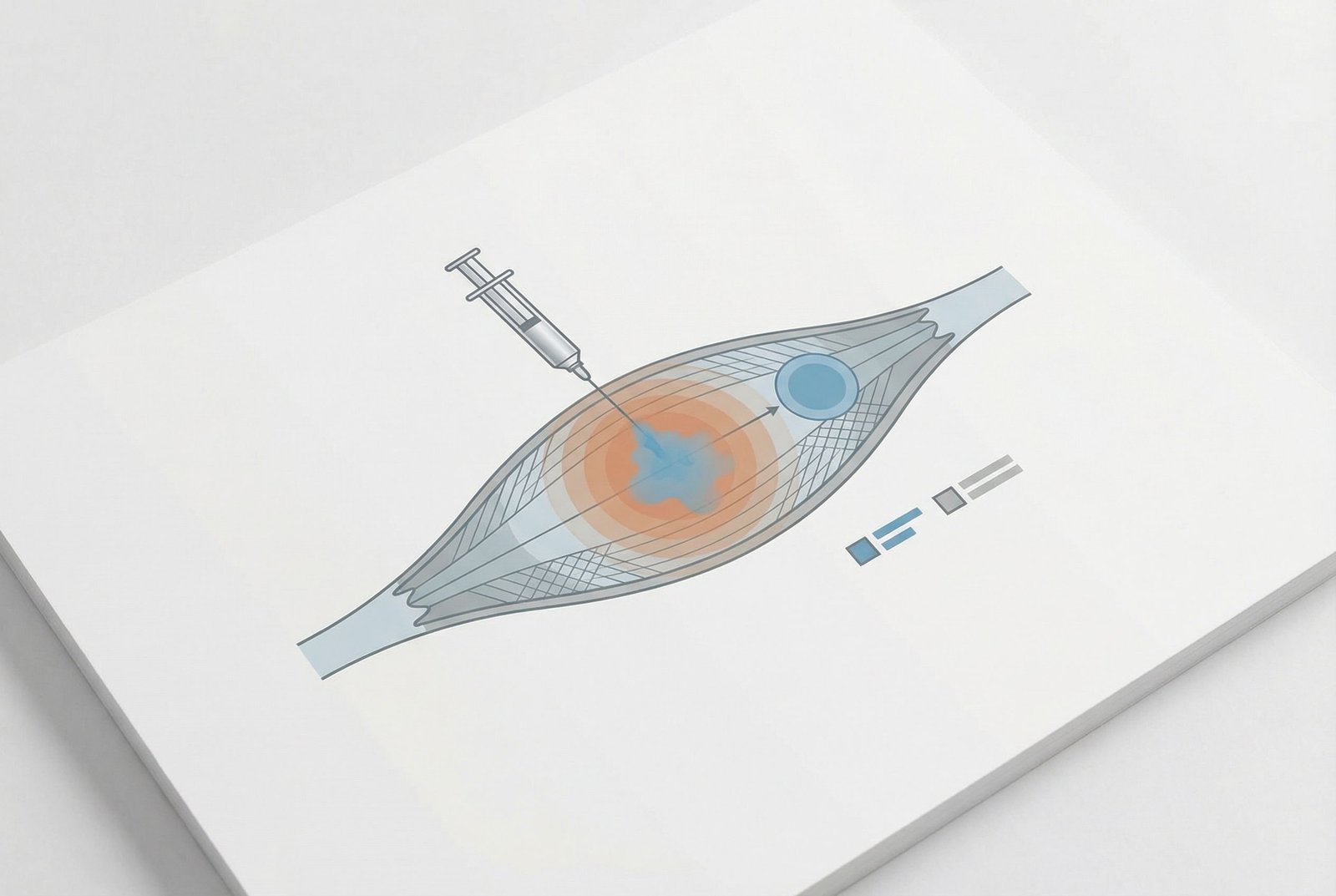
Trigger Point Injections Treatment
Overview DiagramTrigger point injections involve clinician-directed needle treatment of myofascial trigger points using a selected injectate. In practice, the procedure is used when a direct local intervention is needed and when more conservative approaches have not been enough or are not appropriate on their own.
The therapeutic effect may come from more than one source: the needle itself, the local medication effect, the immediate reduction in pain, and the opportunity to follow the procedure with movement or rehabilitation. The exact balance of those effects remains debated.
A useful response means easier daily activity as well as pain relief; repeat treatment depends on that response.
Some patients report short-term relief that can make movement or rehabilitation easier for a while. In a neck and shoulder trial, however, adding lidocaine injection to physical therapy did not improve pain more than physical therapy alone (PMID 26911981).
Types of Injectables
Local Anesthetics
Clinician-selected local anesthetic
Local anesthetic is often used to provide short-term pain relief and make the treated area less reactive immediately after the procedure. The exact balance between needle effect and medication effect remains debated, but immediate symptom reduction is one reason this option is used.
- Can provide short-term pain relief
- May reduce local pain enough to allow follow-up movement or stretching
- Commonly used in routine trigger point practice
- Generally familiar to pain and rehabilitation clinicians
Corticosteroid Addition Is Usually Unnecessary
Local anesthetic alone should be considered
A multisociety guideline led by ASRA Pain Medicine found minimal benefit from adding a corticosteroid to trigger-point injections (Benzon et al.; PMID 39019502), and steroid exposure carries its own risks. Persistent pain after a prior injection calls for reassessment; it does not establish an inflammatory indication for steroid.
- Minimal added benefit over local anesthetic alone
- Persistent symptoms require a review of diagnosis and treatment goals
- An unsuccessful earlier injection does not justify steroid escalation
- Joint, bursal and nerve injections follow their own condition-specific evidence
Normal Saline
Isotonic saline
Saline is sometimes used when the clinician wants to rely mainly on the mechanical needle effect and local fluid distribution rather than on a pharmacologically active local anesthetic.
- Avoids local anesthetic exposure
- Supports the idea that the needle effect itself may be important
- May be useful when a simpler injectate is preferred
- Avoids some medication-specific concerns
Botulinum Toxin
Botulinum toxin in selected cases
Botulinum toxin may be discussed for selected persistent conditions such as assessed piriformis syndrome, where a 56-person trial favored incobotulinumtoxinA plus physical therapy over saline plus physical therapy (Fishman et al., 2017; PMID 27935076). Neck and jaw trials disagree. Its muscle effects can persist without useful pain relief, so it does not have a universal duration advantage over local anesthetic.
- Pain-relief duration depends on diagnosis and response
- Sometimes considered in chronic refractory cases
- Prior brief relief does not predict toxin benefit
- Best reserved for carefully selected scenarios
Combination Injections
Clinician-selected combination approach
A combination injectate requires a specific indication supported by evidence. Adding medications has not established a routine advantage for focal muscle pain; avoid treating persistent symptoms as evidence that a stronger mixture is needed.
- Can be tailored to the clinical situation
- Each added drug needs its own indication and risk review
- Useful in selected rather than routine cases
- Reflects individualized decision-making rather than one-size-fits-all care
Mechanism of Action
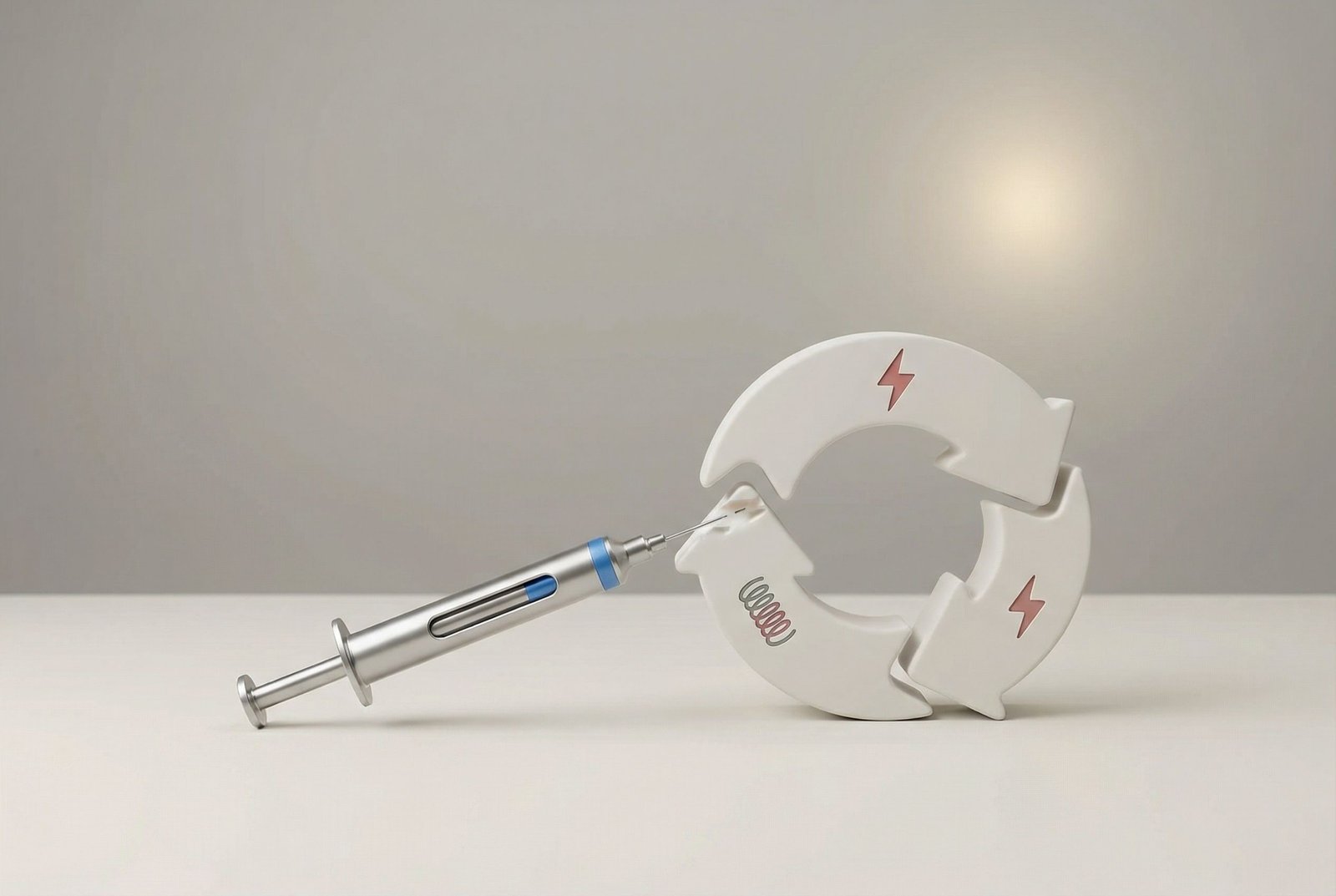
Mechanism of Action
Mechanism DiagramMechanical Effects
- Local needle stimulation may disrupt trigger point irritability
- The procedure may reduce local guarding in a targeted region
- Familiar pain during needle placement is an observation, not confirmation of the diagnosis
- A useful short-term treatment window may follow the procedure
Pharmacological Effects
- A local anesthetic may provide short-term symptom reduction
- Selected injectates may change local tissue irritability in different ways
- Medication choice depends on clinician judgment and the presentation
- The injectate should support the treatment goal, not replace diagnosis
The Procedure

The Procedure
Step-by-Step IllustrationClinical Identification
Preparation and Safety Check
Needle Placement
Confirmation of Relevant Response
Injection
Immediate Reassessment
What to Expect
During Treatment
- A brief sharp sensation may be felt during needle placement
- The familiar pain pattern may be momentarily reproduced
- A local twitch or local response may occur in some cases
- The experience varies depending on the muscle, region, and injectate used
After Treatment
- Short-term soreness is common after the procedure
- The next step is usually guided movement, stretching, or rehabilitation rather than complete inactivity
- The response should be judged by symptom change and function over time, not just by the procedure itself
- Unexpected worsening or signs of complication require follow-up
Evidence by Condition
Focal Upper-Trapezius Myofascial Pain
Assessed Persistent Piriformis Syndrome
Chronic Axial Neck or Back Pain
Chronic Painful TMD
Headache With Neck or Temple Tenderness
Persistent Pain After an Earlier Procedure
Evidence Base
A local-anesthetic injection may provide short-term relief in selected focal muscle pain. In an 80-person upper-trapezius trial (Tantanatip et al., 2021; PMID 34179755), lidocaine TPI relieved pain faster than saline interfascial injection at 10 minutes but had no advantage at 2 or 4 weeks. Injection planes and techniques also differed.
Lugo et al. (2016; PMID 26911981) compared physiotherapy, lidocaine injection and both in 127 people with neck/shoulder MPS and found no additional pain benefit from combining them at 1 or 3 months. For chronic axial neck/back pain, the 2025 BMJ guideline strongly recommends against intramuscular local-anesthetic injections with or without steroid (Busse et al.; PMID 39971339).
For piriformis syndrome, a small 2015 trial randomized 50 patients and analyzed the 47 whose pain fell by at least half after the injection; adding steroid gave no extra benefit at 1 week, 1 month or 3 months (Misirlioglu et al.; PMID 25794202). It lacked sham and used response-based diagnostic selection. For chronic painful TMD, the 2023 BMJ guideline conditionally recommends against routine TPI and toxin (Busse et al.; PMID 38101929).
Choosing Between Injection and Dry Needling
A short-term analgesic goal
A diagnosis-specific evidence discussion
Medication and procedure preferences
An agreed reassessment point
Risks & Complications
Local Anesthetic
Often used when short-term pain reduction is desired after a clearly targeted trigger point procedure.
Needle Effect
A substantial part of the benefit may come from local needle stimulation rather than the injectate alone.
Avoid Routine Steroid Addition
A multisociety guideline found minimal benefit from adding corticosteroid to trigger-point injection.
Botulinum Toxin
Reserved for selected refractory presentations rather than routine first-line use.