Foam Rolling Tools
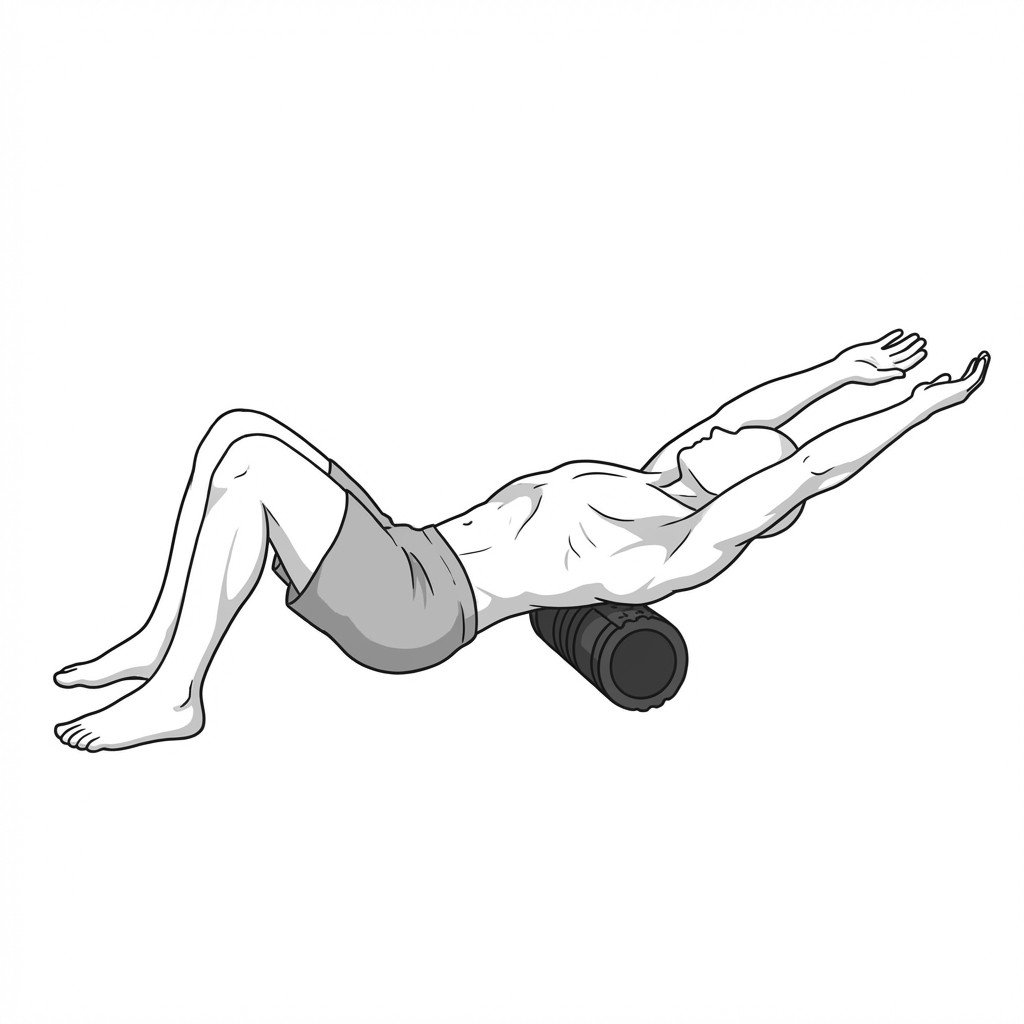
Step-by-Step Instructions
- Select the right tool for the area: foam roller for large muscle groups (quads, hamstrings, IT band, thoracic spine, lats); lacrosse ball or tennis ball for targeted trigger-point work (glutes, piriformis, plantar fascia, upper trapezius); peanut ball for paraspinal muscles alongside the spine.
- For the foam roller: position the target muscle on the roller and use your arms or other leg to control how much body weight loads the tissue — start with less weight and increase only as tolerated.
- For ball work against a wall: stand with the ball between the muscle and the wall and lean in to control pressure; this gives better control than floor-based work for upper-body regions.
- Move slowly along the muscle until you find a tender spot, then hold for 60–90 seconds while breathing slowly — the evidence-based minimum for meaningful trigger-point deactivation.
- Aim for 4–7 out of 10 discomfort: below 4 the stimulus is too light; above 7 the body guards against the pressure, which works against the release goal.
- Never roll directly on the lumbar spine with a foam roller — use a lacrosse ball against a wall or a peanut ball beside the spine for lower-back muscles.
- Finish each session with a brief period of gentle movement or stretching in the treated region to help the body integrate the newly available range.
Why It Works
Sustained pressure (60–90 seconds) stimulates Golgi tendon organs and mechanoreceptors, triggering a neurological reflex that reduces muscle tone — this is why brief, rapid rolling is less effective than slow, deliberate technique.
Foam rolling also transiently improves local blood flow and reduces delayed-onset muscle soreness, making it useful both before activity (to improve readiness) and after (to support recovery).
Clinical Precautions
Avoid rolling over acute inflammation, open wounds, suspected fractures, or areas with known deep vein thrombosis risk. If you experience sharp, shooting, or electrical-type pain during rolling, reposition the tool or reduce pressure immediately.