What Is Manual Therapy for Trigger Points?
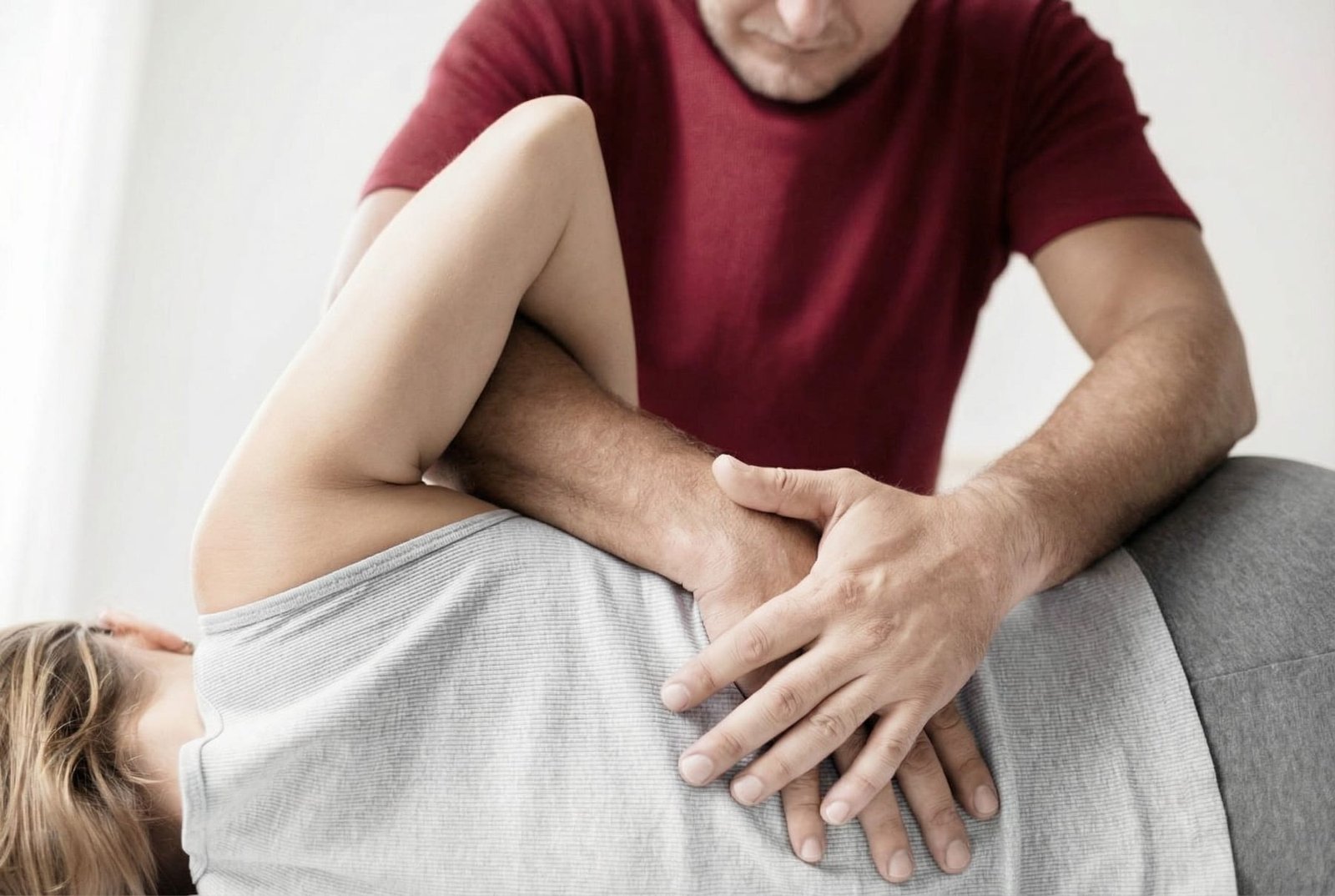
Manual Therapy
Overview IllustrationManual therapy uses hands-on contact or assisted movement to address an assessed pain or movement problem. Techniques include sustained pressure, regional massage, soft-tissue mobilization and selected joint mobilization. The treatment target might be easier chewing, fewer headache days, more comfortable sitting or better walking.
The clearest indications depend on the diagnosis. A guideline recommends manual pressure and assisted jaw mobilization for chronic painful temporomandibular disorders. Trials also support selected regional programs for bladder pain with pelvic-floor tenderness, nonspecific chronic low-back pain and plantar heel pain.
Choose the technique after examination and agree a tolerable dose. External jaw work can target familiar masseter or temporalis tenderness; clinician-assisted jaw movement may address a measured restriction. For plantar heel pain, calf pressure and stroking have been studied alongside stretching.
Manual Therapy Techniques
The names below describe different approaches, with different levels of supporting evidence. Ask which diagnosis the technique addresses, what will be measured and how the plan will change if relief is brief.
The useful result is an activity becoming easier: turning your head, chewing a meal, sitting comfortably or walking farther.
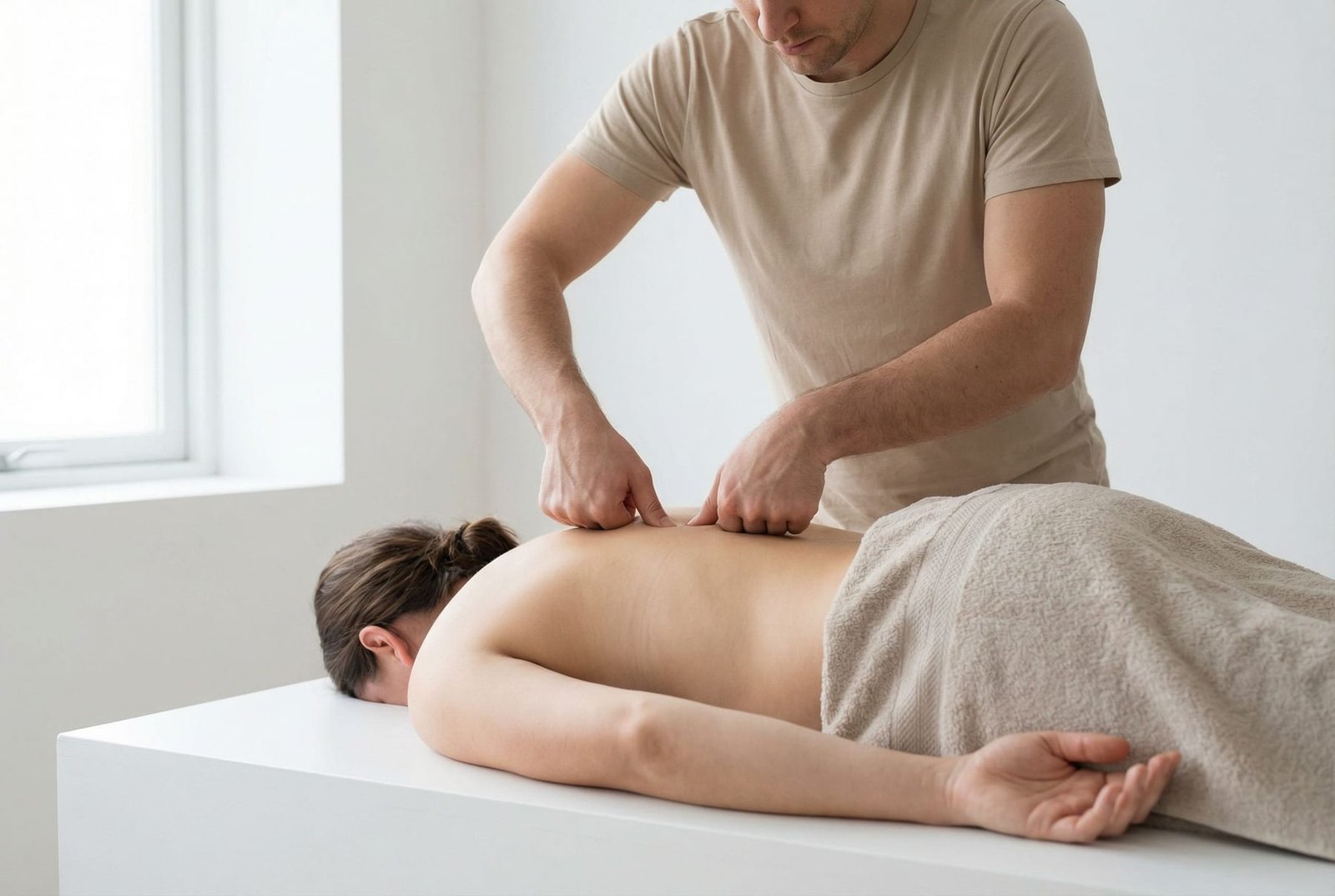
Manual Therapy Techniques
Step-by-Step IllustrationSustained Trigger-Point Pressure
Mechanism
Sustained pressure provides a sensory stimulus that may change pain sensitivity or movement tolerance.
Technique
With the painful region supported, the clinician examines familiar tenderness and gradually applies pressure within agreed tolerance. Adjust or stop pressure according to feedback, then repeat a relevant movement. A neck/shoulder trial used four weekly visits; its registered protocol described about 60 seconds at each of four selected sites. Adapt duration and further visits to the response.
Evidence
A trial of 42 female office workers found no significant difference between manual pressure and dry needling. Both groups improved neck disability after four treatments and at three months. Sites were mainly trapezius and levator scapulae. With no sham group, the trial cannot establish the specific effect of pressure or prove the two treatments equivalent.
Myofascial Release (MFR)
Mechanism
Myofascial release describes sustained contact and movement of soft tissues. The intended effects are greater comfort and easier movement.
Technique
The clinician selects gentle sustained contact, pressure or soft-tissue movement for a defined symptom and functional goal. In pelvic-health care, a studied program combined external pelvic, hip and abdominal work with internal techniques. Internal examination or treatment requires a trained clinician and explicit ongoing consent; it can be declined or stopped at any time.
Evidence
In 81 women with bladder-pain syndrome and pelvic-floor tenderness, targeted myofascial physiotherapy produced 59% global responders versus 26% with global massage at 12 weeks. Separate pain, urgency and frequency changes did not significantly differ. The results apply to the combined internal/external regional program; isolated-muscle effects and equivalence of external-only treatment remain uncertain.
Deep Tissue Massage
Mechanism
Massage varies in pressure and contact. Its effects may include relaxation and a temporary change in pain or movement tolerance.
Technique
The therapist can use slow gliding, kneading or sustained contact over an examined symptomatic region, with the body comfortably supported. Agree the pressure before treatment and adjust it throughout. Repeat a practical task, such as walking or bending, to see whether relief improves function.
Evidence
In a trial with 401 analyzed participants with nonspecific chronic low-back pain, ten weekly sessions of relaxation or structural massage improved disability at ten weeks compared with usual care. Structural massage was not meaningfully better. Functional differences were smaller at 26 weeks, and symptom differences were not significant at 26 or 52 weeks.
Spray and Stretch (Travell Technique)
Mechanism
Spray and stretch combines a skin-cooling stimulus with gentle passive movement to make stretching more comfortable.
Technique
A trained clinician uses a suitable vapocoolant according to its product instructions, then moves the muscle through a comfortable stretch. Protect the skin and eyes, keep the stretch gentle and stop if cooling or movement increases pain.
Evidence
In 70 healthy volunteers with a latent upper-trapezius trigger point, spray and stretch after dry needling reduced soreness more than no additional treatment immediately afterward. The difference was absent from six hours onward during 72-hour follow-up. This trial examined postneedling soreness rather than ongoing myofascial pain. PMID 24928191.
PubMed 24928191Strain-Counterstrain (Jones Technique)
Mechanism
Strain-counterstrain places a body region in a comfortable position while tenderness and movement tolerance are monitored.
Technique
The clinician supports the body part in a position the patient finds comfortable, then returns it slowly to neutral. Check whether an important movement is easier afterward. Stop if the position produces numbness, dizziness or increasing pain.
Evidence
In a sham-controlled trial of 61 adults with neck pain and restricted cervical movement, one strain-counterstrain treatment produced no significant advantage over sham for immediate mobility or pain. That single-session trial did not assess a longer treatment course. PMID 23374199.
PubMed 23374199Muscle Energy Techniques (MET)
Mechanism
Muscle energy techniques use a light voluntary contraction against resistance, followed by relaxation and comfortable movement. The aim is to make the next movement easier to tolerate.
Technique
The patient makes a gentle, pain-limited contraction against the clinician’s resistance, relaxes, and moves through the available comfortable range. Adjust repetitions to tolerance and recheck the movement afterward.
Evidence
A trial of 45 women aged 18–30 with upper-trapezius-related neck pain compared MET, manual pressure and a control group. All groups received postural advice and home exercises. Pain, tenderness, disability and rotation improved in all groups through day 15, with no significant between-group differences. PMID 30588067.
PubMed 30588067Positional Release Therapy
Mechanism
Positional release overlaps with strain-counterstrain, using supported positioning to improve comfort before returning to movement.
Technique
The clinician supports the symptomatic region in an agreed comfortable position, monitors feedback and returns it slowly to neutral. Reassess the movement or activity that prompted treatment.
Evidence
A trial of 60 otherwise healthy adults with upper-trapezius pain and a trigger point compared positional release with therapeutic massage. Both groups reported less pain, with no significant between-group difference; assessment extended to 48 hours. Longer-term benefit was not assessed. PMID 34776151.
PubMed 34776151Sustained Pressure
Tolerable pressure at examined symptomatic sites, followed by a check of a relevant movement.
Jaw Mobilization
Therapist-assisted movement for an assessed jaw restriction within chronic painful TMD care.
Regional Massage
Comfortable contact over a symptomatic region, with disability and activity reassessment.
Calf Manual Care
Calf pressure and stroking alongside stretching for an assessed plantar-heel-pain presentation.
What the Studies Actually Tested
The studies below tested defined clinical presentations. Neck/shoulder pressure treatment used several muscle sites; lumbar massage was regional; pelvic physiotherapy combined internal and external techniques. Their findings apply to those treatment programs and populations. Muscle-specific effects and results from other protocols remain uncertain.
The plantar-heel-pain trial reported outcomes at one month, while the low-back-pain trial found no significant symptom difference at 26 or 52 weeks. In a separate 200-person cervicogenic-headache trial, manual care or low-load exercise improved headache outcomes through 12 months; combining them was not statistically superior. The manual program allowed both mobilization and high-velocity techniques, and isolated suboccipital massage was not studied (Jull et al., 2002; PMID 12221344).
PubMed 12221344De Meulemeester et al. (2017)
Busse et al. (2023)
FitzGerald et al. (2012)
Cherkin et al. (2011)
Renan-Ordine et al. (2011)
Chronic Jaw Pain
Pelvic Global Response
Function at Ten Weeks
Planning and Reviewing Treatment
A treatment plan needs a diagnosis, an agreed technique and a review point. Use the sequence below to choose treatment and adjust it according to the measured response.
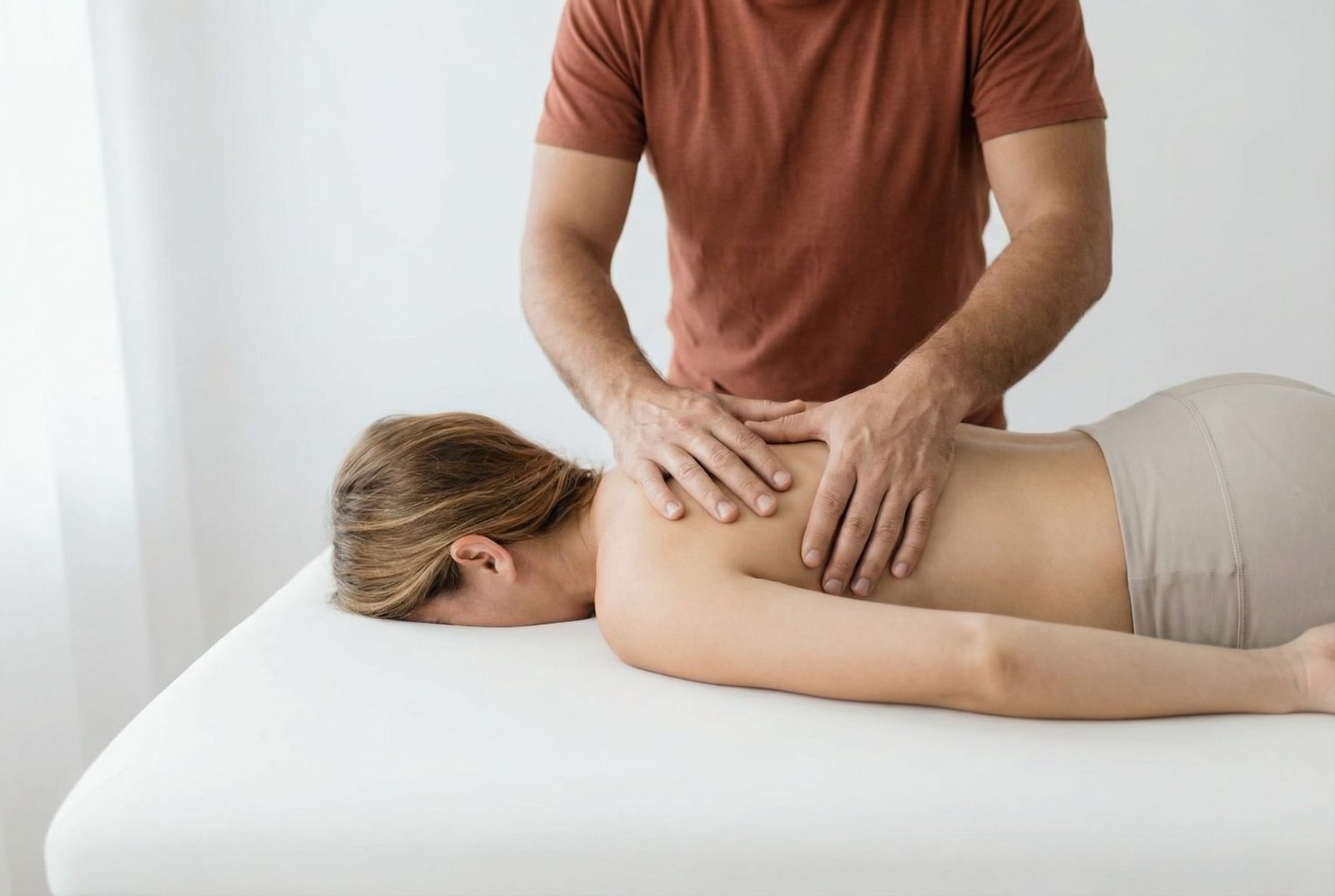
Treatment Protocol
Step-by-Step IllustrationStep 1: Assess and Agree a Target
Identify the relevant diagnosis and an activity the patient wants to improve. Record symptoms and function, explain the proposed contact and agree its limits.
Step 2: Test an Indicated Technique
Choose a technique supported for the presentation, use an agreed tolerable dose and repeat the baseline task. Adjust pressure, duration and the treated area according to feedback and the measured response.
Step 3: Check Carryover
Check whether easier movement lasts into daily activity. Review a relevant measure such as headache days, comfortable jaw opening, walking tolerance or a disability score. Use any improvement to support the active plan chosen for that diagnosis.
Step 4: Discharge or Reassess
End the course when its goals are met or benefit is insufficient. Agree what the patient can manage independently, how to respond to a flare and which changes need clinical review.
When Manual Therapy Alone Is Not Enough
Brief relief followed by returning pain warrants a review of the diagnosis, treatment effect and expectations. Compare symptoms and daily activity with the baseline before choosing the next step.
Review activities, sleep, stress and other health concerns when they fit the history. Adjust a task that reliably aggravates symptoms and arrange assessment or treatment for a relevant medical concern.
Persistent pain may need a broader plan with graded activity, sleep support, psychological care or medication review, chosen for the individual presentation. New weakness, unexplained swelling, systemic symptoms or a marked change in pain need clinical reassessment before further local treatment.
Areas to Review When Relevant
Mechanical
- Sustained tasks that reliably aggravate symptoms
- Workstation changes worth testing for comfort
- A recent increase in repetitive work or training load
- Movements that are difficult because of pain or weakness
- Limited opportunities to change position or move
- Sleep positions or activities linked to the individual’s symptoms
Medical Review When Indicated
- New neurological symptoms or unexplained weakness
- Recent trauma or a suspected acute tissue injury
- Systemic symptoms that need assessment
- Medication effects relevant to the clinical history
- Possible deficiency or endocrine disease when history and examination support testing
- Known medical conditions that change the treatment plan
Psychological
- Chronic stress and anxiety
- Depression or low mood
- Poor sleep quality
- Worry about movement or avoidance that limits daily activity
Finding a Qualified Therapist
Choose someone trained for the body region and diagnosis, who explains the proposed contact, respects consent and measures your progress. Professional titles and scope vary by country; pelvic and intraoral techniques need specific training.
Physical Therapist (PT / DPT)
- Physical therapists can combine manual care with exercise, movement practice and rehabilitation. Ask about training for your diagnosis, the proposed technique and how progress will be measured.
- Relevant credentials: DPT, OCS, FAAOMPT, and other manual therapy training may be relevant
Osteopathic Physician (DO)
- Osteopathic physicians who actively practice osteopathic manipulative treatment may use strain-counterstrain, muscle energy, and myofascial techniques within a broader medical framework. Their medical training may be useful when pain overlaps with other health problems, although evidence for specific osteopathic techniques in myofascial pain is limited.
- Relevant credentials: DO, NMM/OMM-related training where applicable
Chiropractor (DC)
- Some chiropractors use soft-tissue methods alongside spinal or regional manual treatment. Look for training relevant to your symptoms, clear consent and a plan to reassess activity and function.
- Relevant credentials: DC plus specific soft tissue or rehabilitation training may be relevant
Licensed Massage Therapist (LMT)
- Massage therapists can offer relaxation or focused regional techniques within their training and scope. Look for clear consent, pressure adjustments and reassessment of the goals that matter to you.
- Relevant credentials: Clinical massage, neuromuscular therapy, or myofascial training may be useful indicators
Questions to Ask a Potential Therapist
Do you have specific training in trigger point or myofascial pain treatment?
Do you combine hands-on treatment with exercise and self-management instruction?
How do you decide which manual techniques to use?
How do you assess other possible causes of this pain?
How do you measure whether treatment is actually helping?
What is your plan if manual therapy helps only temporarily?
How Manual Therapy Compares
Manual Therapy
Dry Needling
TENS
Exercise Therapy
Match treatment to the diagnosis
Chronic jaw pain, bladder pain with pelvic tenderness, nonspecific low-back pain and plantar heel pain have different studied manual approaches. Choose treatment after examining the symptoms and relevant movement.
Agree the contact and pressure
Keep treatment within agreed tolerance and adjust it using feedback. Internal pelvic or intraoral techniques need specific training and explicit consent.
Measure a meaningful activity
Track comfortable opening, headache days, sitting or walking as appropriate. Recheck how symptoms affect daily function between visits.
Keep the wider care plan
Continue indicated exercise, self-management and medical care. Coordinate pelvic manual treatment with assessment and management of bladder or other pelvic symptoms.
Use a defined review point
Use study schedules as reference doses. Review the chosen goal before extending treatment, and agree a plan for independent activity and future flares.
Reassess limited benefit
Short-lived relief can justify changing the plan. Persistent worsening or new neurological, vascular or systemic symptoms require assessment before further local treatment.