How Sleep Position Perpetuates Trigger Points
Sleep Position & MPS
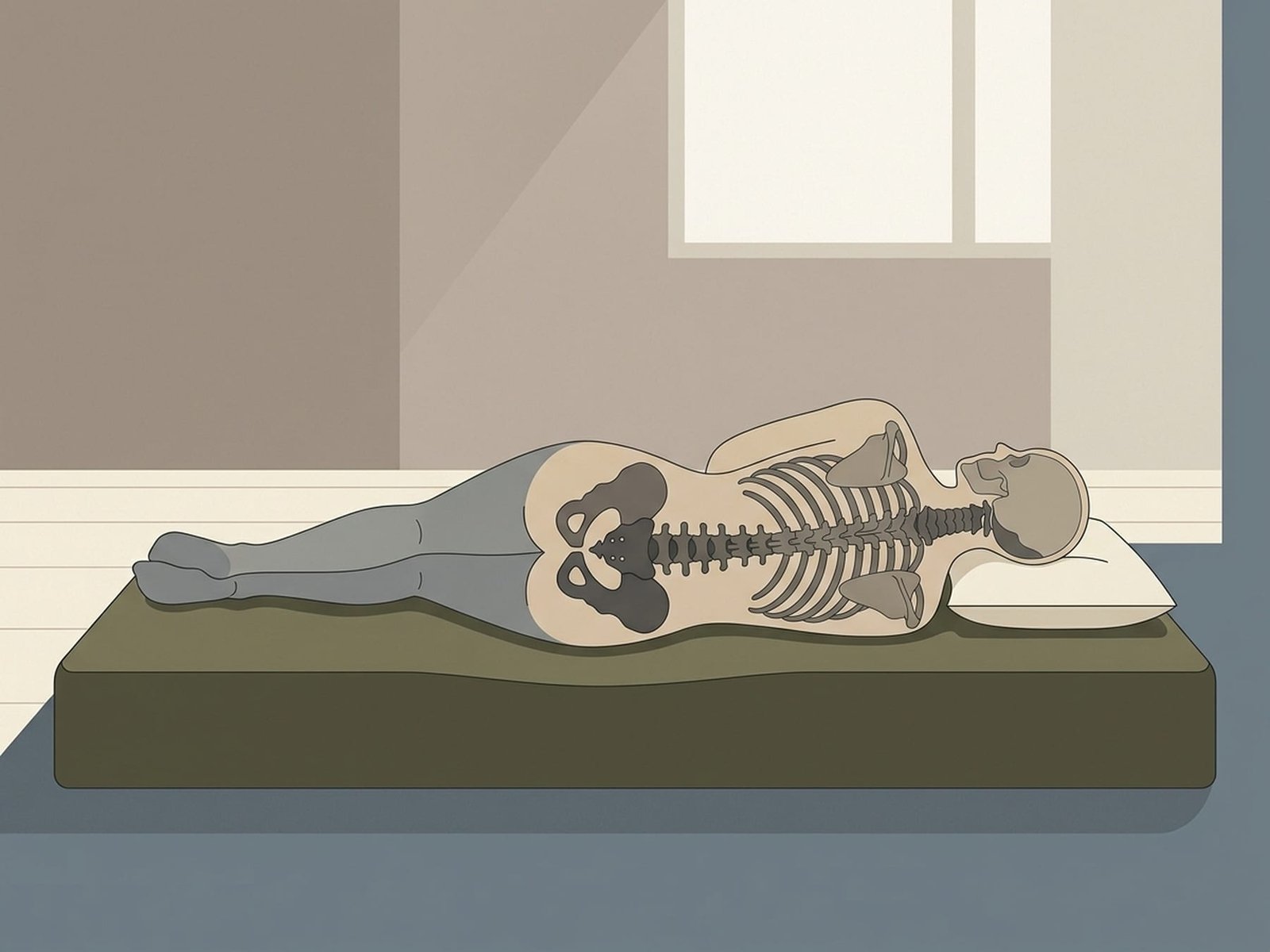
Neutral Spine vs. Compromised Position OverviewSleep position matters in myofascial pain because it creates hours of uninterrupted mechanical loading. If the same muscle or region is held compressed, shortened, or twisted every night, daytime treatment often struggles to hold.
General sleep advice is helpful, but many MPS patients need more specific guidance: what pillow height fits their body, which side is best to sleep on, where support should go, and how to reduce overnight compression in the painful region.
Cervical pillow mismatch is one of the most common reasons upper trapezius, SCM, levator scapulae, and suboccipital trigger points remain active despite otherwise reasonable treatment.
The mattress and support system matter because they determine whether the body stays aligned or collapses into asymmetric positions for hours at a time.
Sleep Position Profiles
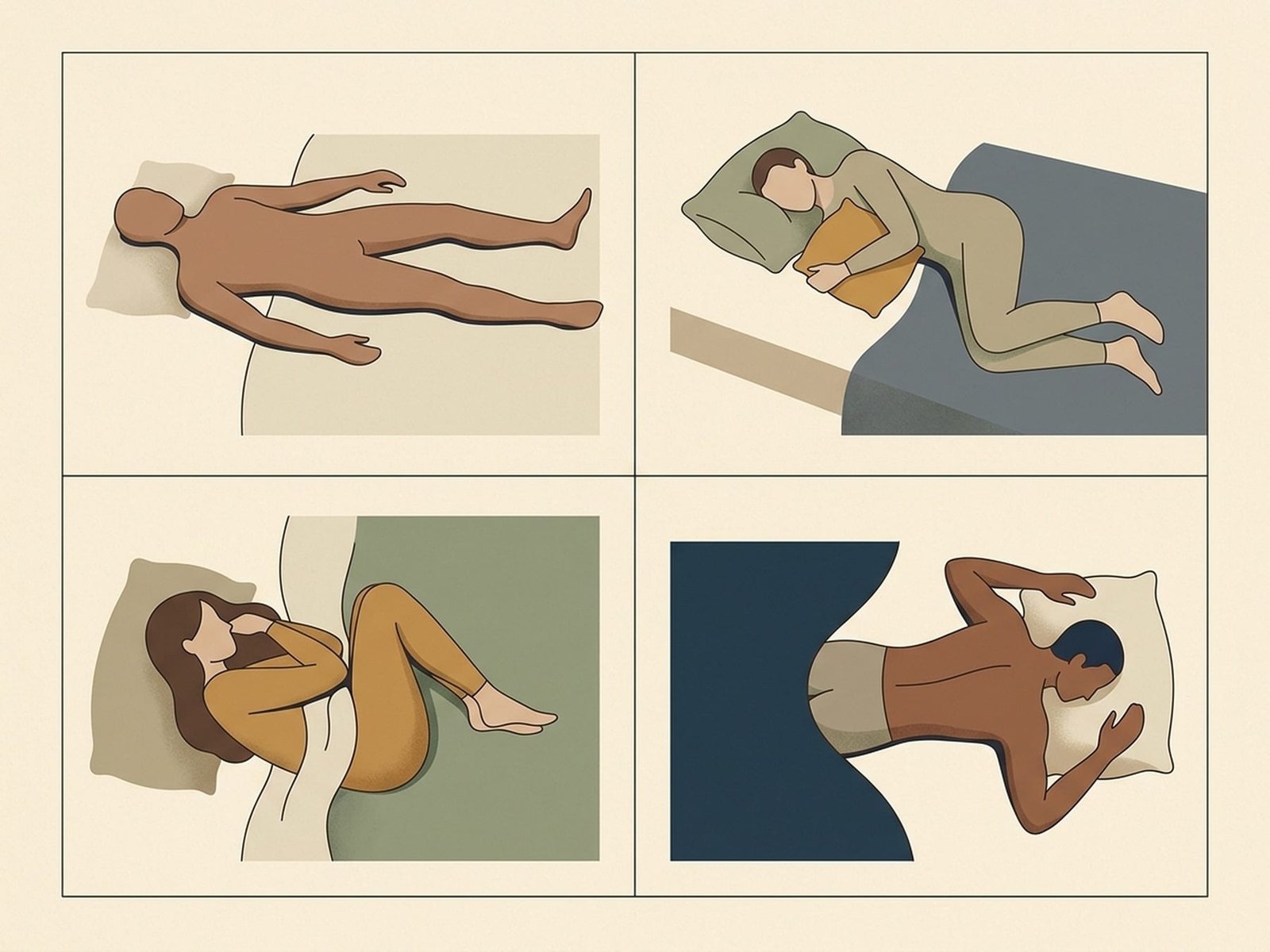
Each sleep position creates a different load pattern through the neck, shoulders, trunk, pelvis, and hips. The goal is not one “perfect” universal position, but the least aggravating one for the patient’s main pain pattern.
Sleep Position Profiles
Side, Back, Prone, Fetal ComparisonSide Sleeping
Most common position — highly setup-dependentSide sleeping is often a good position for many myofascial pain patients, but outcomes depend heavily on pillow height, shoulder accommodation, and hip / knee support. Poor setup can create neck side-bending, shoulder compression, pelvic rotation, and hip-loading issues that perpetuate symptoms.
Back Sleeping
Often the simplest neutral-spine optionBack sleeping can create relatively neutral spinal alignment when the pillow height is appropriate and the knees are supported if needed. It is often useful in patients who do poorly with unilateral shoulder or hip compression.
Stomach Sleeping
Usually the least favorable positionProne sleeping often increases cervical rotation, anterior shoulder positioning, and lumbar extension. It is frequently a perpetuating factor in neck, upper-trapezius, SCM, and upper-back trigger point patterns.
Fetal Position
Flexion-biased side-sleeping variantA mild side-lying curl can be comfortable, but an exaggerated fetal position may keep the trunk, chest, hips, and cervical region in prolonged flexion-biased postures that are unhelpful for some pain patterns.
Transitional Positions
Bed entry and exit mechanicsFor some patients, getting into and out of bed is almost as important as the position itself. Poor transitions can flare lumbar, pelvic, and cervical pain even when the overnight setup is decent.
The Case for Sleep Optimization
Clinically, sleep-position modification often helps most when the patient consistently wakes with worse symptoms than they had at bedtime, especially in the same predictable body region.
The strongest practical principle is simple: keep the painful region out of prolonged compression, reduce asymmetry, and support the body enough that muscles do not have to hold the position all night.
If the patient wakes up worse every morning, the night deserves as much attention as the day.
8-14 cm
Typical side-sleeper pillow-height range
Medium-Firm
Common mattress starting point
2-4 Weeks
Typical adaptation period
Pillow & Support Selection
These assessments are designed to make sleep setup more objective so patients do not rely only on guesswork or marketing claims.
Pillow Height Assessment
Estimating the right pillow loft
A practical method is to match pillow height to the space that needs to be supported — especially the ear-to-shoulder distance in side sleeping. The exact number is less important than whether the neck remains level and relaxed once the person is actually lying down.
Mattress Suitability Assessment
Checking whether the mattress is helping or hurting
A useful mattress allows the heavier parts of the body to sink enough for comfort without letting the spine collapse into obvious side-bending or sagging. If the shoulder and hip feel compressed, it may be too firm; if the trunk sags visibly, it may be too soft.
Pillow Between Knees Assessment
Hip and pelvic support test
If side sleeping aggravates lumbar, piriformis, gluteal, or lateral-hip symptoms, support between the knees often improves pelvic alignment and reduces overnight twisting.
Sleep Position Tracking
Monitoring the real sleep position
Many patients think they sleep in one position but wake in another. Tracking starting position, waking position, and morning symptoms often reveals which setup is actually being tolerated during deeper sleep.
Position-Specific Protocols
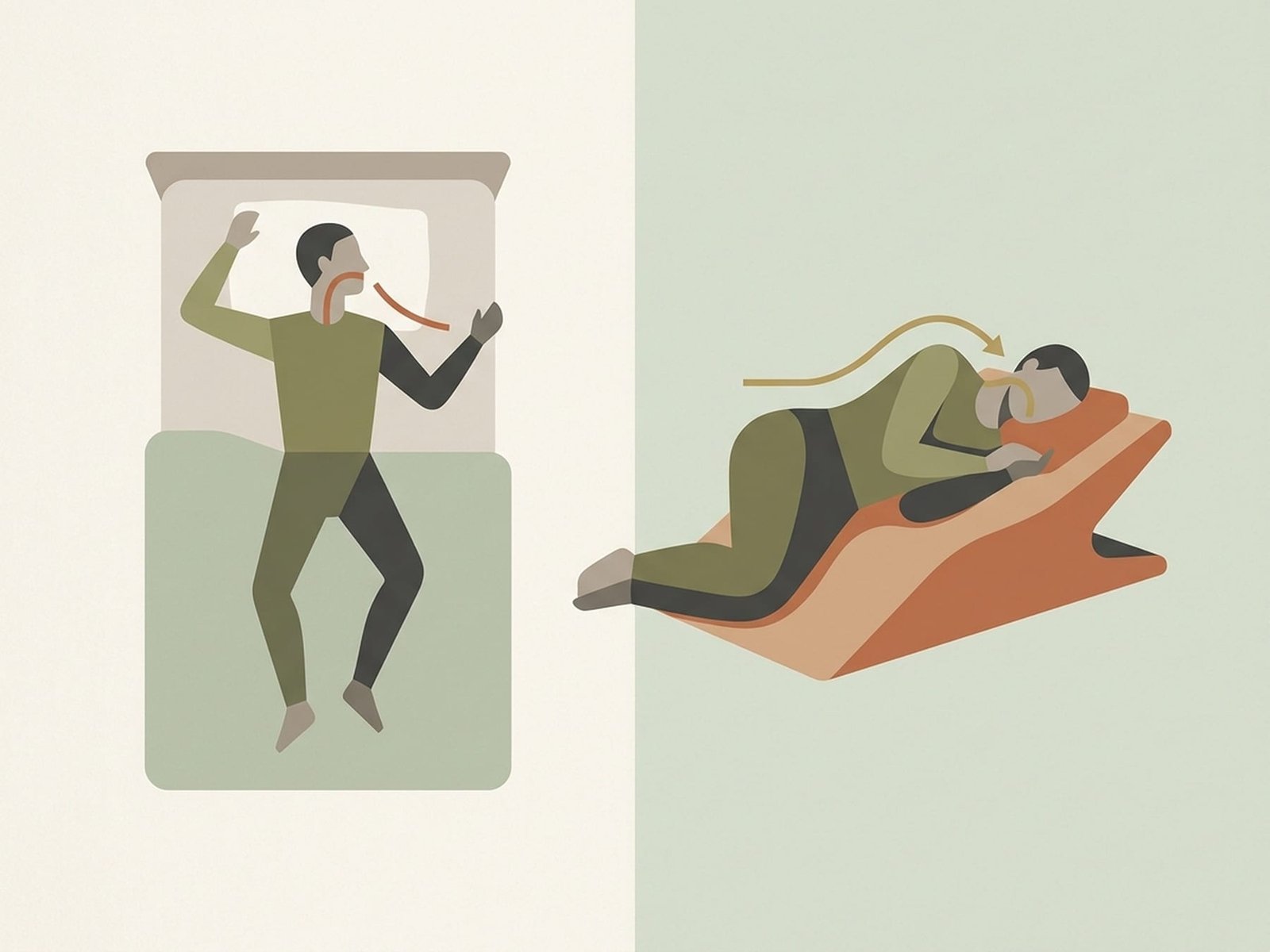
Choose the position-specific protocol based on the patient’s main pain region first, then refine it over time based on morning symptoms and overnight tolerance.
Position-Specific Protocol Setup Diagrams
Cervical MPS Sleep Protocol
For neck, upper trapezius, SCM, scalene, and suboccipital patterns, sleep setup is often highly dependent on pillow height and whether the neck stays neutral through the night.
- Use a pillow height that keeps the neck close to neutral in the main sleep position
- Consider a cervical roll or contour if it clearly improves comfort
- Avoid stomach sleeping when chronic cervical pain is active
- If side sleeping, make sure shoulder width is accounted for in pillow height
- Move slowly on waking and avoid abrupt sit-up movements if mornings are stiff
Lumbar & QL Sleep Protocol
Lumbar and quadratus lumborum trigger points are often very sensitive to overnight pelvic rotation, unsupported waist contour, and poor mattress firmness.
- Try support under the knees in back sleeping if lumbar extension is aggravating
- In side sleeping, consider waist or knee support if the trunk collapses into side-bending
- Use side sleeping only if the pelvis stays relatively stacked rather than twisted
- If the mattress is clearly sagging, address the sleep surface before blaming only the body
- Use gentle morning movement before full bed exit if stiffness is marked
Shoulder & Thoracic Sleep Protocol
Shoulder and thoracic trigger points are frequently aggravated by sleeping directly on the painful side or by allowing the top shoulder to roll too far forward.
- Avoid sustained compression on the clearly symptomatic shoulder
- Use a pillow in front of the chest to support the top arm if needed
- Consider a small axillary or forearm support when shoulder unloading helps
- Address thoracic stiffness with gentle pre-sleep mobility if this consistently improves comfort
- Reassess morning symptoms rather than assuming the current setup is fine
Hip, Piriformis & Gluteal Sleep Protocol
Hip and gluteal trigger points are highly influenced by overnight hip adduction, internal rotation, and lateral compression.
- Use a pillow between the knees in side sleeping when piriformis, gluteal, or lateral-hip pain is present
- Avoid prolonged compression on the most painful greater-trochanter or buttock region
- Body pillows often help keep the trunk and upper leg from rolling forward
- Adjust support thickness until the hips feel neutral rather than forced wide apart
- If symptoms consistently worsen overnight, treat sleep setup as part of the plan, not an afterthought
Red Flags — When Sleep Pain Means Something More
Most sleep-related pain is positional and mechanical, but some patterns suggest that more serious causes need to be excluded before focusing only on sleep setup.
Morning pain is dramatically worse than bedtime pain every day
This pattern can still be mechanical, but it should also raise suspicion for inflammatory or systemic causes when the broader history fits.
New severe nocturnal pain that wakes you from sleep and feels different from positional discomfort
Pain that repeatedly wakes a patient from deep sleep without obvious positional triggers deserves medical evaluation before it is explained as routine MPS.
Persistent numbness or tingling on waking tied to one sleep position
This may indicate positional nerve compression or a cervical issue that needs more than a pillow adjustment alone.
Back-sleep recommendation in a patient with significant suspected sleep apnea
Supine sleep can worsen obstructive sleep apnea in some patients, so airway risk needs to be considered before recommending it as the primary MPS sleep position.
Key Takeaways
Sleep position can perpetuate trigger points when it keeps the affected muscle shortened, compressed, or asymmetrically loaded for many hours.
Pillow height should be treated as a fit problem, not just a comfort preference.
The best sleep position is the one that keeps the spine relatively neutral and reduces pressure on the patient’s main trigger point pattern.
Body pillows, knee pillows, and small support changes often matter more than expensive equipment alone.
Patients usually need a few weeks to adapt to a corrected setup before judging whether it is helping.