Why Water Works
Water has several physical properties that can make movement more comfortable and more accessible for patients with myofascial pain. These properties work together to create a lower-load, more supported exercise environment.
Buoyancy
Water buoyancy reduces the effective load placed on joints and painful tissues. The amount of unloading depends on water depth, body position, and individual body composition. In deeper water, movements that feel difficult or painful on land often become more tolerable, which is one reason aquatic exercise can be helpful early in rehabilitation or during pain flares.
Hydrostatic Pressure
Water exerts gentle, fairly uniform pressure across immersed body surfaces. This pressure can support venous return and may help some patients with swelling, heaviness, or a sense of limb congestion. The effect varies with depth and time in the water, but many people find it supportive and calming.
Thermal Effects
Therapy pools are often warmer than recreational pools, and warmer water is commonly better tolerated by patients with pain and guarding. Warmth may help reduce muscle tension, improve comfort, and make stretching or movement easier. Not every patient needs the same temperature range, but water that is too cold can increase guarding in some pain-sensitive people.
Viscosity
Water provides resistance in every direction. Slow movements encounter gentle resistance, while faster movements become more demanding. This makes water a practical environment for graded strengthening and movement retraining without relying heavily on external weights or machines.

Water Properties and Depth-Based Weight Reduction Diagram
“Is This for Me?”
Aquatic therapy can suit a wide range of pain conditions, but it is not ideal for everyone. Understanding likely benefits and important cautions helps set realistic expectations and improve safety.
For many pain-sensitive patients, water creates a setting where movement feels safer, lighter, and more achievable than it does on land.
Who Benefits Most
- Patients with fibromyalgia or persistent widespread pain who have low tolerance for land-based exercise
- Shoulder rehabilitation, including some post-surgical and frozen-shoulder presentations when medically cleared
- Chronic low back pain, especially when land-based exercise is not yet well tolerated
- Patients who find weight-bearing exercise difficult because of joint pain, guarding, or deconditioning
- Selected post-surgical recovery after hip or knee replacement when cleared by the surgeon
- Individuals with osteoarthritis of the hips, knees, or spine
- Patients with movement-related fear, poor confidence, or reduced conditioning who need a gentler entry point into exercise
Cautions & Contraindications
- Open wounds, skin infections, or unhealed surgical incisions
- Uncontrolled epilepsy or seizure disorders
- Certain cardiac conditions including uncontrolled heart failure or unstable angina
- Severe fear of water (aquaphobia) that does not improve with gradual exposure
- Uncontrolled urinary or fecal incontinence
- Active infections or fever
- Chlorine sensitivity or severe skin conditions aggravated by pool chemicals
Talk to Your Provider First
If you have any of the higher-risk conditions listed under cautions, discuss aquatic therapy with your clinician before beginning. Some cautions are relative rather than absolute, and the right answer depends on your specific situation.
Types of Aquatic Therapy
Aquatic therapy ranges from specialist clinical rehabilitation to independent swimming and community pool classes. The best choice depends on your pain level, goals, access, and confidence in the water.
Exercises by Condition
Different pain conditions often benefit from different aquatic approaches. Use these examples as starting templates rather than rigid prescriptions.
Shoulder Pain / Rotator Cuff
Water Depth
Chest to shoulder depth
Temperature
Often warmer therapy pool temperatures are better tolerated
Duration
20-30 minutes, 2-3 times per week to start
Exercises
Water Wall Push-Ups
2 sets of 8-12Stand at arm's length from the pool wall. Place hands on the wall at shoulder height and width. Slowly lower your chest toward the wall, then push back. Water support and reduced body-weight demand make this a useful early closed-chain option for some shoulder patients.
Arm Sweeps
2 sets of 10-15 each directionStand in chest-deep water with arms extended to the sides just below the surface. Sweep the arms forward until the hands meet in front, then return slowly. Movement speed can be used to adjust resistance.
Pendulum Exercises
1 minute each arm, 1-2 setsLean forward slightly with the unaffected hand on the pool wall for support. Let the affected arm hang freely in the water. Gently swing the arm in small circles, gradually increasing the circle size if comfortable.
Resistance with Water Paddles
2 sets of 8-10 each directionUsing small hand paddles or webbed gloves, perform shoulder flexion, abduction, and external rotation against water resistance. Start slowly and keep movements comfortable and controlled.
Progression Notes
Begin with slow movements and smaller ranges. Progress gradually by increasing speed, range of motion, or light equipment resistance only when the shoulder remains calm after sessions.
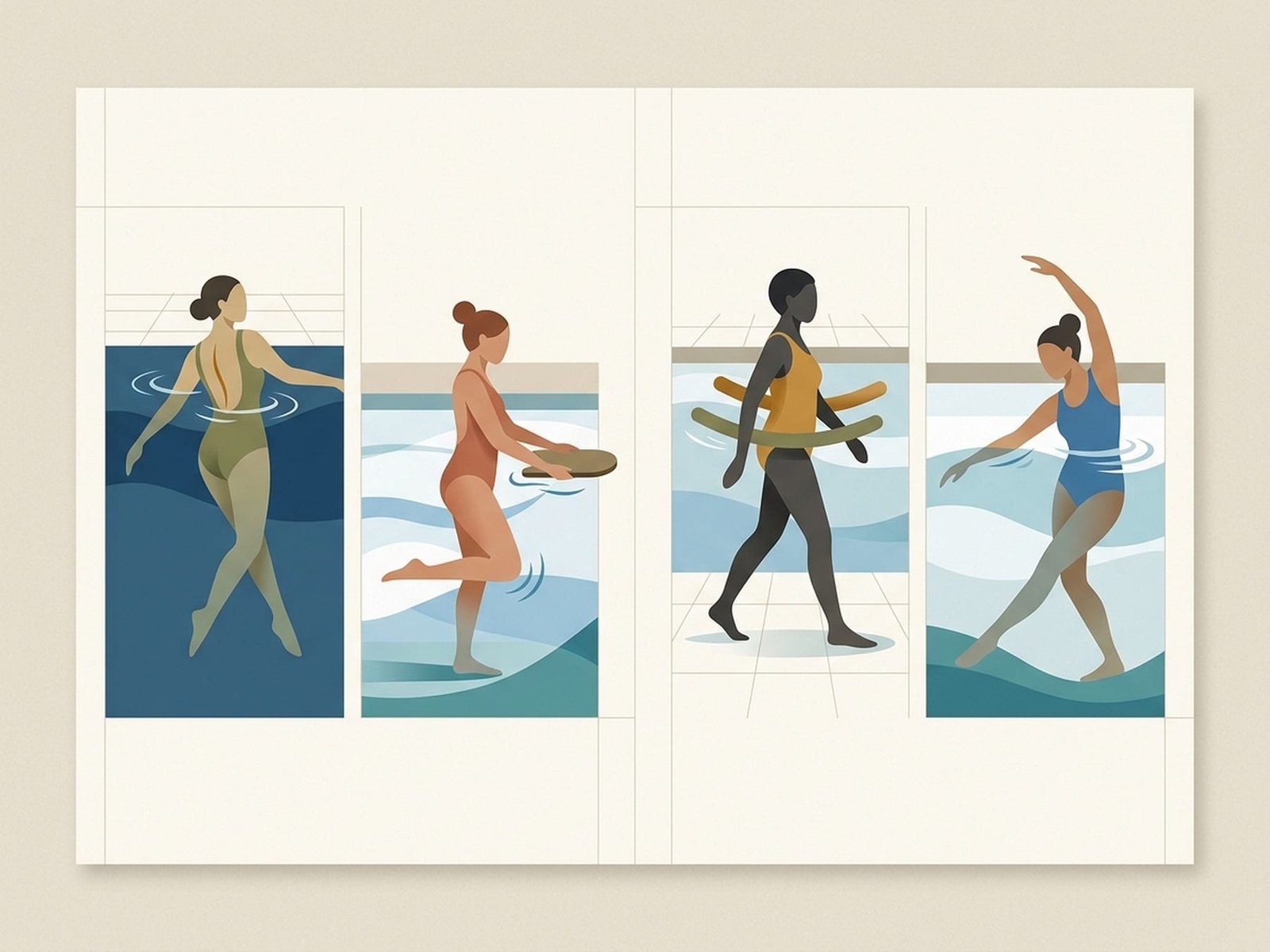
Aquatic Exercise Illustrations by Condition
Swimming Strokes for MPS
Not all swimming strokes are equally comfortable for myofascial pain patients. Stroke choice, breathing style, and technique modifications can make a major difference in whether swimming helps or aggravates symptoms.
Backstroke
Often Best ToleratedBackstroke is often well tolerated by pain patients because it promotes a more open chest posture and does not require neck rotation for breathing. It can be a good starting stroke when swimming is appropriate.
Benefits
- Encourages a more open chest posture
- No neck rotation required for breathing
- Can provide gentle shoulder range of motion in some patients
- Often feels less threatening than face-down swimming
Cautions
- Avoid or modify if overhead movement clearly aggravates shoulder symptoms
- Use awareness of wall position or lane markers to prevent collisions
Freestyle (Front Crawl)
Good With Technique ModificationsFreestyle can be excellent exercise, but technique matters. Breathing mechanics, neck rotation, and shoulder loading may aggravate symptoms if form is poor or volume increases too quickly.
Benefits
- Strong cardiovascular option
- Engages the full body and trunk
- Breathing rhythm can feel calming when technique is comfortable
- Can be modified with snorkels, fins, or shorter intervals
Cautions
- Repeated one-sided breathing may aggravate neck or upper trapezius symptoms in some swimmers
- Poor catch mechanics can increase shoulder irritation
- Volume should build gradually in deconditioned or pain-sensitive patients
Breaststroke
Use With CautionBreaststroke may suit some patients, but the kick and head position can be problematic for others. It is not automatically bad, but it is not the easiest stroke for many pain patients.
Benefits
- Can be performed at a gentle pace
- The glide phase provides built-in rest moments
- May feel less demanding to some beginners than freestyle
Cautions
- The whip kick may aggravate medial knee symptoms in susceptible patients
- Repeated head lifting or extension may worsen neck pain in some swimmers
- Technique errors can increase tension rather than reduce it
Butterfly
Usually Not a Starting StrokeButterfly is demanding and is usually not a sensible early stroke for pain patients. The combination of bilateral overhead movement, trunk demand, and technical complexity makes it a poor fit for most people early in rehabilitation.
Benefits
- Can be a powerful full-body workout in conditioned, pain-free swimmers
- Develops strong trunk and shoulder control in the right context
Cautions
- High shoulder and trunk demand
- Can aggravate lumbar or shoulder symptoms easily
- Usually inappropriate until conditioning and symptoms are substantially improved
Modified Strokes & Equipment
The right equipment can make aquatic exercise more comfortable and more accessible. These tools help modify load, breathing demands, and movement complexity.
Pull Buoy
Placed between the thighs to support the lower body and reduce kicking demand. Useful when the goal is to focus on upper body technique or reduce lower-limb effort.
Fins
Short fins increase propulsion and may reduce shoulder workload by allowing the legs to contribute more. They can also increase ankle and calf demand, so they should be introduced thoughtfully.
Center-Mount Snorkel
Eliminates the need for head turning during freestyle, which can be very helpful for patients with neck pain or asymmetric breathing-related aggravation.
Kickboard
Supports the upper body during kicking drills and can help isolate lower-body work. Board position can be adjusted to change the challenge.
Webbed Gloves
Increase hand surface area and therefore water resistance. Useful for progressive strengthening once basic movement is well tolerated.
Getting Started
Starting an aquatic therapy program usually goes more smoothly when you plan the setting, temperature, supervision, and first few sessions in advance.
Find an Appropriate Pool
Not all pools are equally suitable. Many pain patients do better in warmer pools, especially early on. Ask about pool temperature, accessibility features such as ramps or lifts, and whether aquatic therapy programs or supervised rehabilitation are available.
Consider Aquatic Therapy Programs
If you are new to aquatic exercise or have significant pain, starting with a supervised aquatic therapy program can be helpful. A trained therapist can assess your condition, design a personalized program, and help you avoid doing too much too soon.
What to Expect in Your First Session
A first session often includes some land-based discussion or assessment, gradual entry into the pool, a few minutes of water acclimation, and a short series of gentle exercises. Some people feel pleasantly loose afterward; others notice unfamiliar fatigue because water changes how muscles work. Early sessions do not need to be long to be useful.
Appropriate Swimwear for Comfort
Choose swimwear that feels secure and comfortable during movement. Comfort matters because feeling exposed, cold, or distracted by clothing can make it harder to relax and move well in the water.
Build Duration Gradually
Many patients do best starting with shorter sessions and progressing based on symptom response. If a session clearly triggers a prolonged flare-up, reduce the next session and progress more slowly. The right pace depends on the individual rather than a universal rule.
Gradual Progression Timeline
Early Sessions
15-20 minutes
Acclimation, gentle walking, and low-intensity introductory exercises
Week 2-3
20-25 minutes
Add condition-specific exercises and slightly increase repetition or movement range
Week 3-4
25-30 minutes
Increase movement confidence and add light equipment if well tolerated
Week 4-5
30-40 minutes
Build continuity and consider simple interval or lap-based work when appropriate
Week 5-6+
35-45 minutes
Transition toward a more independent maintenance program if recovery remains stable
Safety Considerations
The aquatic environment is often therapeutic, but it has its own safety considerations. Following a few basic precautions makes aquatic exercise both safer and more sustainable.
Avoid Unsupervised Water Exercise If Safety Is Uncertain
Some chronic pain conditions are associated with dizziness, fatigue, or sudden symptom escalation. When that risk is relevant, choose a setting with lifeguard coverage, supervision, or a reliable exercise partner rather than exercising alone.
Hydration Still Matters
It is easy to underestimate fluid loss in the water because sweat is less noticeable. Warm pools can increase fluid loss and fatigue, so drinking before and after sessions is still important.
Post-Pool Recovery Routine
After exiting the pool, some patients benefit from a warm shower and a few minutes of gentle movement or stretching while tissues are still relaxed. Others need a short seated recovery period before leaving. Move slowly if you tend to feel lightheaded after immersion.
Chlorine Sensitivity Management
Some people develop skin, eye, or respiratory irritation from pool chemicals. Goggles, prompt rinsing after swimming, and choosing pools with better air quality or different sanitation systems may help. Persistent symptoms deserve reassessment of pool choice.
Stop Immediately If You Experience
- Sudden dizziness, lightheadedness, or disorientation while in the water
- Chest pain, shortness of breath, or heart palpitations
- Sharp, sudden pain that differs clearly from your usual chronic pain
- Numbness, tingling, or unexpected weakness
- Nausea or a feeling of being overheated despite being in water
Key Takeaways
Water Reduces Loading Without Eliminating Exercise Challenge
Buoyancy reduces loading while water resistance still allows meaningful movement and strengthening. That balance is one reason aquatic therapy can be such a useful bridge for pain-sensitive patients.
Temperature Can Change Tolerance
Many pain patients tolerate warmer therapy pools better than cooler recreational pools. Pool temperature is an important practical variable when planning aquatic exercise.
Progress Gradually
Shorter, better-tolerated sessions usually work better than pushing duration too quickly and triggering prolonged flare-ups.
Backstroke Is Often a Good Starting Stroke
For many myofascial pain patients, backstroke is one of the easier strokes to tolerate because breathing is simpler and chest posture is more open.
Match the Approach to the Condition
Different pain patterns need different aquatic strategies. A shoulder patient, a low back patient, and a fibromyalgia patient may all need different entry points and progressions.
Safety Still Comes First
Aquatic therapy is usually gentle, but it still requires attention to supervision, hydration, pacing, and medical contraindications.
Continue Learning
Walking for Pain Relief
How walking activates gentle muscle engagement, improves circulation, and complements aquatic therapy for chronic pain.
Exercise Guide
Comprehensive guide to exercise for myofascial pain — from gentle movement to strength training protocols.
Physical Therapy
How physical therapists assess and treat myofascial pain using manual therapy, exercise, and education.
Restorative Yoga
Gentle yoga practices that complement aquatic therapy by promoting flexibility, relaxation, and body awareness.
Tai Chi for Pain
Slow, flowing movements that share principles with some aquatic movement approaches and can support chronic pain management.