
Restorative Yoga Mechanism Overview
What Makes This Different from Regular Yoga?
Restorative and Yin yoga differ from more active styles because they use longer holds, more support, and much less muscular effort. The aim is not fitness, sweat, or performance.
That difference matters in chronic pain because some patients respond better to slower, more supported input than to stronger or more athletic movement. Time and support are part of what makes these practices distinct.
Restorative yoga is often useful not because it is intense, but because it creates enough safety and stillness for the body to stop bracing.
Vinyasa / Power Yoga
- More active muscular effort
- Shorter holds
- More strength and flow emphasis
- Can feel stimulating
Yin Yoga
- Passive with mild stretch sensation
- Longer holds
- Often targets fascia and joint-range tolerance
- Can feel quiet but still intense
Restorative Yoga
- Fully supported and passive
- Longer holds with comfort prioritized
- Aims for nervous-system settling
- Usually the gentlest option
Restorative vs. Yin — Key Differences
Although both styles use longer holds, they are not the same. One is usually more downregulating and fully supported; the other often involves a mild, sustained edge of sensation.
Restorative Yoga
Fully supported — the body should feel held up by the props rather than working to maintain the shape
Comfort first — if the pose feels effortful or clearly stretchy, the setup usually needs adjustment
Longer holds — enough time for the body to settle into stillness
Fewer poses — each pose is held longer and treated as a recovery environment
Best for: stress-heavy flares, poor sleep, high nervous-system reactivity, and very deconditioned patients
Yin Yoga
Passive with a mild edge — the aim is a broad, tolerable sensation rather than full comfort
More tissue loading — often chosen when the patient needs more than pure relaxation
Moderate hold times — long enough to create a distinct stretch experience
More poses per session — usually more movement through different regions than restorative practice
Best for: maintenance work, chronic stiffness, and selected fascial restriction patterns
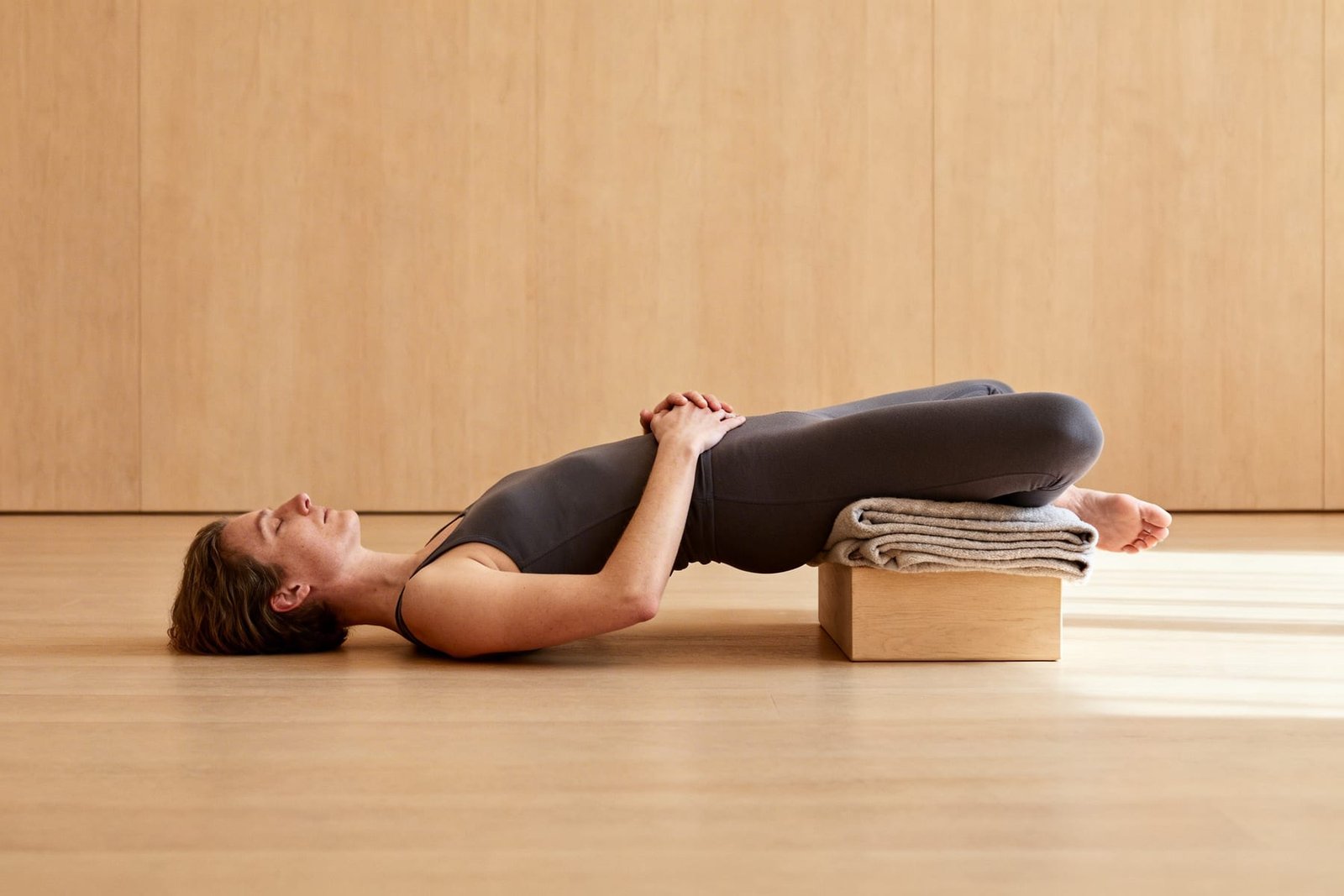
Restorative Yoga Pose Technique Demonstration
Is This for Me?
These practices can be highly useful, but the right choice depends on the stage of pain, irritability, joint stability, and how the nervous system is behaving.
Who Benefits Most
High-stress patients
When the nervous system is highly activated, restorative yoga is often a better starting point than more intense stretching or strengthening.
Anyone in an acute flare
Restorative yoga is often more appropriate than yin during a flare because it reduces effort rather than adding more tissue demand.
Patients with sleep disturbance
A short evening restorative sequence can be a practical pre-sleep ritual for patients whose pain and stress rise at night.
People who “can’t relax”
For patients who live in a constant state of tension, stillness and supported rest can become a therapeutic skill rather than a passive luxury.
Fascial restriction patterns (yin yoga)
When the main complaint is persistent stiffness or reduced range despite decent pain control, yin-style loading may be worth considering if the joints and symptoms tolerate it well.
Cautions
Hypermobility (Yin yoga caution)
Patients with significant hypermobility often need more stability and control, not more long-duration stretching. Restorative yoga may still fit well; yin often needs much more caution.
Acute joint injury (Yin yoga caution)
If the tissue is acutely inflamed or structurally irritated, sustained loading may be the wrong choice in that area until symptoms settle and the diagnosis is clearer.
Why Long Holds Feel Different
Long holds change both the tissue experience and the nervous-system experience. The exact mechanism varies by the person and the pose, but the practical effect is often that the body has more time to soften and reorganize.
Fascial Creep
One reason longer holds are used is that connective tissues often respond differently to sustained load than to quick stretching. This does not mean every long hold is automatically therapeutic, but it helps explain why the experience feels different.
Thixotropy
Fascial tissues and their surrounding ground substance may feel less stiff after gentle sustained movement or pressure. Patients often describe this as “softening” or “melting,” which is a useful clinical description even when the exact mechanism is more complex than simple folklore.
Parasympathetic Activation
Stillness, support, and slower breathing often shift the system toward a calmer state. This can matter as much as the mechanical stretch itself in chronic pain patients.
Muscle vs. Fascia Timing
Quick stretches often feel muscular; longer sustained positions often feel broader, slower, and more diffuse. That difference is one reason some patients who dislike ordinary stretching still respond well to yin or restorative practice.
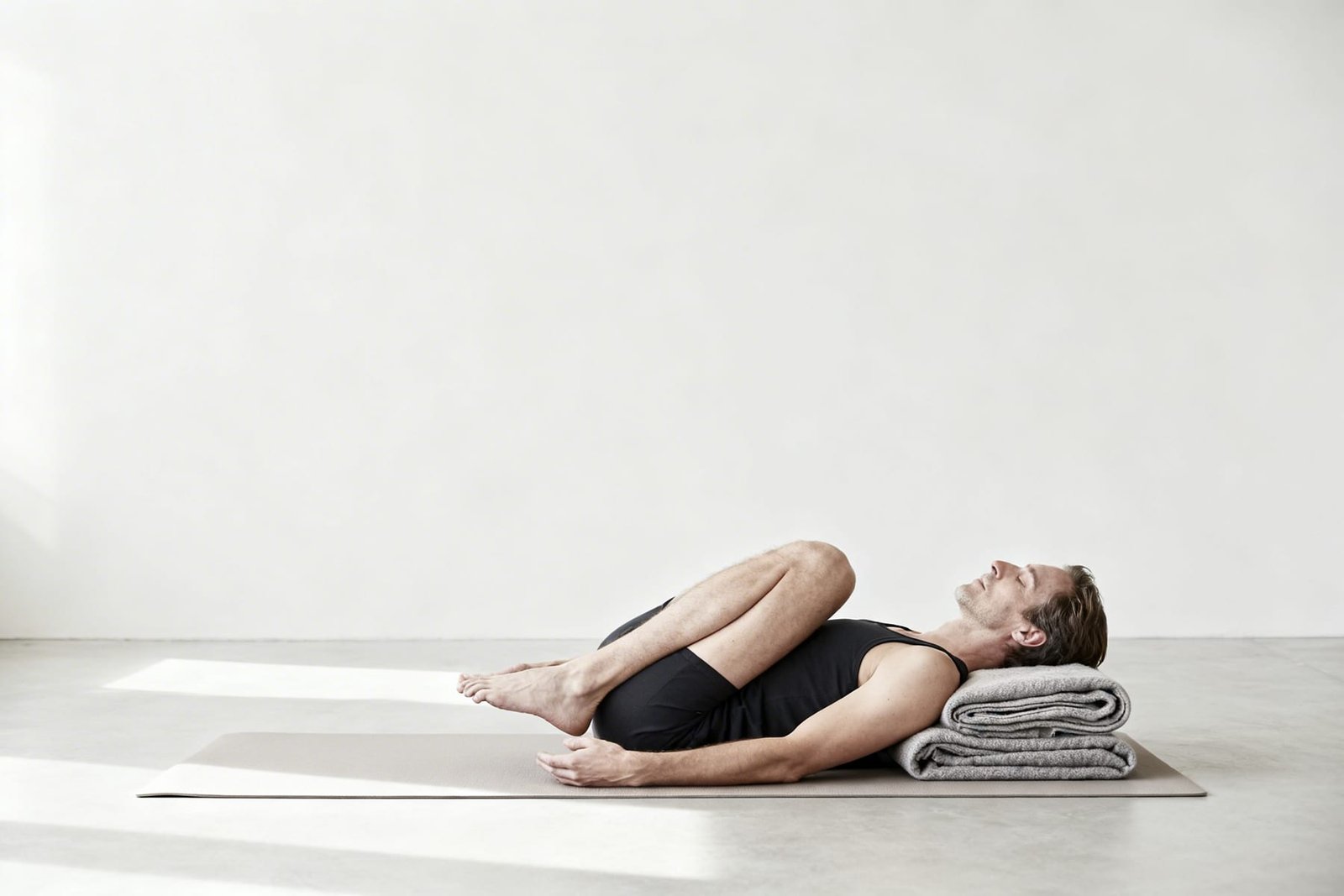
Restorative Yoga Props Setup Guide
Restorative Poses
These poses are most useful when the props do enough of the work that the patient can genuinely settle into them. If the body is still straining, the pose is probably not restorative yet.
Yin Poses for Tissue Release
Yin poses are best approached as mild, patient, sustained loading — not as end-range stretching contests.
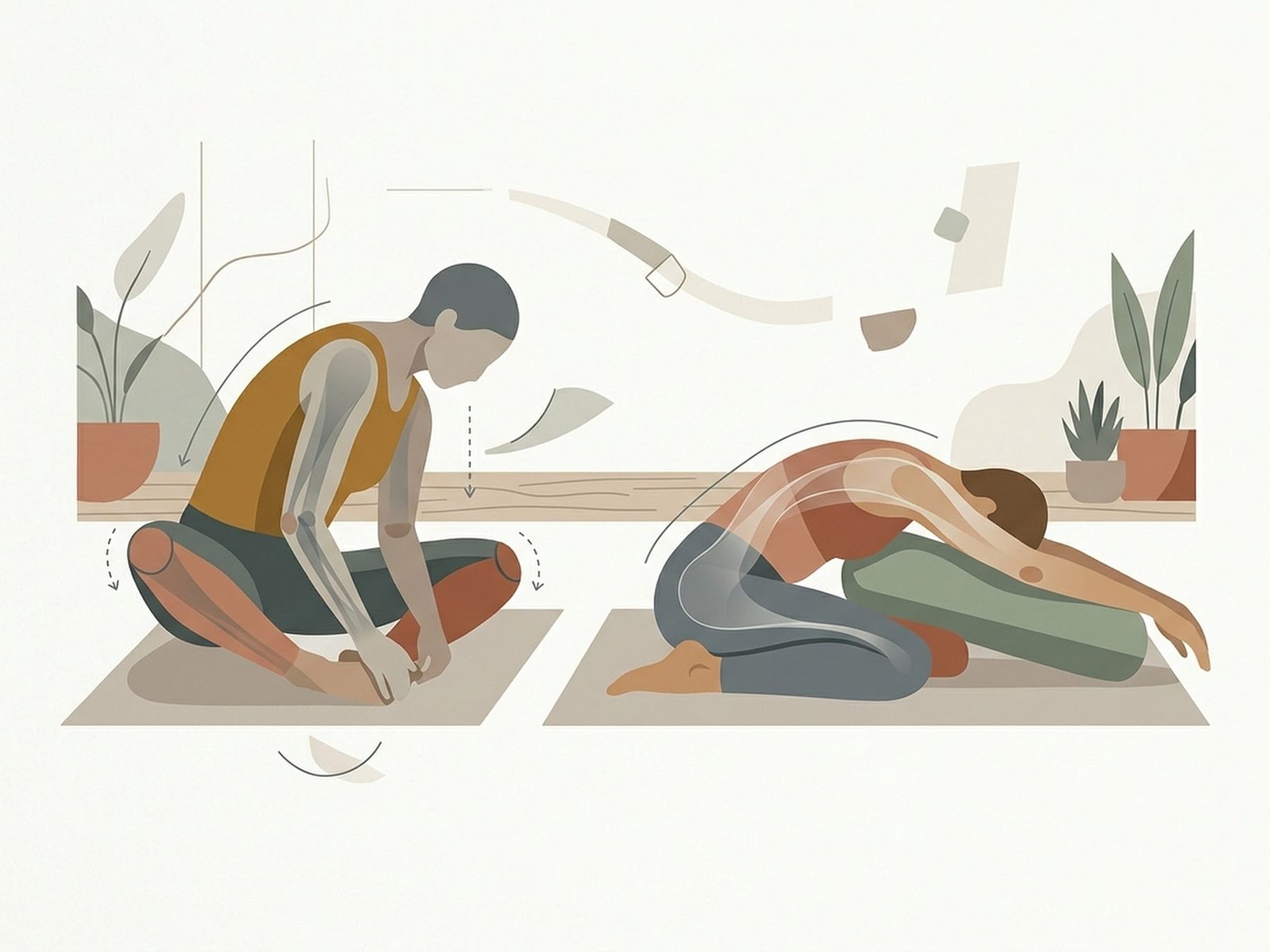
Yin Yoga Fascial Release Technique Demonstration
Props Guide
Props are part of the treatment. Better support usually means better downregulation, less guarding, and a more useful therapeutic experience.
Yoga Bolster (Firm Rectangular)
The most versatile restorative prop. It provides broad support for reclining, folding, and twisting positions.
Budget Alternative
Firm bed pillows wrapped tightly, stacked cushions, or folded blankets can often work well enough for home practice.
Yoga Blocks (2)
Useful for adjusting pose height, supporting the knees, or reducing range.
Budget Alternative
Firm books wrapped in a towel or similarly stable household substitutes.
Blankets (2-3)
Useful for padding, warmth, head support, and fine-tuning almost every restorative setup.
Budget Alternative
Bath towels, fleece blankets, or other foldable household textiles.
Yoga Strap
Helps hold a position passively without requiring extra muscular effort.
Budget Alternative
A robe belt, long scarf, or other non-elastic fabric strap substitute.
Eye Pillow
Useful for light blocking and a gentle settling cue during final relaxation poses.
Budget Alternative
A folded washcloth or a small soft cloth placed over the eyes.
Sample Sequences
These example sequences show how poses can be combined into a full session. They are templates, not rigid rules.
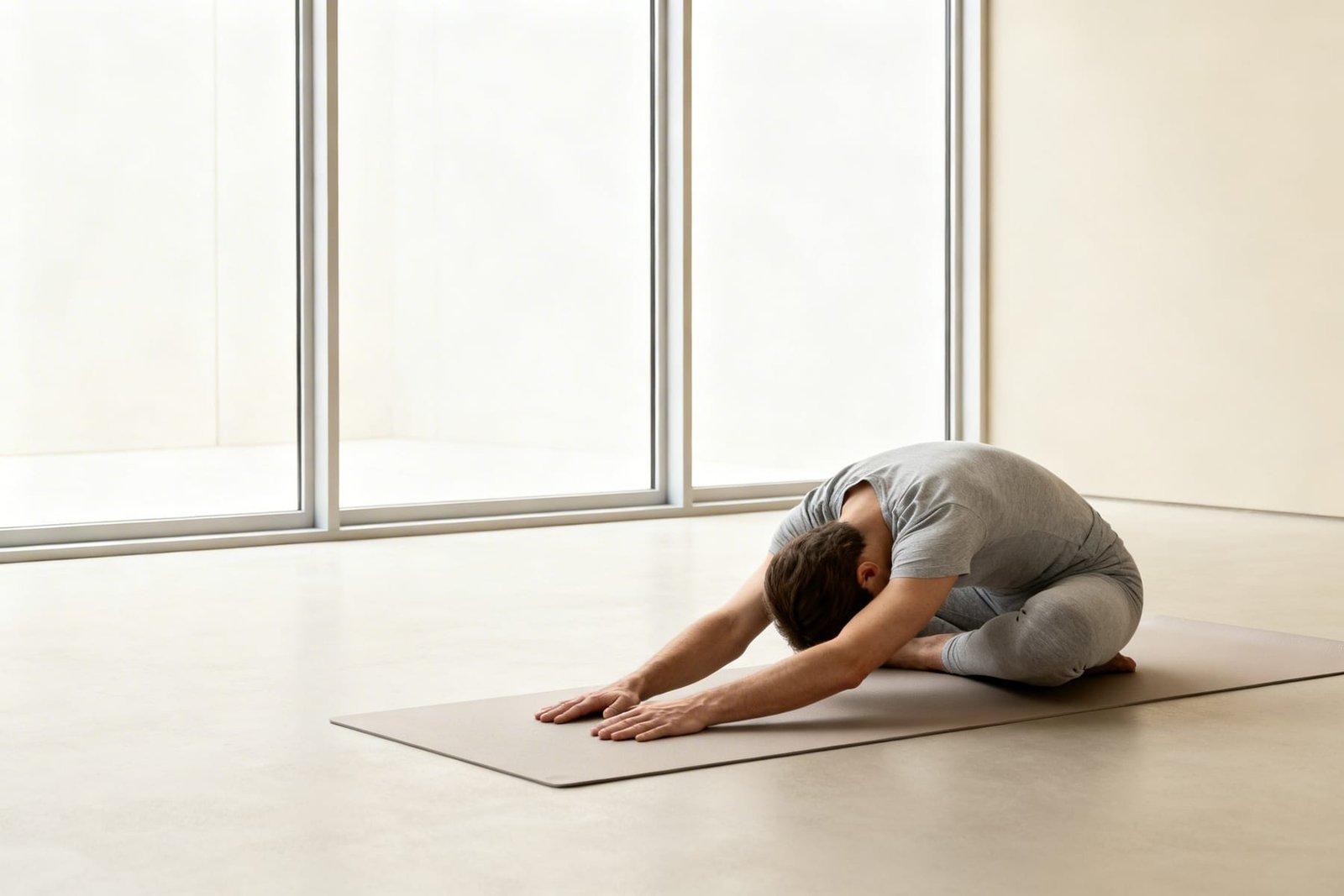
Restorative Yoga Sequence Clinical Evidence Summary
Safety & When to Avoid
Restorative and yin yoga are gentle compared with many movement systems, but they still need judgment. Joint stability, symptom irritability, diagnosis, and body confidence all matter.
Restorative Yoga Safety
Support first: If a pose feels effortful, use more props or change the shape.
Temperature: Many patients settle better when warm enough to fully relax.
Transition slowly: Long stillness can make rapid transitions uncomfortable, so move out of poses gradually.
Yin Yoga Safety
Mild stretch only: Broad and tolerable is appropriate; sharp, electrical, or joint-pinch sensations are not.
Exit for neurological symptoms: Numbness, tingling, or shooting pain means back off or stop.
Use caution with hypermobility: Long-hold stretching can be the wrong tool in highly lax systems.
Modify extension-sensitive backs: Backbends and deep extension positions are not always helpful for active lumbar irritation.
This material is educational and does not replace individual medical or rehabilitation advice. Choose poses and intensity based on diagnosis, irritability, and guidance from an appropriate clinician or qualified teacher.
Key Takeaways
Longer Holds Change the Experience
Longer holds can shift the experience from ordinary stretching toward a slower, more calming practice that many chronic-pain patients tolerate better.
Less Effort Often Helps More
Restorative yoga is most useful when the body is so well supported that the nervous system stops guarding against the pose.
Start with Downregulation
When the nervous system is highly reactive, restorative practice often makes more sense before stronger or more sensation-focused yin work.
Props Matter
Support changes everything. Better prop setup usually improves both comfort and therapeutic effect.
Find the Edge, Not the Maximum
In yin yoga, useful intensity is usually mild and broad. Once the body starts defending, the pose is no longer doing what you want it to do.
Consistency Beats Intensity
Short, regular practice usually works better than occasional marathon sessions, especially in patients with persistent pain or stress-related flare patterns.
Continue Learning
Yoga for Myofascial Pain
A broader guide to yoga approaches, including more active styles alongside restorative and yin practices.
Tai Chi & Qigong
Gentle meditative movement practices that may complement restorative yoga well.
Mindfulness & Meditation
A useful complement when stress and vigilance strongly amplify pain.
Stretching Fundamentals
A guide to how different types of stretching and tissue loading differ in practice.
Fascia System
A deeper look at fascia, tissue hydration, and why slow loading may feel different from quick stretching.
Sleep Optimization
How evening routines, relaxation, and stress reduction can support sleep and pain recovery.