What Is Qigong?
Qigong is a traditional Chinese movement practice that combines gentle motion, breathing, and attention. In modern pain care, it is most useful as a low-intensity, low-threat way to help people move, breathe more fully, and reduce stress-related muscular guarding.
Compared with more complex movement systems, Qigong is often easier to begin because it uses simpler patterns that can be practiced individually. This makes it especially suitable for beginners, older adults, or people who feel overwhelmed by standard exercise.
Qigong can be valuable for myofascial pain because it combines gentle movement, breath, and nervous-system downregulation in one accessible practice.
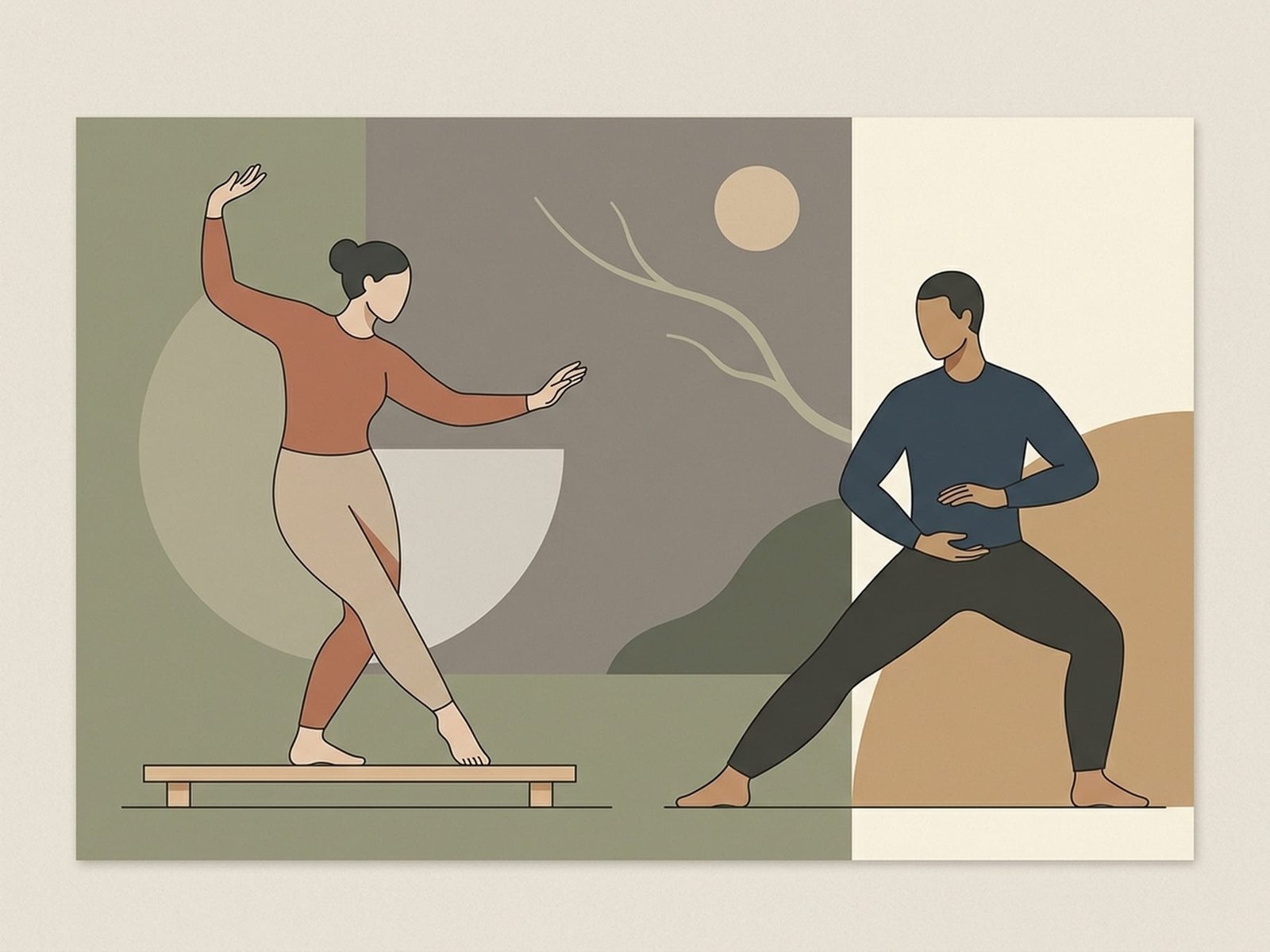
Qigong Practice
Standing, Seated, and Lying FormsWhy Qigong for Trigger Points?
Qigong may help break the stress-pain-tension cycle by reducing guarding, improving breathing mechanics, and giving patients a calmer and more approachable way to move regularly.
"Is This for Me?"
Qigong is often worth considering when the patient needs a gentle, repeatable, stress-sensitive movement practice rather than a high-load or performance-based exercise approach.
Key point: Qigong is especially useful when simplicity and consistency matter more than intensity.
People with stress-related trigger point patterns
Qigong may be especially helpful when pain is strongly linked to stress, guarding, shallow breathing, and upper-quarter tension. The practice combines low-threat movement with attention and breathing, which can help reduce muscle overprotection.
Older or deconditioned patients
Qigong is often accessible because it can be practiced standing or seated, at very low intensity, and without needing floor transfers, gym equipment, or high exercise tolerance.
People with pain plus anxiety, poor sleep, or low confidence with movement
Because Qigong blends movement with breathing and attention, it can be useful in patients whose pain is amplified by stress, hypervigilance, or fear of more conventional exercise.
People intimidated by exercise
Qigong can be a low-barrier entry point into regular movement for people who find gyms, formal rehabilitation, or high-intensity exercise overwhelming.
Cautions
Severe balance issues
People with significant balance problems should begin with seated or well-supported forms. Standing practice can be introduced later only if it is clearly safe.
Acute vertigo
During active vertigo or severe dizziness, simplify practice to breathing and minimal head movement. Full standing or turning forms can wait until symptoms settle.
The Evidence
The evidence for Qigong in pain care is encouraging but should be described modestly. It is best viewed as one useful option within a broader movement and self-regulation toolkit.
Musculoskeletal Pain Research
The literature suggests Qigong can help selected chronic pain conditions, including some musculoskeletal pain presentations, especially when gentle movement, stress reduction, and adherence are important.
Likely Mechanisms
The most plausible mechanisms are not mystical ones: slower breathing, reduced sympathetic arousal, improved movement confidence, mild mobility work, and regular practice over time.
Suitable Exercise Intensity
Qigong is typically a low-intensity movement practice, which makes it useful for people who cannot yet tolerate more demanding exercise but still need a structured way to move.
Broad Health Benefits
Potential benefits extend beyond pain and may include better movement confidence, improved stress regulation, better sleep habits, and more consistent physical activity.
Key Qigong Movements for Pain
The following movements are commonly used because they are simple, low-threat, and relevant to posture, breathing, trunk mobility, and stress-related tension patterns.

Qigong Movement Sequence
Standing FormsQigong vs. Tai Chi
Qigong and Tai Chi share some principles but differ in complexity and emphasis. Qigong is usually easier to start; Tai Chi often offers a greater balance challenge once learned.
Feature
Qigong
Tai Chi
Complexity
Usually simpler and easier to begin quickly
Often more complex and sequence-based
Structure
Individual movements can be practiced on their own
Movements are often linked into flowing forms
Accessibility
Often easier to adapt to seated or low-mobility practice
Usually more balance-demanding
Learning Curve
Often beginner-friendly from the first session
Usually takes longer to learn comfortably
Balance Training
Moderate, depending on the form
Often stronger balance challenge
Meditative Quality
Often highly meditative because movements are simpler
Meditative once the form becomes familiar
Physical Demand
Very low to moderate, easily adjusted
Low to moderate, sometimes more demanding
Best For
Stress-linked pain, beginners, deconditioned patients, rehabilitation
Balance, coordination, fall prevention, longer-form movement practice
Which Should I Choose?
If the main goal is a simple, calming, accessible pain-management movement practice, Qigong is often the easier starting point. Tai Chi may become more attractive later, especially when balance and longer-form coordination are priorities.
Getting Started
Qigong requires very little to begin. The most important requirements are a safe space, enough room to move comfortably, and a commitment to short, regular practice.
Finding Classes
Look for teachers who are comfortable adapting Qigong for pain, older adults, or rehabilitation contexts rather than treating it only as performance or cultural display.
Practice Environment
A quiet, uncluttered space is enough. Outdoor practice can feel calming, but a small indoor space works perfectly well.
Clothing
Wear comfortable clothing that allows easy breathing and shoulder, hip, and trunk movement.
Starting Duration
Begin with short daily practice. Consistency matters more than long sessions, especially at the beginning.
Sample 4-Week Beginner Protocol
This 4-week progression introduces Qigong gradually. It is a framework, not a rulebook — simplify further if symptoms, fatigue, or balance require it.
Week 1
Focus
Breath and grounding
Daily Practice
- 1Standing Like a Tree (or seated equivalent)
- 2Lifting the Sky
- 3Shaking the Body (gentle version)
- 4Brief quiet standing or sitting afterward
Focus on breathing, ease, and consistency rather than learning everything at once.
Week 2
Focus
Add upper-body flow
Daily Practice
- 1Standing Like a Tree
- 2Lifting the Sky
- 3Pushing Mountains
- 4Drawing the Bow
- 5Quiet standing or sitting afterward
Add movements gradually and keep the pace slow enough that breathing stays easy.
Week 3
Focus
Add spinal mobility and coordination
Daily Practice
- 1Standing Like a Tree
- 2Lifting the Sky
- 3Pushing Mountains
- 4Turning the Waist
- 5Touching Toes and Bending Backwards (modified if needed)
- 6Shaking the Body
Reduce range quickly if the spine, neck, or balance system becomes irritated.
Week 4
Focus
Integrate flow and rhythm
Daily Practice
- 1Standing Like a Tree
- 2Lifting the Sky
- 3Pushing Mountains
- 4Drawing the Bow
- 5Turning the Waist
- 6Cloud Hands
- 7Shaking the Body
- 8Quiet standing or seated closing
By this stage the practice should feel calmer and more familiar, not harder and more exhausting.
Key Takeaways
Simple Enough to Repeat Daily
Qigong is often helpful precisely because it is simple enough to practice consistently without fear or overwhelm.
Breathing Is Central
Slow, easy breathing is one of the most therapeutic parts of Qigong for pain-related tension and stress overload.
Accessible to Many People
Standing, seated, and simplified forms make Qigong adaptable for many levels of strength, age, and mobility.
Movement, Breath, and Attention Together
The combination of movement, breath, and attention often helps patients who do poorly with “exercise only” approaches.
Short and Regular Outperforms Long and Occasional
A short daily routine usually works better than a long session done inconsistently.
Benefits Extend Beyond Pain
Many people notice broader gains in stress regulation, movement confidence, and general well-being alongside pain improvement.
Continue Learning
Tai Chi for Pain
A related movement practice that often places more emphasis on longer forms and balance challenge.
Yoga for Myofascial Pain
Another movement-and-breath practice that may complement Qigong depending on preference and tolerance.
Mindfulness & Meditation
A useful companion when stress, fear, or hypervigilance strongly amplify pain.
Stress-Pain Connection
Why stress regulation often matters as much as stretching or strengthening in trigger point care.