Beyond Basic Pool Exercises
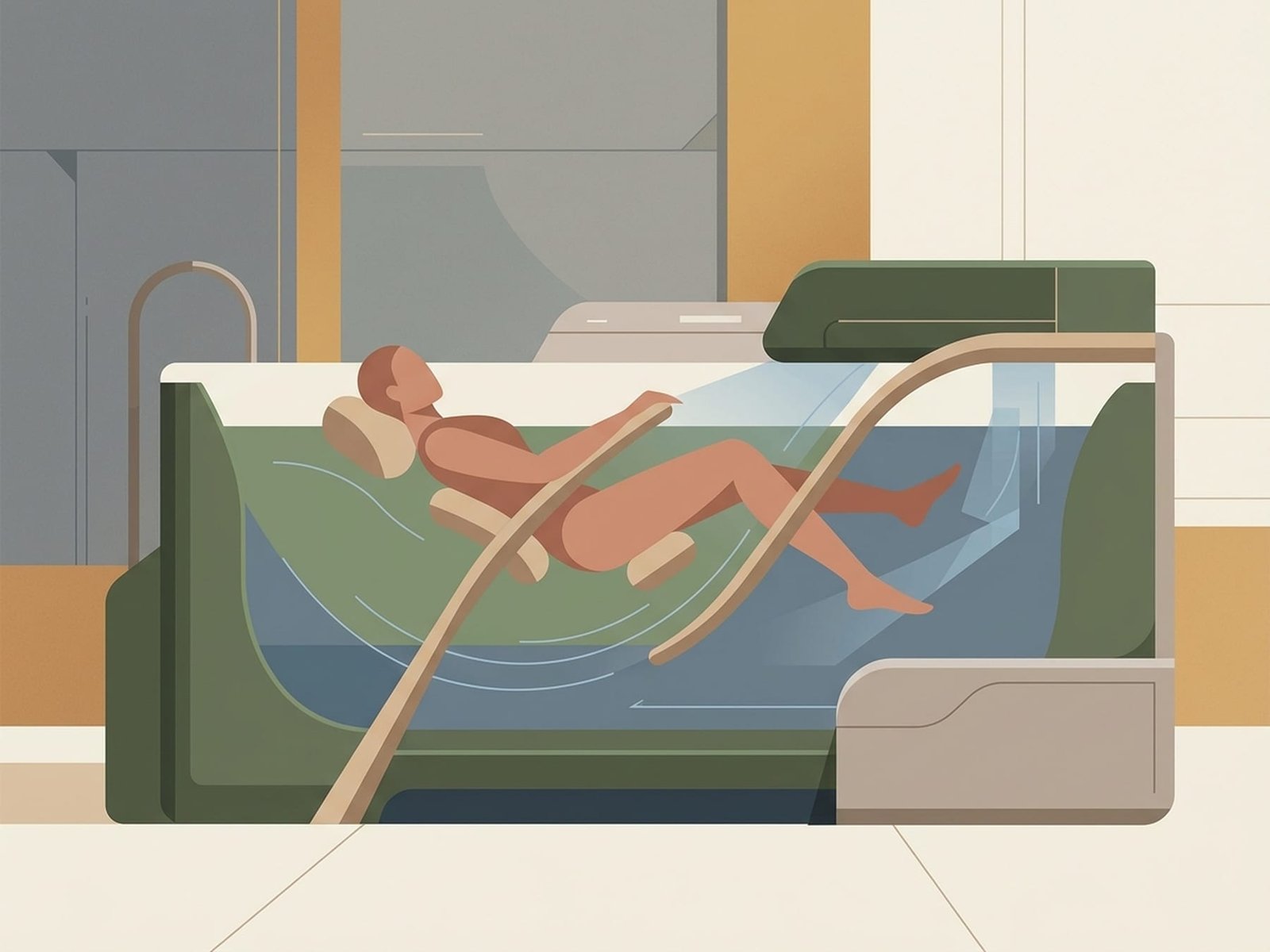
Advanced Aquatic Physiotherapy
Halliwick, Watsu, and Bad Ragaz OverviewStandard aquatic exercise classes at community pools can be useful for some people with general musculoskeletal pain or deconditioning. For patients with more complex chronic myofascial pain, however, generic pool exercise may be too unspecific, poorly tolerated, or not warm enough to reduce guarding meaningfully.
Halliwick, Watsu, and Bad Ragaz represent more specialized forms of aquatic therapy. They typically involve a trained therapist in the water or closely guiding the session, a more intentional therapeutic structure, and a stronger focus on safety, confidence, symptom response, and individual progression. In that sense, they are not simply “pool exercises,” but broader therapeutic methods delivered in water.
The rationale for aquatic therapy in MPS is usually multi-factorial. Buoyancy reduces loading, warm water may reduce guarding and improve comfort, and hydrostatic pressure changes the sensory environment in ways some patients find calming or analgesic. These effects are real and clinically useful, but they vary by patient and are not a guarantee of benefit.
Access remains a major issue. Heated hydrotherapy pools, trained therapists, and longer specialist sessions are not available everywhere. Even when evidence and clinical logic support a trial, the limiting factor is often facility access, travel burden, or availability of appropriate expertise rather than patient willingness alone.
The Three Advanced Methods
These specialized aquatic methods serve different purposes. Some help with water confidence and balance, some focus on supported relaxation and passive movement, and others emphasize more active rehabilitation once the patient is ready.

The Three Methods
Comparative DiagramHalliwick Method
Watsu
Bad Ragaz Ring Method
AquaStretch
Pool-Based Proprioceptive Training
Evidence & Clinical Results
The evidence base for advanced aquatic physiotherapy in MPS and related chronic pain populations is growing, but it is uneven across methods. Watsu has some supportive evidence in fibromyalgia and chronic pain populations, while Bad Ragaz is better established in neurological and rehabilitation settings with more limited MPS-specific data. Halliwick is strongest as a water-confidence and balance framework rather than as a direct MPS-specific intervention.
Clinically, aquatic therapy often seems most useful in patients with high guarding, widespread pain sensitivity, poor tolerance of land-based exercise, or overlapping balance and confidence issues. This does not mean aquatic therapy is superior to all land-based care — rather, it may offer a useful route when standard approaches are not working well enough or are not yet tolerable.
For some patients, water makes movement possible again — not because it fixes everything, but because it reduces enough load and guarding to let therapy begin.
Warm-Water Advantage
Selected Patients
Growing Evidence
Patient Selection Guide
Appropriate patient selection matters. The questions below help clarify whether a patient is likely to tolerate and benefit from aquatic therapy, and which method may be the best fit to start with.
Pool Temperature Requirements
Water Adjustment Readiness
Hydrotherapy Access Checklist
Appropriate Method Selection
Therapeutic Protocols
Aquatic therapy is usually most helpful when the method matches the patient’s current stage: confidence-building first if needed, supported passive work when guarding is high, and more active rehabilitation once the patient is ready. In practice, overlap between these stages is common.
Aquatic Rehabilitation Protocols
Progressive SequencingHalliwick 10-Point Programme
A structured progression designed to build water confidence, balance, and independence. It may be particularly useful for MPS patients who are anxious in water, have balance limitations, or need more gradual entry into aquatic therapy.
- Early stages focus on water adjustment, confidence, and basic control rather than therapeutic intensity
- Rotational control and balance work may help reduce fear-driven guarding in water
- Gliding and movement progression can prepare patients for later therapeutic exercise
- The pace is individualized — some patients move quickly, while others need prolonged adjustment work
- For MPS, the value is often creating enough comfort and safety in water for later therapeutic movement to become possible
Watsu Therapeutic Sessions
Supported warm-water sessions centered on passive movement, floating, and relaxation. In selected patients with high guarding or poor tolerance of land-based care, this may provide a useful low-threat entry point into aquatic treatment.
- Sessions often begin with gentle supported floating, rocking, and breath-synchronized movement
- Cervical, thoracic, or lumbar regions may be addressed through supported passive movement and careful positioning
- Frequency and duration vary by setting, tolerance, and clinician approach
- Some patients report reduced guarding, easier sleep, or lower pain sensitivity after several sessions, though response is variable
- A brief debrief or grounding period after treatment can be helpful, especially in patients who respond strongly emotionally or autonomically
Bad Ragaz Active Rehabilitation
A more active aquatic rehabilitation method using floats and therapist-guided movement patterns. It may be useful once pain and guarding are reduced enough that the patient can participate in graded movement and resistance work.
- Early sessions may begin with more assisted patterns to teach movement and gauge tolerance
- Progression can move toward more active participation and therapist-applied resistance
- Lumbar, hip, shoulder, and cervicothoracic patterns can be adapted to the patient’s symptoms and goals
- Technique quality and symptom response matter more than forcing progression on a timetable
- This method is often best introduced once basic water comfort and adequate relaxation have already been established
Combined Aquatic Programme
A broader programme may combine elements of Halliwick, Watsu, Bad Ragaz, and other supportive aquatic techniques. In practice, the most helpful sequence depends on patient comfort, access, and treatment goals rather than a universal protocol.
- Some patients begin with water adjustment and more passive work before adding active rehabilitation
- Others may combine supported relaxation work with more targeted active exercises in the same treatment block
- AquaStretch or proprioceptive tasks may be added selectively when they fit the presentation
- Home or community-pool strategies may help maintain gains once specialist sessions are reduced
- The long-term goal is usually improved confidence, movement tolerance, and self-management rather than indefinite specialist dependence
Contraindications & Red Flags
Aquatic therapy is often safe when appropriately screened and supervised, but some medical, surgical, and practical situations require delay, modification, or specialist clearance before treatment begins.
Advanced aquatic methods such as Halliwick, Watsu, and Bad Ragaz differ meaningfully from standard community pool exercise classes in training requirements, therapist involvement, and clinical intent.
Warm-water aquatic therapy may help selected MPS patients by reducing load, easing guarding, and making movement more tolerable than on land.
Not every patient with MPS needs aquatic therapy, but it may be worth considering when land-based approaches are poorly tolerated or when fear, balance issues, or high guarding limit progress.
Method selection should be individualized: some patients need water confidence first, some respond best to supported passive treatment, and others are ready for more active aquatic rehabilitation.
Access remains a practical barrier because heated pools, specialist training, and longer therapist-supported sessions are less widely available than standard outpatient physiotherapy.