Is This for Me?
Tai Chi is often a good option for people who need movement that is low-impact, psychologically approachable, and compatible with chronic pain or reduced fitness.
Safe for Beginners
Tai Chi can usually be adapted to the person rather than forcing the person to match the form. That makes it especially useful for beginners, older adults, and pain-sensitive patients.
Chronic Myofascial Pain With a Strong Stress Component
Older Adults
Exercise-Intimidated Individuals
People With Balance Issues
People With Widespread Pain
Complete Beginners

Tai Chi Practice
Diverse Group in Outdoor SettingThe Evidence Base
Tai Chi has been studied across pain, balance, mobility, and quality-of-life outcomes. The evidence supports it as a reasonable and often helpful option, especially when the patient wants gentle whole-body movement rather than intense exercise.
Tai Chi is often most helpful not because it is “magical,” but because it combines gentle movement, breathing, balance, and nervous-system downregulation in one practice.
Musculoskeletal Pain
Systematic reviews generally support Tai Chi as a reasonable option for chronic musculoskeletal pain. Benefits are usually modest to moderate and are often similar to other well-designed gentle exercise programs rather than dramatically superior to them.
Systematic reviews of randomized trials
Low Back Pain
Trials in chronic low back pain suggest that Tai Chi can reduce pain and improve function, especially when practiced consistently over several weeks. Its appeal is often strongest in patients who need a lower-threat entry point into movement.
Randomized trials and comparative studies
Fibromyalgia
Tai Chi has shown meaningful benefit in fibromyalgia, particularly in global well-being, pain, sleep, and confidence in movement. It is one of several exercise approaches that can be useful rather than the only right choice.
Randomized controlled trials and follow-up studies
Compared to Conventional Exercise
Tai Chi often performs similarly to other structured exercise programs in pain outcomes, while sometimes showing added benefit in stress, sleep, or confidence. That difference likely reflects its combined physical and meditative qualities rather than a purely mechanical effect.
Head-to-head comparison trials
Safety Profile
Tai Chi has a generally favorable safety profile in research settings, especially when the practice is scaled to the participant’s age, balance, and pain level. As with any movement system, poor matching of intensity or progression can still cause problems.
Safety reporting across clinical trials
Why Tai Chi Sometimes Feels Different
Tai Chi may feel different from conventional exercise because it layers movement with slower breathing, pacing, balance, and attentional focus. That does not make it universally superior, but it does make it a particularly useful fit for some chronic pain patients.
How Tai Chi May Help Myofascial Pain
Tai Chi likely helps through a combination of breathing, mild aerobic work, postural control, body awareness, and stress regulation. That multidimensional profile is part of why it fits chronic pain so well.
Deep Diaphragmatic Breathing
Tai Chi often emphasizes slower, lower, more coordinated breathing rather than fast upper-chest breathing. This shift alone can change how the neck, chest, and trunk feel during movement.
MPS-Specific Relevance
For myofascial pain patients, this may help reduce accessory-muscle overuse, improve relaxation, and lower the stress-related tension that often perpetuates trigger points.
Mild-to-Moderate Aerobic Intensity
Tai Chi is usually low to moderate in intensity, which makes it accessible to people who are not ready for heavier exercise but still need circulation and movement exposure.
MPS-Specific Relevance
Improved circulation and repeated low-threat movement may help reduce stiffness and improve tissue tolerance without heavily provoking sensitive muscles.
Balance & Proprioception
Weight shifts, stance changes, and slower transitions challenge proprioception and balance in a controlled format.
MPS-Specific Relevance
Because chronic pain can alter body awareness and protective movement strategies, Tai Chi may help restore smoother movement and reduce over-guarding.
Meditative Movement
Tai Chi requires attention to the body during movement, which gives it a mindful quality distinct from many conventional exercise forms.
MPS-Specific Relevance
That mind-body component may be particularly useful in chronic pain patients with fear, stress, or pain-related hypervigilance.
Gentle Whole-Body Loading
Tai Chi loads the body lightly but repeatedly, often through controlled ranges rather than high force or impact.
MPS-Specific Relevance
This can make it a good fit for patients who flare with heavier exercise but still need gradual exposure to coordinated full-body movement.
Stress Reduction
Many people experience Tai Chi as calming. The combination of pace, breathing, rhythm, and attention often reduces subjective stress and helps with downregulation.
MPS-Specific Relevance
Because stress can amplify trigger point irritability, poor sleep, and generalized guarding, this may be one of Tai Chi’s most relevant effects in MPS.
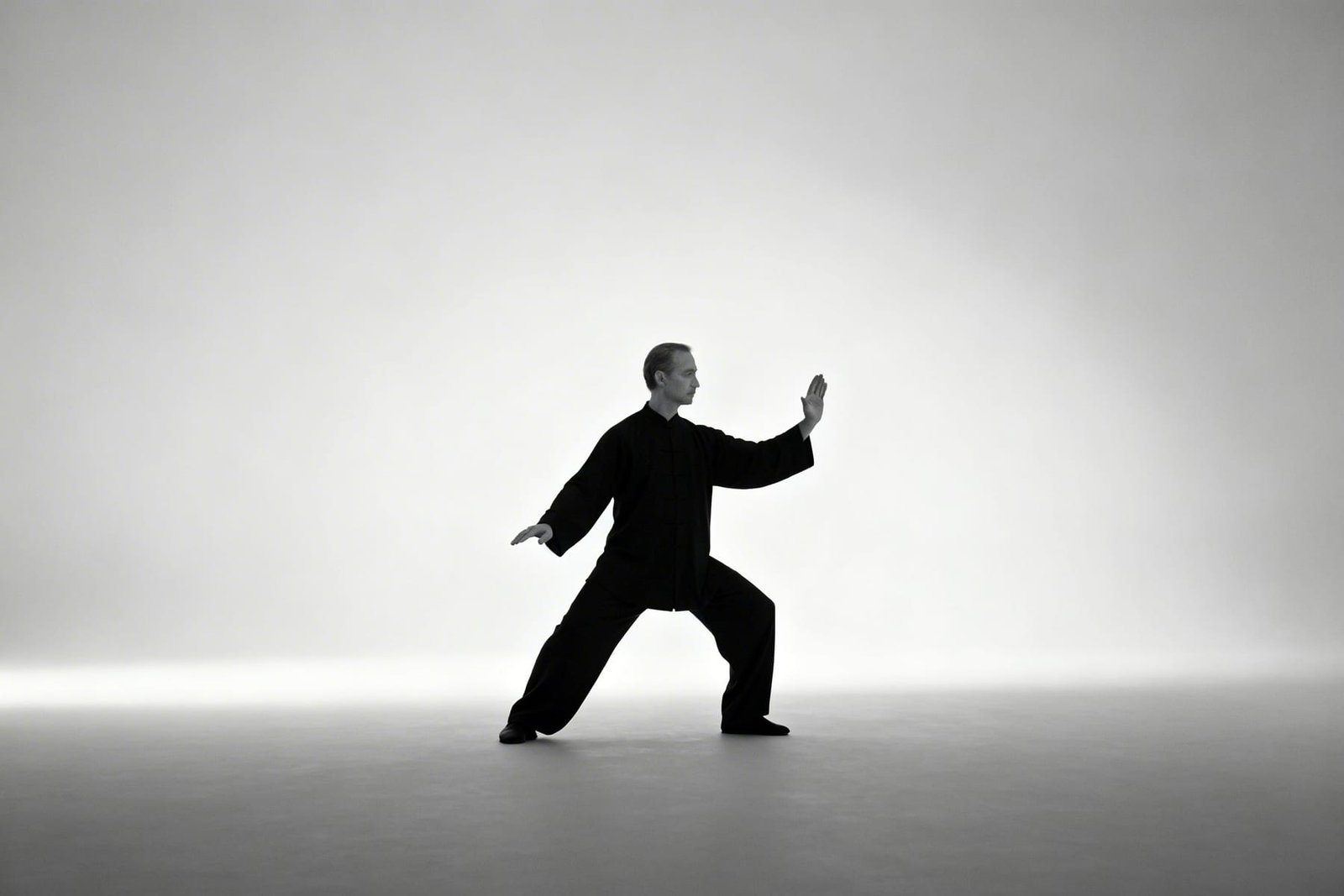
Tai Chi Mechanisms of Action
InfographicKey Movements for Pain Relief
These movements illustrate the kinds of qualities Tai Chi trains: coordinated weight shift, controlled range, upper-quarter relaxation, trunk integration, and balance.
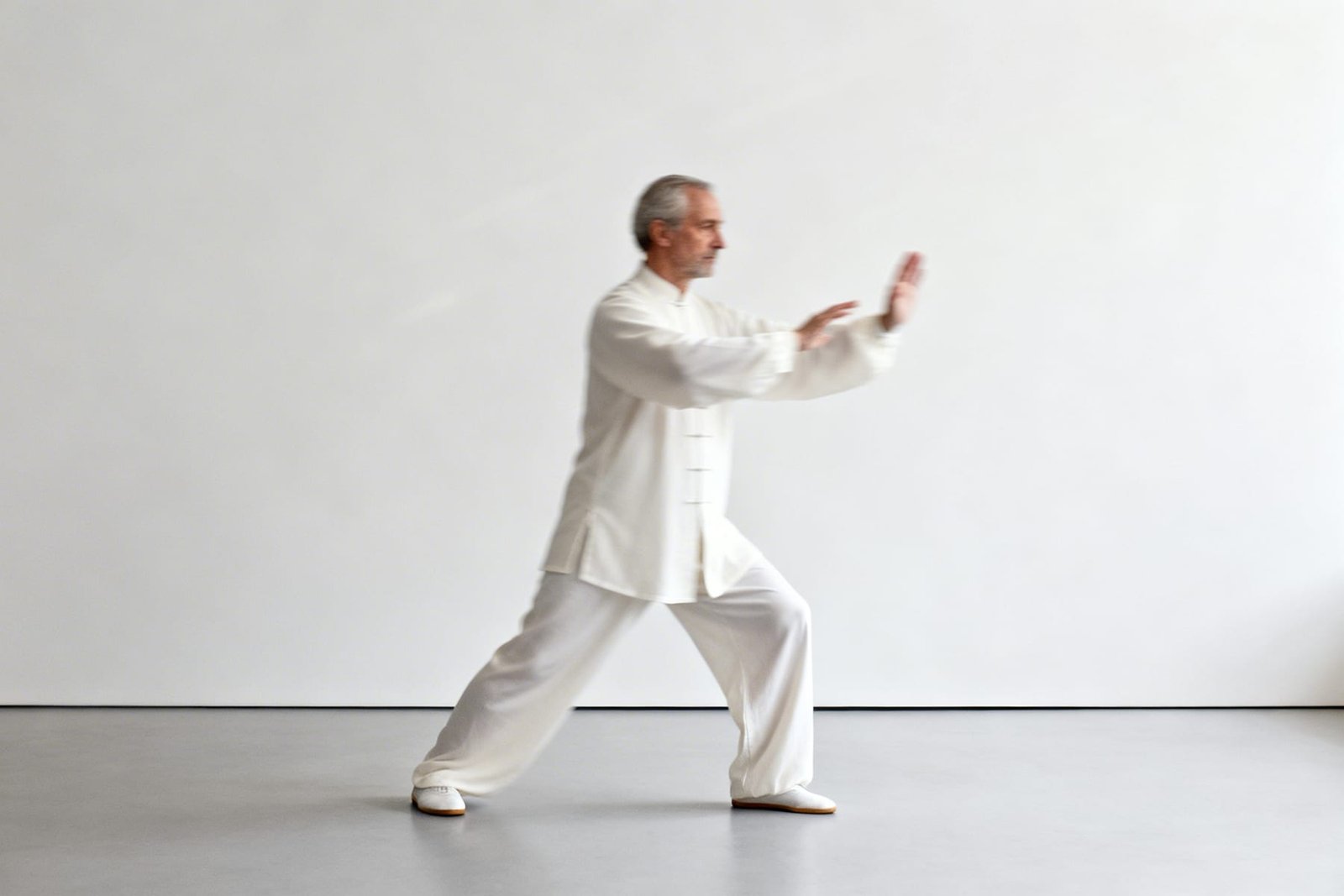
Tai Chi Key Movements
Illustrated GuideHealth Benefits Beyond Pain
One reason Tai Chi is attractive in pain care is that the benefits often extend beyond pain itself and into areas like balance, sleep, mood, and confidence.
Improved Aerobic Capacity
Muscular Strength
Balance & Fall Prevention
Quality of Life
Psychological Well-Being
Better Sleep
The Compounding Effect
A small improvement in sleep can improve pain tolerance. Better balance can improve confidence. Lower stress can reduce guarding. Tai Chi often helps because these changes reinforce each other over time.
Safety Considerations
Tai Chi is generally safe, but “generally safe” still means the practice should be adapted to the person’s balance, pain irritability, and current capacity.
Very Few Absolute Contraindications
Pain Monitoring
Stance Modifications
Range of Motion Adjustments
Chair-Supported Practice
Getting Started
Starting does not require special equipment or athletic experience. The most important thing is choosing a simple form, a reasonable schedule, and a style of practice that feels sustainable.
Choose Yang Style First
Find a Qualified Instructor
Consider Online Options
Establish a Practice Schedule
Commit to Several Weeks
Minimal Equipment Needed
Recommended Practice Schedule
Short regular practice: Many patients do well with 15-30 minutes most days if that is realistic.
Longer weekly sessions: Longer guided classes can also work well when consistency is maintained.
Give it time: Do not judge the method too early. The first weeks are often about learning the rhythm of the practice rather than immediately feeling dramatic pain relief.
Tai Chi Practice Timeline
8-Week ProgressionSafe for Many Pain Patients
Tai Chi is often one of the most approachable movement options for chronic pain patients because it is easy to scale and usually low threat.
Useful for Both Body and Nervous System
Its value comes partly from movement and partly from breathing, pacing, attention, and stress regulation.
Comparable to Other Gentle Exercise Approaches
Tai Chi often performs similarly to other good low- to moderate-intensity exercise programs, with possible added benefit in stress and sleep domains.
Benefits Extend Beyond Pain
Balance, confidence, mood, and sleep often improve alongside pain and function.
Consistency Matters More Than Complexity
A simple, repeatable practice done regularly usually beats chasing advanced forms or long sessions too early.
A Sustainable Long-Term Option
One of Tai Chi’s best features is that it can remain useful across the lifespan and across many levels of physical capacity.
Continue Learning
Yoga for Pain
How yoga combines flexibility, breathwork, and downregulation in chronic pain care.
Pilates for Pain
A more control-focused movement approach that overlaps well with Tai Chi in some patients.
Exercise Guide
A broader overview of movement options for chronic myofascial pain.
Mindfulness & Meditation
How mindfulness-based practices can help reduce stress-related pain amplification.
Older Adults & Pain
Practical guidance for pain management in older adults where balance, confidence, and recovery are especially important.