Why Iyengar Yoga for Myofascial Pain
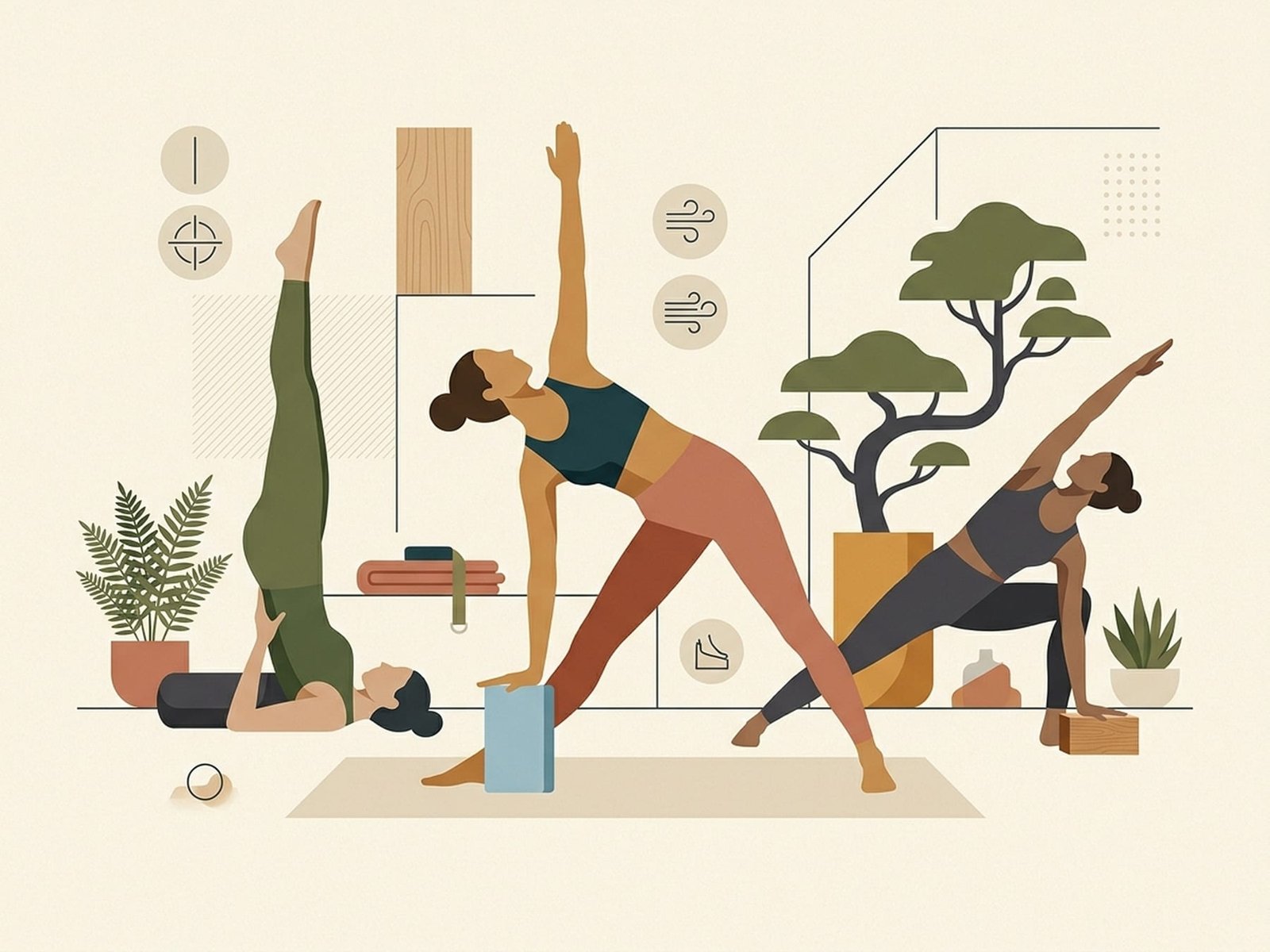
Iyengar Yoga Props
Blocks, Bolsters, Straps, and Wall Support OverviewIyengar yoga is known for a precise, prop-supported approach in which blocks, bolsters, straps, blankets, chairs, and walls are used to adapt postures to the person rather than forcing the person to match the full expression of the pose. That makes it especially appealing in therapeutic settings where pain, stiffness, weakness, fatigue, or balance limitations are part of the picture.
The key difference between this approach and a more general yoga class is not just the presence of props, but the use of props to improve support, alignment, and tolerance. For chronic pain patients, this can be clinically meaningful: the pose becomes something that is adjusted to the body’s current capacity rather than a target to be achieved at any cost.
For myofascial pain, supported yoga may help through several overlapping mechanisms: reduced guarding, calmer breathing, gradual exposure to movement, improved alignment, and more tolerable stretching or loading. It is too simplistic to say that trigger points respond only to prolonged passive positioning, but many pain patients do benefit from slower, more supported positions compared with aggressive stretching or fast-paced flow.
Finding an experienced teacher still matters. A teacher who understands pain, hypermobility, postoperative limitation, or major mobility restriction is more likely to modify poses skillfully and recognize when a student needs more support, less range, or a different sequence entirely. That distinction is often more important clinically than the style label alone.
Essential Props & Their Applications
These props form the foundation of many Iyengar-inspired therapeutic adaptations. The important question is not which prop is “best,” but which combination makes the pose safer, calmer, and more effective for the person in front of you.
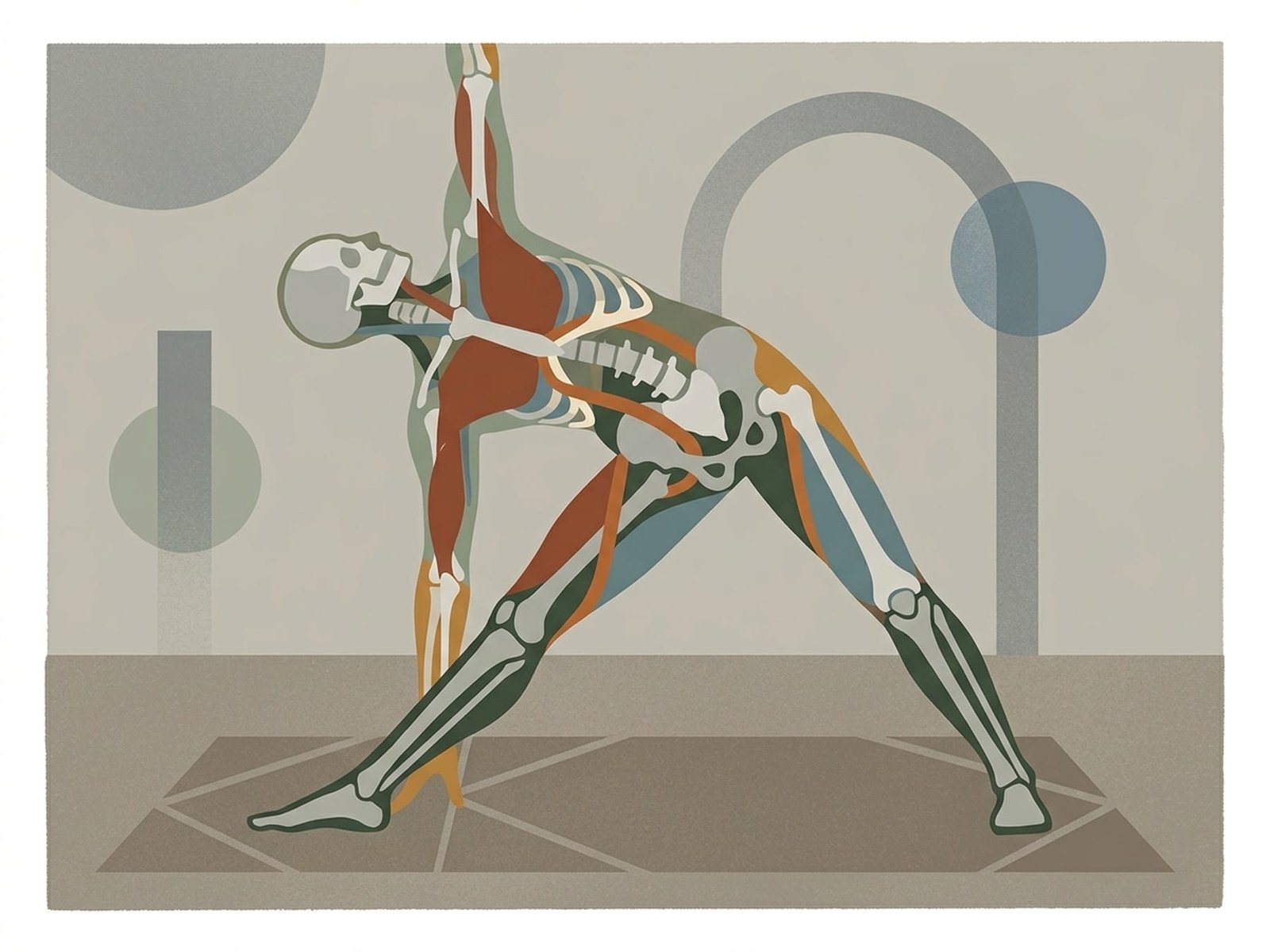
Essential Yoga Props
Applications for Chronic Pain and MPSYoga Blocks
Height and support modifierFoam and cork blocks offer different levels of comfort and stability. A core therapeutic principle is that blocks bring the floor closer to the student, reducing the need to force range that is not yet comfortable or controllable. In pain care, blocks may help make forward folds, balance work, and seated poses more accessible by reducing strain, improving alignment, and allowing the spine and hips to stay in a better-supported position.
Bolsters
Passive opening & supported restRound and rectangular bolsters provide support for restorative postures, chest-opening positions, supported forward folds, and reclined hip-opening poses. Their main therapeutic value is that they reduce muscular effort and allow the body to rest in a more tolerable position for longer. In chronic pain care, that may help reduce guarding, improve comfort, and make slower breathing and relaxation easier. Hold times should be individualized rather than fixed.
Yoga Straps / Belts
Reach extender for limited rangeStraps help students maintain better alignment without collapsing into ranges they cannot yet control. They are useful in seated folds, leg stretches, and shoulder-opening variations when the goal is controlled access to a position rather than pulling harder. In therapeutic settings, the strap functions best as a precision and support tool, not as a way to force extra range.
Wall Support
Decompression and alignment referenceThe wall can provide balance support, postural feedback, and a stable reference for decompression-style positions. Legs-up-the-wall, wall-supported standing poses, and wall-based shoulder or thoracic-opening variations are commonly used because they reduce balance demands and let the person focus on breathing, alignment, and symptom tolerance. For some patients, the wall is one of the most useful props because it is accessible and easy to reproduce at home.
Chairs
Accessibility and adaptationChair-supported yoga can be useful for older adults, deconditioned patients, post-surgical patients, and anyone who cannot comfortably get down to or up from the floor. Chair-assisted backbends, twists, and supported rest positions make practice more accessible while limiting the need for excessive kneeling, floor transfers, or unsupported spinal loading. Chairs are best understood as adaptation tools, not a lesser form of practice.
Evidence & Outcomes
The evidence base for yoga in chronic pain has expanded substantially, especially in chronic low back pain and some other persistent pain conditions. Overall, the literature supports yoga as a potentially useful part of care for selected patients, but study designs, populations, and yoga styles vary considerably, which makes strong style-specific claims difficult.
Iyengar-style yoga is often considered especially suitable for clinical populations because of its slower pace, heavy use of props, and emphasis on individual modification. That is a plausible therapeutic advantage, especially for pain, hypermobility, or restricted mobility, but it should be framed as a good fit for many patients rather than as a proven universally superior method. In practice, the quality of instruction and the appropriateness of the modifications often matter more than the label of the class.
For pain patients, the therapeutic question is not “Can you do the pose?” but “Can the pose be adapted so it helps rather than aggravates?”
Promising Evidence
Yoga can help selected chronic pain populations
Prop Support
Often makes practice more accessible and tolerable
Heterogeneous Literature
Outcomes vary by style, teacher, and population
Finding the Right Practice
These assessments help identify what kind of support, modification, and teaching environment may be most appropriate. They are less about “passing” a mobility test and more about matching the practice to the body safely.
Pain Location Mapping
Posture-Specific Symptom Mapping
Before beginning a therapeutic yoga program, note which positions tend to aggravate symptoms and which tend to calm them. For example, some patients with neck pain do poorly with unsupported neck extension, while some with lumbar pain struggle with deep unsupported forward bending. The goal is not to self-diagnose by pose, but to identify patterns that help guide safer modification. A skilled teacher or clinician can then use this information to adjust the practice.
Spinal Mobility Screen
Standing Forward Fold Assessment
A simple forward-fold screen can help determine how much support is needed. The distance from the hands to the floor gives a rough sense of how much elevation, chair support, or other modification may be useful. The therapeutic point is not how far the person can reach — it is whether they can find a supported position that allows breathing, spinal length, and symptom tolerance without strain.
Hypermobility Screen for Yoga
Restricted vs. Hypermobile Pattern Recognition
Some students need support because they cannot reach a position comfortably; others need support because they can go too far without enough control. In hypermobile patients, yoga often needs to emphasize micro-bending, muscular engagement, and stability rather than passive end-range stretching. Recognizing this difference is clinically important because the safest yoga cue for one patient may be the wrong cue for another.
Neurodynamic Tension Assessment
Sciatic Nerve Sensitivity in Forward Folds
When forward bends provoke symptoms down the back of the leg, it is useful to distinguish local muscular stretch from neural tension. Burning, tingling, electric, or distal symptoms suggest the need for a more modified approach, such as bending the knee or reducing range. This is a helpful screening distinction, but it is not a substitute for formal clinical assessment when symptoms are significant or persistent.
Therapeutic Sequences
These therapeutic sequences show how Iyengar-style yoga can be scaled from quiet restorative work toward more active movement. The progression should follow symptoms, recovery, and function — not a fixed schedule.
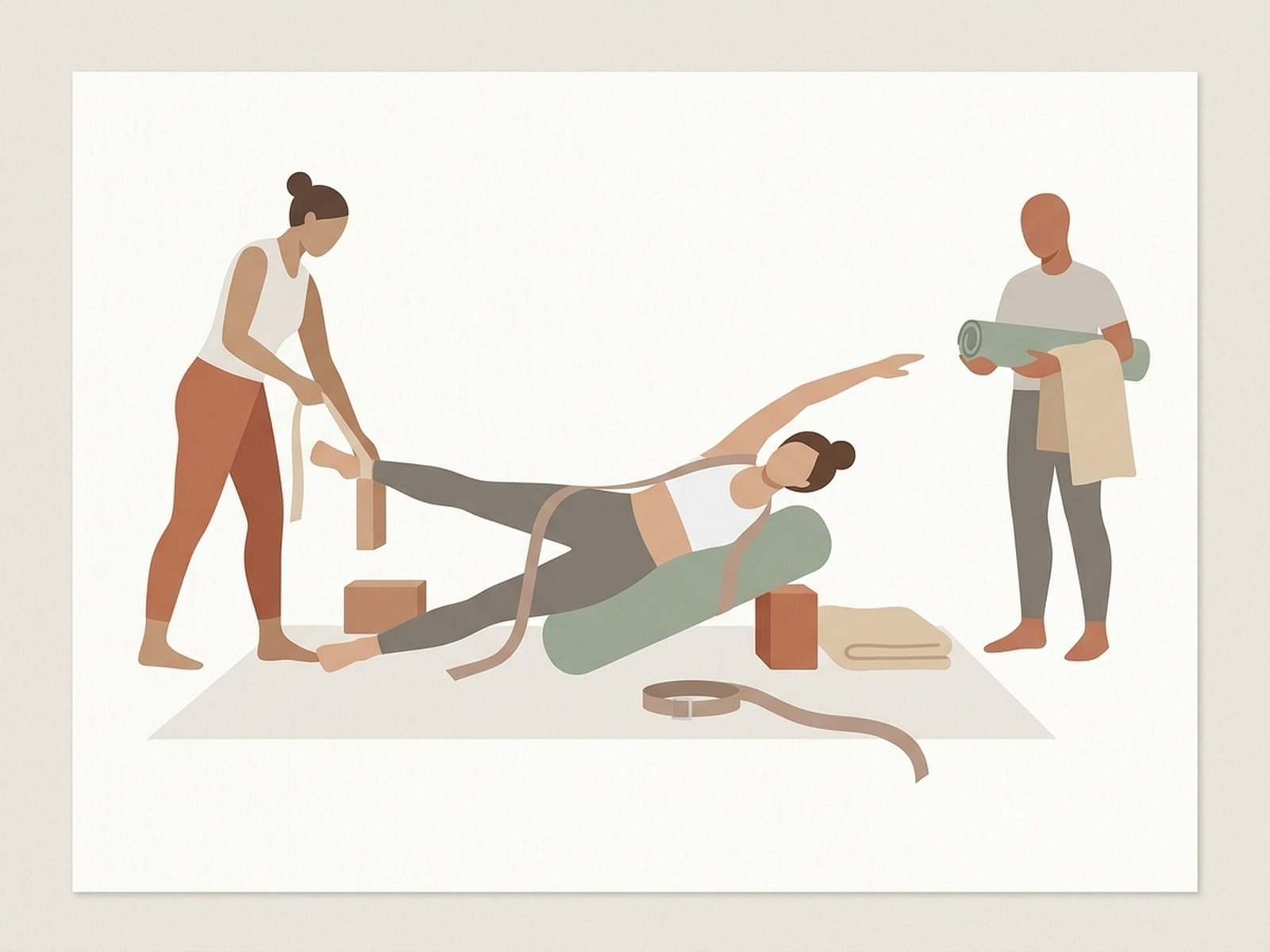
Iyengar Therapeutic Sequences
Restorative to Active ProgressionRestorative Iyengar Sequence
A fully supported restorative sequence may be a good starting point during pain flares, fatigue, or early reintroduction to movement. The main goal is to reduce effort, improve comfort, and allow quieter breathing and nervous-system downregulation.
- Supported chest-opening or thoracic-extension position using a bolster
- Supported reclined bound-angle or similarly modified hip-opening posture when tolerated
- Legs-up-the-wall or another supported inversion-style rest position when appropriate
- Constructive rest or supported savasana for lumbar neutrality and recovery
- Sequence length and hold time should be individualized based on comfort, fatigue, and symptom response
Cervical & Shoulder MPS Protocol
A short therapeutic sequence may help selected patients with neck, upper trapezius, or shoulder girdle tension when it emphasizes decompression, thoracic support, and gentle scapular control rather than aggressive stretching.
- Wall-supported forward-leaning positions to unload the neck and open the thoracic region
- Gentle strap-assisted chest or shoulder opening only within symptom tolerance
- Scapular mobility and low-load thoracic-extension work
- Neck retraction or alignment exercises using the wall as feedback when appropriate
- A supported restorative pose at the end of the sequence to reduce post-practice guarding
Lumbar & Hip MPS Protocol
A progressive sequence for low back, hip, and gluteal pain often works best when it combines supported decompression, gentle hip mobility, and gradual reintroduction of movement rather than forceful stretching.
- Constructive rest or supported supine positioning for lumbar unloading
- Supported twists or hip-opening positions that reduce muscular guarding
- Modified pigeon or figure-4 style positions with bolsters or blankets as needed
- Supported standing forward bends using blocks or a chair to limit strain
- Strap-assisted leg mobility work with knee bend and range adjusted to symptom behavior
Restorative-to-Active Progression
Many patients benefit from progressing gradually from passive or restorative work toward more active standing and strengthening-based practice. The progression should follow symptom behavior rather than a rigid timetable.
- Begin with more supported restorative work during highly irritable phases
- Introduce wall-supported standing poses when tolerance improves
- Progress to freestanding poses with blocks or chair support when needed
- Add gentle active sequences only when recovery between sessions is acceptable
- During flares, it is often reasonable to temporarily return to a calmer, more restorative version of practice
When to Modify or Avoid
Therapeutic yoga can be very adaptable, but some patients still require postponement, specialist review, or major modification. Pain-informed teaching includes knowing when not to continue as usual.
Acute disc herniation with progressive neurological symptoms or bowel/bladder change
Standard yoga practice should be paused until the patient has been medically assessed. A modified therapeutic program may still be possible later, but acute neurological red flags require medical evaluation first.
Known cervical instability or medically significant upper cervical risk
Advanced neck-loading or inversion-style poses may be inappropriate. These patients need specialist guidance, and some positions should be avoided or heavily modified depending on the condition.
New or worsening arm tingling, weakness, or vascular-type symptoms during shoulder-opening work
Stop the provoking posture and reassess before continuing. Neurovascular compression, thoracic outlet-type symptoms, or excessive local irritation may need clinical review.
Post-class pain or stiffness that is clearly worse the next day and not settling
This usually means the load, duration, or range was too much for the current phase. The response should be to simplify, reduce intensity, or increase support — not to push through repeatedly.
Key Takeaways
Iyengar-style yoga is especially known for prop use, slower pacing, and alignment-based adaptation, which can make yoga more accessible for some chronic pain patients.
Props are best understood as therapeutic tools that help match the pose to the person, not as markers of weakness or inexperience.
Supportive, lower-effort positions may be more appropriate than aggressive stretching during pain flares or in highly irritable myofascial presentations.
Research on yoga for chronic pain is promising, but the literature is heterogeneous and does not justify claiming one style is universally superior in all cases.
For patients with pain, hypermobility, deconditioning, or post-surgical limitations, finding a teacher experienced in therapeutic modification is often more important than choosing the most physically demanding class format.