The Gut-Muscle Pain Connection

IBS & MPS
The Viscero-Somatic Connection OverviewThe gut and the abdominal muscle wall share the same pain pathways — a neuroanatomical reality that explains one of the most clinically confusing overlaps in medicine. Visceral afferents from the gut and somatic afferents from the abdominal musculature converge on the same second-order neurons in the dorsal horn of the spinal cord. When the gut is chronically inflamed or sensitized — as in IBS — these shared neurons become hyperexcitable, lowering the threshold for pain arising from the abdominal wall muscles. The result: an IBS patient develops abdominal trigger points not because of direct muscle injury, but because their gut has sensitized their spinal cord.
The gut-brain axis — the bidirectional communication network between the enteric nervous system, the central nervous system, and the immune system — perpetuates myofascial pain in IBS patients. Gut microbiome dysbiosis, which is increasingly recognized in IBS, elevates systemic inflammatory markers that lower pain thresholds throughout the body. Stress activates both the HPA axis (driving cortisol release and muscle tension) and the enteric nervous system (altering gut motility and visceral sensitivity). This creates the stress-gut-muscle triangle: a vicious cycle in which psychological stress worsens IBS symptoms, IBS symptoms worsen central sensitization, and central sensitization amplifies both gut and muscle pain.
One of the most commonly missed diagnoses in IBS is abdominal wall myofascial pain syndrome. Trigger points in the rectus abdominis, internal and external obliques, and iliopsoas can produce pain that is difficult to distinguish from visceral pain — cramping, bloating-like discomfort, and urgency. Clinical experience suggests that a substantial proportion of patients with IBS have clinically significant abdominal wall trigger points, though precise prevalence estimates vary across studies. Many IBS patients who have undergone extensive GI investigations without a structural explanation for their pain may have an abdominal wall MPS component — a condition that often responds well to trigger point release once correctly identified using the simple Carnett's test.
The treatment revolution in IBS-MPS management is the recognition that integrated care — combining gastroenterology medical management, physiotherapy trigger point treatment, dietitian-guided low FODMAP therapy, and psychological intervention — produces outcomes superior to any single-discipline approach. Low FODMAP diet reduces gut-driven mast cell activation that sensitizes abdominal wall nociceptors. Trigger point release reduces the somatic afferent bombardment that perpetuates visceral hypersensitivity. Gut-directed hypnotherapy reduces central sensitization shared by both conditions. The gut-muscle pain cycle can be interrupted at multiple points simultaneously — and that is precisely what integrated treatment achieves.
The Gut-Muscle Connection
Viscero-Somatic Convergence
Mast Cell Bridge
Central Sensitization
Stress-Gut-Muscle Triangle
Key Mechanisms
Five mechanisms explain the biological link between IBS and myofascial pain syndrome. Understanding them helps justify integrated treatment to patients and guides selection of the correct intervention at each stage of the gut-muscle pain cycle.
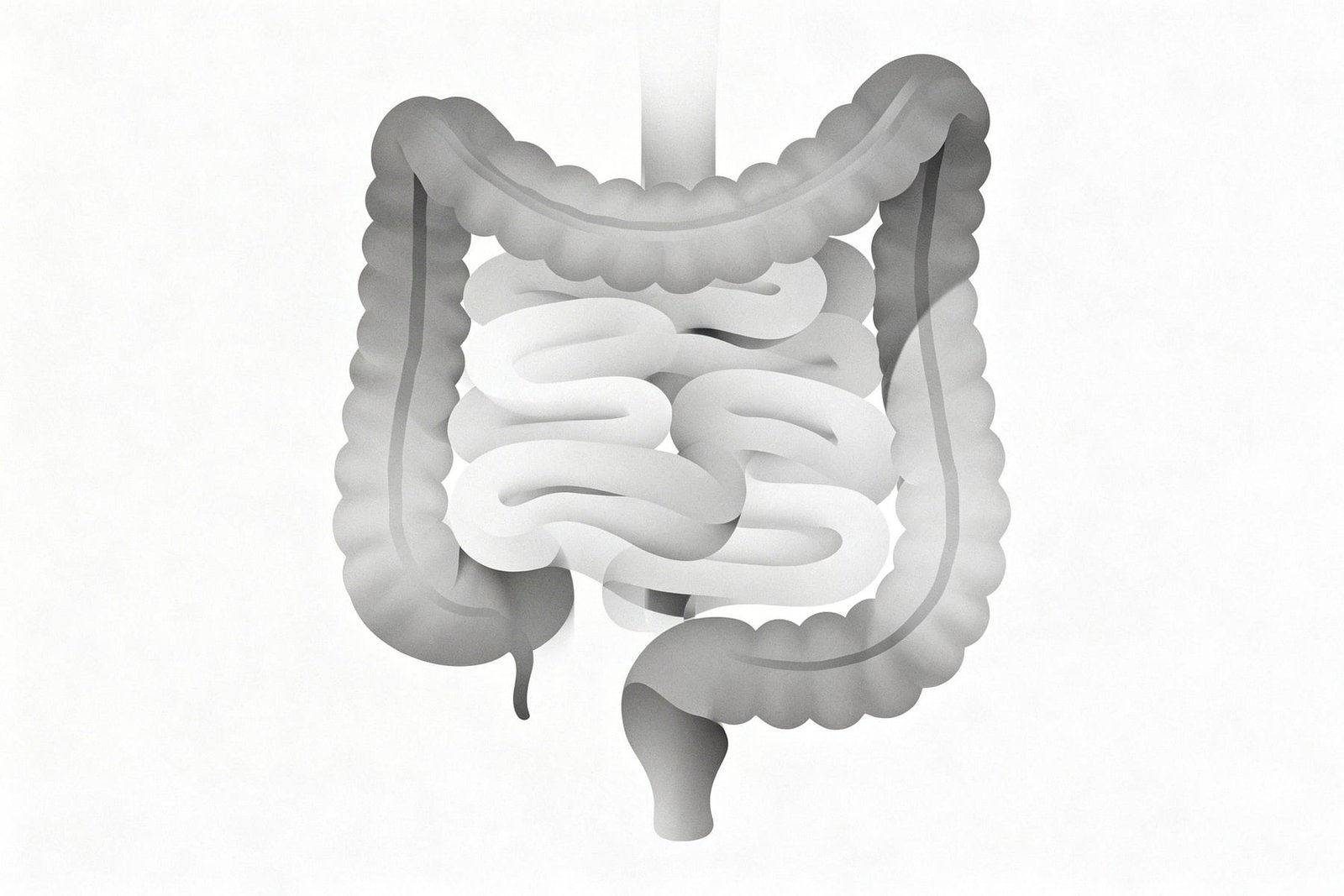
Viscero-Somatic Convergence
Spinal Cord Dorsal Horn DiagramViscero-Somatic Convergence
Central Sensitization as Common Ground
The Gut-Brain-Muscle Axis
Abdominal Wall MPS
Mast Cell Activation — The Tissue Bridge
Evidence & Epidemiology
The epidemiological overlap between IBS and MPS is striking. IBS is one of the most common functional GI disorders, with global prevalence estimates ranging from roughly 4% to 10% depending on diagnostic criteria, and a higher prevalence in women. Studies of IBS cohorts consistently show elevated rates of widespread musculoskeletal pain, fibromyalgia, and trigger point sensitivity — consistent with shared central sensitization. Patients with both IBS and MPS tend to report higher pressure pain sensitivity at remote sites (the hand, the leg) than patients with either condition alone, suggesting additive central nervous system amplification. The economic burden of the IBS-MPS overlap is substantial: these patients tend to have higher healthcare utilization, more missed workdays, and lower quality of life scores than patients with either condition in isolation.
Mast cell research has clarified the local tissue mechanism linking IBS gut inflammation to abdominal wall MPS. Mast cells in the intestinal mucosa are activated by IBS triggers — stress, specific foods, gut dysbiosis — and release histamine, prostaglandins, and tryptase. These mediators are not confined to the gut lumen; they enter the mesenteric circulation and directly sensitize abdominal wall nociceptors. This explains the clinical observation that IBS flares reliably worsen abdominal trigger points, and that dietary interventions that reduce IBS symptoms (particularly low FODMAP) also reduce abdominal trigger point sensitivity. The mast cell is the molecular bridge between the gut and the muscle wall.
The gut does not hurt in isolation — it sensitizes the entire abdominal wall. Treating IBS without assessing abdominal trigger points is leaving the most common somatic component of the condition untreated.
Common
Common
Shared
Assessment Tools
These four assessment tools allow systematic evaluation of the IBS-MPS overlap. Carnett's test is the essential starting point in every patient. The IBS-SSS provides objective severity tracking. The FODMAP response assessment identifies diet-driven trigger point flares. And psychological screening identifies the subgroup requiring integrated gastroenterology-psychology-physiotherapy care.
Carnett's Test
Distinguishing Abdominal Wall from Visceral Pain
IBS Symptom Severity Scale
IBS-SSS — Correlating Gut with Muscle Symptoms
Low FODMAP Diet Response Assessment
Food-Triggered MPS Flare Identification
Psychological Comorbidity Screen
Anxiety and Depression in IBS-MPS Overlap
Integrated Treatment
Integrated treatment of IBS and MPS follows a logical sequence that addresses gut sensitization, local trigger point burden, central amplification, and medical management simultaneously. No single intervention addresses all four components — combined treatment is the evidence-based standard for this overlap condition.

Integrated IBS-MPS Treatment Protocol
AlgorithmIntegrated Diet and Trigger Point Protocol
Combining low FODMAP diet with concurrent abdominal wall MPS assessment and treatment — the synergistic approach that addresses both gut sensitization and trigger point burden simultaneously.
- 6-week low FODMAP diet to reduce gut sensitization and mast cell activation
- Concurrent abdominal wall MPS assessment: Carnett's test and systematic palpation
- Abdominal trigger point release after first 3 weeks of diet (as gut sensitization reduces, abdominal wall becomes accessible)
- Reintroduce foods while monitoring abdominal trigger point reactivity to identify culprit foods
- The synergistic effect: gut quietening + trigger point release = superior to either alone
Abdominal MPS-Specific Manual Therapy
Specialized manual therapy addressing the abdominal wall trigger points that perpetuate and are perpetuated by IBS — techniques requiring specific training and patient positioning.
- Diaphragm release at the viscero-somatic junction
- Iliopsoas trigger point release via abdominal approach
- Rectus abdominis trigger point technique (Carnett's-guided)
- Internal oblique and transverse abdominis release
- Visceral manipulation by trained practitioner (specialized training required — not standard physiotherapy)
- Abdominal self-massage protocol for home use between treatments
Brain-Gut-Muscle Psychological Intervention
Psychological interventions targeting the shared central sensitization underlying both IBS and MPS — gut-directed hypnotherapy has the strongest evidence base for this overlap condition.
- Gut-directed hypnotherapy (Manchester protocol) — best evidence for IBS, also reduces overall pain sensitivity
- CBT for IBS-pain overlap — addressing catastrophizing about both gut and somatic symptoms
- Mindfulness-based stress reduction: simultaneous effects on gut motility and MPS central sensitization
- Digital therapeutics for gut-brain axis: Mahana and Nerva apps for between-session support
- How to find gut-directed hypnotherapy practitioners — specialist referral pathways
Medical Management Integration
Coordinating gastroenterology medical management with MPS physiotherapy — several IBS medications have dual benefit for the gut-muscle pain overlap.
- Low-dose amitriptyline 10-25mg at night addresses both IBS and MPS simultaneously — dual mechanism
- Mirtazapine for IBS-D with comorbid MPS — particularly useful with poor sleep and appetite
- Rifaximin (for SIBO if present) and mebeverine for gut spasm — reducing visceral afferent bombardment
- Avoiding opioids which worsen gut motility and paradoxically increase central sensitization
- Gastroenterology partnership: coordinating medical IBS treatment with physiotherapy trigger point management
Distinguishing IBS-MPS from Serious GI Disease
IBS is a diagnosis of exclusion. Before attributing abdominal pain to the IBS-MPS overlap, organic pathology must be excluded with appropriate clinical judgment. The following presentations require immediate medical evaluation and must not be attributed to IBS or abdominal wall MPS without appropriate investigation.
Key Takeaways
IBS and MPS share central sensitization as a common biological mechanism — treating one condition improves the other through shared neural pathways.
Carnett's test is the key clinical tool to identify abdominal wall MPS in IBS patients — it is quick, reliable, and should be performed in every IBS patient with focal abdominal tenderness.
Low FODMAP diet reduces gut sensitization which secondarily reduces abdominal trigger point reactivity — diet is a physiotherapy tool, not just a gastroenterology tool.
Treating both conditions simultaneously produces better outcomes than addressing each in isolation — integrated gastroenterology-physiotherapy care is the evidence-based model.
Gut-directed hypnotherapy is the best-evidenced psychological intervention for the IBS-MPS overlap — it reduces both visceral hypersensitivity and central pain sensitization.