Exercise and rehabilitation
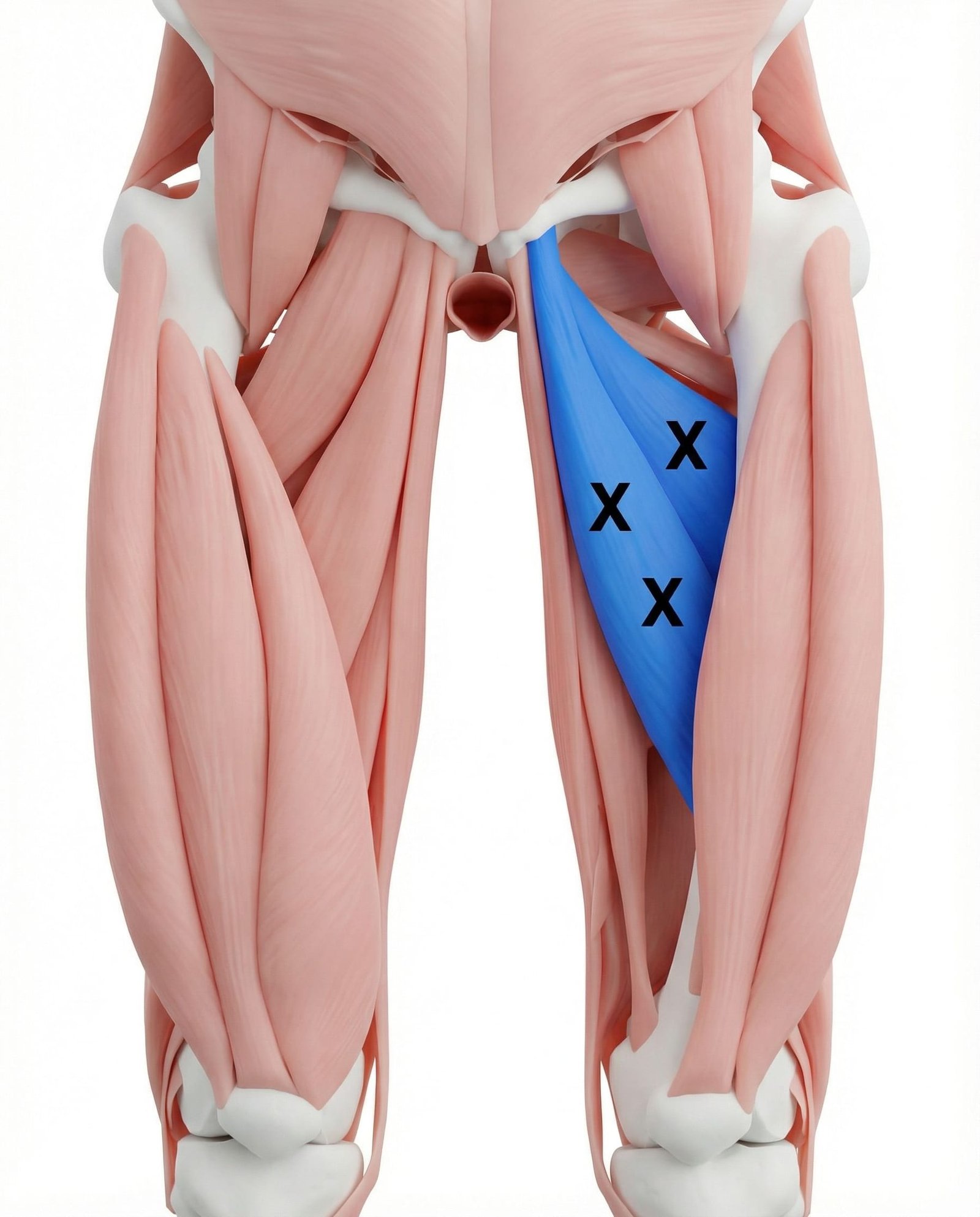
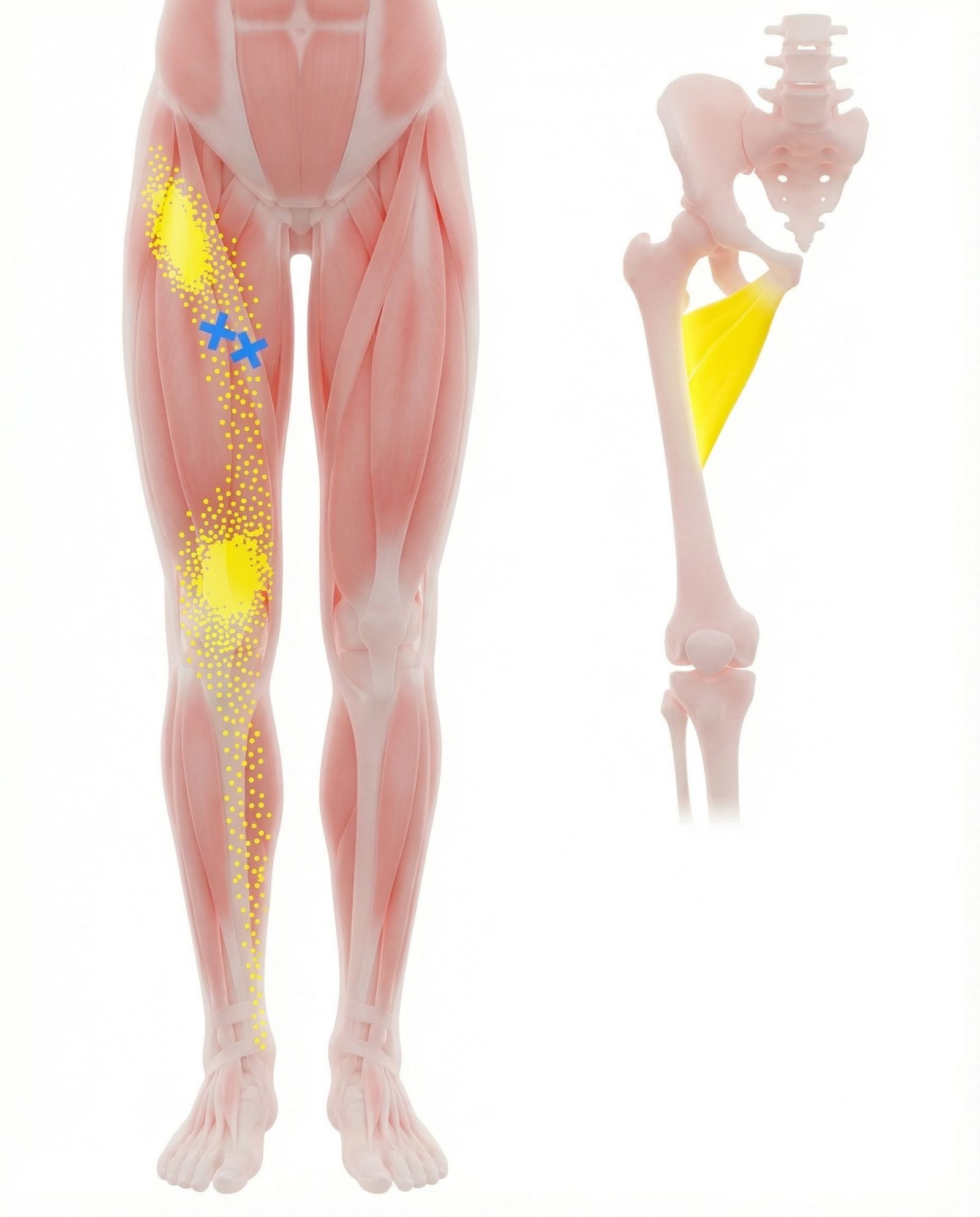
Adductor longus and regional adductor strengthening[3]
Consider when. An assessed adductor-related presentation with acute major injury excluded.
Start with a comfortable bent-knee squeeze. Add a side-lying short-lever adduction or standing band adduction without twisting the pelvis; later progress toward longer-lever and sport-specific loading.
- Dose and review
- Illustrative entry point: 4–5 comfortable short isometric holds or 1–2 sets of 6–10 controlled repetitions, followed by a next-day check. Adjust effort and frequency clinically.
- Progression
- Move from short-lever loading toward greater resistance and longer levers; add lateral lunges and sport-specific actions as tolerance improves.
- Stop or reassess
- Stop for sharp new pain, bruising or deteriorating walking; reduce the next exposure if baseline function remains worse.
- Evidence and limits
- A randomized trial supports active strength/coordination training for longstanding athletic adductor-related groin pain. It did not test a single adductor muscle or this illustrative starting dose.
Exercise and rehabilitation
Restore lateral movement and kicking capacity[3][2]
Consider when. Walking and initial strengthening are tolerable but sport movements remain limited.
Build straight-line walking/jogging first. Add controlled side steps and shallow lateral lunges, then planned changes of direction. Restore kicking power and unpredictable cutting separately.
- Dose and review
- Use short supervised exposures with recovery between demanding sessions; set the starting volume from the current squeeze and movement response.
- Progression
- Increase speed, range or unpredictability individually and complete the actual sport task before unrestricted return.
- Stop or reassess
- Stop for a limp, sharp groin pain or loss of control; return to the last tolerable stage.
- Evidence and limits
- Regional active rehabilitation has trial support; readiness is based on capacity and symptom response rather than a guaranteed calendar date.
Clinician-delivered care
Manual-assisted adductor movement within rehabilitation[4][3][2]
Consider when. Longstanding athletic adductor-related groin pain, with proximal tenderness and familiar pain on resisted adduction for at least two months; major acute injury and competing hip, pubic or inguinal causes have been assessed.
After warming the region, a clinician supports the leg through hip flexion, external rotation and abduction, then returns it toward adduction with soft-tissue contact over the adductors. Use an agreed tolerable range and pressure. Follow with individualized stretching and graded return to running; this treats the regional adductor presentation.
- Dose and review
- The studied manual sequence used three cycles in one visit and allowed one repeat visit if there was no improvement. Daily warm-up and stretching preceded a return-to-running program after 14 days when pain and discomfort had settled. Adjust the stretch to tolerance and reassess before progression.
- Progression
- Recheck the same adductor squeeze, sport pain and running task. Build strength and running capacity, then restore kicking or cutting according to the sport.
- Stop or reassess
- Stop for sharp pain, new bruising, numbness or worsening walking. Reassess a groin bulge, focal pubic pain or deep joint symptoms before repeating local treatment.
- Evidence and limits
- In 54 athletes, a manual/stretch/running program produced faster return among those who resumed sport: 12.8 versus 17.3 weeks with home exercise and running. Full return proportions were 50% versus 55%, and sport pain and objective outcome did not differ. Follow-up extended to 24 weeks; the trial did not isolate manual treatment or longus, brevis or magnus.
Self-care and activity
Adjust the provoking stance and workload[3][2]
Consider when. Groin symptoms reliably track the amount of lateral, wide-stance or kicking activity.
Temporarily shorten the stance or stride, reduce repeated high-force kicking, and separate hard sessions. Keep easy walking or other comfortable conditioning while working on strength.
- Dose and review
- Review a small number of comparable sessions and next-day symptoms; complete rest is not a mandatory fixed course.
- Progression
- Reintroduce the removed task alongside strength gains and use the same movement to measure progress.
- Stop or reassess
- Arrange reassessment for persistent rest pain, pubic bone pain, a groin bulge or urinary/genital symptoms.
- Evidence and limits
- This is practical load management within active care. Verified evidence does not justify a routine DN, ESWT or injection course for isolated longus, brevis or magnus tenderness.

 Open full-size image
 Open full-size image