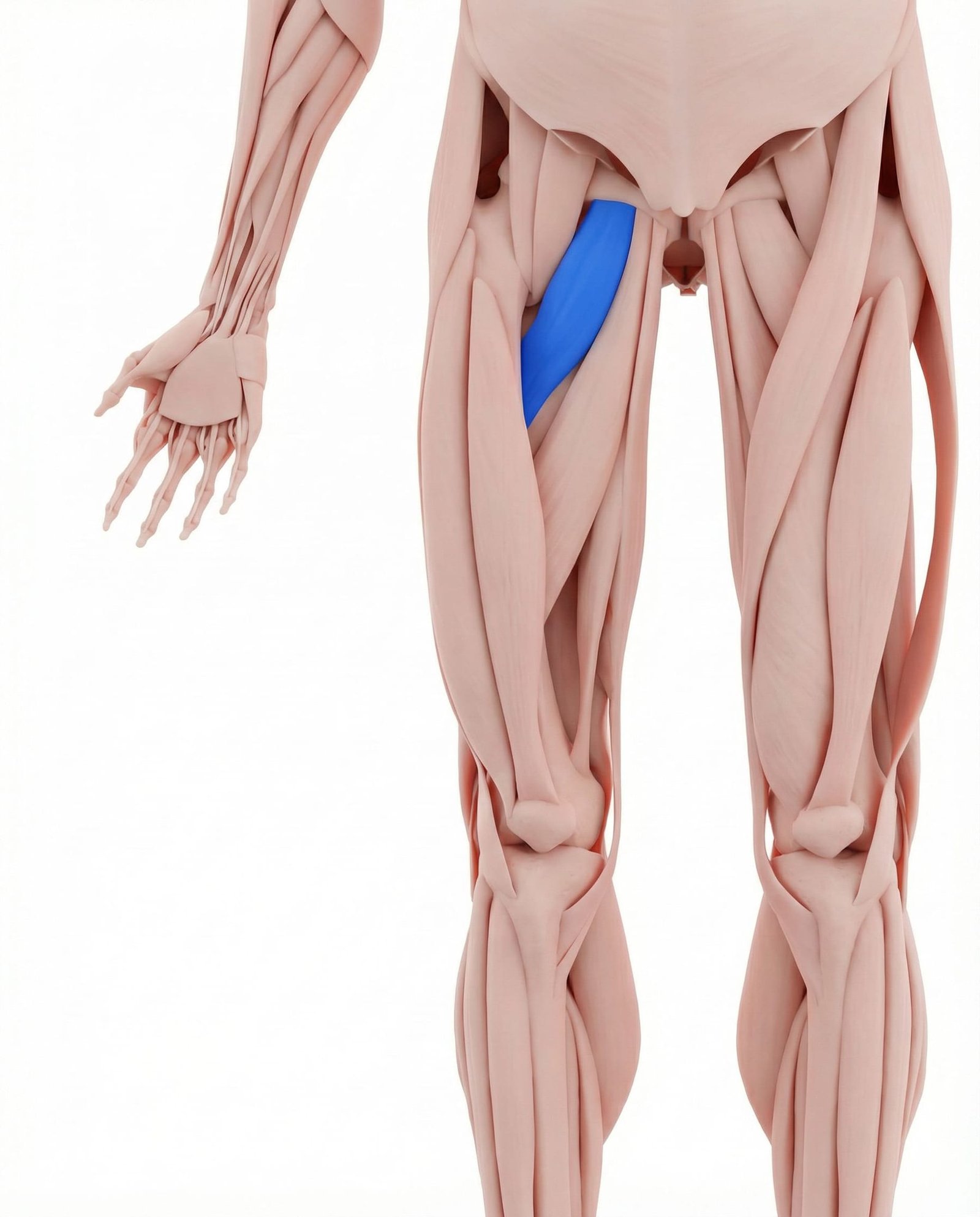
TrP 1
Pectineus
Location. Upper inner thigh, deep
Pain referral. Groin, upper inner thigh
- Groin
- Upper inner thigh
- Pubic area
Deep inguinal aching from pectineus trigger points near the pubic and femoral attachments
Location. Upper inner thigh, deep
Pain referral. Groin, upper inner thigh
Groin pain. Deep inguinal aching from pectineus trigger points near the pubic and femoral attachments
Deep thigh pain. Upper medial thigh ache from pectineus trigger point referral to proximal femoral area
Pain with walking. Groin discomfort during hip flexion phase of gait from pectineus trigger point activation
Running. Repetitive hip flexion and adduction during running overloads the pectineus muscle each stride
Soccer. Inside-foot kicking demands combined hip flexion and adduction straining the pectineus
Hockey. Skating stride requires repetitive hip adduction that overloads the pectineus chronically
Sudden movements. Unexpected lateral leg displacement with flexion acutely strains pectineus muscle fibers
Hip flexion. Sustained or repetitive hip flexion activities overload the pectineus beyond its recovery capacity
Lie on your back with the affected knee bent and foot flat on the floor. Using your fingertips, press gently into the groin crease where the inner thigh meets the pelvis. Work slowly along this crease, applying sustained pressure to tender spots for 20-30 seconds each. The pectineus is small and deep, so use moderate pressure and avoid pressing on the femoral artery pulse.
Kneel on the affected side with the opposite foot forward in a lunge position. Tuck your pelvis under (flatten the lower back) and gently shift your weight forward until you feel a stretch deep in the front of the hip and groin on the kneeling side. Keep your trunk upright and avoid arching the low back. This lengthens the pectineus along with the iliopsoas.
Lie on your back with knees bent and feet flat on the floor. Place a soccer ball, pillow, or soft ball between your knees. Squeeze the ball gently with your inner thighs, holding for 5 seconds, then relax. Gradually increase squeeze intensity over sessions as pain allows. This strengthens the pectineus and adductors in a safe, controlled position.
Lie on your side with the top leg resting on a bench or sturdy chair at knee height. Lift the bottom leg up to meet the bench, engaging the inner thigh muscles. Hold for 2-3 seconds, then lower slowly. For the modified version, keep the top knee bent on the bench rather than the foot. Progress to the full version as strength improves.
Before any running, kicking, or lateral movement activity, perform a thorough warm-up including 5 minutes of light jogging, dynamic leg swings (forward-back and side-to-side), bodyweight sumo squats, and gentle groin stretches. A proper warm-up increases blood flow to the pectineus and prepares it for the demands of sport, significantly reducing the risk of flare-ups.
See an orthopedic specialist or sports medicine physician if deep groin pain persists beyond 3-4 weeks despite self-care, especially if accompanied by clicking, catching, or a sensation of the hip giving way. A comprehensive hip examination and possibly imaging (MRI arthrogram) can rule out acetabular labral tears, femoroacetabular impingement, or sports hernias that present similarly to pectineus trigger points.