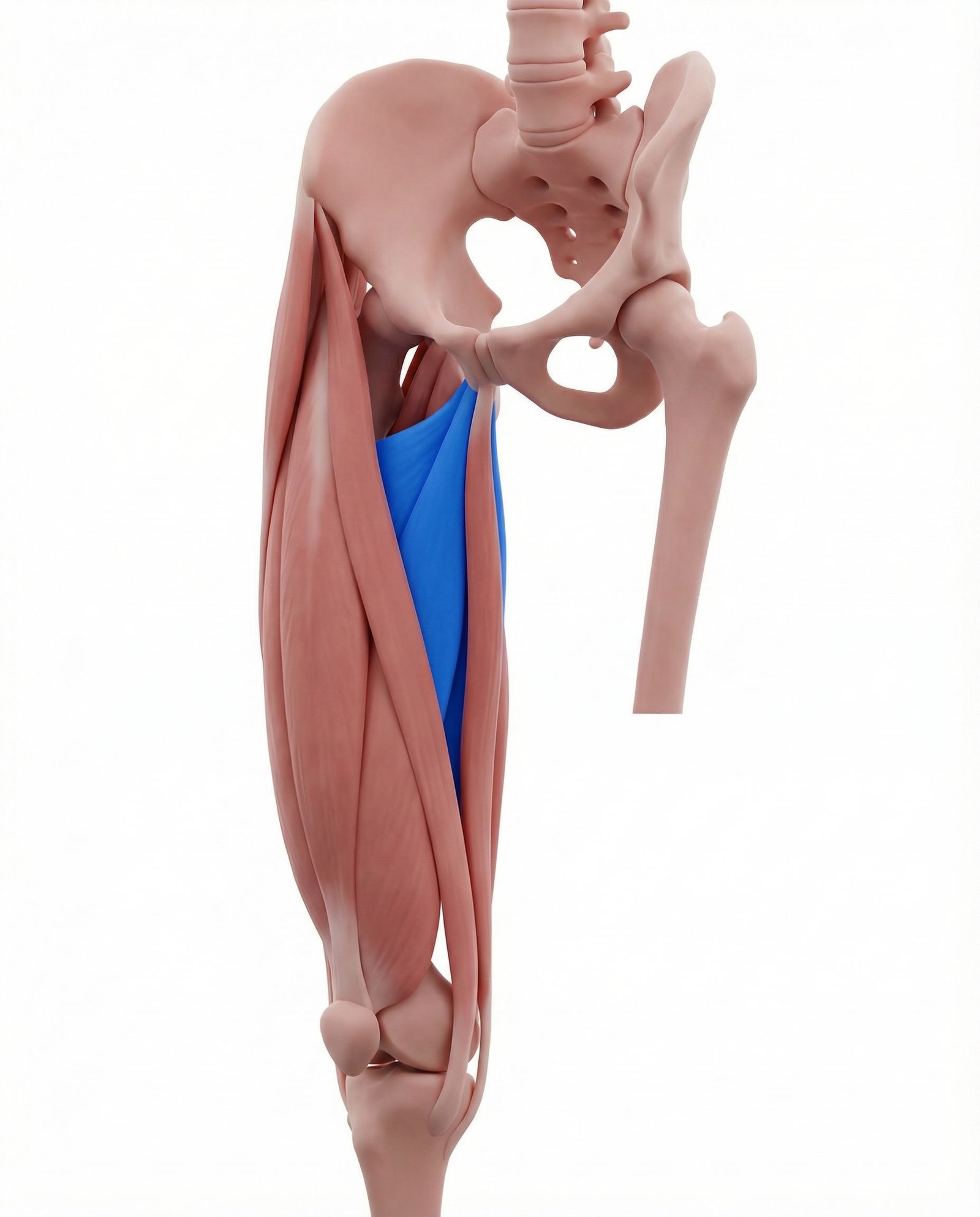
TrP 1
TrP1
Location. Inner thigh, large muscle
Pain referral. Inner thigh, pelvic floor, knee
- Inner thigh
- Pelvic floor
- Inner knee
- Groin
- Vagina/testicles
- Rectum
Deep medial thigh aching along the adductor magnus from proximal to distal attachments
Location. Inner thigh, large muscle
Pain referral. Inner thigh, pelvic floor, knee
Location. Posterior medial thigh, from ischial tuberosity to adductor tubercle of femur
Pain referral. Inner thigh and deep groin area
Location. Mid-belly of posterior fibers of adductor magnus
Pain referral. Deep in pelvis, deep hip ache
Inner thigh pain. Deep medial thigh aching along the adductor magnus from proximal to distal attachments
Groin pain. Deep inguinal and pubic aching from proximal adductor magnus trigger point referral
Pelvic pain. Referred pelvic floor discomfort from adductor magnus trigger points near pubic attachment
Pain with leg movement. Medial thigh pain during hip adduction and abduction from adductor magnus taut bands
Sitting pain. Ischial discomfort from compression of posterior adductor magnus attachment trigger points
Deep inner thigh pain. Posterior adductor magnus trigger point produces deep medial thigh aching along muscle belly
Groin ache. Referred pain from ischial origin radiates anteriorly to inguinal crease and groin region
Pain with adduction against resistance. Resisted hip adduction directly contracts the involved trigger point fibers causing sharp pain
Pelvic floor discomfort. Adductor magnus proximity to pelvic floor creates referred tension and perineal discomfort
Inner knee pain. Distal referral along adductor magnus to adductor tubercle insertion at medial femoral condyle
Deep hip ache. Posterior adductor magnus trigger points project pain deep into the hip joint region
Intrapelvic discomfort. Deep fiber referral extends into the pelvic cavity mimicking visceral or joint pathology
Pain mimicking hip joint pathology. Referred pain to the deep hip area closely mimics acetabular or labral joint pathology
Deep groin aching. Medial referral from posterior fibers creates a deep groin ache overlapping hip joint pain
Difficulty with weight-bearing hip rotation. Loaded rotational movement engages adductor magnus fibers provoking deep trigger point pain
Running. Repetitive adduction demand during running gait fatigues adductor magnus each stride cycle
Horseback riding. Sustained isometric adduction during riding chronically overloads the adductor magnus muscle
Soccer. Kicking and sudden direction changes place high demand on adductor magnus during play
Gymnastics. Extreme hip abduction positions eccentrically overload adductor magnus beyond normal range
Slipping splits. Sudden involuntary leg abduction acutely strains adductor magnus muscle fibers forcefully
Sudden leg movements. Unexpected lateral leg displacement activates protective adductor contraction causing acute strain
Swimming (breaststroke). Powerful adduction phase of breaststroke kick repeatedly stresses posterior adductor magnus
Wide stance squatting. Sumo or wide stance squat demands excessive adductor magnus lengthening under heavy load
Sudden sideways movements. Rapid lateral deceleration eccentrically overloads adductor magnus beyond its capacity
Groin strain recovery. Incomplete rehabilitation from adductor strain leaves residual trigger points in healing tissue
Hip adductor overuse. Repetitive adduction activities exceed adductor magnus recovery capacity causing cumulative microtrauma
Wide-stance deadlifts. Sumo-style stance places high tensile load on posterior adductor magnus fibers at depth
Sumo squats. Wide abducted stance under load maximally stresses posterior adductor magnus throughout range
Skating sports. Lateral push-off eccentrically loads adductor magnus during propulsion and recovery phases
Splits training. Extreme hip abduction stretching overloads posterior adductor magnus fibers beyond elastic tolerance
Prolonged sitting with crossed legs. Sustained hip adduction and rotation in crossed position shortens adductor magnus creating trigger points
Lie face down and bring the affected leg out to the side with the knee bent at about 90 degrees. Place a foam roller under the inner thigh, running from the groin toward the knee. Support yourself on your forearms and gently roll along the inner thigh, pausing on tender spots for 20-30 seconds. Use moderate pressure — the adductor magnus is a large, deep muscle.
Stand with your feet wide apart, roughly twice shoulder width. Shift your weight to one side, bending that knee while keeping the other leg straight with the foot flat on the floor. You should feel a stretch along the inner thigh of the straight leg. Keep your trunk upright and hold at a comfortable stretch intensity.
Lie on the affected side with the top leg crossed over and the foot flat on the floor in front of you. Lift the bottom leg straight up toward the ceiling, engaging the inner thigh muscles. Hold at the top for 3 seconds, then lower slowly. Keep the movement controlled and avoid rotating the pelvis.
Stand with feet wider than shoulder width, toes pointed slightly outward. Lower into a squat by pushing the hips back and bending the knees, keeping the chest upright and the knees tracking over the toes. Go only as deep as comfortable. Start with bodyweight and progress to holding a light weight as strength improves over weeks.
Avoid sitting with legs crossed for extended periods, as this places the adductor magnus in a sustained shortened position on one side and stretched on the other. When seated, keep both feet flat on the floor with knees at roughly hip width. If you must cross your legs, alternate sides frequently and take regular breaks to stand and stretch.
Consult a physiotherapist or sports medicine physician if inner thigh or groin pain does not improve within 3-4 weeks of self-care. A thorough evaluation can help distinguish adductor magnus trigger points from hip joint pathology, inguinal hernia, pelvic floor dysfunction, or stress fractures that may present with similar symptoms.
Stand with feet wider than shoulder-width apart, toes pointed slightly outward. Shift your weight to the unaffected side by bending that knee while keeping the affected leg straight. You should feel a gentle stretch along the inner thigh of the straight leg. Hold for 30 seconds and gently return to center.
Lie face down and place the foam roller perpendicular to your inner thigh. Bend the affected knee out to the side so the inner thigh rests on the roller. Use your forearms to control pressure and slowly roll from mid-thigh toward the groin, pausing on tender spots for 20-30 seconds. Avoid rolling directly on the pubic bone.
Stand on the affected leg with a slight knee bend. Hinge forward at the hips while extending the opposite leg behind you for balance. Lower your torso until you feel a stretch in the hamstring and posterior adductor of the standing leg. Return to upright. Use a wall or chair for balance if needed.
Sit or lie on your back with knees bent and a soft ball or pillow between your knees. Gently squeeze the ball, hold for 5 seconds, then release. Progress by increasing hold duration or using a firmer ball. Keep the squeeze effort at a moderate level that does not reproduce pain.
During the recovery phase, avoid prolonged sitting with legs spread wide, straddling positions, or deep sumo squats. When seated, keep the legs at a comfortable width and use a cushion if the chair is hard. Resume wide-stance activities gradually as pain decreases.
If deep inner thigh or perineal pain persists beyond 4-6 weeks, consult a sports medicine physician or orthopedic specialist. They can evaluate for proximal hamstring tendinopathy, ischial bursitis, stress fracture, or obturator nerve entrapment using clinical examination and imaging.