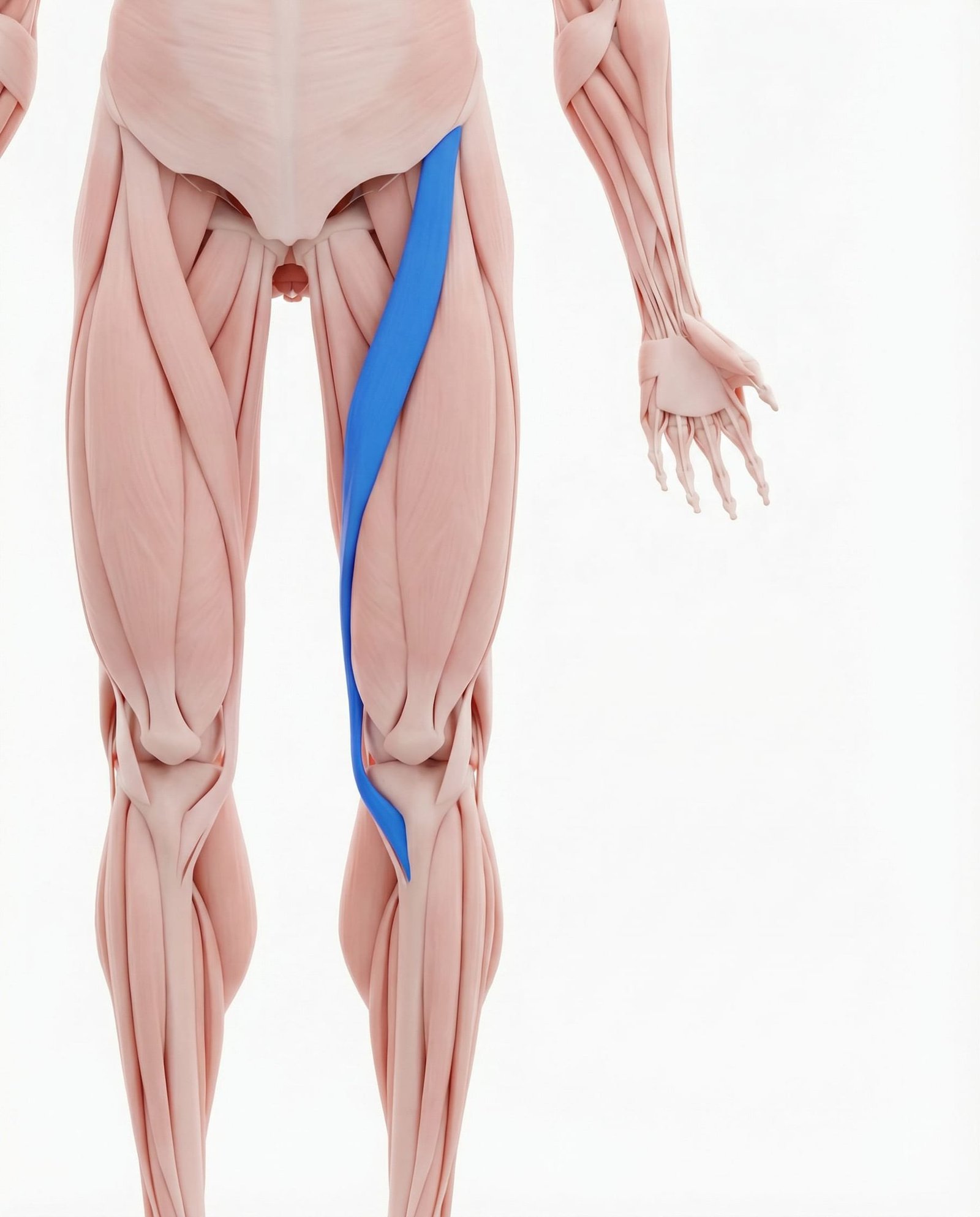
TrP 1
TrP1
Location. Diagonal across front of thigh
Pain referral. Outer hip, inner knee
- Outer hip (ASIS)
- Inner knee
- Anterior thigh
Anterolateral hip aching near the ASIS from proximal sartorius trigger point tension
Location. Diagonal across front of thigh
Pain referral. Outer hip, inner knee
Location. Mid-thigh, crossing anterior sartorius belly
Pain referral. Sharp, superficial burning pain along anteromedial thigh
Location. Distal fibers near pes anserinus at medial knee
Pain referral. Medial knee and anteromedial tibia
Hip pain. Anterolateral hip aching near the ASIS from proximal sartorius trigger point tension
Inner knee pain. Medial knee aching at the pes anserinus from distal sartorius trigger point referral
Thigh pain. Diagonal anterior thigh aching along the sartorius muscle path from hip to knee
Superficial burning thigh pain. Sartorius trigger points create a superficial burning referral along the anteromedial thigh dermatome
Sharp anteromedial thigh ache. Taut bands in the sartorius belly produce sharp superficial pain along its course across the thigh
Meralgia-like symptoms. Superficial burning mimics lateral femoral cutaneous neuropathy but follows sartorius distribution
Pain crossing legs. Leg crossing combines hip flexion external rotation and knee flexion loading the sartorius maximally
Anterior thigh sensitivity. Trigger point-mediated peripheral sensitization increases cutaneous sensitivity along the anteromedial thigh
Medial knee pain. Medial knee ache from distal sartorius trigger point at pes anserinus tibial insertion
Superficial medial knee burning. Burning dysesthesia at medial knee from sartorius trigger point irritation of saphenous nerve branches
Pain with knee flexion and internal rotation. Combined knee flexion-rotation loads sartorius at pes anserinus aggravating distal trigger points
Medial knee tenderness on palpation. Palpable tenderness at medial tibial flare from sartorius taut band tension at insertion
Pes anserinus area swelling sensation. Perceived medial knee puffiness from trigger point referred tissue sensitivity at pes anserinus
Running. Repetitive hip flexion with external rotation during running stride overloads sartorius
Cross-legged sitting. Sustained hip flexion-abduction-external rotation shortens sartorius creating chronic taut bands
Soccer. Kicking motions demanding combined hip flexion and external rotation strain the sartorius
Dancing. Turnout positions and high kicks demand sustained sartorius activation causing fatigue
Prolonged sitting with legs crossed. Sustained combined hip flexion and external rotation shortens the sartorius creating ischemia
Tailoring position (sitting cross-legged). Cross-legged floor sitting maximally shortens sartorius in all three of its action planes
Yoga postures requiring hip flexion and external rotation. Sustained lotus or pigeon pose positions maintain sartorius in a shortened contracted state
Running with excessive hip flexion. Overstriding increases hip flexor demand including sartorius during swing phase of gait
Tight clothing around waist or thigh. Compressive garments restrict sartorius excursion and create external pressure on the muscle belly
Ballet and dance (turnout position). Sustained hip external rotation in turnout chronically loads sartorius as a secondary rotator
Running with overpronation. Foot pronation creates tibial internal rotation overloading sartorius at pes anserinus insertion
Breaststroke swimming. Breaststroke kick requires hip flexion-abduction-external rotation maximally loading sartorius
Pes anserinus bursitis compensation. Bursal inflammation alters sartorius loading mechanics creating compensatory distal trigger points
Valgus knee stress activities. Knee valgus forces increase medial knee loading overworking sartorius as medial stabilizer
Stand holding a wall for balance. Cross the affected ankle over the opposite knee, creating a figure-4. Slowly bend the standing knee and sit back as if sitting in a chair. This stretches the sartorius through its combined hip flexion and external rotation action.
Apply a warm heat pack diagonally across the front of the thigh, following the line from the outer hip to the inner knee. This follows the path of the sartorius muscle. Lie in a comfortable position for the full duration.
Stand holding a wall for balance. Bend the affected knee and grab the ankle behind you. Pull the heel toward the buttock while extending the hip backward. Keep the knees together and pelvis tucked. This stretches the sartorius across both the hip and knee joints simultaneously.
Sit on the edge of a chair. Lift one knee upward while gently rotating the thigh outward. Hold for 3 seconds, then lower. Use ankle weights for progression. This strengthens the sartorius in its functional movement pattern.
Cross-legged sitting places the sartorius in a shortened position for extended periods. If you habitually sit cross-legged, consciously switch to feet-flat posture. When doing floor activities, alternate leg positions frequently.
If pain at both the outer hip and inner knee persists beyond 3 weeks, consult a physiatrist. The diagonal pain pattern of the sartorius is often misdiagnosed as separate hip and knee conditions. Targeted treatment of the sartorius can resolve both areas simultaneously.