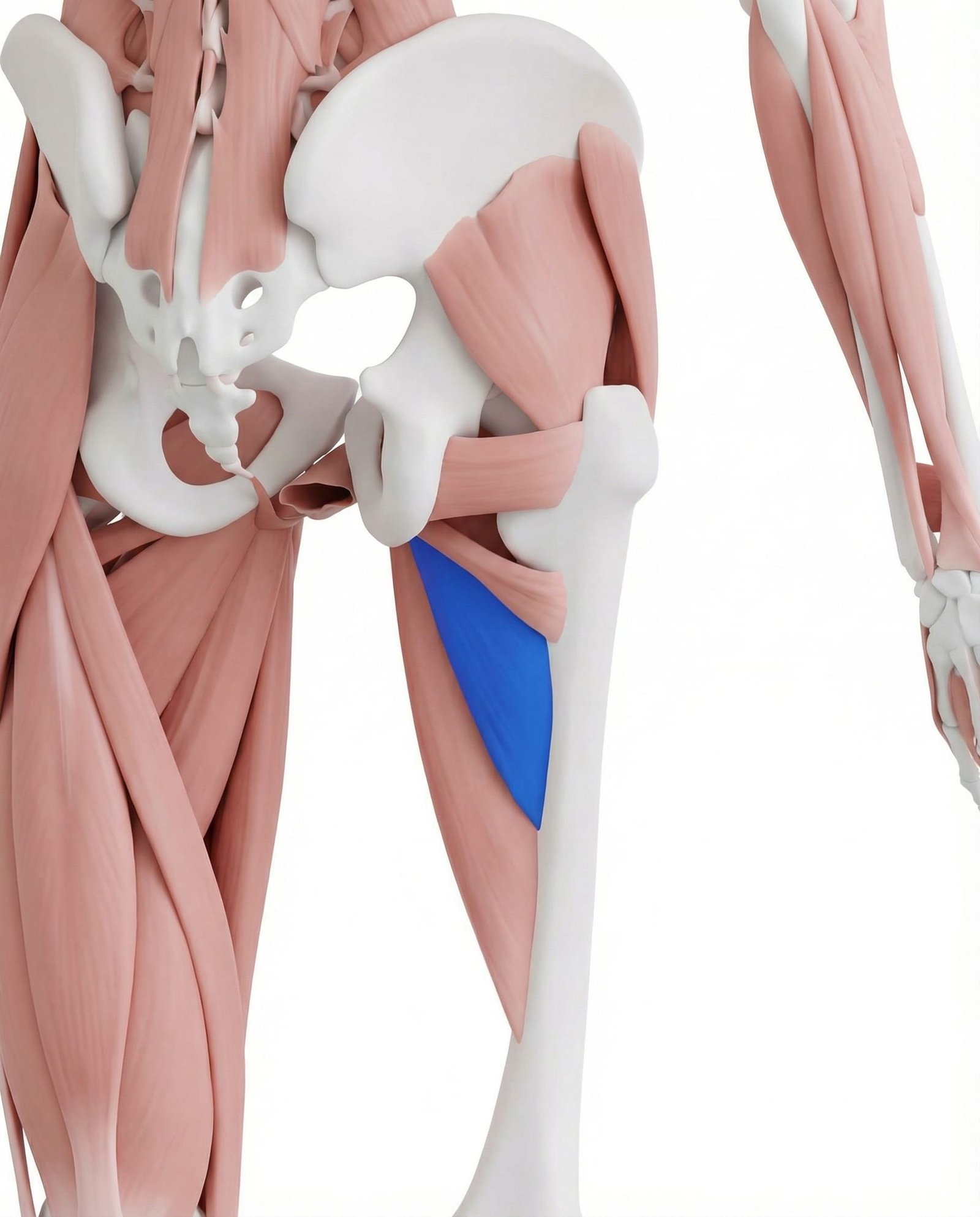
TrP 1
TrP1
Location. Upper inner thigh
Pain referral. Upper inner thigh, groin
- Upper inner thigh
- Groin
- Pubic area
Deep inguinal aching aggravated by hip abduction stretching and adduction against resistance
Location. Upper inner thigh
Pain referral. Upper inner thigh, groin
Location. Near femoral attachment of adductor brevis
Pain referral. Medial proximal thigh and groin
Groin pain. Deep inguinal aching aggravated by hip abduction stretching and adduction against resistance
Upper inner thigh pain. Proximal medial thigh aching from adductor brevis trigger points near pubic origin
Adduction weakness. Reduced hip adduction force from taut band inhibition impairing lateral cutting movements
Medial thigh tightness. Persistent medial thigh restriction from adductor brevis taut band limiting hip abduction range
Groin ache with hip abduction. Hip abduction stretches shortened adductor brevis trigger points reproducing deep groin pain
Pain with lateral movements. Lateral cutting movements eccentrically load sensitized adductor brevis creating medial thigh pain
Inner thigh stiffness after rest. Post-rest adductor brevis shortening creates morning medial thigh stiffness limiting abduction
Difficulty with wide-stance positions. Wide stance stretches contracted adductor brevis aggravating trigger points near femoral attachment
Running. Repetitive hip flexion-extension cycle creates cumulative strain on adductor brevis during stance
Soccer. Kicking and lateral cutting movements demand rapid forceful adduction overloading adductor brevis
Hockey. Skating stride requires powerful hip adduction that progressively fatigues adductor brevis muscles
Sudden movements. Rapid directional changes eccentrically overload adductor brevis beyond its prepared capacity
Sudden lateral movements in sports. Rapid lateral cutting creates eccentric adductor brevis overload during deceleration phases
Adductor strain recovery. Incomplete adductor strain healing creates persistent trigger points in adductor brevis fibers
Wide-stance exercises. Repetitive wide-stance loading eccentrically overloads adductor brevis through hip abduction
Ice skating or skiing. Lateral leg movements during skating cyclically load adductor brevis through abduction-adduction
Forced abduction injury. Sudden forced hip abduction acutely overloads adductor brevis creating traumatic trigger points
Sit on the floor with the soles of your feet together and knees falling outward. Hold your ankles and gently press your knees toward the floor using your elbows. Do not bounce — hold a steady, gentle stretch. You should feel a mild pull in the inner thigh and groin, not sharp pain.
Lie face down and place a foam roller perpendicular to the inner thigh near the groin. Support your weight on your forearms and opposite leg. Slowly roll from just below the groin crease to mid-inner thigh. When you find a tender spot, hold sustained pressure for 20-30 seconds until the tenderness decreases.
Lie on your back with knees bent and feet flat. Place a pillow or small ball between your knees. Gently squeeze the pillow with both knees, hold for 5 seconds, then release. Focus on a controlled contraction without holding your breath. Gradually increase squeeze intensity as pain allows.
Place a resistance band around your ankles or just above your knees. Stand in a quarter-squat position with feet hip-width apart. Step sideways in a controlled manner, maintaining tension on the band throughout. Take 10 steps in each direction. Keep your toes pointed forward and avoid leaning to one side.
Temporarily reduce or eliminate activities requiring abrupt lateral movements — such as lateral lunges, side-shuffle drills, and cutting movements in sport. Replace with forward-backward movement patterns during recovery. Gradually reintroduce lateral movements only after pain-free adductor squeezing is achieved.
If groin pain persists beyond 3-4 weeks despite self-care, consult a sports medicine physician or physiotherapist experienced with groin injuries. They can differentiate between adductor trigger points, sports hernia, hip labral pathology, and other groin conditions using clinical tests and imaging if needed.