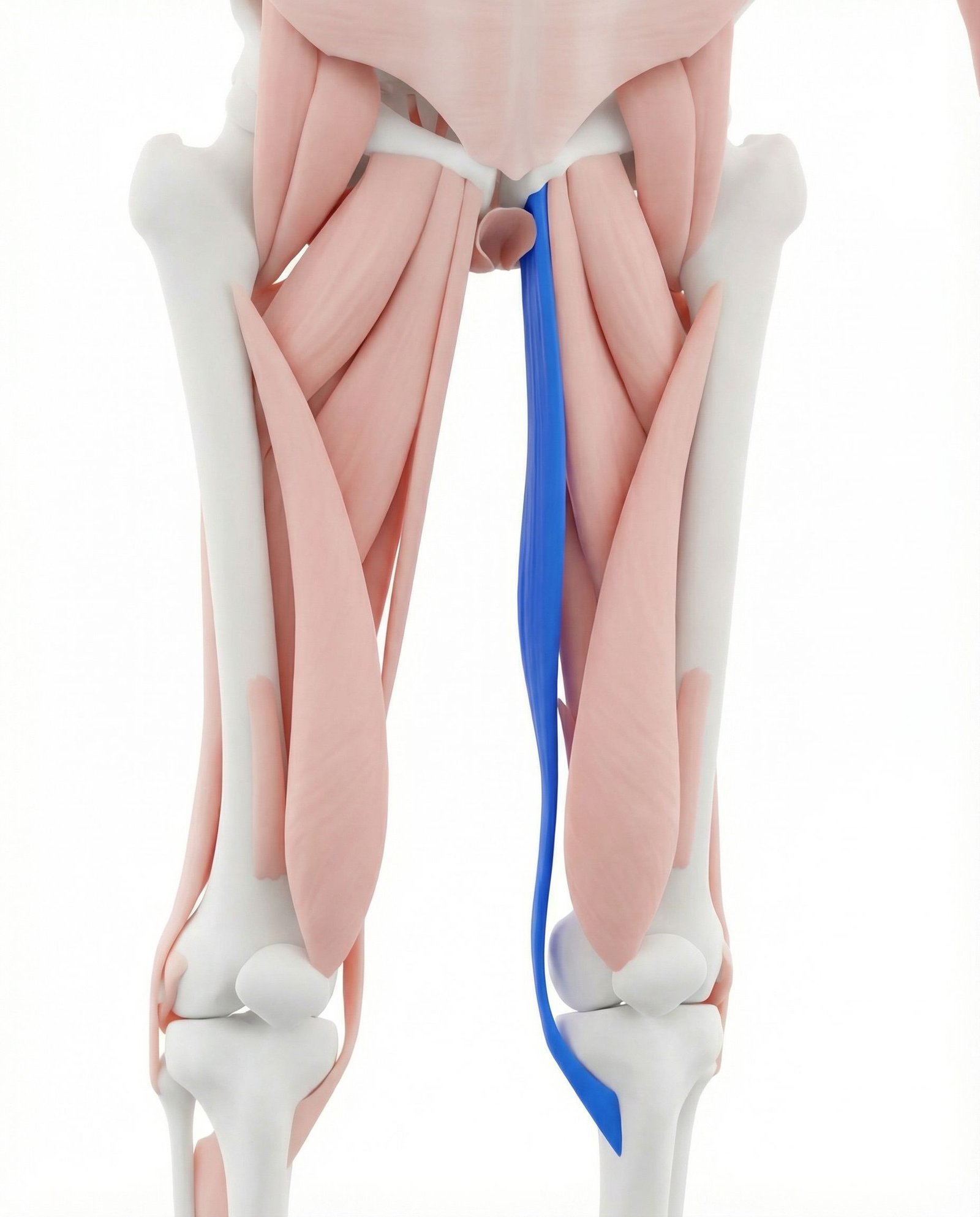
TrP 1
Gracilis
Location. Innermost thigh
Pain referral. Inner thigh, inner knee
- Inner thigh
- Inner knee
- Pubic area
Superficial medial thigh aching along the gracilis from pubis to medial knee
Location. Innermost thigh
Pain referral. Inner thigh, inner knee
Inner thigh pain. Superficial medial thigh aching along the gracilis from pubis to medial knee
Inner knee pain. Medial knee aching at the pes anserinus from distal gracilis trigger point referral
Pain with leg crossing. Medial thigh discomfort during hip adduction and crossing one leg over the other
Running. Repetitive hip adduction during gait fatigues the gracilis muscle with each stride cycle
Horseback riding. Sustained isometric adduction during riding chronically overloads the gracilis muscle
Gymnastics. Extreme hip abduction positions eccentrically overload the gracilis beyond its normal range
Splits. Forced hip abduction during splits acutely strains the gracilis muscle fibers
Lie face down and place a foam roller perpendicular to your inner thigh. Support your body weight on your forearms and opposite leg. Slowly roll along the inner thigh from just above the knee to the groin area. When you find a tender spot, pause and hold pressure for 20-30 seconds. Use moderate pressure and avoid rolling directly over the knee joint.
Apply a warm, damp towel or microwavable heat pack along the inner thigh from groin to knee. Lie in a comfortable position with the leg slightly bent and supported. Ensure the heat is comfortably warm but not hot enough to burn.
Sit on the floor with the soles of your feet together and your knees falling outward. Hold your feet with both hands and gently press your knees toward the floor using your elbows. Sit up tall and lean slightly forward from the hips to deepen the stretch. You should feel a comfortable stretch along the inner thighs.
Lie on the affected side with a light resistance band looped around both ankles. Keep the top leg crossed over and foot flat on the floor in front of you. Lift the bottom leg straight up toward the ceiling against the band resistance, engaging the inner thigh. Hold for 3 seconds at the top, then lower slowly. This strengthens the gracilis in a controlled range.
Have your walking and running gait assessed for overpronation, which places extra stress on the inner thigh muscles. If overpronation is identified, use supportive footwear with medial arch support or consider custom orthotics. When walking or running, focus on landing with a neutral foot position. Avoid running on cambered road surfaces that force uneven leg positioning.
Consult a sports medicine physician or physical therapist if inner thigh or groin pain persists beyond 3-4 weeks of self-care. A thorough examination can differentiate gracilis trigger points from adductor strain, stress fracture, hip joint pathology, or referred pain from the lumbar spine. Imaging may be recommended if symptoms include significant swelling or pain with weight-bearing.