Understanding the Quadriceps
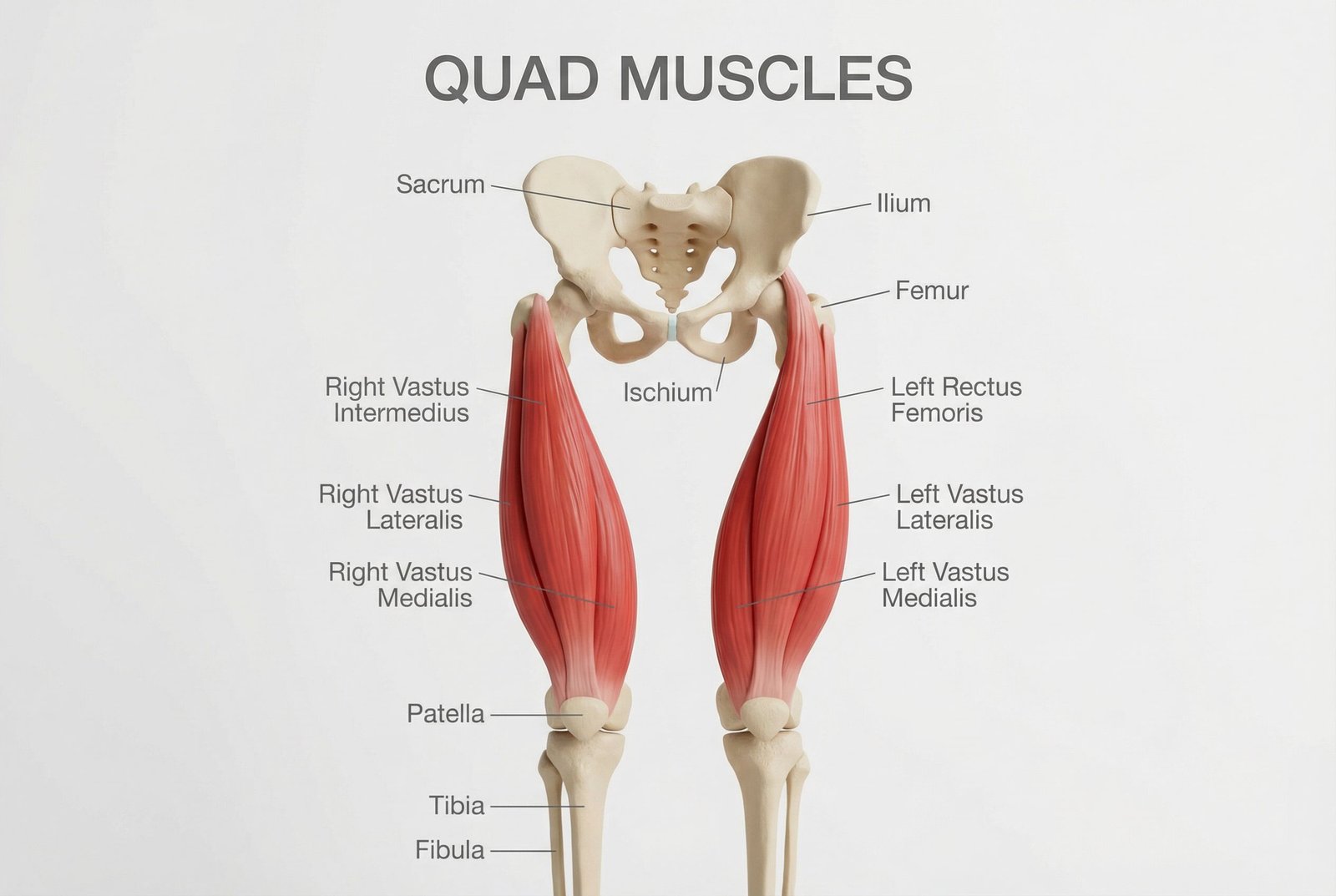
Quadriceps Group Anatomy Anterior View All Four Heads
The quadriceps femoris is a four-part muscle group responsible for knee extension and, in the case of rectus femoris, hip flexion as well. Because it inserts through the patellar mechanism, its function has a major effect on how the knee feels and moves.
Quadriceps dysfunction matters clinically because changes in length, guarding, strength, or trigger point irritability can all alter patellar mechanics and symptom behavior. A painful knee does not always mean the primary problem is inside the knee joint.
Trigger points in different quadriceps heads can produce different knee pain signatures: medial, lateral, or anterior. That is one reason the quadriceps group deserves routine attention during knee pain assessment.
Knee pain is often multi-factorial. A meniscus finding, patellofemoral irritation, tendon overload, and quadriceps trigger points can coexist. The task is to identify what is actually driving the current pain presentation.
Anatomy & Trigger Points
Each quadriceps head contributes slightly differently to pain and movement: vastus medialis often matters for medial support, vastus lateralis for lateral dominance, rectus femoris for anterior knee and hip interactions, and vastus intermedius for deeper central thigh pain.
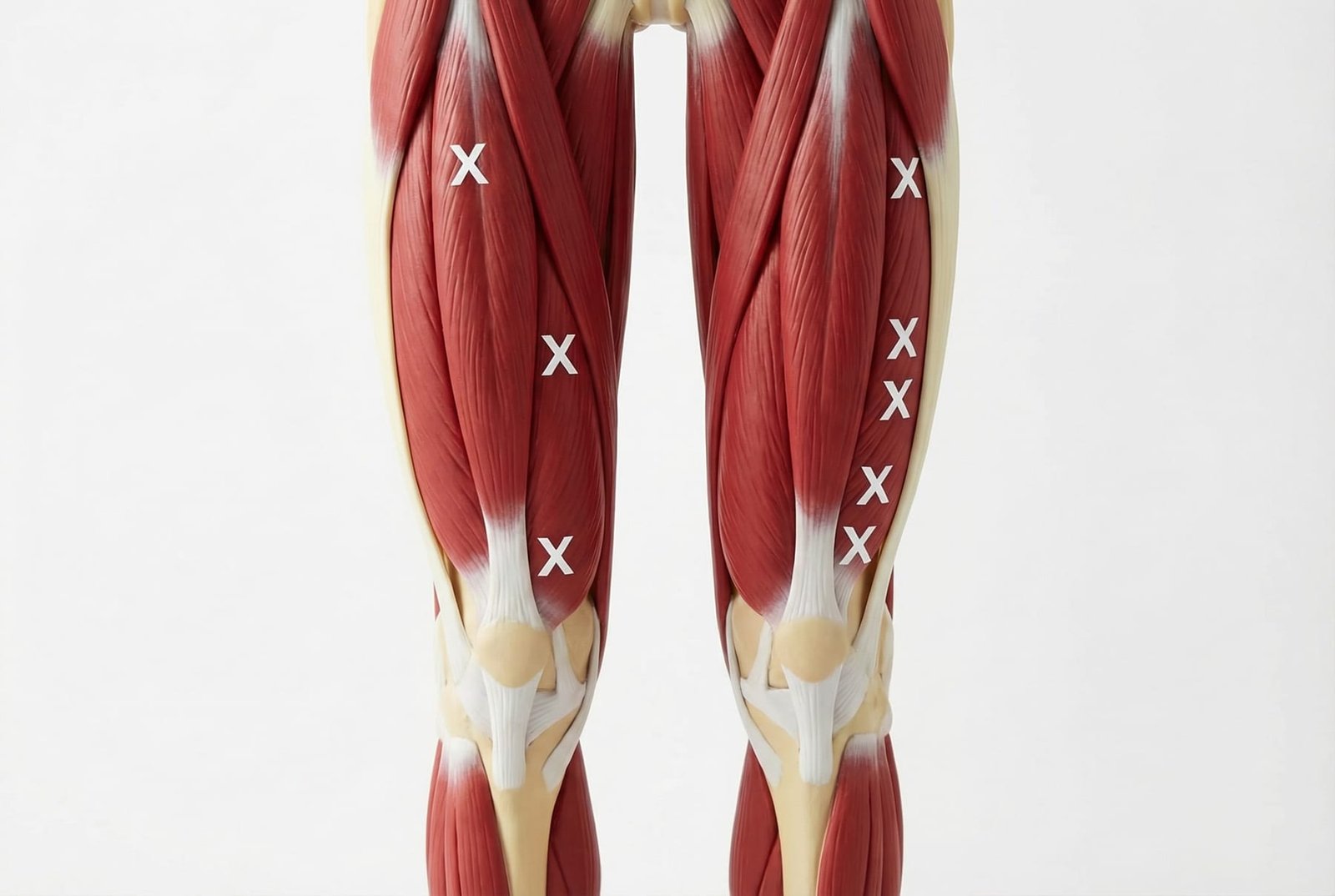
Knee Pain Anatomy
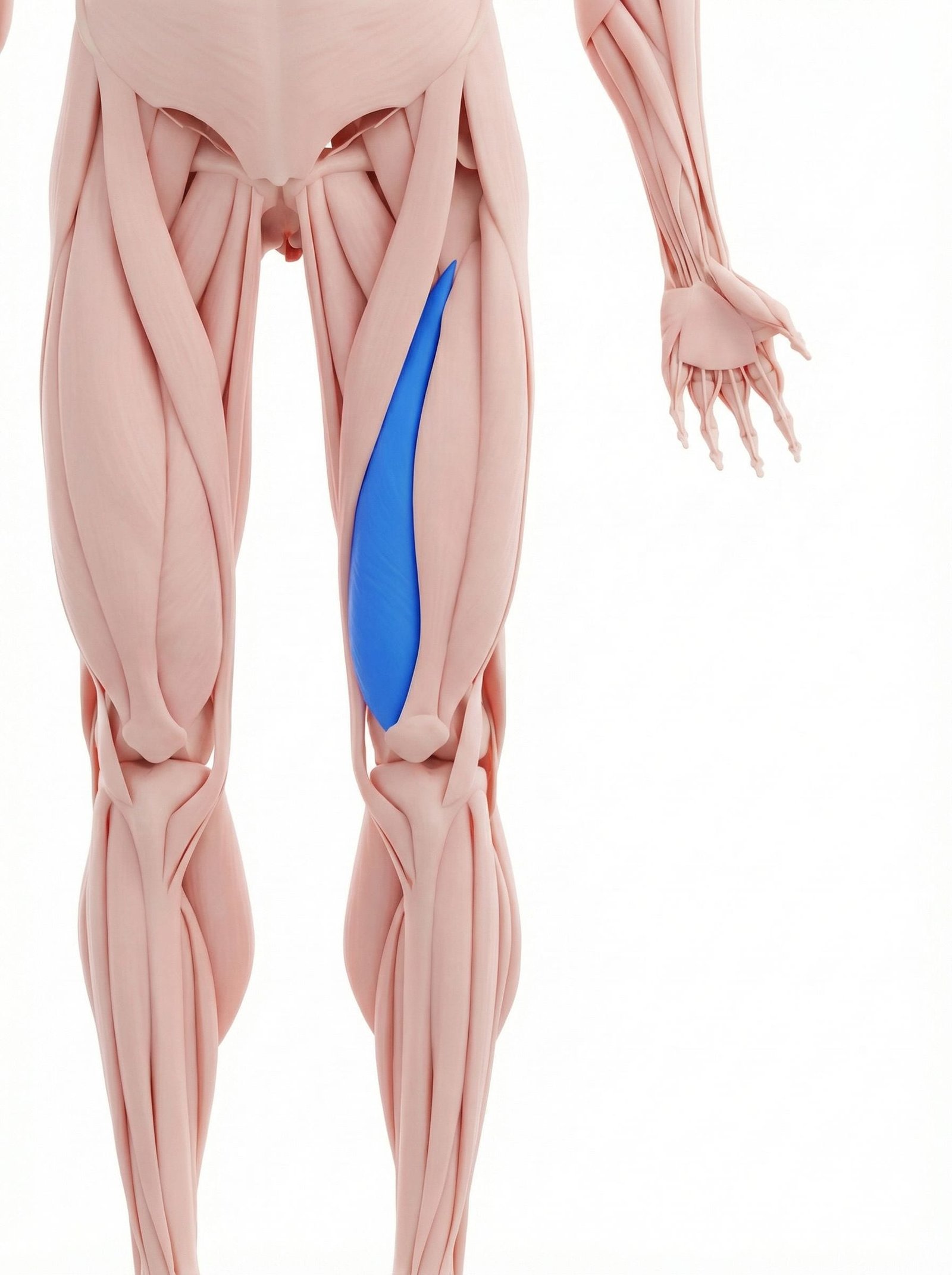
Can contribute to deep anteromedial or medial knee pain, especially around the joint line and medial patellar region. In some patients this overlaps with the symptom story of meniscal or patellofemoral pain.
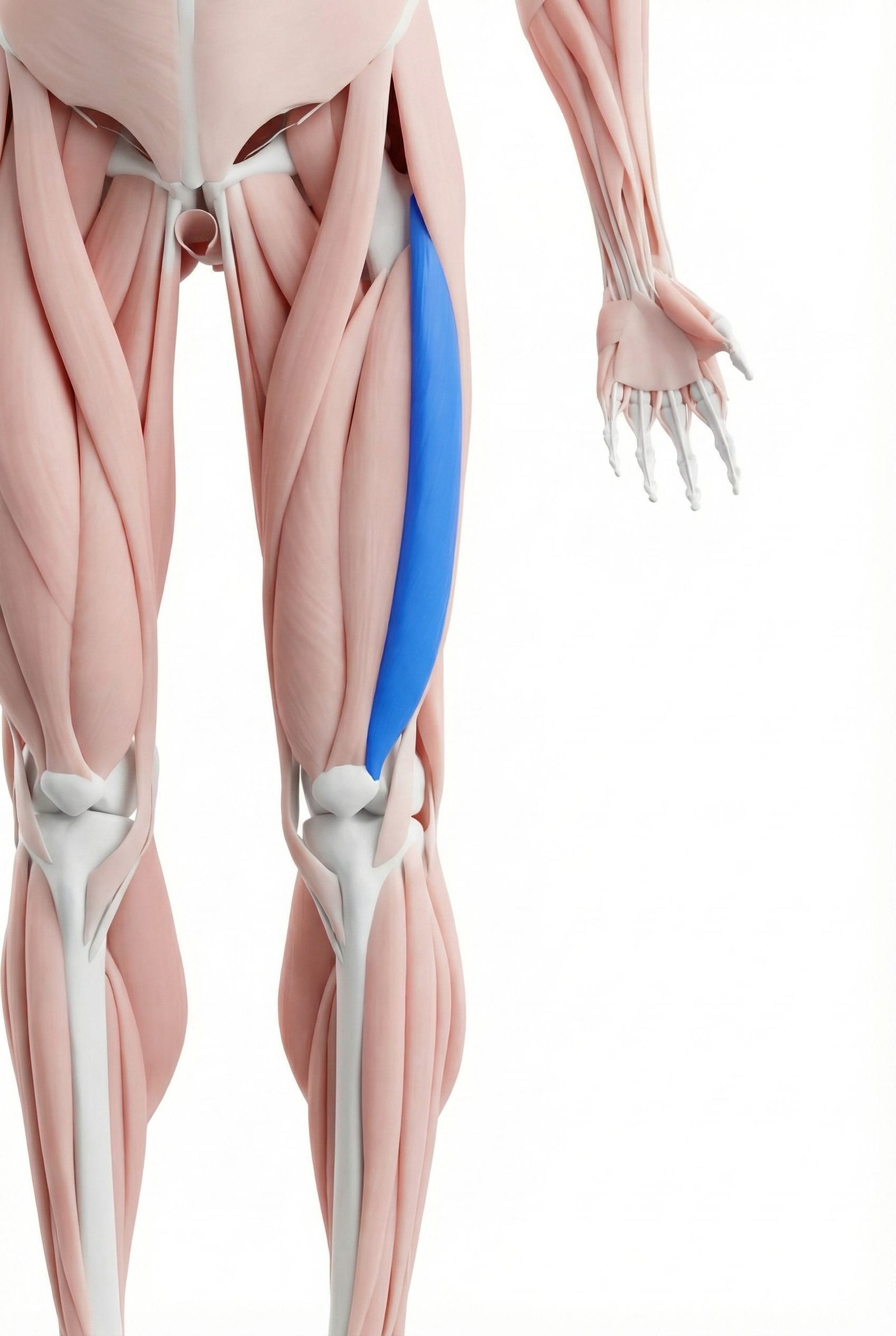
Can contribute to lateral thigh and lateral knee pain, sometimes overlapping with IT-band-related or lateral patellofemoral complaints.
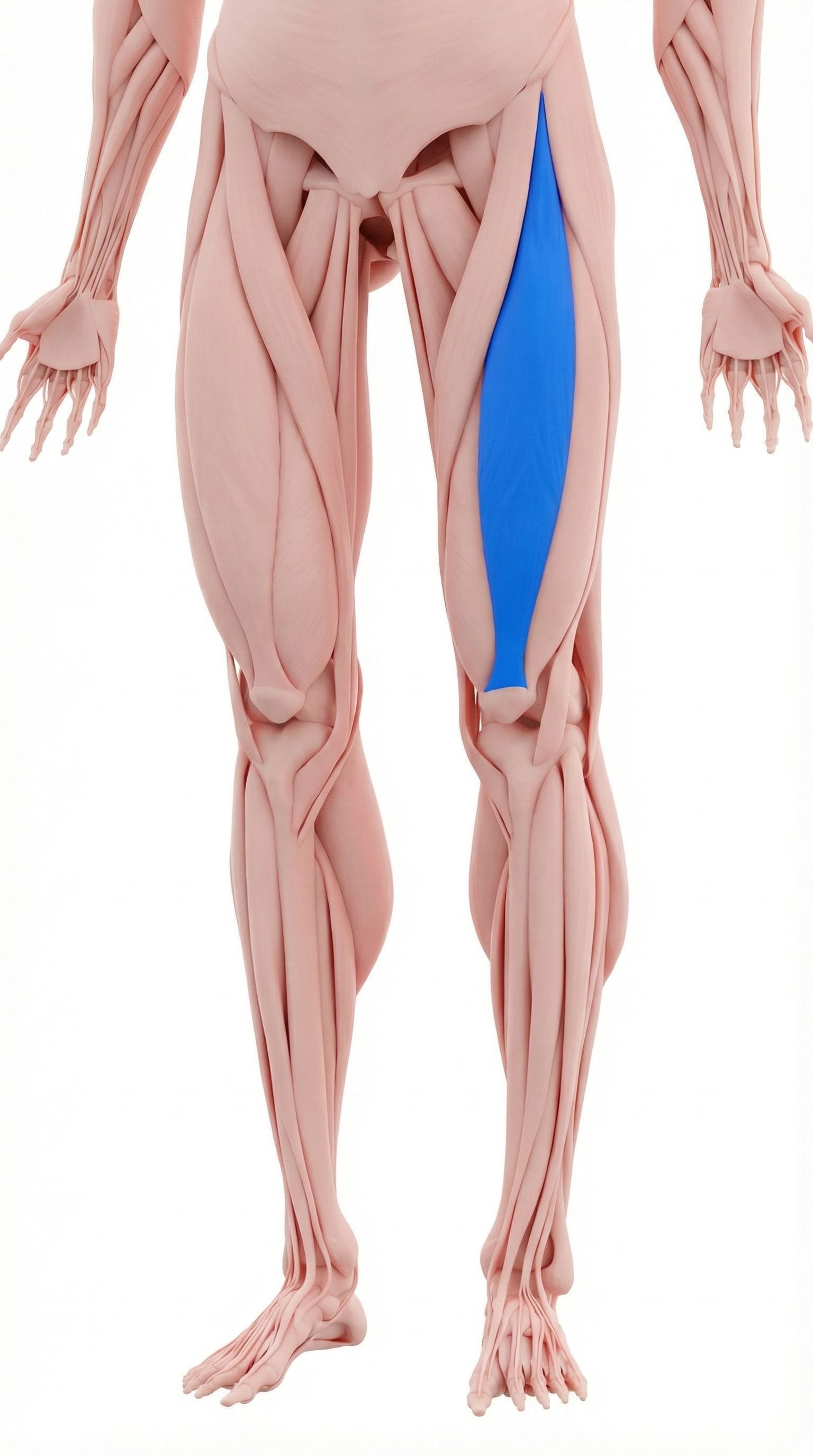
Can produce deep anterior knee or peripatellar pain, sometimes together with anterior thigh or anterior hip discomfort because it crosses both the hip and knee.
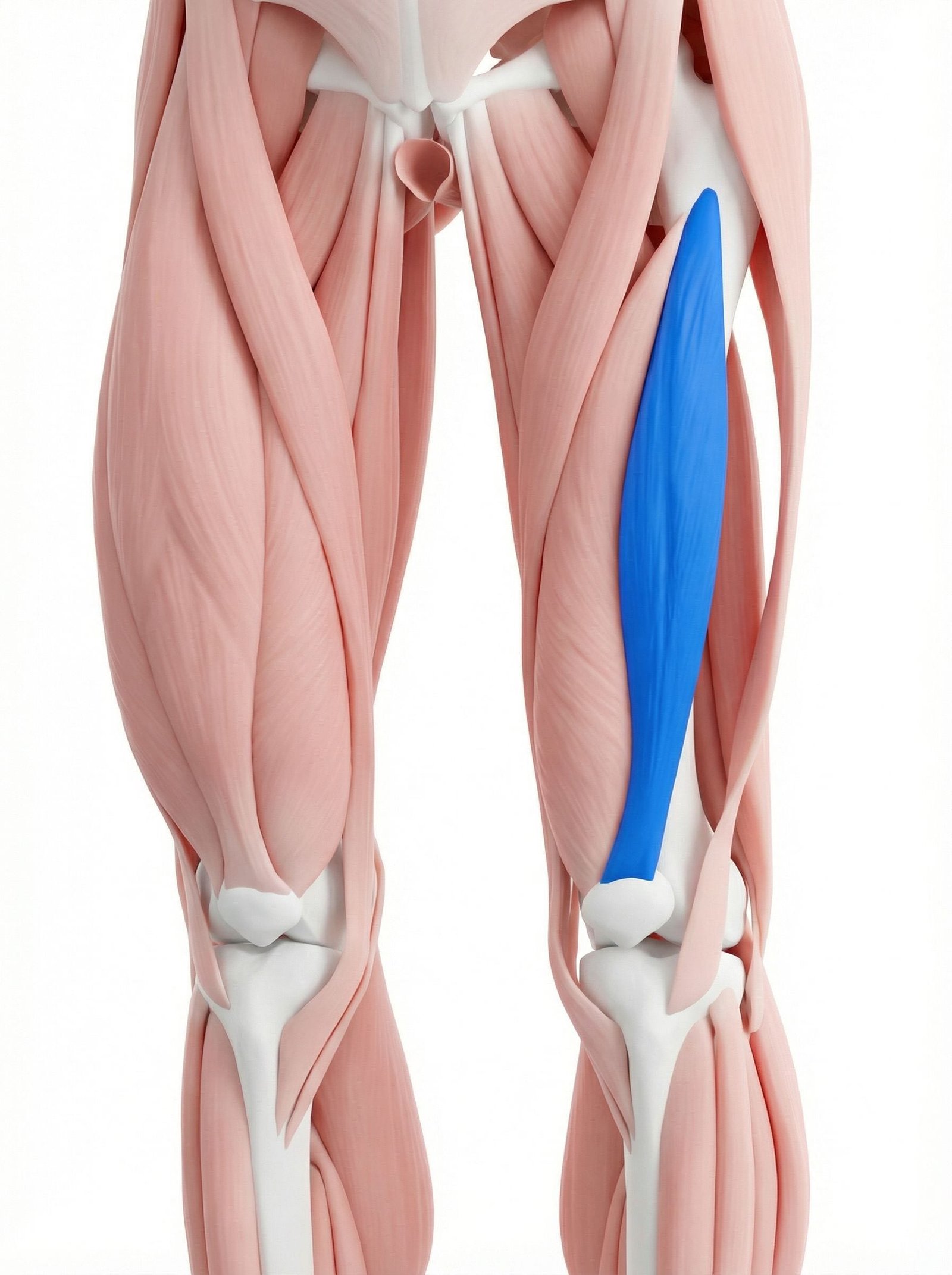
May contribute to deeper, more poorly localized anterior thigh or anterior knee aching and can be harder to identify because of its depth.
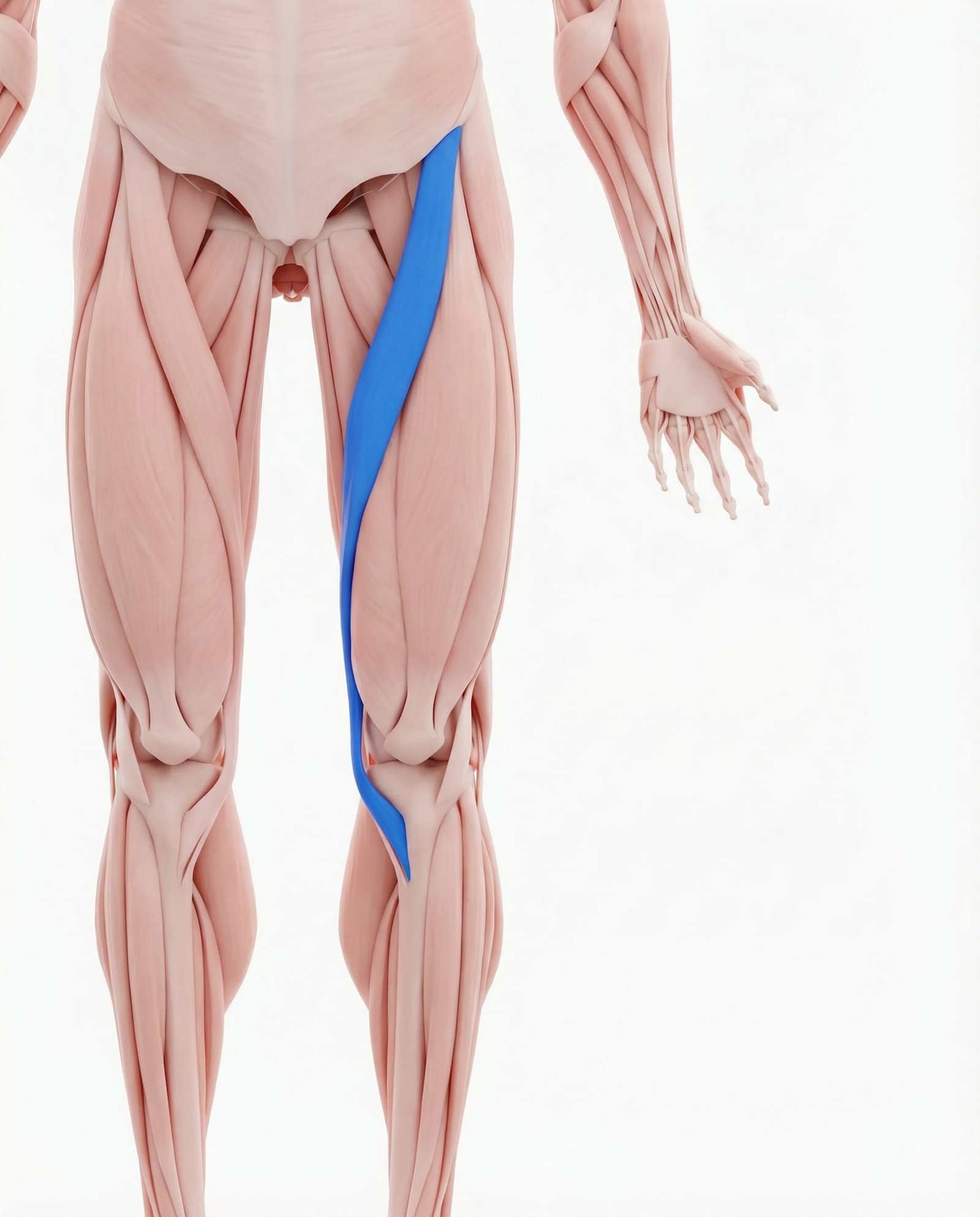
May contribute to superficial anteromedial thigh discomfort and can overlap with pes anserine-region pain in some patients.

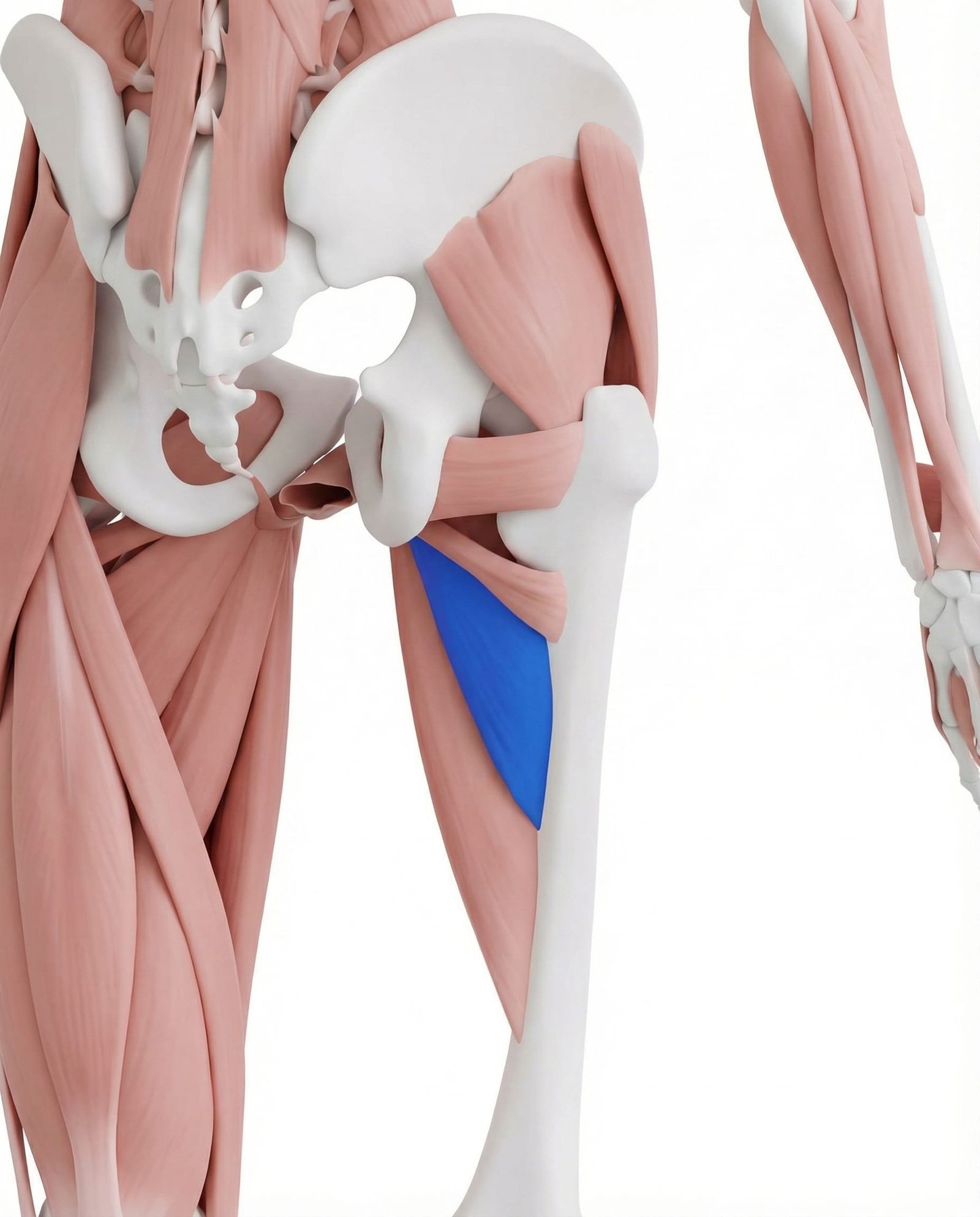
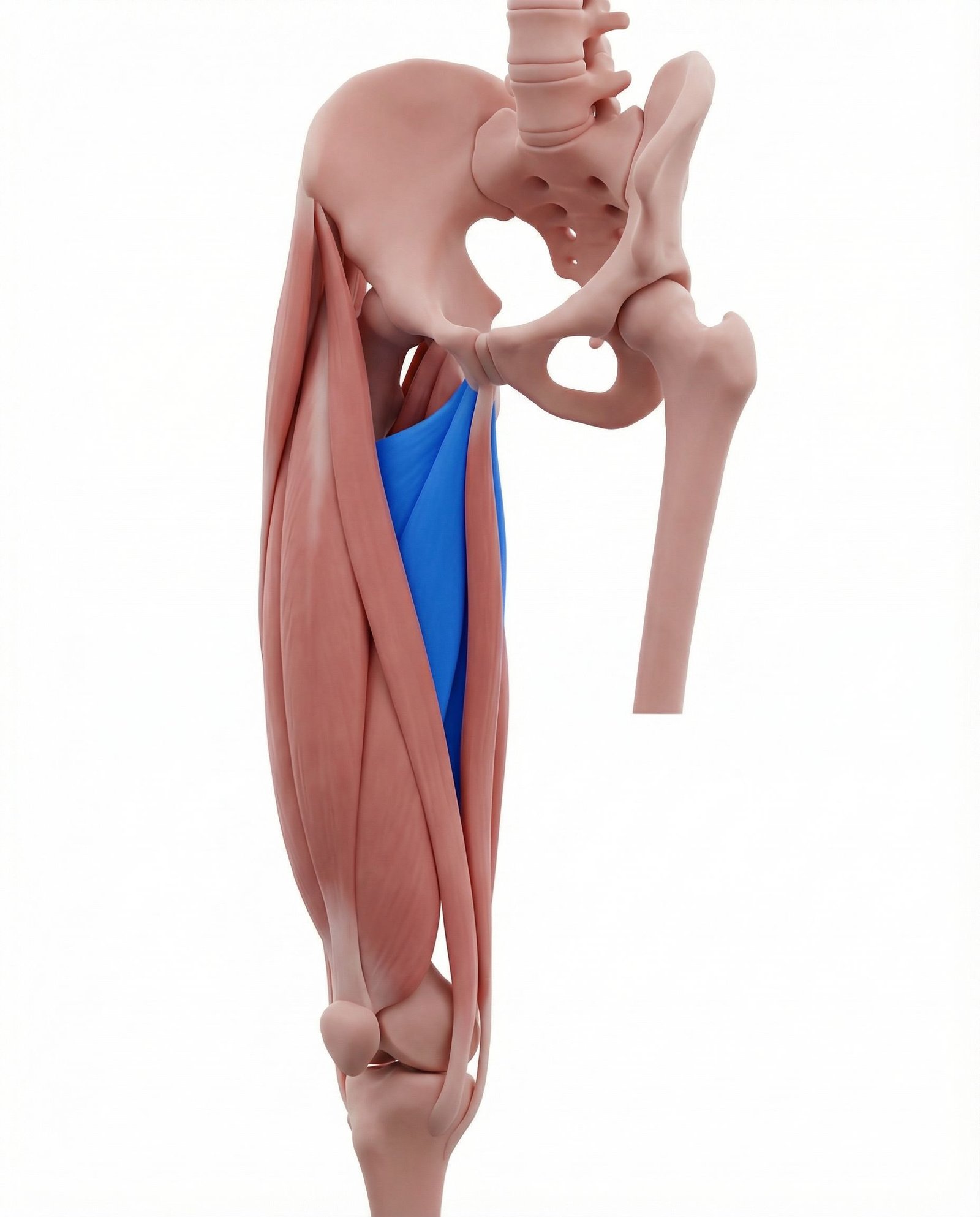
Can contribute to medial thigh, groin, and sometimes medial-knee-adjacent pain when gait mechanics or quadriceps control are altered.
Referral Patterns: The Knee Pain Signature
Vastus medialis can contribute to medial or anteromedial knee pain. Vastus lateralis can contribute to lateral thigh and lateral knee pain. Rectus femoris often contributes to peripatellar or anterior knee pain, especially in load-sensitive or prolonged-sitting patterns.
When more than one quadriceps head is involved, patients may describe a more diffuse “whole-knee” ache. That broad pattern often points toward muscular contribution rather than one sharply isolated joint structure alone.
Sometimes the knee hurts because the thigh is overloaded — not because the joint itself is the only problem.
Medial Knee
Lateral Knee
Anterior Knee
Self-Assessment Tests
The most useful question is not whether the quadriceps are tender, but whether testing them reproduces the patient’s familiar pain pattern and movement problem.
Quadriceps Palpation Sweep
Single-Leg Squat Test
Prone Heel-to-Buttock Test
Patellar Glide and Tilt Test
Treatment Pathways
Effective treatment often combines quadriceps release, stretching, strengthening, and movement retraining rather than relying on one of those alone.
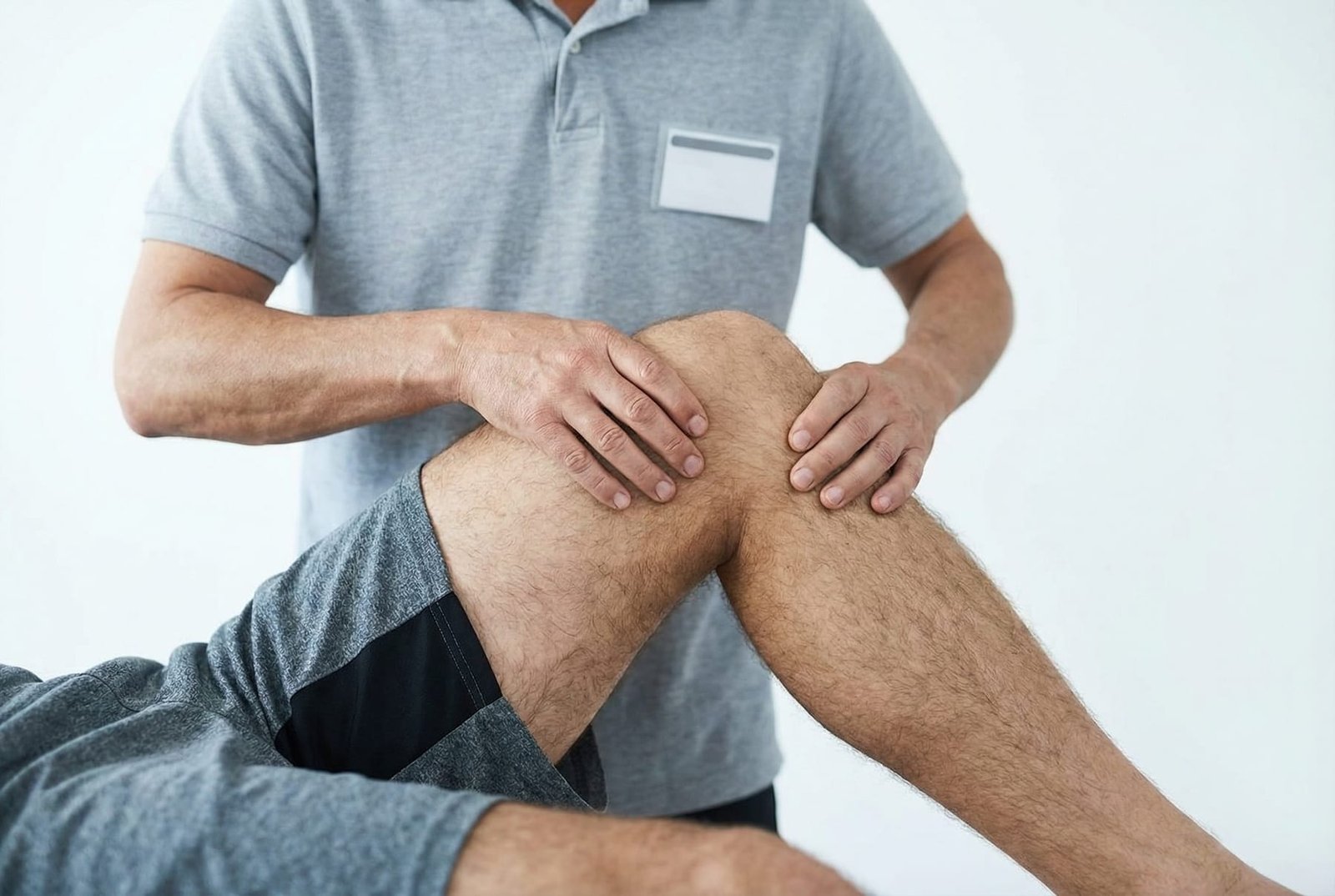
Knee Pain Treatment
Quadriceps Stretching Protocol
Stretching can be useful when the quadriceps are clearly shortened, guarded, or dominating knee mechanics. Different heads may need slightly different emphasis.
- Standing quadriceps stretch with comfortable alignment
- Kneeling hip-flexor / rectus femoris stretch when tolerated
- Side-lying or supported quadriceps stretch when balance is limited
- Wall-supported variations for patients who need more stability
- Gentle, consistent stretching rather than brief aggressive pulls
Quadriceps Self-Release
Self-release may help reduce quadriceps irritability before strengthening or stretching. Larger tools are often better tolerated than highly focal pressure at the beginning.
- Foam rolling the anterior thigh in a symptom-guided way
- Targeting medial or lateral quadriceps only if clearly relevant
- Using moderate rather than maximal pressure
- Combining release with later stretching or exercise
- Stopping if symptoms become sharply worse or highly irritated
Dry Needling: Quadriceps Group
Dry needling or injection-based treatment may help selected persistent quadriceps trigger point patterns, especially when the pain is clearly reproducible and conservative care has not been enough.
- Needling of the relevant quadriceps head by an experienced clinician
- Systematic treatment if multiple heads are contributing
- Use of local twitch response only as one clinical sign, not the sole goal
- Selection based on anatomy, irritability, and patient tolerance
- Reintegration with movement afterward
VMO Retraining & Patellar Control
When medial quadriceps weakness, poor eccentric control, or patellofemoral tracking issues are present, strengthening and movement retraining usually matter as much as direct trigger point work.
- Terminal knee-extension work in a tolerable range
- Straight leg raise or short-arc quadriceps work when appropriate
- Step-down and eccentric-control drills
- Wall-sit or isometric work in selected cases
- Progression toward split squat and single-leg control as symptoms improve
Vastus Medialis
Vastus Lateralis
Rectus Femoris
Vastus Intermedius
Red Flags — When to See a Doctor
Some knee symptoms suggest meniscal, ligamentous, infectious, inflammatory, or neurological pathology that should be prioritized before assuming a purely myofascial explanation.
The quadriceps can refer pain into the knee convincingly enough to overlap with common intra-articular diagnoses.
Vastus medialis, vastus lateralis, and rectus femoris are especially important in medial, lateral, and anterior knee pain patterns.
Pain around the knee does not automatically mean the primary problem is inside the joint.
The best knee assessments usually include quadriceps palpation, movement testing, and patellofemoral control — not imaging alone.
Long-term improvement usually depends on both symptom reduction and better quadriceps / hip control.