Overview
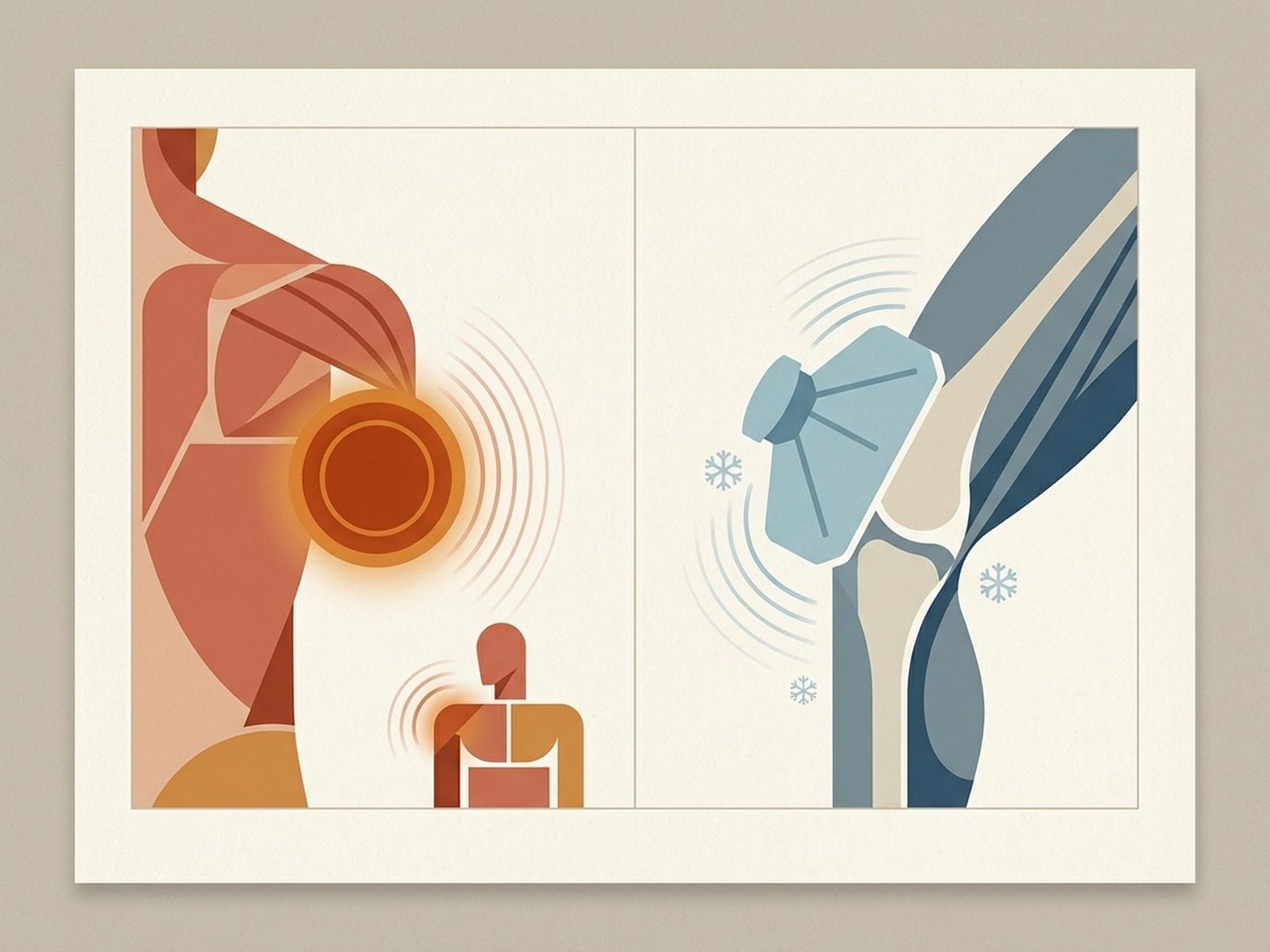
Heat vs Ice Thermotherapy Cryotherapy Overview
Temperature therapy is one of the most accessible and effective self-care tools for managing myofascial trigger points at home. However, the widespread advice to "put ice on it" for muscle pain is not only incorrect for trigger points — it can actively worsen the condition by increasing muscle spasm and reducing blood flow to already ischemic tissue.
The pathophysiology of myofascial trigger points involves a localized energy crisis at the motor endplate, sustained muscle contraction, ischemia, and accumulation of sensitizing metabolic waste. Heat directly addresses every one of these mechanisms: it increases blood flow, relaxes contracted muscle fibers, enhances metabolic waste clearance, and reduces pain through multiple neurological pathways.
Ice, by contrast, causes vasoconstriction that worsens the ischemia at the core of trigger point pathophysiology. It increases muscle stiffness, elevates resting muscle tone, and can perpetuate the very pain-spasm cycle it is intended to treat. Ice has a role in acute injury management, but for chronic trigger points, heat is almost always the correct choice.
Heat targets the core of trigger point pathology: it relaxes the sustained contraction, restores blood flow, and creates the conditions for healing.
Understanding when to use heat, when to use ice, and how to combine them through contrast therapy can significantly accelerate trigger point recovery and provide substantial pain relief between professional treatment sessions.
Key principle: For chronic myofascial trigger points, heat is almost always superior to ice. The common advice to "ice it" applies to acute injuries with active inflammation — not to the sustained muscle contraction and ischemia that characterize trigger points.
Why Heat Works for Trigger Points
Heat application addresses the fundamental pathophysiology of myofascial trigger points through four complementary mechanisms. Understanding these mechanisms explains why heat is so consistently effective — and why it should be the default temperature modality for MPS patients.
Vasodilation & Blood Flow
Heat application dilates blood vessels in the treated area, producing meaningful increases in local skin and muscle blood flow. This enhanced perfusion delivers oxygen and nutrients to ischemic trigger point zones while supporting clearance of sensitizing metabolites (substance P, bradykinin, prostaglandins) thought to contribute to the pain-spasm cycle. By restoring adequate blood supply, heat helps offset the localized energy crisis at the motor endplate proposed in current trigger point models.
Muscle Relaxation & Extensibility
Heat reduces gamma motor neuron activity, decreasing muscle spindle sensitivity and lowering resting muscle tone. Collagen fibers in fascia become more extensible at temperatures above 40°C (104°F), allowing the contracted sarcomeres within trigger point taut bands to lengthen more easily. This is why heat applied before stretching is significantly more effective than stretching alone for trigger point release.
Pain Gate Modulation
Warm thermoreceptors activate large-diameter A-beta nerve fibers, which inhibit pain signal transmission at the spinal cord dorsal horn via the gate control mechanism. This provides immediate analgesic relief that outlasts the heat application itself. Sustained heat also increases endorphin release, providing a secondary pain-relieving pathway.
Parasympathetic Activation
Gentle, sustained heat shifts autonomic balance toward parasympathetic dominance, reducing the sympathetic overdrive that perpetuates trigger point activity. Lower sympathetic tone means less vasoconstriction, reduced muscle guarding, and improved conditions for tissue repair. This systemic calming effect is why a warm bath often provides more relief than localized treatment alone.
Heat Application Methods
Not all heat delivery methods are equal. Moist heat penetrates significantly deeper than dry heat and produces superior muscle relaxation. The following methods are ranked by clinical effectiveness for trigger point management.
Moist Heat Packs (Hydrocollator)
ExcellentDuration
15–20 minutes
Temperature
40–45°C (104–113°F)
Moist heat is generally considered to penetrate more deeply than dry heat because water conducts thermal energy far more efficiently than air. Hydrocollator packs or microwave-heated moist towels are widely used as a clinic-quality home option for trigger point therapy. Always use a protective cloth barrier to prevent burns.
Electric Heating Pad
GoodDuration
20–30 minutes
Temperature
Medium setting (~40°C / 104°F)
Convenient for sustained application but delivers dry heat with less tissue penetration. Best used at medium settings — high settings risk superficial burns, especially if you fall asleep. Never use on areas with reduced sensation. Choose a pad with automatic shutoff.
Warm Bath / Shower
ExcellentDuration
15–20 minutes
Temperature
37–40°C (99–104°F)
Full-body immersion provides systemic vasodilation, parasympathetic activation, and hydrostatic pressure that aids lymphatic drainage. Adding Epsom salts (magnesium sulfate, 2 cups per bath) may provide additional muscle relaxation through transdermal magnesium absorption. Particularly effective for multiple trigger point regions.
Infrared Heat Lamp
GoodDuration
15–20 minutes
Temperature
Distance-dependent
Near-infrared (NIR) wavelengths penetrate further into tissue than visible light or shortwave dry heat, providing somewhat deeper warming than conventional surface methods. Far-infrared saunas raise core body temperature and may provide systemic cardiovascular benefits. Keep the lamp at least 45 cm (18 inches) from skin to prevent burns.
When Ice Is Appropriate
Ice has a limited but legitimate role in trigger point management. The key is restricting its use to situations involving genuine acute inflammation or tissue trauma — not chronic trigger point pain.
Acute Injury (First 48–72 Hours)
Ice is appropriate only for genuine acute trauma — a fresh muscle strain, contusion, or post-injection swelling. The vasoconstriction reduces hemorrhage and limits inflammatory edema in the first 48–72 hours. After this acute window, switch to heat to promote healing.
Post-Dry Needling / Injection Soreness
Brief ice application (10–15 minutes) can reduce post-procedural soreness after dry needling or trigger point injections. This is one of the few legitimate uses of ice for trigger point-related pain — it addresses the iatrogenic tissue trauma, not the underlying trigger point.
Acute Flare with Visible Swelling
If a trigger point region shows visible swelling, redness, or feels hot to touch, brief ice application can reduce the acute inflammatory response. However, this is uncommon with typical trigger point presentations and should prompt evaluation for other pathology.
Why Ice Often Worsens Trigger Points
Applying ice to chronic trigger points is one of the most common self-care mistakes. The trigger point energy crisis involves sustained sarcomere contraction due to excessive acetylcholine release at the motor endplate, leading to localized ischemia and hypoxia. Ice application causes vasoconstriction that further reduces blood flow to already oxygen-deprived tissue, deepening the energy crisis.
Additionally, cold increases muscle spindle sensitivity and gamma motor neuron activity, raising resting muscle tone — the exact opposite of what trigger point treatment requires. Cold-induced muscle stiffness makes the taut band more rigid and resistant to stretch, and the analgesic effect of ice, while providing temporary numbing, masks the pain without addressing the underlying pathology.
The one exception is very brief ice application (under 2 minutes) used as a neurological "reset" stimulus — such as spray-and-stretch technique using vapocoolant spray. This is fundamentally different from prolonged icing and works through spinal reflex inhibition, not tissue cooling.
Contrast Therapy Protocol
Contrast therapy alternates heat and cold application to create a powerful "vascular pump" effect that exceeds either modality alone. The alternating vasodilation and vasoconstriction drives fluid exchange through the tissue, flushing metabolic waste and bringing fresh oxygenated blood to the trigger point zone.

Contrast Therapy Protocol Steps
Apply heat for 3–4 minutes
Moist heat pack or warm compress at 40–45°C (104–113°F). This dilates blood vessels and relaxes the muscle.
Switch to cold for 1 minute
Cold pack wrapped in cloth. Brief cold application causes vasoconstriction that "pumps" metabolic waste out of the tissue.
Return to heat for 3–4 minutes
The vasodilation after cold creates a powerful "vascular flush" that brings fresh oxygenated blood into the trigger point zone.
Repeat for 3–4 cycles, always end on heat
Total session: 15–20 minutes. The alternating pump effect enhances circulation far beyond either modality alone. Always finish with heat to leave the muscle relaxed.
Region-Specific Protocols
Different trigger point locations require tailored approaches based on muscle depth, accessibility, and surrounding anatomy. The following protocols address the three most common trigger point regions encountered in clinical practice.
Upper Trapezius
Moist heat draped across the upper shoulders and base of neck for 15–20 minutes — this is the single most effective home treatment for upper trapezius trigger points.
A warm shower directed at the upper trapezius while performing gentle neck lateral flexion stretches combines heat with movement.
Avoid ice on the upper trapezius for chronic trigger points — it increases muscle guarding and spasm in an already hypertonic muscle.
For acute post-exercise flare: brief contrast therapy (3 min heat / 1 min cold × 3 cycles, end on heat).
Quadratus Lumborum (QL)
Apply a large moist heat pack across the lower back, covering the area from the iliac crest to the lower ribs bilaterally.
Lie on a heating pad set to medium for 20 minutes before performing QL stretches — the heat-then-stretch sequence is significantly more effective.
Warm baths with Epsom salts are particularly effective for QL trigger points due to the deep location of the muscle.
Consider a far-infrared heating pad for the QL, as standard surface heating may not reach this deep posterior muscle adequately.
Piriformis & Gluteal
Sit on a moist heat pack placed on a firm chair for 15–20 minutes — the body weight provides additional compression that enhances heat penetration to the piriformis.
A warm bath is ideal for the piriformis as the buoyancy reduces compressive loading while heat relaxes the muscle.
Avoid prolonged ice application to the gluteal region — the piriformis is a deep muscle and ice primarily affects superficial tissues while increasing deeper muscle guarding.
Follow heat with piriformis stretching (figure-4 stretch or seated cross-leg stretch) for best results.
Contraindications & Safety
Both heat and cold have specific contraindications that must be observed to prevent tissue damage. When in doubt, consult your healthcare provider before applying temperature therapy.
Heat
Open wounds or acute skin infections
Areas with impaired sensation (peripheral neuropathy, post-surgical numbness)
Malignancy — heat increases blood flow that may accelerate tumor growth
Acute inflammation with visible swelling (first 48 hours post-injury)
Over areas with metal implants (deep heating modalities only)
Pregnancy: avoid heating the abdomen or low back
Ice
Raynaud's phenomenon or cold hypersensitivity
Peripheral vascular disease (compromised circulation)
Chronic trigger points without acute inflammation — ice worsens the energy crisis
Cryoglobulinemia or cold urticaria
Areas with impaired sensation
Over superficial nerves (risk of cold-induced nerve palsy)
Key Takeaways
Heat is the primary temperature modality for chronic myofascial trigger points. It addresses the core pathophysiology: ischemia, sustained contraction, and metabolic waste accumulation.
Moist heat is generally considered to penetrate more deeply than dry heat and is widely recommended for home trigger point therapy. Apply for 15–20 minutes.
Ice worsens chronic trigger points by increasing vasoconstriction, muscle stiffness, and resting tone. Reserve ice for acute injuries (first 48–72 hours) and post-procedural soreness.
Contrast therapy (3–4 min heat / 1 min cold, 3–4 cycles, end on heat) creates a vascular pump effect superior to either modality alone.
Always apply heat before stretching trigger points — warm tissue is significantly more extensible and responds better to therapeutic stretch.
For upper trapezius trigger points, moist heat draped across the shoulders is the single most effective home intervention.
Warm baths with Epsom salts provide systemic vasodilation plus targeted muscle relaxation — ideal for patients with multiple trigger point regions.
Never apply heat or ice to areas with impaired sensation, and never fall asleep on a heating pad.
The Bottom Line
If you have chronic trigger points and you have been icing them, you have likely been making them worse. Switch to moist heat as your default self-care modality. Heat before stretching. Heat before self-massage. Heat when pain flares. Heat is not merely symptom relief — it directly addresses the ischemia and sustained contraction that maintain trigger point activity. It is one of the simplest, cheapest, and most effective tools in the trigger point management arsenal.