Overview
Acupressure Self Treatment Tools Overview
Self-treatment tools allow people to apply sustained pressure to painful muscle areas at home without needing another person to help. For some people with persistent myofascial pain, regular self-treatment between clinical visits may help with symptom control and body awareness.
The basic principle is simple: apply steady, tolerable pressure to a painful spot for a short period of time, then ease off and reassess. Some people find this reduces tenderness, produces a sense of release, or makes stretching and movement easier afterward. The exact mechanism is not fully established, and responses vary from person to person.
One practical challenge is reaching painful areas on the back of the body such as the upper trapezius, levator scapulae, rhomboids, infraspinatus, and thoracic erectors. Self-treatment tools can make these regions more accessible than hands alone.
The most useful self-treatment tool is usually the one a person can use consistently and comfortably rather than the most aggressive device available.
This guide covers major tool categories, possible mechanisms, region-specific practical suggestions, safety considerations, and a gradual progression from gentle introductory work to more targeted pressure.
Types of Self-Treatment Tools
Different tools suit different body regions, pressure preferences, and levels of sensitivity. Many people end up using more than one tool — for example, a broader tool such as a foam roller or acupressure mat for general warm-up, followed by a ball or cane for more targeted pressure if needed.
TheraCane / S-Shaped Canes
Backnobber / Knob Tools
Acupressure / Shakti Mats
Lacrosse Balls & Therapy Balls
Foam Rollers
Percussion Massage Guns
How Sustained Pressure May Help
Sustained pressure is often used as a practical self-management technique for painful muscle areas. Several physiological explanations have been proposed, but none should be treated as a complete or definitive account of how people experience relief.
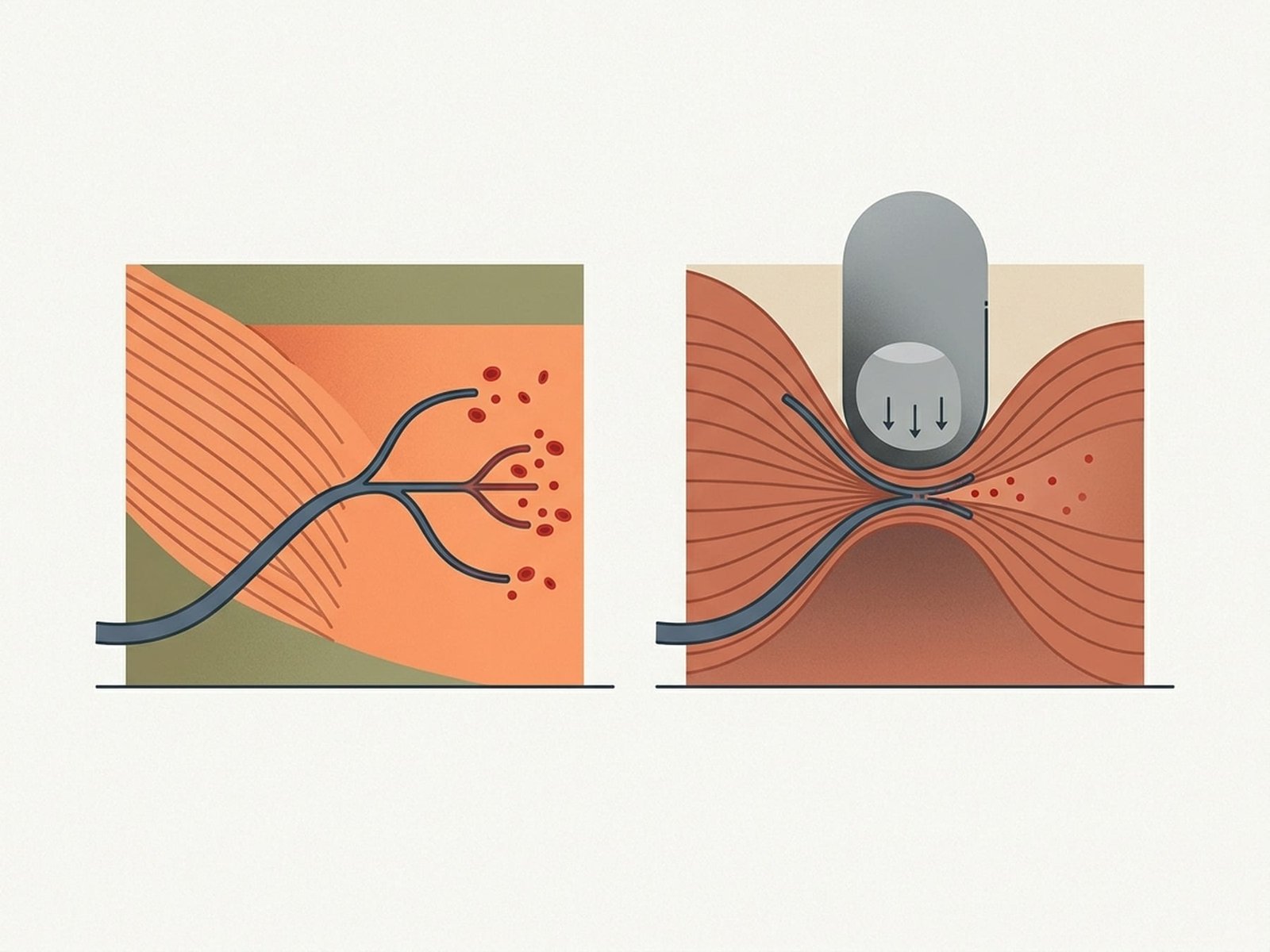
Ischemic Compression Mechanism Diagram
Temporary Local Pressure and Reperfusion
Pain Modulation Through Sensory Input
Local Tissue Relaxation
Neurological Downregulation
Body Region Treatment Guides
Different body regions often require different tools, body positions, and pressure levels. The suggestions below are intended as practical starting points rather than rigid rules.
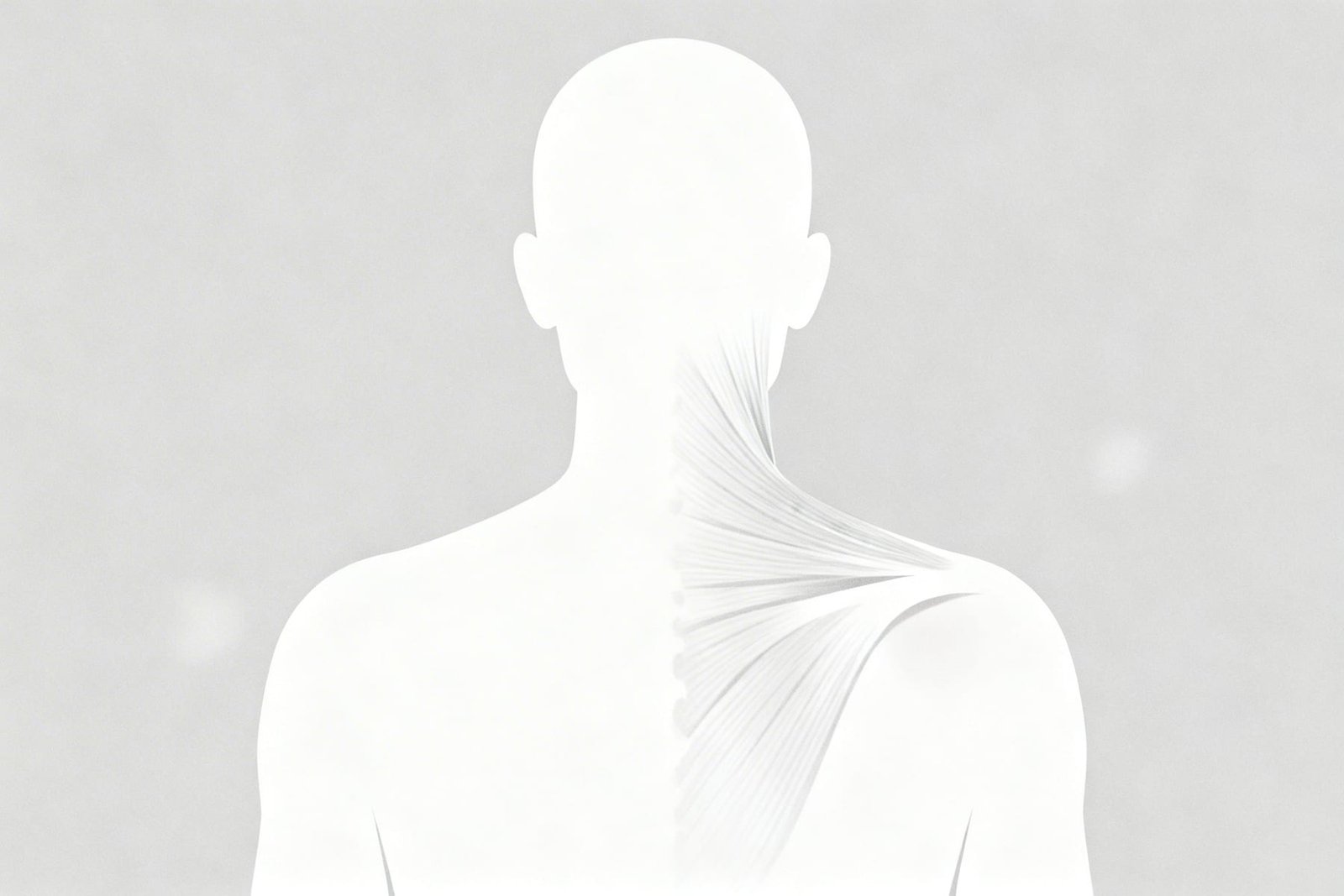
Body Region Treatment Guide Illustration
Upper Trapezius & Levator Scapulae
- TheraCane: Hook the cane over the shoulder, positioning the knob on the tender muscle area between the neck and shoulder tip. Pull downward on the lower handle to control pressure. A hold of 30-90 seconds may be reasonable depending on tolerance.
- Lacrosse ball against wall: Stand with the ball between your upper back and the wall. Position it over the tender area and lean in gradually to control pressure. Small movements may help locate the most sensitive point.
- Avoid pressing directly on the cervical spine. Work on the muscle belly lateral to the spinous processes.
- These muscles often respond better to moderate, controlled pressure than to very aggressive force. If you find yourself tensing or guarding, reduce pressure.
Rhomboids & Infraspinatus (Scapular Region)
- Backnobber: The scapular region is often one of the most practical areas for this tool. Place the knob between the spine and medial scapular border, using the opposite end as a lever to control pressure.
- Peanut ball on floor: Lie on two taped-together balls positioned vertically alongside the spine. Move slowly to explore areas of tenderness between the spine and scapula.
- TheraCane: Hook over the opposite shoulder to reach the infraspinatus region below the scapular spine.
- Posterior scapular muscles are often difficult to reach with hands alone, which is one reason many people prefer a cane or ball for this area.
Quadratus Lumborum & Lumbar Erectors
- Lacrosse ball on floor: Lie on your back with the ball positioned lateral to the lumbar spine in the area between the 12th rib and iliac crest. Use body weight carefully and adjust pressure gradually.
- Foam roller: A roller may be used first for broader warm-up, followed by a ball for more targeted pressure if tolerated.
- TheraCane: Reach around to the lower back to apply more controlled pressure while seated or standing.
- These deeper areas may feel very sensitive. Starting with a softer ball may be more tolerable before progressing to firmer tools.
Gluteals & Piriformis
- Lacrosse ball on floor: Sit on the ball with the affected side, crossing the ankle over the opposite knee if comfortable. This can improve access to the posterior hip region.
- Firm foam roller: May be useful for broader gluteal-region pressure before switching to a more targeted tool.
- Acupressure mat: Sitting or lying on the mat may provide low-intensity broad stimulation to the gluteal area, but it is less precise than a ball.
- Deep buttock-region pressure should be introduced gradually, especially if symptoms radiate or the area is very irritable.
Suboccipital Muscles
- Double lacrosse ball (peanut): Lie face-up with the peanut ball positioned at the base of the skull, with the gap centered over the cervical spine. Gravity usually provides enough pressure without additional force.
- Specialized tools: Occipivot-style tools can provide gentler, more even bilateral support under the skull base.
- Avoid using a TheraCane or Backnobber in the suboccipital region, where pressure is harder to control safely.
- These muscles usually respond better to gentle sustained pressure than to forceful compression. If dizziness, nausea, visual symptoms, or unusual discomfort occur, stop immediately and seek medical advice.
Progression: Gentle to More Targeted
One of the most common mistakes is starting too aggressively. Excessive pressure can increase guarding, bruising, or post-treatment soreness. A gradual progression usually improves comfort and long-term adherence.
Week 1-2: Gentle Introduction
Week 3-4: Building Tolerance
Week 5+: More Confident Use
Combining With Breathing
Slow breathing can make pressure-based self-treatment more tolerable. It may reduce guarding, help people avoid bracing against the tool, and make pressure easier to control.
A simple approach is to inhale gently through the nose and then increase pressure slightly during a slow exhale. The goal is not to force release but to reduce unnecessary tension while applying pressure. If you notice breath-holding, jaw clenching, or whole-body bracing, reduce the pressure.
For acupressure mats, slow diaphragmatic breathing may make the experience more tolerable and help reduce general muscle tension while lying on the mat.
Contraindications & Safety
Self-treatment tools are often safe when used carefully, but certain conditions call for extra caution or avoidance. Review the following before starting a new self-treatment routine.
Self-treatment tools can help some people manage painful muscle areas between clinical visits, especially when used consistently and with good technique.
TheraCanes, Backnobbers, and lacrosse balls are practical options for posterior muscle regions that are hard to reach with the hands.
Sustained pressure may help through a combination of sensory modulation, reduced guarding, and local tissue effects, but the exact mechanism is not fully settled.
Moderate, controlled pressure is usually more effective and better tolerated than very aggressive compression.
Acupressure mats may be useful for broad areas of tension, while balls and canes are usually more useful for targeted point work.
Starting gently and progressing gradually often improves tolerance and reduces the risk of bruising or flare-ups.
The suboccipital region requires extra care. Gentle, gravity-based tools are usually safer than lever-based devices in this area.
Anticoagulant therapy, active inflammation, osteoporosis over vulnerable areas, significant neuropathy, and vascular issues are all reasons for extra caution.
The Bottom Line
- Self-treatment tools can be useful additions to a broader myofascial pain management plan, especially when they help a person apply consistent, tolerable pressure to hard-to-reach areas. The best results usually come from careful technique, gradual progression, and realistic expectations rather than aggressive pressure. These tools work best as supportive self-management options alongside appropriate movement, recovery strategies, and clinical care when needed.