Understanding the Gluteal Complex
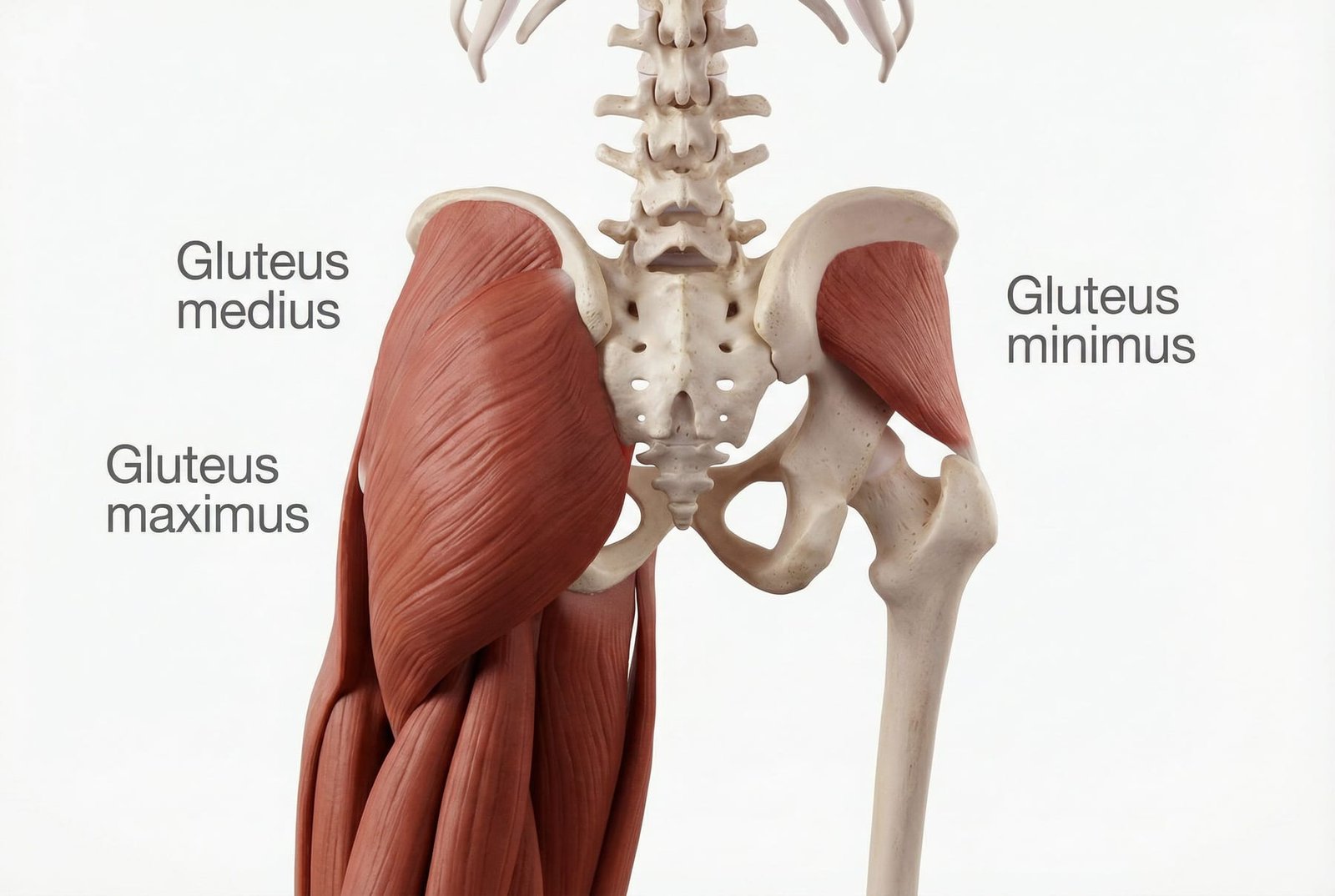
Gluteus Medius and Minimus Anatomy Posterior View
The gluteal muscles occupy different layers: maximus is the large superficial muscle, medius is partly covered by it, and minimus lies deeper against the ilium. They contribute to hip extension, abduction and rotation during walking, stairs and balance. Pain in this region can involve several tissues, so anatomy provides orientation rather than a diagnosis.
Gluteus medius runs from the outer ilium to the greater trochanter. It abducts the hip and helps limit dropping of the opposite side of the pelvis during single-leg stance. A pelvic drop or trunk lean can reflect reduced abductor performance, pain or balance difficulty; it does not identify one damaged muscle.
Gluteus minimus lies beneath medius and attaches to the anterior facet of the greater trochanter. Traditional trigger-point descriptions include lateral thigh and leg pain, but these distributions overlap with other conditions. A neurological examination and assessment of the hip and lumbar spine remain relevant when pain travels down the leg.
Recent changes in walking, running, sitting tolerance or exercise load can help explain when symptoms appear. Muscle tenderness may coexist with gluteal tendinopathy, hip disease or low back pain. These associations do not establish one universal mechanism for trigger-point formation.
Gluteal Dysfunction Patterns
Trendelenburg Sign
Overlapping Leg Pain
Regional Assessment
Activity and Capacity
Anatomy & Trigger Points
The maps locate regions described in traditional trigger-point references. Medius is more accessible than the deeper minimus. Tenderness varies, and surface contact cannot reliably separate the two layers or establish a diagnosis. Do not press harder to reach a point shown in an illustration.
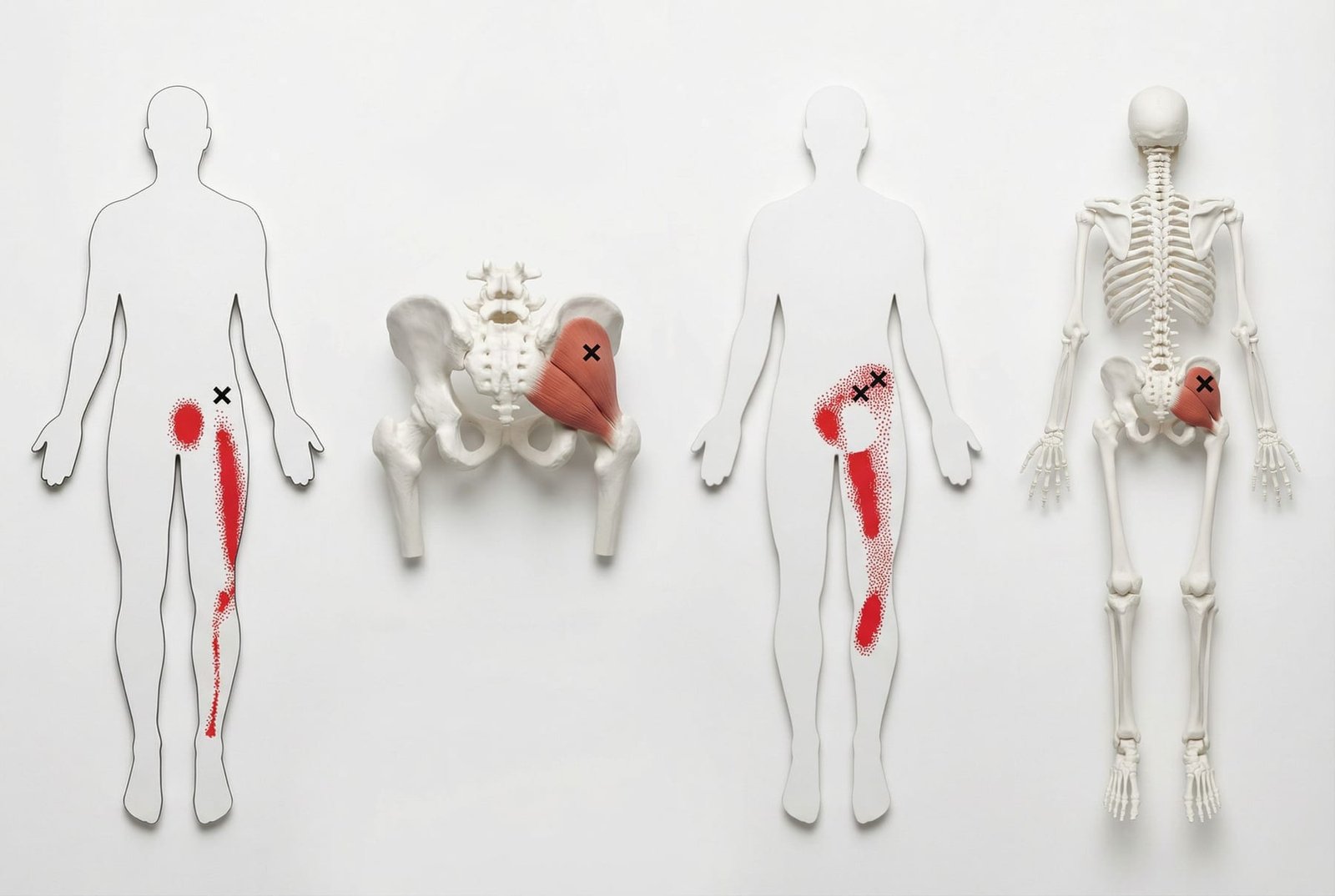
Gluteal Trigger Point Locations and Referral Zones
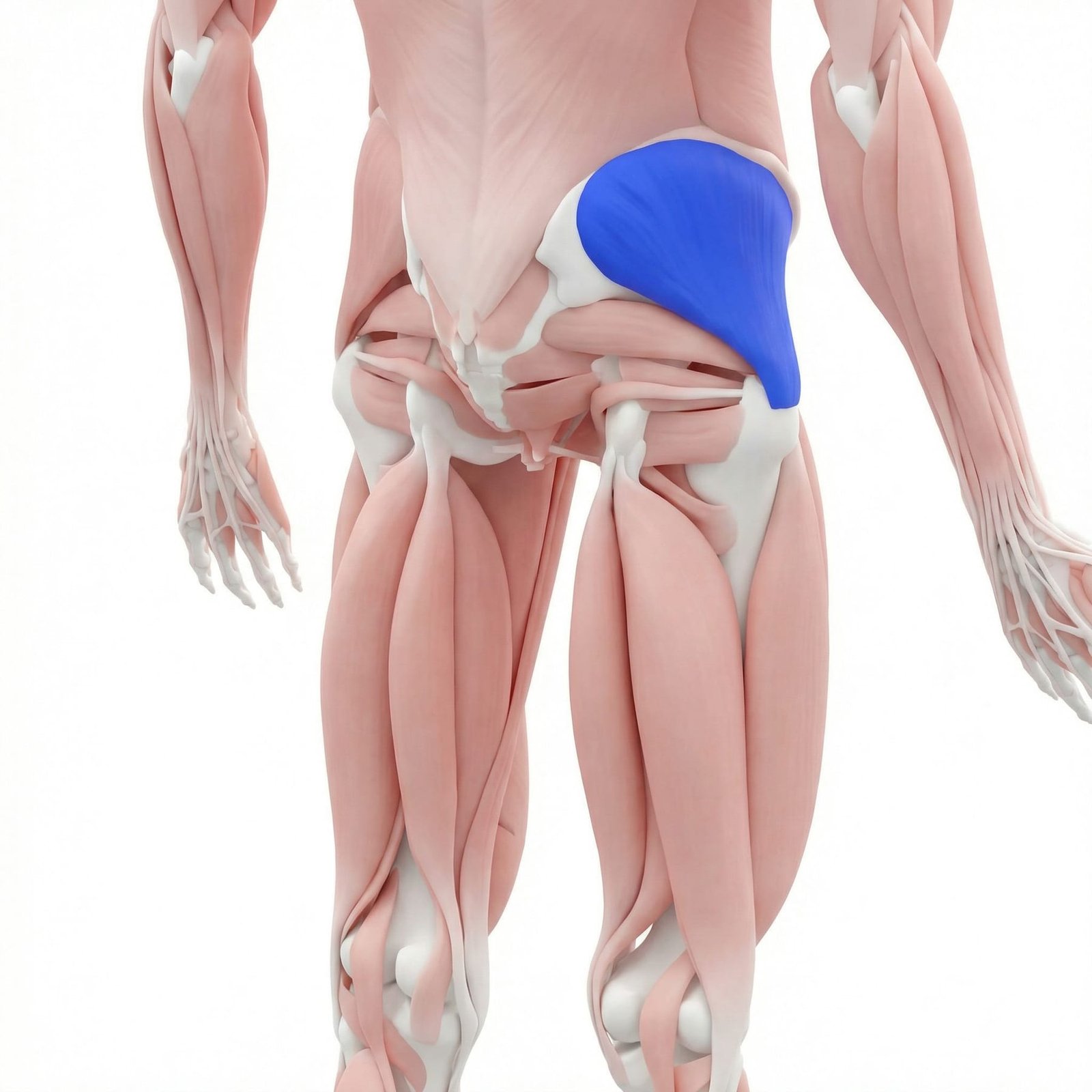
Familiar aching may be felt around the lateral hip, upper buttock or iliac crest. These regions overlap with tendon, hip joint, sacroiliac and lumbar symptoms; the location alone does not identify the source.
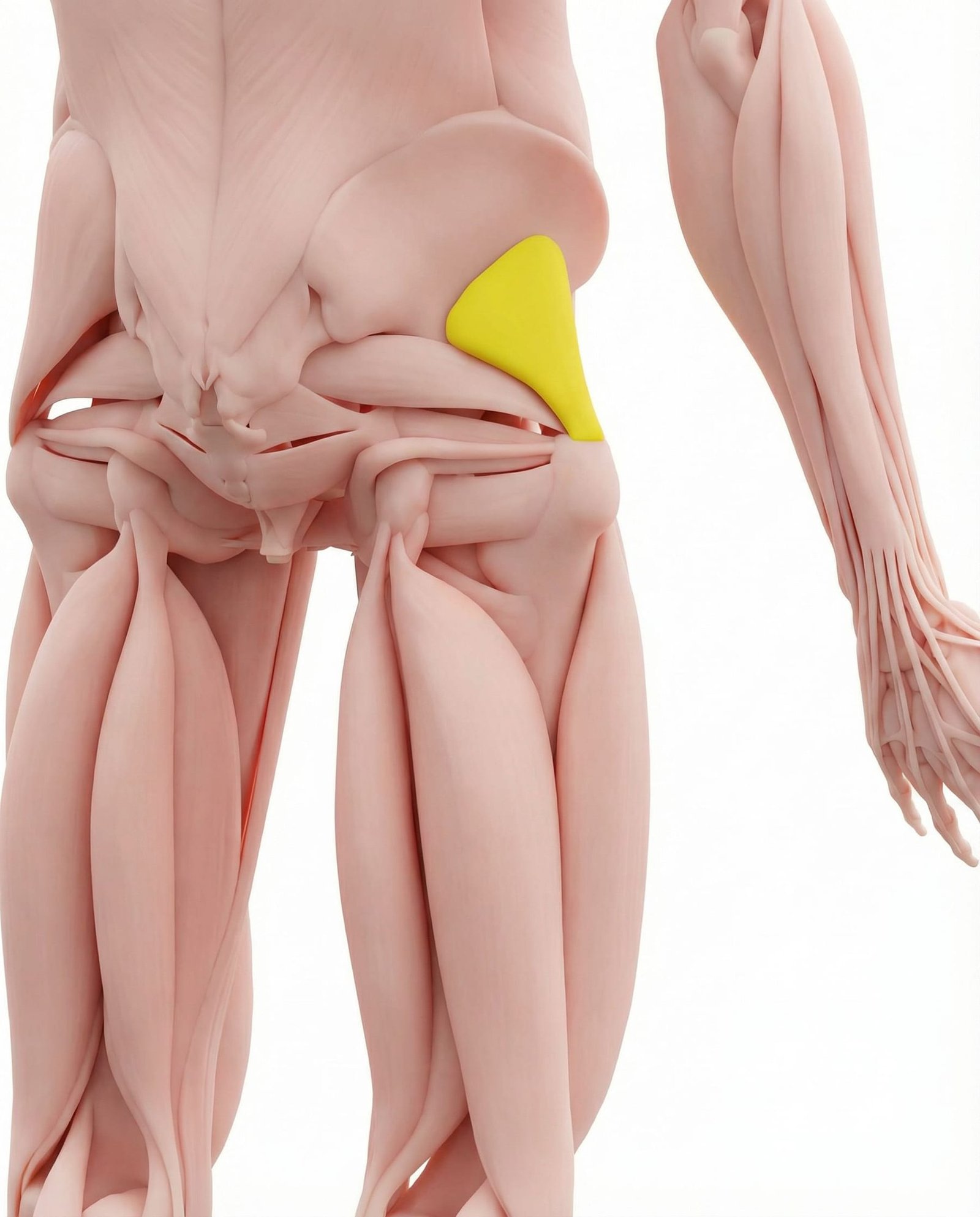
Traditional maps describe pain along the lateral thigh and sometimes farther down the leg. This is a reference pattern, not a way to exclude radiculopathy. The minimus lies beneath the medius and cannot be isolated reliably by surface pressure.
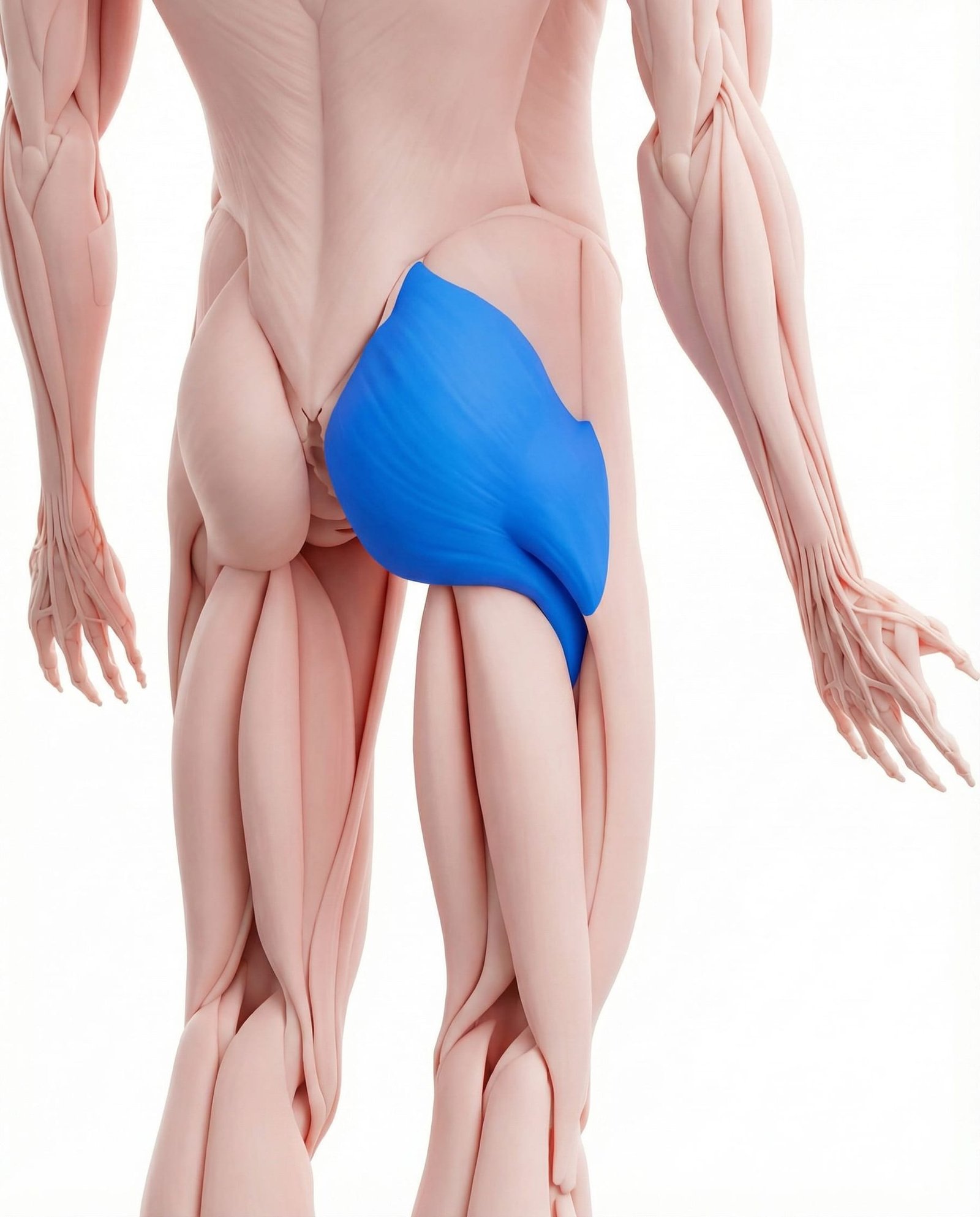
Buttock discomfort may accompany chair rises, stairs or prolonged sitting. Pain near the sitting bone or tailbone also needs assessment of the proximal hamstrings, coccyx and nearby structures.
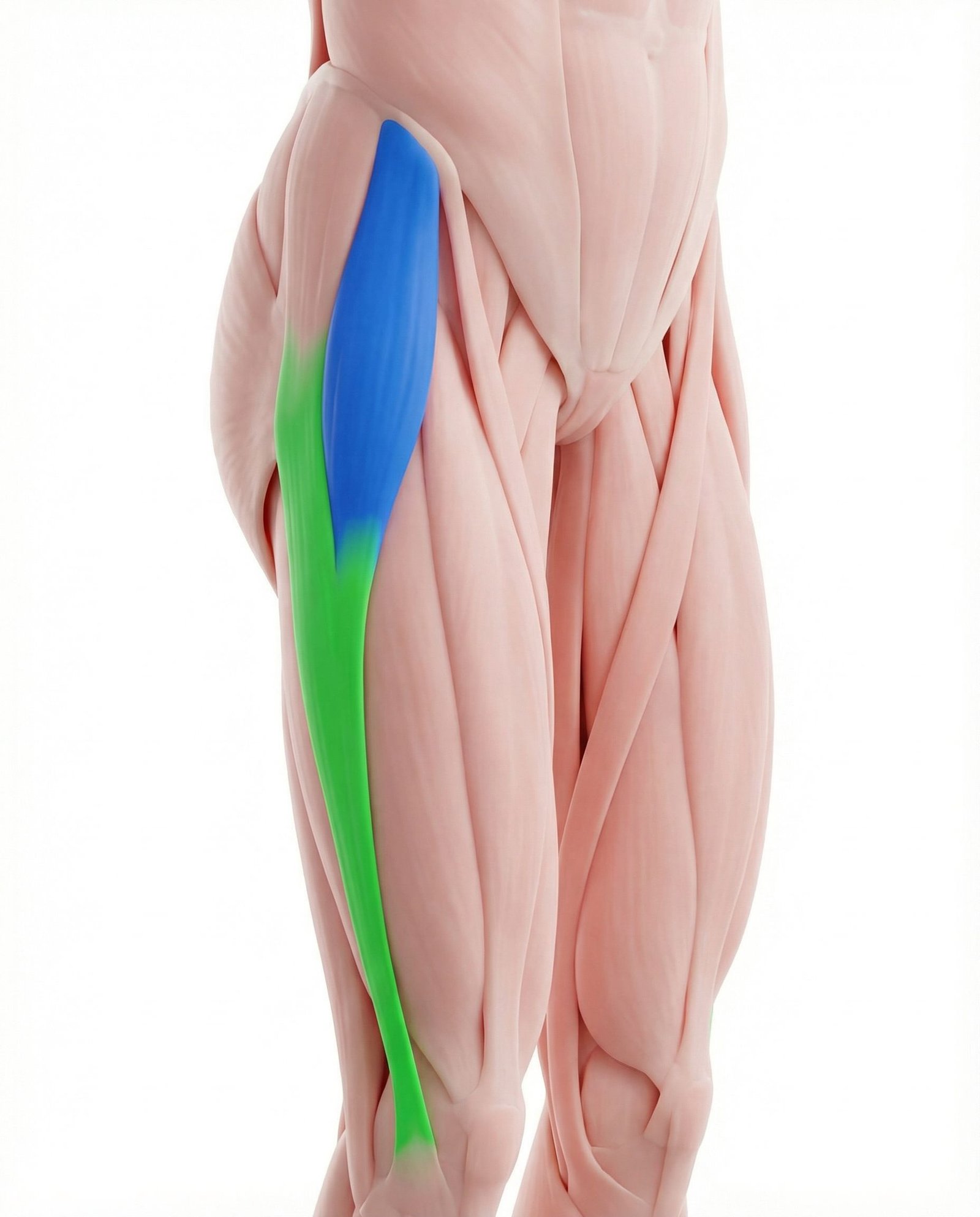
Lateral hip or thigh discomfort may occur during repeated walking or running. Tensor fasciae latae works alongside the gluteal muscles; tenderness does not establish the cause of iliotibial-band or knee pain.
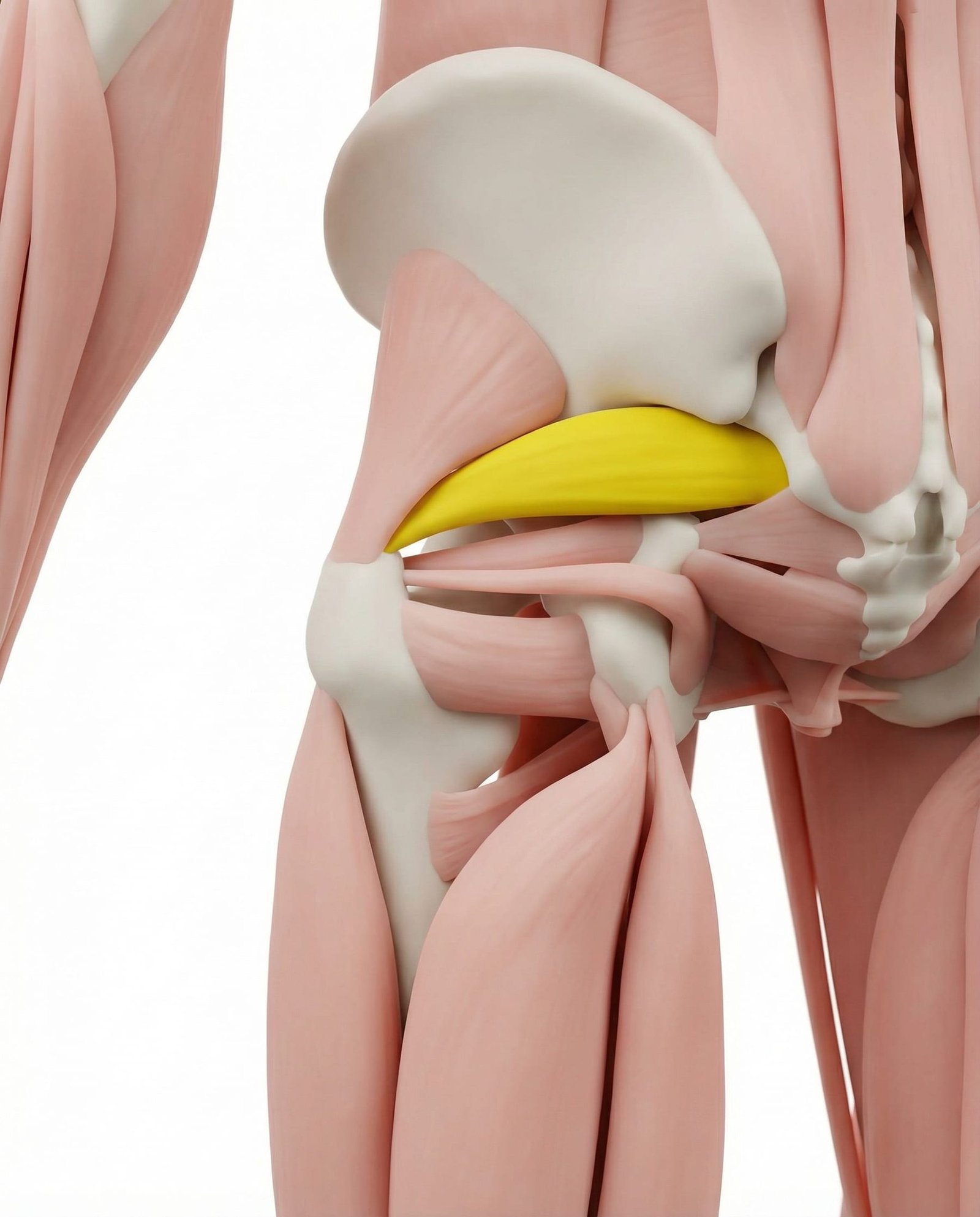
Deep buttock symptoms may coexist with gluteal tenderness. Leg radiation, altered sensation or weakness require assessment of lumbar and sciatic nerve causes rather than an assumption that both muscles need release.
Referral Patterns: The Gluteal Pain Signature
Gluteal pain may overlap the lateral hip, iliac crest, buttock and sacral region. Familiar symptoms during muscle loading or palpation are useful observations, but they are not specific. Sacroiliac and hip assessment may be needed alongside the lumbar examination.
A lateral-leg pattern is sometimes described with gluteus minimus tenderness. Radicular pain can occur without a clear sensory deficit, and a negative straight-leg raise does not exclude all spinal causes. Interpret symptom distribution alongside strength, sensation, reflexes and the rest of the examination.
A familiar pain pattern helps guide the examination; it does not determine the diagnosis on its own.
Sacral / SI
Lateral Leg
Coccyx
Self-Assessment Tests
These clinician-led observations assess movement, strength and familiar symptoms. They are not tests that confirm a trigger point. Stop if a movement produces shooting pain, numbness or weakness, and arrange assessment for persistent or changing leg symptoms.
Trendelenburg Test
Single-Leg Stance Hip Abductor Assessment
Side-Lying Hip Abduction Strength
Resisted Hip Abduction Assessment
FABER / Patrick's Test
Hip & Sacroiliac Joint Screening
Ober's Test
IT Band / TFL Tightness Assessment
Treatment Pathways
Choose treatment for the assessed problem. Education about activity and a progressive exercise plan can support function; gentle manual treatment may be an optional adjunct when helpful. Tendon, joint and nerve presentations may need different loading and follow-up.
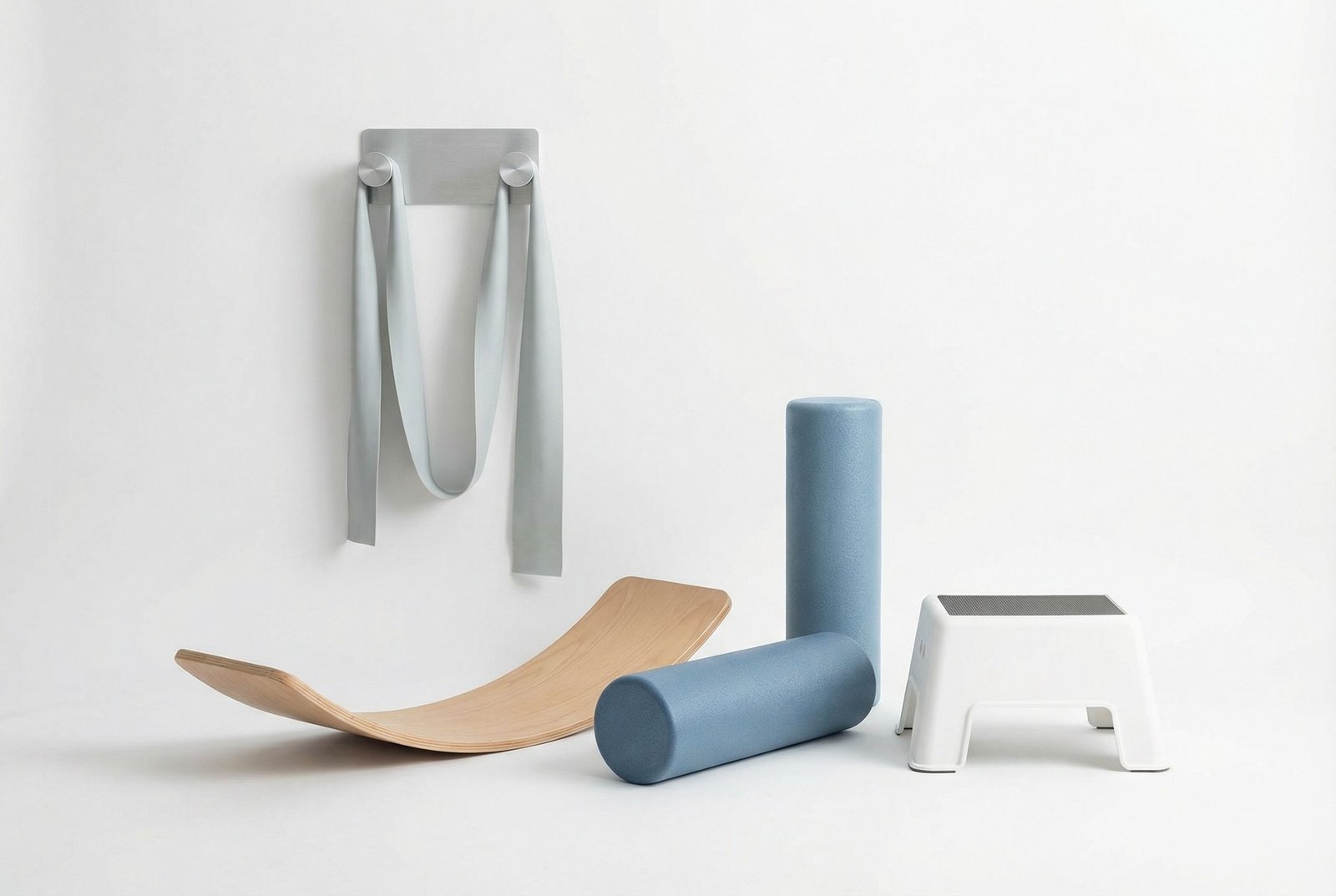
Gluteal Stretching and Self-Release Techniques
Gluteal Stretching & Mobility
Comfortable hip movement can help maintain activity. Choose the range according to symptoms; stretching has not been shown to switch off a trigger point or guarantee recovery within a set number of weeks. Strong cross-body stretches may aggravate lateral hip tendon pain.
- Begin with comfortable hip movement without forcing the end of range
- Try an easy walk or supported movement if sitting makes the region stiff
- A gentle figure-4 position is optional only if it is comfortable
- Avoid sustained hip adduction or strong cross-body stretches when these aggravate lateral hip pain
- Reassess ordinary walking or dressing after the movement rather than chasing a deeper stretch
Optional Gentle Symptom Relief
Light massage may feel helpful for some people, but deeper pressure is not necessarily more effective. Do not attempt to reach gluteus minimus through the overlying muscle with a hard ball or prolonged compression. Symptom relief does not establish the pain source.
- Choose a comfortable position with the hip supported
- Use light contact only if it feels helpful
- Avoid pressing directly onto the painful greater trochanter or a recent injury
- Stop for shooting pain, tingling, numbness or a lasting increase in symptoms
- Use any short-term relief to support comfortable movement; pressure is optional
Hip Abductor Strengthening
Progressive hip exercise can improve capacity when the examination identifies a relevant strength or loading problem. The starting exercise and load should suit the diagnosis and irritability. Weakness is one possible finding, not a universal cause of trigger points.
- Begin with a supported chair rise or an easy bilateral bridge if comfortable
- Use a tolerated hip-abduction exercise with the pelvis supported
- Progress resistance and repetitions separately according to the response
- Add step-ups and single-leg tasks when these can be controlled comfortably
- Reduce the load for a sustained flare and review a plan that is not improving function
Dry Needling
Needling is an optional clinician-delivered procedure after assessment and discussion of expected benefits, uncertainty and risks. Evidence for a regional pain condition does not establish that deep gluteal needling is necessary or that a twitch response predicts recovery.
- Discuss the diagnosis and the functional goal before choosing a procedure
- Consider exercise and activity modification as part of the plan
- Ask about the practitioner’s training, local authorization and procedure risks
- Deep gluteal anatomy contains nerves and vessels; no self-needling or insertion instructions are provided here
- Judge benefit by meaningful pain and function changes, with reassessment when symptoms persist
Red Flags — When to See a Doctor
Most lateral hip, buttock, and thigh pain is musculoskeletal in origin, but several presentations require urgent evaluation for fracture, vascular, or neurological causes, particularly in elderly patients or those with recent trauma.
Key Takeaways
Gluteus medius and minimus help control the pelvis during walking and single-leg activity. Pain, reduced strength and poor balance can each affect performance; one finding does not establish the cause.
Pain spreading down the leg needs a history and, when indicated, neurological examination. Reproducing pain by pressing the buttock cannot exclude a spinal or nerve source.
Muscle, gluteal tendon, hip joint, sacroiliac and lumbar pain can overlap. Examination should test the relevant possibilities rather than assign all regional pain to a tender area.
Activity modification and progressive exercise can support recovery. Choose loading from the assessed problem and current capacity; weakness is not a universal explanation for hip pain.
If lying on the painful hip aggravates symptoms, try another comfortable position or a pillow between the knees. Avoid forceful stretches or pressure that produces a lasting flare.
A gluteal tendon disorder or hip joint condition needs its own management. Trigger-point treatment is not established as a way to resolve these diagnoses.