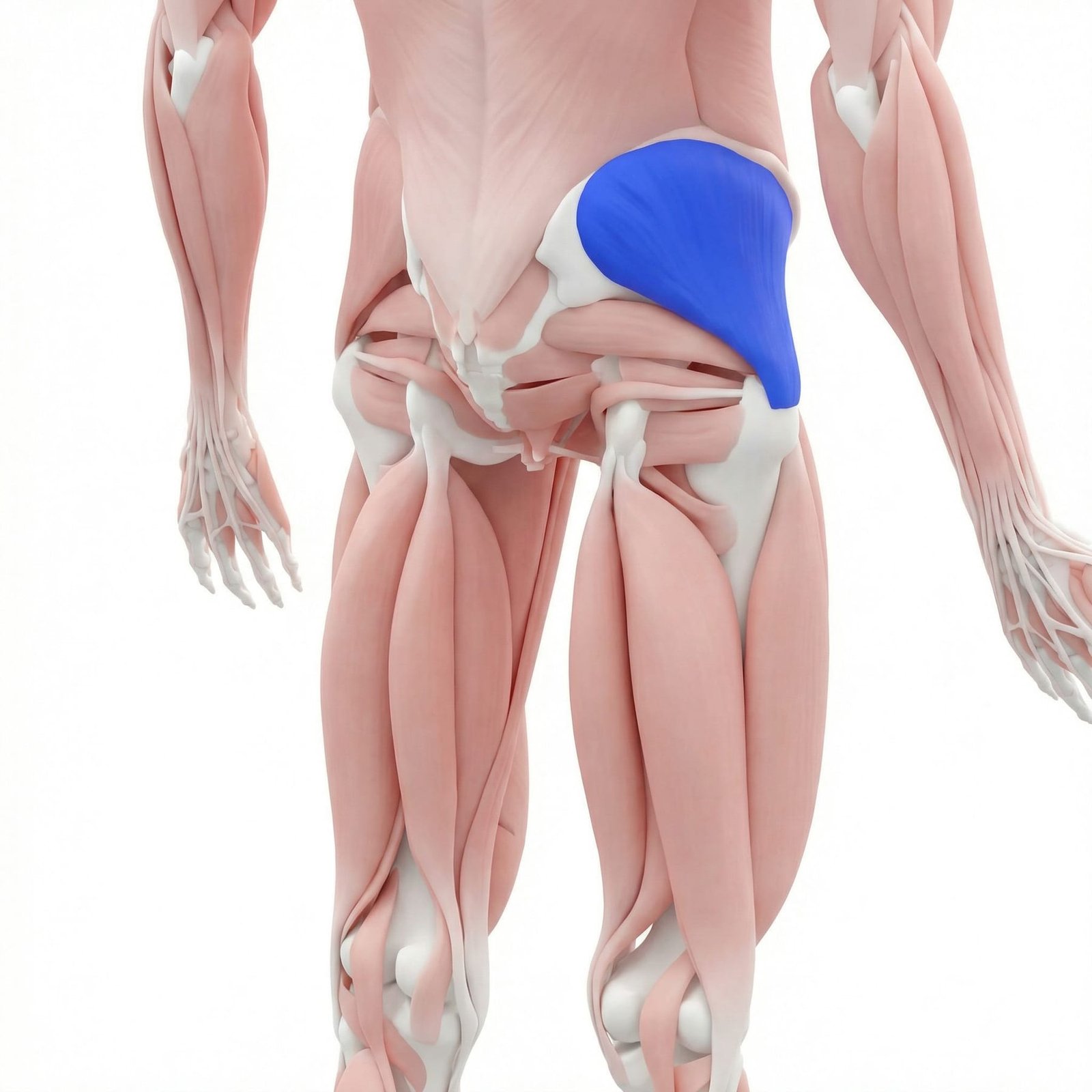
TrP 1
TrP1
Location. Side of hip, upper buttock
Pain referral. Side of hip, lower back, outer thigh
- Side of hip
- Lower back
- Outer thigh
- Buttock
- Near SI joint
Lateral hip aching over the greater trochanter worsened by single-leg weight bearing
Location. Side of hip, upper buttock
Pain referral. Side of hip, lower back, outer thigh
Location. Posterior fibers of gluteus medius near sacroiliac area
Pain referral. Sacrum and low back
Location. Anterior fibers of gluteus medius near ASIS
Pain referral. Lower lateral gluteal area and posterior thigh
Location. Mid-belly of gluteus medius
Pain referral. Along iliac crest and greater trochanter
Hip pain. Lateral hip aching over the greater trochanter worsened by single-leg weight bearing
Lower back pain. Referred lumbar and sacroiliac aching from gluteus medius trigger point radiation
Outer thigh pain. Referred lateral thigh ache extending toward the knee from hip abductor tension
Difficulty lying on side. Lateral hip compression pain preventing comfortable side sleeping on affected hip
Limping. Antalgic gait pattern from gluteus medius weakness causing Trendelenburg-like hip drop
Sacral pain. Posterior gluteus medius trigger point refers pain medially to sacral region mimicking sacral pathology
Low back ache. Referred lumbar pain from posterior gluteus medius fibers near sacroiliac attachment region
SI joint area pain. Trigger point proximity to SI joint creates localized pain mimicking sacroiliac joint dysfunction
Pain when walking. Each gait cycle step activates posterior gluteus medius for pelvic stabilization loading trigger point
Difficulty lying supine. Supine position compresses posterior gluteus medius trigger point against firm surface
Lateral buttock pain. Anterior gluteus medius trigger point refers laterally and inferiorly to lower buttock region
Posterior thigh ache. Referred pain descends from anterior gluteus medius into proximal posterior thigh territory
Pain with walking. Gait-cycle hip flexion activates anterior gluteus medius fibers loading the active trigger point
Trochanteric area tenderness. Trigger point in anterior fibers refers pain to greater trochanter creating palpable tenderness
Hip abductor weakness. Trigger point inhibits anterior gluteus medius reducing overall hip abduction force production
Hip pain along the crest. Mid-belly trigger point refers pain along iliac crest from periosteal irritation at attachment
Trochanteric pain. Referred aching to greater trochanter region from mid-gluteus medius belly trigger point
Difficulty lying on affected side. Lateral compression of mid-gluteus medius against trochanter aggravates trigger point during side-lying
Lateral hip ache. Generalized lateral hip pain from mid-belly trigger point referring to surrounding hip structures
Pain putting on pants. Single-leg stance required for dressing demands gluteus medius stabilization loading trigger point
Weak hip abductors. Insufficient gluteus medius strength causes overload during single-leg stance activities
Running. Repetitive single-leg stance during running fatigues gluteus medius each stride cycle
Walking on uneven surfaces. Uneven terrain demands increased hip abductor stabilization overloading gluteus medius
Prolonged standing. Extended weight bearing fatigues hip abductors maintaining pelvic level alignment
Poor posture. Habitual hip hiking or lateral pelvic shift chronically overloads gluteus medius unilaterally
Pregnancy. Increased body weight and altered gait mechanics overload hip abductors during pregnancy
Prolonged standing on one leg. Unilateral stance demands sustained posterior gluteus medius contraction for pelvic stability
Uneven leg length. Leg length discrepancy creates asymmetric pelvic loading overworking shorter-side gluteus medius
Running on banked surfaces. Cambered running surfaces tilt pelvis overloading downhill posterior gluteus medius fibers
Scoliosis with pelvic obliquity. Spinal curvature creates chronic pelvic tilt overloading posterior gluteus medius on convex side
Prolonged sitting on hard surfaces. Hard surface compression of anterior gluteus medius creates sustained ischemia and trigger points
Hip abductor weakness. Deficient abductor strength forces anterior fibers to compensate creating overuse trigger points
Lateral pelvic tilt. Asymmetric pelvic alignment creates chronic overload of anterior gluteus medius on depressed side
Post-hip surgery. Surgical approach through gluteus medius creates scarring and residual trigger points in anterior fibers
Walking with cane on wrong side. Incorrect cane side fails to offload hip abductors creating continued anterior gluteus medius overwork
Side sleeping without pillow between knees. Adducted hip position during sleep compresses gluteus medius against trochanter creating ischemia
Running on cambered roads. Road camber creates asymmetric pelvic loading chronically overworking downhill-side gluteus medius
Weak gluteal muscles. Overall gluteal weakness forces mid-belly fibers to work beyond capacity during daily activities
Standing with weight shifted to one side. Habitual weight-shifting overloads one-sided gluteus medius with sustained contraction
Post-total hip replacement. Surgical gluteus medius detachment and reattachment creates residual weakness and trigger points
Lie on your side with a foam roller or tennis ball positioned under the outer hip, just below the bony prominence at the top of the thigh bone. Support your upper body with your forearm and slowly roll back and forth over the tender area. Pause on any especially sore spots and let the pressure sink in for 20-30 seconds. Control the amount of pressure by shifting more or less body weight onto the roller.
Apply a warm, damp towel or a microwavable moist heat pack to the outer hip and upper buttock area. Lie on the unaffected side with the heat pack resting against the painful hip. Moist heat penetrates deeper than dry heat and promotes muscle relaxation and improved blood flow to the area.
Lie on your non-painful side with your body in a straight line. Keep the bottom knee slightly bent for stability. Slowly lift the top leg upward about 30-45 degrees, keeping the knee straight and toes pointed slightly downward. Hold for 2-3 seconds at the top, then lower slowly. Focus on using the outer hip muscles rather than rotating the leg or tilting the pelvis. Add a light ankle weight once you can do 15 repetitions easily.
Lie on your non-painful side with hips and knees bent to about 45 degrees, feet together. Keeping your feet touching, slowly open the top knee upward like a clamshell opening, rotating from the hip. Do not roll your pelvis backward during the movement. Hold the open position for 2-3 seconds, then lower slowly. You should feel the muscles on the outer hip and upper buttock working. Add a resistance band around the knees for more challenge.
For single-leg balance: stand on the affected leg near a wall or counter for support. Try to maintain balance for 30 seconds without letting the opposite hip drop. For monster walks: place a resistance band around both ankles, bend your knees slightly, and take wide steps sideways, keeping tension on the band throughout. Take 10 steps in each direction. Both exercises activate the gluteus medius in its functional stabilizer role.
Avoid crossing your legs when sitting, as this places the gluteus medius in a shortened position. When standing, distribute weight evenly between both feet rather than habitually shifting onto one hip. When sleeping on your side, place a firm pillow between your knees to keep the hips aligned and reduce strain on the upper gluteus medius. Alternate which side you sleep on. Wear supportive, well-fitted shoes and replace worn-out footwear that may cause gait imbalance.
If lateral hip and buttock pain persists despite 4-6 weeks of strengthening and self-care, consult a healthcare provider for evaluation. They can assess for trochanteric bursitis, hip joint pathology, or IT band syndrome that may coexist with or mimic gluteus medius trigger points. A physical therapist can perform gait analysis to identify biomechanical factors contributing to the problem.