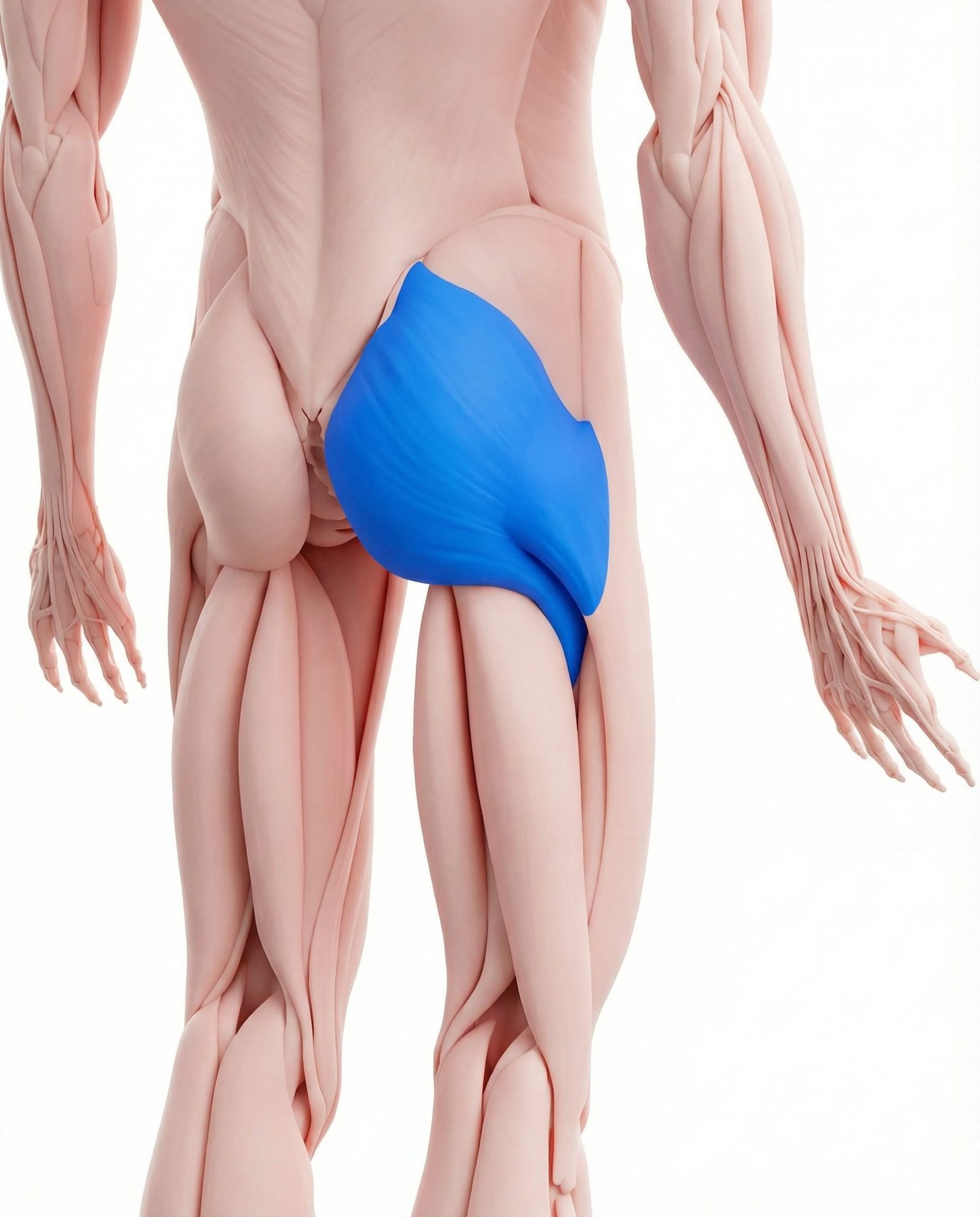
TrP 1
TrP1
Location. Buttock, large gluteal muscle
Pain referral. Buttock, lower back, back of thigh
- Buttock
- Lower back
- Back of thigh
- Tailbone area
- Hip
Deep gluteal aching that worsens with prolonged sitting on hard surfaces
Location. Buttock, large gluteal muscle
Pain referral. Buttock, lower back, back of thigh
Location. Mid-belly of gluteus maximus, central buttock
Pain referral. Sacrum and coccyx (tailbone pain)
Location. Near coccyx, medial inferior fibers
Pain referral. Deep intrapelvic pain and ischial pain (sitting pain)
Location. Near IT band insertion, lateral fibers
Pain referral. Lateral thigh along IT band
Buttock pain. Deep gluteal aching that worsens with prolonged sitting on hard surfaces
Sitting pain. Ischial discomfort from compressed trigger points between pelvis and seating surface
Lower back pain. Referred lumbar aching from gluteus maximus trigger points near sacral attachment
Posterior thigh pain. Referred ache down the back of the thigh mimicking hamstring involvement
Hip pain. Deep hip joint area aching from gluteal trigger point referral to the trochanteric region
Tailbone pain when sitting. Central gluteus maximus trigger points refer medially to the coccygeal region during compression
Sacral aching. Mid-belly taut bands project pain medially across the sacral surface via local referral
Buttock pain with weight bearing. Compressive loading through the gluteus maximus activates central trigger points during stance
Restlessness when seated. Sustained compression of trigger points causes increasing discomfort prompting frequent repositioning
Pain rolling over in bed. Gluteal contraction during trunk rotation in supine loads irritable trigger points
Sitting bone pain. Medial inferior gluteal fibers refer to the ischial tuberosity region during seated compression
Deep pelvic aching. Trigger points in deep medial fibers project pain into the intrapelvic space mimicking visceral pain
Pain directly on ischial tuberosity. Medial gluteal referral converges on the ischial tuberosity overlapping hamstring attachment pain
Difficulty sitting on firm surfaces. Firm surfaces compress medial inferior trigger points against the ischium intensifying pain
Perineal discomfort. Deep medial fiber referral extends into the perineal region via shared pudendal nerve territory
Lateral thigh pain. Lateral gluteal fibers refer distally along the iliotibial band tract to the outer thigh
IT band-like tightness. Taut bands in lateral gluteus maximus fibers increase tension transmitted through the IT band
Greater trochanter tenderness. Lateral fiber trigger points refer locally to the trochanteric region mimicking bursitis
Lateral knee discomfort. Distal referral along the IT band pathway extends to the lateral knee joint line area
Pain lying on affected side. Lateral recumbent position compresses trochanteric trigger points against the mattress surface
Prolonged sitting. Sustained compression of gluteus maximus during sitting creates ischemia and trigger points
Weak glutes. Deconditioned gluteus maximus develops trigger points from inadequate strength for daily tasks
Climbing stairs. Repetitive concentric hip extension during stair climbing overloads gluteus maximus fibers
Running uphill. Increased hip extension demand during incline running fatigues gluteus maximus rapidly
Poor posture. Posterior pelvic tilt or excessive lordosis alters gluteus maximus length-tension relationship
Sedentary lifestyle. Chronic inactivity causes gluteal atrophy making muscles susceptible to trigger point formation
Fall onto buttock. Direct contusion of central gluteal fibers causes traumatic trigger point activation
Running on hard surfaces. Repetitive eccentric gluteal loading during heel strike on hard ground fatigues muscle fibers
Heavy squatting. High-load hip extension through deep squat range maximally stresses gluteus maximus fibers
Sitting on wallet or hard objects. Focal pressure from objects beneath the buttock creates localized ischemia in gluteal fibers
Weak gluteal muscles from sedentary lifestyle. Chronic disuse weakens gluteus maximus making it vulnerable to overload during minimal activity
Prolonged sitting on hard surfaces. Sustained ischial compression of medial inferior gluteal fibers creates chronic ischemic contracture
Cycling (saddle pressure). Bicycle saddle compresses medial gluteal fibers and ischial region during repetitive pedaling
Rowing (ischial loading). Sliding seat creates repetitive shear loading on medial inferior gluteal fibers at catch position
Fall on buttock. Impact trauma to the inferior gluteal region damages medial fibers near coccygeal attachment
Post-surgical adhesions. Surgical scarring in the perineal or gluteal region restricts tissue mobility creating trigger points
Chronic constipation. Repeated straining increases pelvic floor tension and reflexive medial gluteal contraction
Running (especially on banked surfaces). Banked surface running creates asymmetric lateral gluteal loading and IT band tension
Excessive stair climbing. Repetitive hip extension with abduction component overloads lateral gluteal fiber attachments
Weak hip abductors. Insufficient gluteus medius strength transfers lateral stabilization demands to lateral gluteus maximus
IT band friction from repetitive activity. Chronic IT band tension from lateral gluteal trigger points increases friction at lateral knee
Lateral sleeping on hard mattress. Sustained compression of lateral gluteal fibers against a firm surface creates ischemic trigger points
Hiking on uneven terrain. Variable lateral stabilization demands on uneven ground fatigues lateral gluteal fiber groups
Sit on a firm surface with a tennis ball under the affected buttock. Roll slowly to locate the most tender spot, then hold sustained pressure for 30-60 seconds. Adjust your position by crossing the affected-side ankle over the opposite knee for deeper access to the lower fibers.
Lie on your back. Cross the affected ankle over the opposite knee. Reach through and grasp the back of the supporting thigh, pulling it toward your chest. You should feel a deep stretch in the buttock of the crossed leg. Keep your head and shoulders relaxed on the floor.
Lie on your back with knees bent and feet flat. Squeeze your glutes and lift your hips until your body forms a straight line from shoulders to knees. Hold for 5 seconds at the top, then lower slowly. Focus on gluteal activation rather than using your low back.
Stand holding a chair or wall for balance. Keeping your knee straight, extend one leg backward about 15-20 degrees. Squeeze the buttock at the end of the movement and hold for 3 seconds. Lower slowly. Keep your trunk upright — do not lean forward.
Avoid sitting for more than 30-45 minutes at a time. Use a cushion or donut-shaped seat pad to reduce pressure on the buttock trigger points. When sitting is unavoidable, shift your weight periodically and stand for brief stretching breaks. Walk for at least 20-30 minutes daily.
If buttock pain persists beyond 3-4 weeks of self-care, or if the pain radiates down the leg, consult a physiatrist. They can differentiate gluteus maximus trigger points from sacroiliac dysfunction, piriformis syndrome, or lumbar radiculopathy and provide targeted treatment.