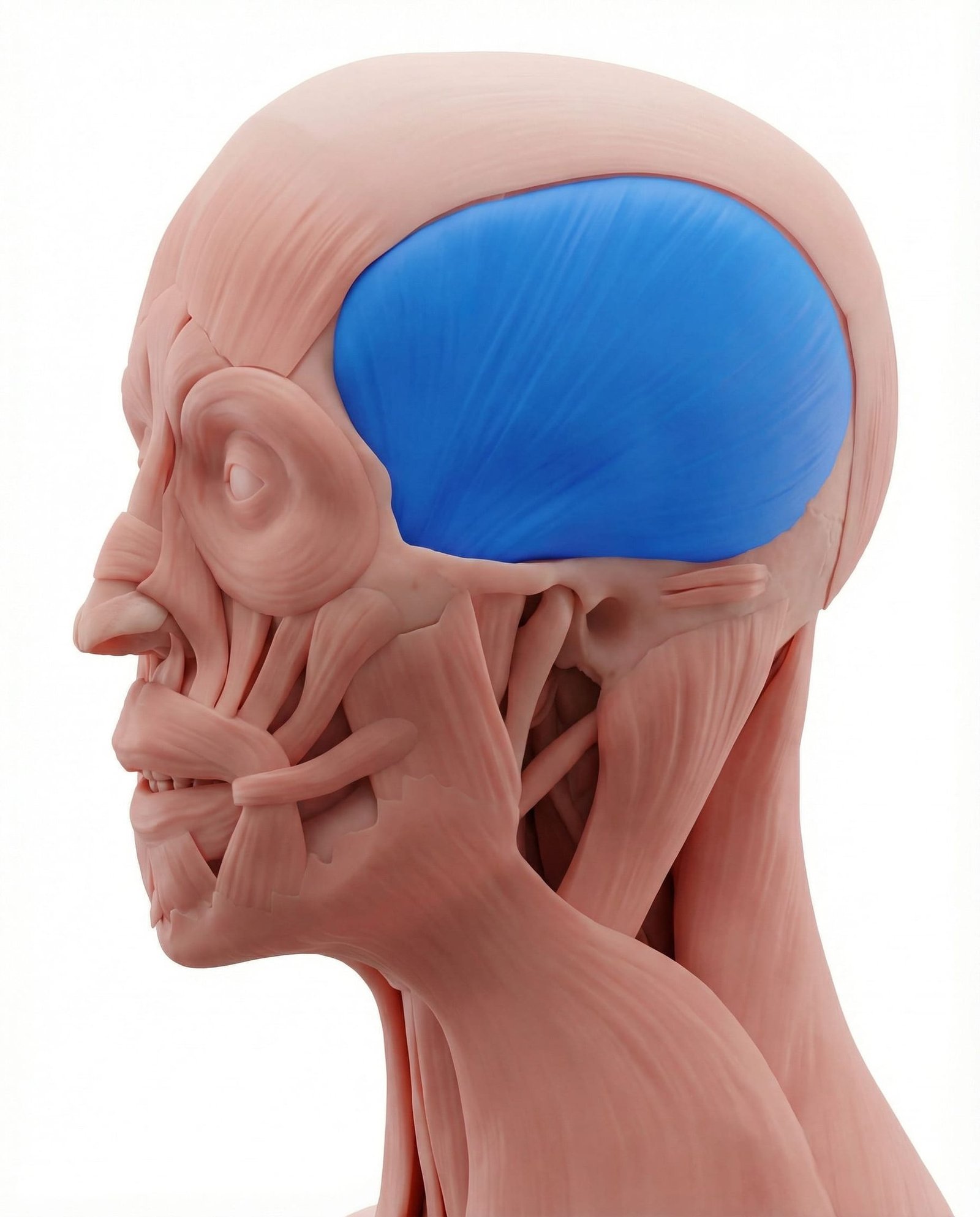
TrP 1
TrP1
Location. Above ear, temporal fossa
Pain referral. Temple and side of head
- Temple region
- Side of head
- Above ear
- Upper teeth
Unilateral temporal ache radiating across the temple region
Location. Above ear, temporal fossa
Pain referral. Temple and side of head
Location. Mid temporal region above the ear
Pain referral. Upper teeth and maxillary region
Location. Posterior temporalis near the ear
Pain referral. Occipital region and behind the ear
Headache on side of head. Unilateral temporal ache radiating across the temple region
Tooth pain in upper jaw. Referred pain mimicking toothache in upper molars and premolars
Pain when chewing. Increased pain during mastication especially with hard or chewy foods
Temple tenderness. Localized sensitivity to touch over the temporal fossa area
Upper tooth pain without dental cause. Temporalis TrP2 refers pain to maxillary teeth through trigeminal V2 convergence pathways
Maxillary ache. Mid-temporal trigger point refers to upper jaw and maxillary region mimicking sinus pathology
Hypersensitivity of upper teeth. Referred neural sensitization from temporalis trigger point increases upper tooth sensitivity
Pain chewing on affected side. Temporalis contraction during mastication directly loads mid-temporal trigger point with each bite
Facial pain in upper jaw area. Upper facial aching from temporalis trigger point referral along maxillary trigeminal distribution
Headache behind the ear. Posterior temporalis trigger point refers pain retroauricularly to mastoid and occipital region
Occipital pain. Referred occipital aching from posterior temporalis through posterior temporal neural connections
Ear ache without infection. Trigger point proximity to ear refers deep otalgia mimicking middle ear pathology
Pain when lying on pillow. Pillow compression of posterior temporal trigger point aggravates pain during recumbent rest
Posterior headache worse with jaw use. Jaw closure activates posterior temporalis directly loading trigger point and intensifying headache
Teeth grinding (bruxism). Nocturnal clenching overloads the temporalis causing chronic taut bands
Jaw clenching. Sustained isometric contraction from stress creates trigger point activation
Chewing gum excessively. Repetitive low-load contraction fatigues temporalis muscle fibers
Stress. Emotional tension manifests as sustained jaw muscle contraction
Dental problems. Malocclusion or dental work alters bite mechanics stressing temporalis
TMJ dysfunction. Joint dysfunction causes compensatory overuse of the temporalis muscle
Bruxism. Nocturnal teeth grinding repetitively and forcefully activates temporalis creating mid-belly trigger points
Jaw clenching during stress. Habitual stress-induced jaw clenching sustains temporalis in sustained isometric contraction
Dental procedures with prolonged mouth opening. Extended mouth opening during dental work stretches temporalis beyond comfortable range
Chewing hard or chewy foods. Forceful mastication of resistant foods overloads temporalis muscle fibers beyond capacity
Emotional stress. Psychological tension drives habitual jaw clenching creating sustained temporalis hypertonicity
Dental malocclusion. Improper bite alignment forces asymmetric posterior temporalis activation during mastication
Chewing on one side only. Unilateral chewing habit overloads ipsilateral posterior temporalis creating asymmetric trigger points
Place a warm, damp towel or a microwaveable heat pack directly over the temple area. The heat should be comfortably warm, not hot. Close your eyes and relax your jaw while applying.
Place your fingertips on the temples above the ears. Apply gentle, circular pressure — about the firmness of pressing a ripe avocado. Slowly move in small circles, covering the entire temporal fossa from above the ear to the hairline. When you find a tender spot, hold sustained pressure for 30-60 seconds until you feel it release.
Place the tip of your tongue on the roof of your mouth, just behind your upper front teeth. Let your jaw drop open slightly so your upper and lower teeth are not touching. Breathe through your nose with your lips gently closed. This is the ideal resting jaw position and should become your default throughout the day.
Slowly open your mouth as wide as comfortable, then move the jaw gently to the left, hold 5 seconds, return to center, then to the right, hold 5 seconds. Repeat 5 times each direction. Do not force the opening beyond a comfortable range.
Consult your dentist about a custom-fitted night guard (occlusal splint). A custom guard is significantly more effective than over-the-counter options. Wear it every night, even when symptoms improve. Clean daily with cool water and brush.
Identify your clenching triggers — work stress, driving, concentrating. Practice diaphragmatic breathing: inhale for 4 counts through the nose, exhale for 6 counts through the mouth. When you notice tension, consciously relax the jaw using the tongue-on-roof technique.
If self-care does not significantly improve symptoms within 3-4 weeks, consult a physiatrist or pain specialist experienced with myofascial pain. They can perform targeted trigger point treatment and assess for TMJ dysfunction, bruxism severity, or other contributing factors.