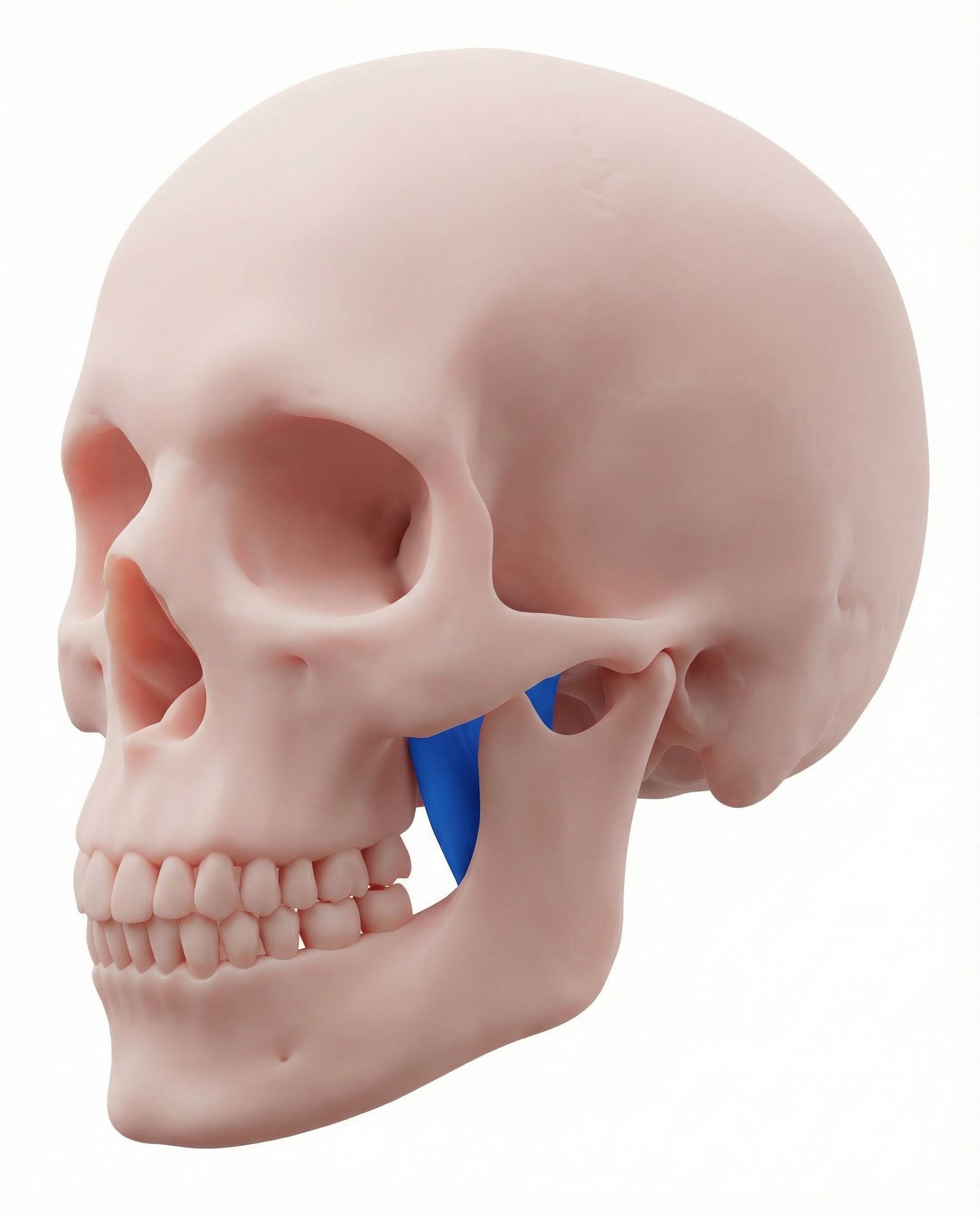
TrP 1
TrP1
Location. Deep jaw muscle, inner aspect
Pain referral. Jaw, ear, temple
- Jaw
- Ear
- Temple
- Hard palate
Deep aching in mandibular region from medial pterygoid trigger point contraction
Location. Deep jaw muscle, inner aspect
Pain referral. Jaw, ear, temple
Location. Superficial head near mandibular ramus
Pain referral. Deep ear and posterior jaw
Location. Deep fibers near mandibular ramus
Pain referral. Deep jaw and posterior throat
Jaw pain. Deep aching in mandibular region from medial pterygoid trigger point contraction
Ear pain. Referred otalgia from medial pterygoid proximity to middle ear structures
Difficulty chewing. Restricted mandibular elevation from trigger point taut bands limiting jaw closure force
TMJ symptoms. Altered jaw mechanics from pterygoid dysfunction creating joint clicking and deviation
Throat pain. Referred pain to pharyngeal area from deep medial pterygoid trigger point activation
Deep ear pain without infection. Medial pterygoid trigger points refer to the deep ear via shared auriculotemporal nerve pathways
Pain with wide mouth opening. Wide opening stretches the medial pterygoid provoking trigger points near the mandibular ramus
Sensation of ear fullness. Referred autonomic effects from pterygoid trigger points create eustachian tube dysfunction sensation
Sore throat sensation (referred). Medial pterygoid referral to the tonsillar region mimics pharyngitis without actual infection
Difficulty with jaw protrusion. Trigger point-mediated pterygoid dysfunction impairs smooth mandibular protrusive movement
Deep jaw pain. Deep mandibular ache from medial pterygoid trigger point located deep to mandibular ramus
Throat discomfort on swallowing. Referred posterior throat pain during swallowing from deep medial pterygoid trigger point referral
TMJ area deep ache. Deep TMJ region pain from medial pterygoid trigger point tension transmitted to joint capsule
Ear fullness sensation. Perceived ear pressure from medial pterygoid trigger point referral to deep auricular region
Difficulty opening mouth fully. Medial pterygoid trigger point restricts mandibular depression limiting maximum mouth opening range
Teeth grinding. Nocturnal bruxism creates sustained involuntary clenching overloading medial pterygoid fibers
Jaw clenching. Habitual daytime clenching maintains isometric contraction causing pterygoid muscle ischemia
Chewing hard foods. Excessive masticatory force demands overload medial pterygoid during forceful jaw closure
TMJ dysfunction. Joint mechanical dysfunction alters loading patterns increasing medial pterygoid compensatory workload
Stress. Psychological tension manifests as involuntary jaw clenching overloading masticatory muscles chronically
Prolonged dental procedures with mouth held open. Extended mouth opening during dental work overloads and strains the medial pterygoid muscle
Habitual jaw clenching. Chronic jaw clenching sustains medial pterygoid contraction creating ischemic trigger points
Unilateral chewing preference. One-sided chewing creates asymmetric medial pterygoid loading and unilateral trigger point development
Orthodontic appliances. Altered occlusion from orthodontic devices changes pterygoid loading patterns creating trigger points
Intubation during surgery. Forced jaw opening during intubation can traumatically activate medial pterygoid trigger points
Chronic teeth grinding (bruxism). Nocturnal bruxism overloads medial pterygoid through sustained forceful jaw clenching during sleep
Dental procedures (prolonged mouth opening). Extended mouth opening during dental work stretches medial pterygoid creating post-procedure trigger points
Stress-related jaw clenching. Habitual stress-induced jaw clenching creates sustained medial pterygoid contraction and ischemia
Malocclusion. Dental misalignment creates asymmetric medial pterygoid loading during mastication causing overload
Wash your hands thoroughly or put on a clean disposable glove. Open your mouth and place your thumb or index finger inside your cheek on the affected side. Press gently inward toward the inner surface of the jaw angle — the medial pterygoid lies on the inner aspect of the mandible. When you locate a tender spot, hold steady gentle pressure for 15-20 seconds. Release slowly and repeat on any additional tender areas. Work carefully, as this muscle is deep and sensitive.
Soak a clean washcloth in warm water and wring it out. Fold it and apply it to the jaw and cheek area on the affected side, covering from the ear down to the jaw angle. Hold it in place for the full duration while resting in a comfortable position. The moist heat penetrates deeper than dry heat and helps relax the deep jaw muscles. Reheat the cloth if it cools before the session ends.
Place your thumb under your chin. Gently push your jaw downward against the resistance of your thumb — use only about 20% of your maximum force. Hold for 5 seconds, then relax completely. Next, place your fingers on the right side of your jaw and gently push your jaw to the right against the resistance of your fingers. Hold for 5 seconds. Repeat on the left side. Perform 8-10 repetitions of each direction. These isometrics strengthen the jaw muscles without triggering painful joint movement.
Practice resting your tongue gently on the roof of your mouth with the tip just behind the upper front teeth. The back of the tongue should rest lightly against the soft palate. This tongue posture naturally keeps the teeth slightly apart and the jaw muscles relaxed. Practice holding this position throughout the day — it counteracts the tendency to clench or grind. When you notice your tongue dropping or your teeth touching, gently reset the position.
If you grind your teeth at night (bruxism) or clench during sleep, talk to your dentist about a custom-fitted nightguard (occlusal splint). A properly fitted guard separates the teeth, reduces clenching force, and protects the medial pterygoid from sustained overnight loading. While over-the-counter guards are available, a custom-fitted guard from a dentist provides better fit and protection. Wear it every night for maximum benefit.
If deep jaw pain, referred throat discomfort, or difficulty swallowing persists beyond 3-4 weeks of self-care, seek evaluation from a dentist experienced in TMJ disorders or an orofacial pain specialist. They can assess for medial pterygoid trigger points, disc dysfunction, and malocclusion. A physical therapist specializing in TMJ rehabilitation can provide targeted intraoral manual therapy and jaw retraining exercises not easily performed independently.