This Isn't Just Physical

Grief Cycle
Concept Overview IllustrationChronic pain doesn't just change what you can do — it changes who you are. The person who could hike on weekends, play on the floor with their kids, work a full day without watching the clock, sleep through the night without waking in agony. That person feels like a stranger now. And losing that person — losing that version of your life — is a real, significant loss that deserves to be acknowledged.
Grief is the natural human response to loss. We associate grief with death, but the losses that chronic pain brings are no less profound: loss of physical ability, loss of spontaneity, loss of career trajectory, loss of social roles, loss of intimacy, loss of the future you imagined. These losses accumulate, often invisibly, and the emotional weight of carrying them is enormous.
You are not weak for grieving. You are not being dramatic. Understanding the grief cycle is about recognizing where you are and finding a path forward.
You are not weak for grieving. You are not being dramatic. You are not "letting pain win" by acknowledging that it has taken something from you. Understanding the grief cycle of chronic pain is not about wallowing — it is about recognizing where you are, validating your experience, and finding a path that leads somewhere other than suffering in silence.
The 5 Stages, Adapted for Chronic Pain
Originally developed by Elisabeth Kubler-Ross for terminal illness, the five stages of grief have been adapted by pain psychologists to describe the emotional journey of living with chronic pain. Each stage is a natural response to an unnatural situation. Understanding them helps you make sense of feelings that might otherwise feel chaotic, irrational, or shameful.
Denial
"This can't be happening to me"
Denial is the mind's first line of defense against overwhelming reality. When chronic pain enters your life, your brain simply refuses to accept that this is permanent. You push through flare-ups, refuse to cancel plans, and tell yourself and everyone around you that this is temporary. You might visit doctor after doctor, not because you want answers, but because you want someone to tell you nothing is really wrong. "I just slept wrong." "It's just stress." "I'll be fine once I rest." Denial is not stupidity or stubbornness — it is a protective mechanism that allows you to absorb devastating information at a pace your psyche can handle.
What This Feels Like Inside
- Minimizing symptoms to yourself and others, insisting it will go away on its own
- Continuing activities that clearly worsen your pain because stopping feels like admitting defeat
- Avoiding making any lifestyle changes because that would mean accepting something is truly wrong
- Feeling frustrated or dismissive when others express concern about your pain
- Searching obsessively for a simple explanation that makes everything "normal" again
Common Behaviors in This Stage
- Doctor shopping — seeking multiple opinions hoping someone will say nothing is wrong
- Pushing through workouts, chores, or work obligations despite increasing pain
- Refusing to use assistive devices, medications, or accommodations
- Delaying or canceling medical appointments because "it's getting better"
- Hiding the severity of your pain from family, friends, and coworkers
What You Should Know — Stage 1
Denial serves a purpose — it prevents emotional overwhelm during the initial shock. But prolonged denial becomes a barrier to treatment. When you refuse to acknowledge pain, you also refuse the help that could reduce it. The transition out of denial often begins when the gap between what you are telling yourself and what your body is telling you becomes impossible to ignore. There is no shame in taking time to accept a new reality. The key is recognizing when protection has become avoidance.
Anger
"This isn't fair"
When denial can no longer hold, anger rushes in to fill the space. Anger at your body for betraying you. Anger at doctors who cannot fix you or who don't believe you. Anger at friends who say "have you tried yoga?" as if you haven't already tried everything. Anger at the universe for choosing you. You watch other people live effortlessly — picking up their kids, going for runs, sleeping through the night — and the unfairness of it burns. Anger is messy, loud, and uncomfortable, but it is also a sign that you are engaging with reality rather than hiding from it. You are no longer pretending everything is fine. You are acknowledging that something has been taken from you, and you are furious about it.
What This Feels Like Inside
- Resentment toward people who take their health and mobility for granted
- Frustration with a medical system that seems unable to explain or resolve your pain
- Irritability and short-temperedness with family members, even when they are trying to help
- Rage at yourself for "letting" this happen, as if chronic pain were a personal failure
- Bitterness about the life you planned versus the life you are now living
Common Behaviors in This Stage
- Snapping at loved ones over minor issues because the real issue feels too big to address
- Writing angry reviews of doctors, therapists, or treatments that did not deliver results
- Withdrawing from social situations because pretending to be okay feels impossible
- Engaging in self-destructive behavior — overexertion, skipping medications, neglecting self-care
- Fixating on blame — the doctor who missed the diagnosis, the accident, the genetics
What You Should Know — Stage 2
Anger is not a character flaw. It is a completely rational response to having your life upended by something outside your control. The danger is not in feeling anger — it is in letting anger become your permanent state. Unprocessed anger corrodes relationships, increases muscle tension and pain sensitivity, and drives people away at a time when you need support most. The goal is not to eliminate anger but to channel it. Anger can fuel advocacy, motivate treatment adherence, and drive you to find solutions. The question is not whether you will feel angry, but what you will do with that anger.
Bargaining
"If I just try harder..."
Bargaining is the stage where you become a full-time project manager of your own pain. You research obsessively. You try every supplement, every diet, every device. You spend thousands on treatments, convinced that the next one will be the breakthrough. You make deals with yourself and with the universe: "If I can just get through this wedding..." "If I eat perfectly clean for 30 days..." "If I do every exercise exactly right..." Bargaining is driven by the belief that if you just find the right combination of actions, you can earn your way back to your old life. It often manifests as hyper-vigilance about doing everything "right" — the perfect posture, the perfect diet, the perfect sleep hygiene — and devastating self-blame when pain persists despite your best efforts.
What This Feels Like Inside
- Obsessive research into every possible cause, treatment, and cure available
- Making conditional promises to yourself: "If I can just control this one variable..."
- Intense guilt when you "cheat" on your self-imposed rules and then experience a flare-up
- Magical thinking about specific treatments, practitioners, or lifestyle changes
- Exhaustion from the relentless effort of trying to fix something that resists fixing
Common Behaviors in This Stage
- Spending significant money on supplements, alternative treatments, and devices
- Adopting increasingly restrictive diets in search of the "inflammatory trigger"
- Developing orthorexia-like patterns around food, movement, or sleep
- Keeping detailed pain journals, tracking every variable with compulsive precision
- Cycling rapidly through practitioners and treatment plans without giving any single approach adequate time
What You Should Know — Stage 3
Bargaining contains a kernel of something valuable — it represents agency and the refusal to be passive. The problem is that bargaining in chronic pain is often driven by the belief that you can control the uncontrollable. When you believe that perfect adherence should produce perfect results, every flare-up becomes a personal failure. The transition out of bargaining comes when you begin to separate productive self-care (evidence-based treatment, pacing, reasonable lifestyle choices) from the illusion of total control. You can manage chronic pain. You cannot will it away through effort alone.
Depression
"What's the point of any of this?"
When denial, anger, and bargaining have all failed to restore your old life, depression arrives. This is not a stage you enter because you are weak or because you have given up. It is the natural emotional consequence of sustained loss. You have lost physical capabilities, social roles, career possibilities, spontaneity, sleep, intimacy, and sometimes your sense of identity. Depression in chronic pain is the moment you stop fighting reality and sit with the full weight of what has changed. The world feels gray. Activities that once brought joy feel pointless or impossible. You withdraw from friends because explaining your situation is exhausting and being around healthy people is painful. The loneliness of invisible illness becomes suffocating — you look fine on the outside while collapsing on the inside.
What This Feels Like Inside
- A pervasive sense that things will never get better and that effort is futile
- Loss of interest in activities, hobbies, relationships, and goals that once defined you
- Feeling fundamentally broken, defective, or like a burden to the people around you
- Deep loneliness even when surrounded by people who care about you
- Questioning your worth and your ability to contribute anything meaningful to the world
Common Behaviors in This Stage
- Withdrawing from social events, canceling plans, and isolating at home
- Neglecting basic self-care — hygiene, nutrition, movement, medication adherence
- Sleeping excessively or struggling with insomnia fueled by rumination
- Abandoning treatment plans because nothing seems to make a difference anyway
- Saying "I'm fine" to everyone while feeling anything but fine internally
What You Should Know — Stage 4
There is a critical distinction between grief-related sadness and clinical depression, and it matters for treatment. Grief-related sadness is a proportional emotional response to real, significant losses — it comes in waves, and you can still experience moments of connection or hope between the waves. Clinical depression is a pervasive neurological state that flattens all emotion, disrupts sleep and appetite, and may include hopelessness and suicidal ideation. Both can exist simultaneously in chronic pain patients. If you feel trapped in darkness with no moments of light, if you have thoughts of self-harm, or if basic functioning has become impossible, you need professional mental health support — not because you are weak, but because your brain chemistry may need the same kind of help your body needs for pain.
Acceptance
"This is part of my life, not all of it"
Acceptance is the most misunderstood stage of the grief cycle in chronic pain. It is NOT resignation. It is NOT giving up. It is NOT pretending you are okay with being in pain. Acceptance is the moment you stop fighting reality and start working with it. You stop asking "why me?" and start asking "what now?" You acknowledge that chronic pain is part of your life without allowing it to become all of your life. You pursue treatment not from a place of desperation but from a place of informed self-advocacy. You build a new identity that includes pain management as one component — not the defining component — of who you are. Acceptance often feels less like a dramatic breakthrough and more like a quiet shift. One day you realize you have made plans without first catastrophizing about what your pain might do. You have adapted, not surrendered.
What This Feels Like Inside
- A growing sense that your life has value and meaning even with pain as a constant companion
- Ability to make plans while holding realistic expectations about what your body can do
- Willingness to ask for help without shame and to set boundaries without guilt
- Recognition that bad pain days will come and they will also pass
- A quieter, more grounded relationship with your body — not love, perhaps, but no longer war
Common Behaviors in This Stage
- Engaging in activity pacing — doing meaningful things within your capacity without boom-bust cycles
- Building and maintaining a treatment team that you trust and collaborate with actively
- Communicating openly with loved ones about your needs and limitations
- Pursuing new goals, hobbies, or adaptations of old ones that work with your current abilities
- Mentoring or supporting others who are earlier in their chronic pain journey
What You Should Know — Stage 5
Acceptance is not a destination you arrive at and never leave. It is a practice. You will have days where you cycle back through anger, bargaining, or depression — and that is completely normal. Acceptance does not mean you stop seeking improvement. Many people in the acceptance stage are the most disciplined about their treatment because they approach it without desperation. They follow evidence-based plans, track their progress realistically, and advocate for themselves effectively. Acceptance simply means you have made peace with the reality that chronic pain is part of your story while refusing to let it be the entire story.
These stages are adapted from the Kubler-Ross model for the chronic pain context. They are not a clinical diagnostic tool. Individual experiences vary significantly, and there is no "correct" order or timeline for moving through these stages.
What Stage Am I In?
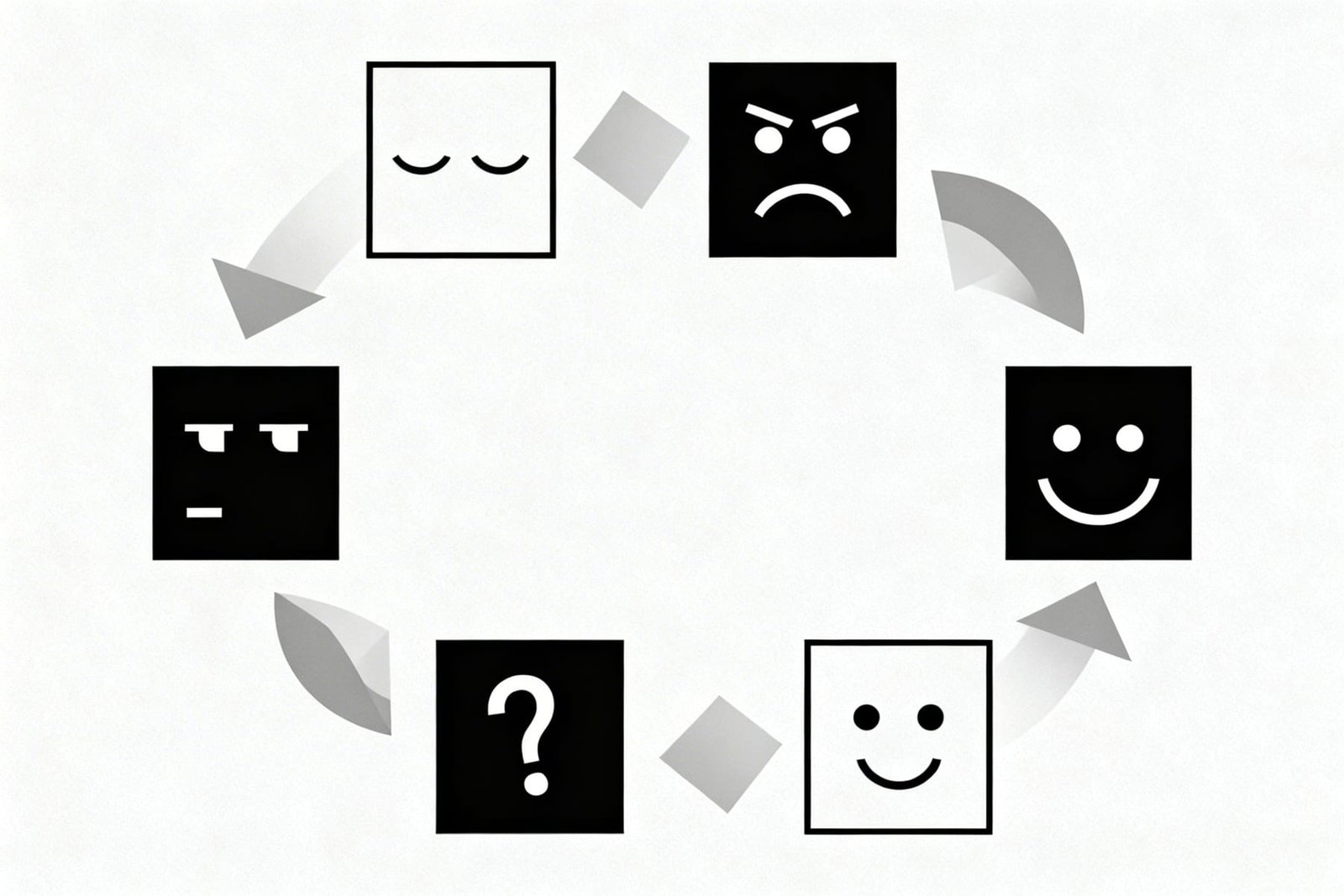
What Stage Am I In?
Stage Progression DiagramRead through the statements below and notice which ones resonate with where you are right now. You may identify with statements across multiple stages — that is completely normal. This is not a diagnostic tool. It is a mirror designed to help you recognize and name what you are experiencing, because naming an experience is the first step toward processing it.
Denial
- I keep telling people "it's not that bad" even when I'm struggling to function
- I refuse to use the word "chronic" when describing my pain to anyone, including myself
- I believe that if I just push through, my body will eventually go back to normal
- I have canceled or avoided medical appointments because I don't want to hear bad news
- I get defensive when someone suggests I might need to make long-term changes to my lifestyle
Anger
- I feel resentful watching other people do things effortlessly that I can no longer do
- I snap at my partner or family members and then feel guilty about it afterward
- I am furious at the medical system for not being able to fix me or even explain what is wrong
- I feel betrayed by my own body and sometimes hate it for what it has taken from me
- I find myself thinking "this isn't fair" multiple times a day and it consumes my thoughts
Bargaining
- I have spent significant money searching for "the answer" through treatments and practitioners
- I blame myself when I have a flare-up, believing I must have done something wrong
- I follow extremely strict rules about diet, posture, or activity and feel panicked when I deviate
- I constantly research new treatments and feel a surge of hope each time I find one, then crash when it doesn't work
- I make deals with myself: "If I can just get through this event, I'll rest for a whole week"
Depression
- I have stopped doing things I used to enjoy because they feel pointless or too difficult
- I feel like a burden to the people in my life and I often avoid asking for help
- I spend a lot of time alone and have pulled away from friends and social activities
- I often think that my life will never be good again and that I'm stuck like this forever
- I have days where getting out of bed feels like an enormous, overwhelming accomplishment
Acceptance
- I can make plans while acknowledging that I might need to adjust them based on how I feel
- I have found new ways to enjoy life that work with my current abilities, not against them
- I can talk about my pain openly without feeling ashamed, angry, or like I need to perform wellness
- I still pursue treatment, but from a place of self-care rather than desperation for a cure
- I recognize that bad days will come and I have strategies to get through them without spiraling
What Helps at Each Stage
What Helps at Each Stage
Stage Progression DiagramThere is no single intervention that works for every stage of grief. What helps someone in denial is different from what helps someone in depression. Meeting yourself where you are — rather than where you think you should be — is the foundation of effective coping.
Denial
- Gentle, non-judgmental education about your condition from trusted sources
- Keeping a simple symptom journal to build awareness of patterns over time
- Seeking a comprehensive evaluation from a practitioner who specializes in chronic pain
- Having one honest conversation with someone you trust about how you are actually feeling
Anger
- Physical activity within your limits — walking, swimming, or gentle movement as emotional release
- Journaling specifically about anger, frustration, and resentment without censoring yourself
- Finding a chronic pain community or support group where anger is understood and validated
- Working with a therapist who specializes in chronic illness adjustment
Bargaining
- Partnering with a knowledgeable practitioner to build an evidence-based treatment plan
- Setting a budget (financial and emotional) for new treatments and experiments
- Practicing self-compassion when flare-ups happen — they are not your fault
- Learning the difference between productive self-management and compulsive control
Depression
- Seeking professional mental health support — this is not a sign of weakness
- Connecting with others living with chronic pain through support groups or online communities
- Practicing small, consistent acts of self-compassion even when you do not feel like it
- Maintaining basic routines — sleep hygiene, gentle movement, adequate nutrition
Acceptance
- Setting meaningful, realistic goals that account for pain variability
- Developing activity pacing skills to avoid boom-bust cycles and maximize good days
- Engaging in meaningful activities, hobbies, and relationships that bring genuine fulfillment
- Sharing your experience to help others who are earlier in their journey
Things Other Patients Want You to Know
These reflections come from people living with chronic pain who have moved through these stages.
"The flare-ups get less scary once you know what to do"
"Finding a doctor who believed me changed everything"
"I had to grieve my old life before I could build my new one"
"Acceptance didn't mean giving up — it meant fighting smarter"
"The bad days still come, but they don't define me anymore"
"Connecting with others who understand was the turning point"
When to Seek Professional Help
Grief is a normal part of living with chronic pain. But there is a line between grief-related sadness — which comes in waves and allows for moments of hope — and clinical depression, which is a persistent neurological state that requires professional treatment.
If You Are in Crisis Right Now
If you are experiencing suicidal thoughts or are in immediate danger, please contact one of these resources. You do not need to face this alone.
988 Suicide & Crisis Lifeline
Call or text 988 — available 24/7
Crisis Text Line
Text HOME to 741741
SAMHSA National Helpline
Call 1-800-662-4357 — free, confidential, 24/7
Not all therapists understand chronic pain. Seeking out professionals with specific training in pain psychology, chronic illness adjustment, or somatic experiencing can make a significant difference in the quality of support you receive.
Pain Psychologist
Cognitive Behavioral Therapy (CBT) Therapist
Acceptance and Commitment Therapy (ACT) Therapist
Peer Support Groups
Continue Your Journey
Healing from chronic pain is not just about the body. Explore these resources to address the emotional, cognitive, and social dimensions of your experience.
Stress-Pain Connection
- How chronic stress amplifies pain signals and how to break the cycle through nervous system regulation.
Mindfulness & Meditation
- Evidence-based mindfulness practices that reduce pain perception and emotional suffering.
Cognitive Behavioral Therapy (CBT) Strategies
- Cognitive behavioral techniques for managing pain catastrophizing, fear avoidance, and negative thought patterns.
Caregivers & Family
- A guide for the people who love someone in chronic pain — how to support without burning out.
Your journey is valid. Your pain is real. And you are not alone.
Wherever you are in this cycle — whether you are in denial, rage, bargaining, the depths of depression, or the quiet work of acceptance — you deserve compassion. From others, and most importantly, from yourself.