A Common but Under-Discussed Pattern
Men Pain
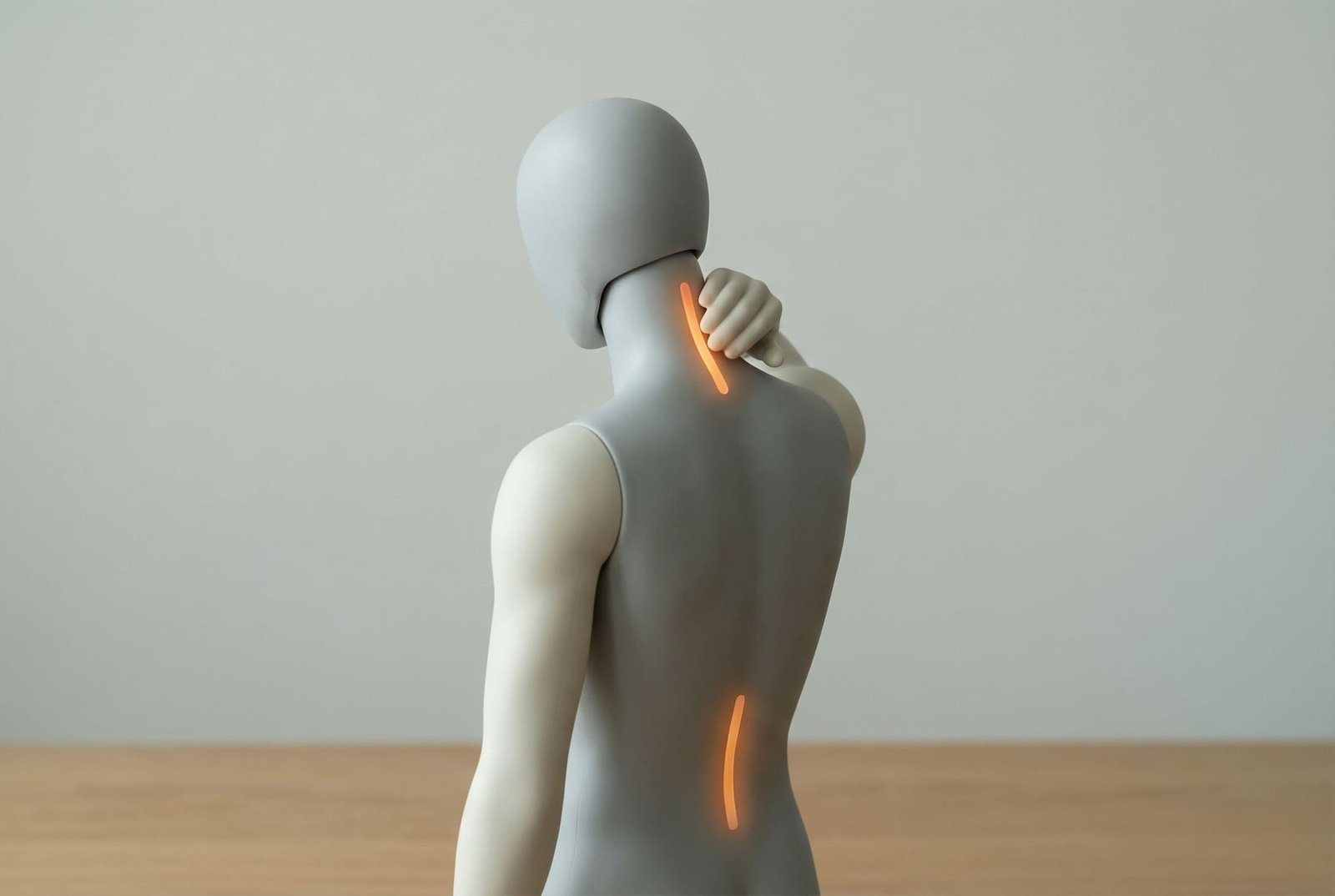
Anatomy and Pain Pattern OverviewMyofascial pain is not uniquely male or female, but men often report it differently and may seek help later. Instead of describing pain directly, many men emphasize stiffness, loss of function, fatigue, or “normal wear and tear.” That difference in presentation can slow recognition of a treatable problem.
What the Pattern Often Looks Like
2x
Many clinicians observe that men often wait longer before seeking care for chronic musculoskeletal pain, which means they may present with more entrenched pain patterns by the time treatment starts.
40%
Men in physically demanding occupations may be especially likely to normalize pain that would otherwise prompt earlier evaluation.
65%
Functional language such as “tight,” “locked up,” or “stiff” often appears before men use the word “pain,” which can influence how quickly the correct diagnosis is considered.
3x
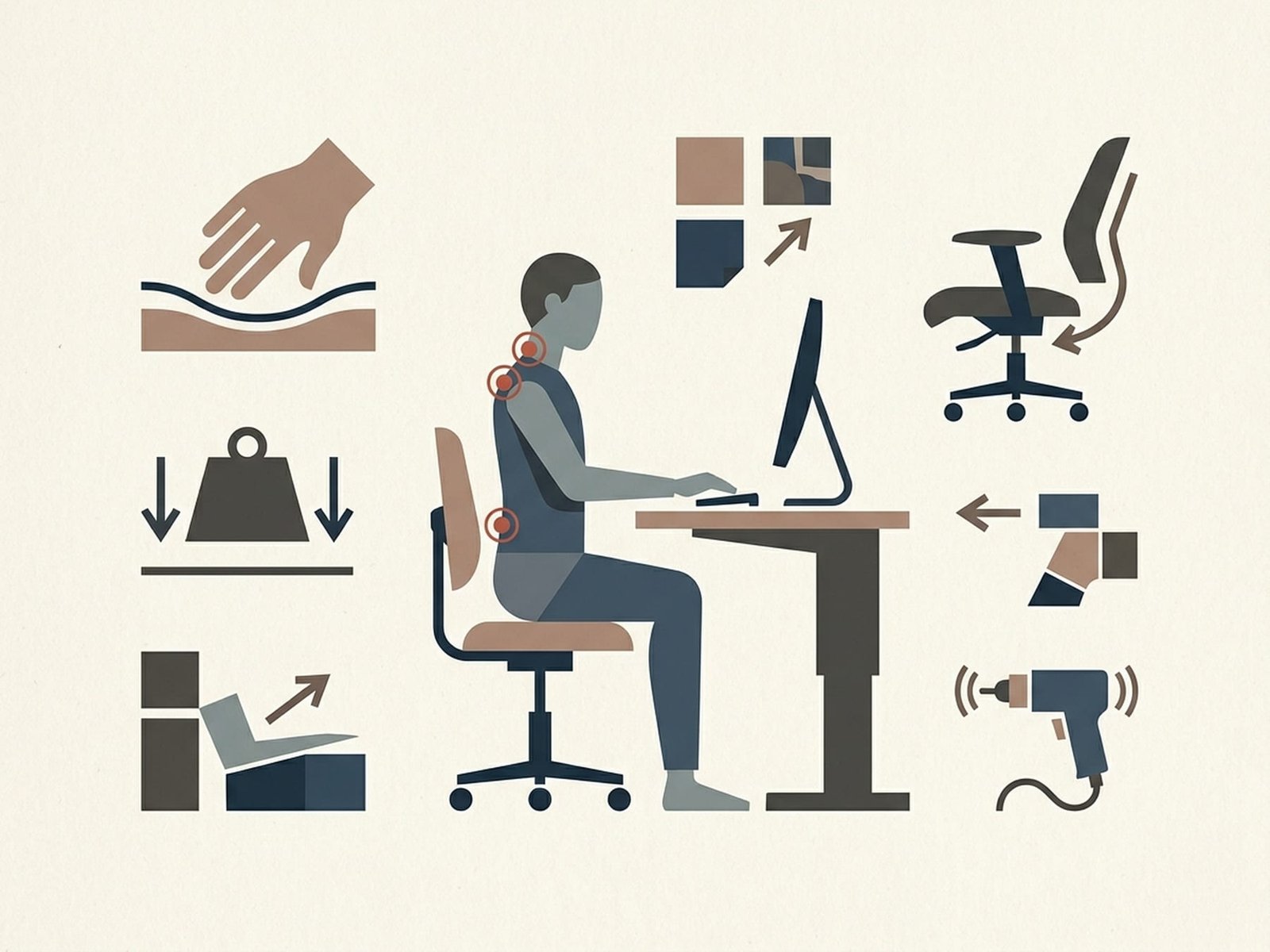
Occupational and sport-related exposure patterns are a major reason men often present with predictable trigger point clusters in the neck, shoulders, low back, forearms, and hips.
The practical consequence is not just delayed comfort. Untreated pain can reduce work capacity, training quality, sleep, relationships, and mental health. Earlier recognition often means simpler treatment and faster recovery.
Why This Matters
The longer a pain pattern stays active, the more likely compensation, fear, poor sleep, and broader sensitization become part of the picture. Early intervention does not guarantee quick resolution, but it usually improves the odds of a cleaner recovery.
How Men Often Present Differently
Men Pain
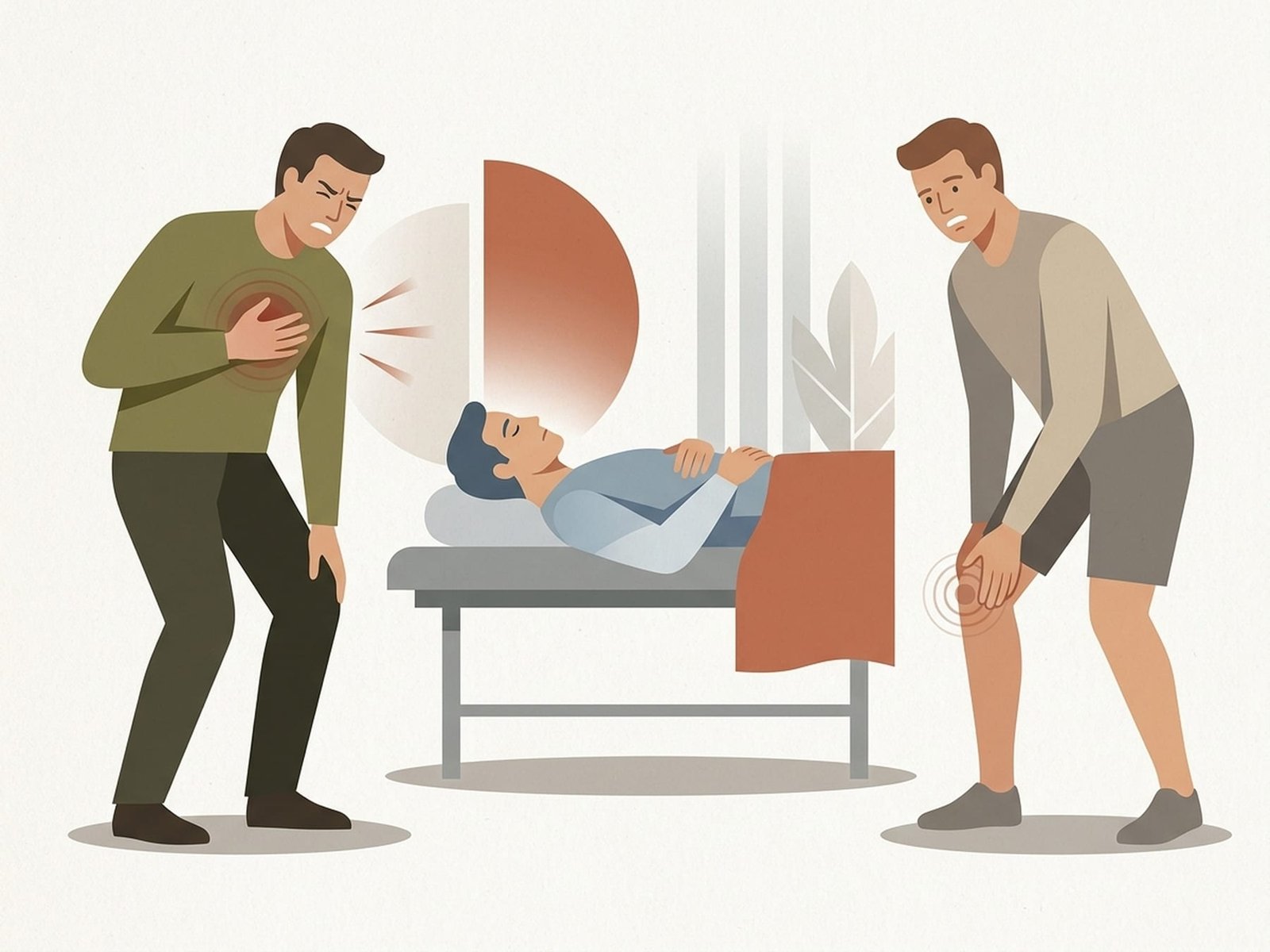
How Men Present DifferentlyMen often present in a more function-focused and less symptom-labeled way than standard pain questionnaires assume. That does not mean their pain is milder — it means the language may be different.
When pain is described only as “tightness,” “stiffness,” or “wear and tear,” both diagnosis and treatment can be delayed.
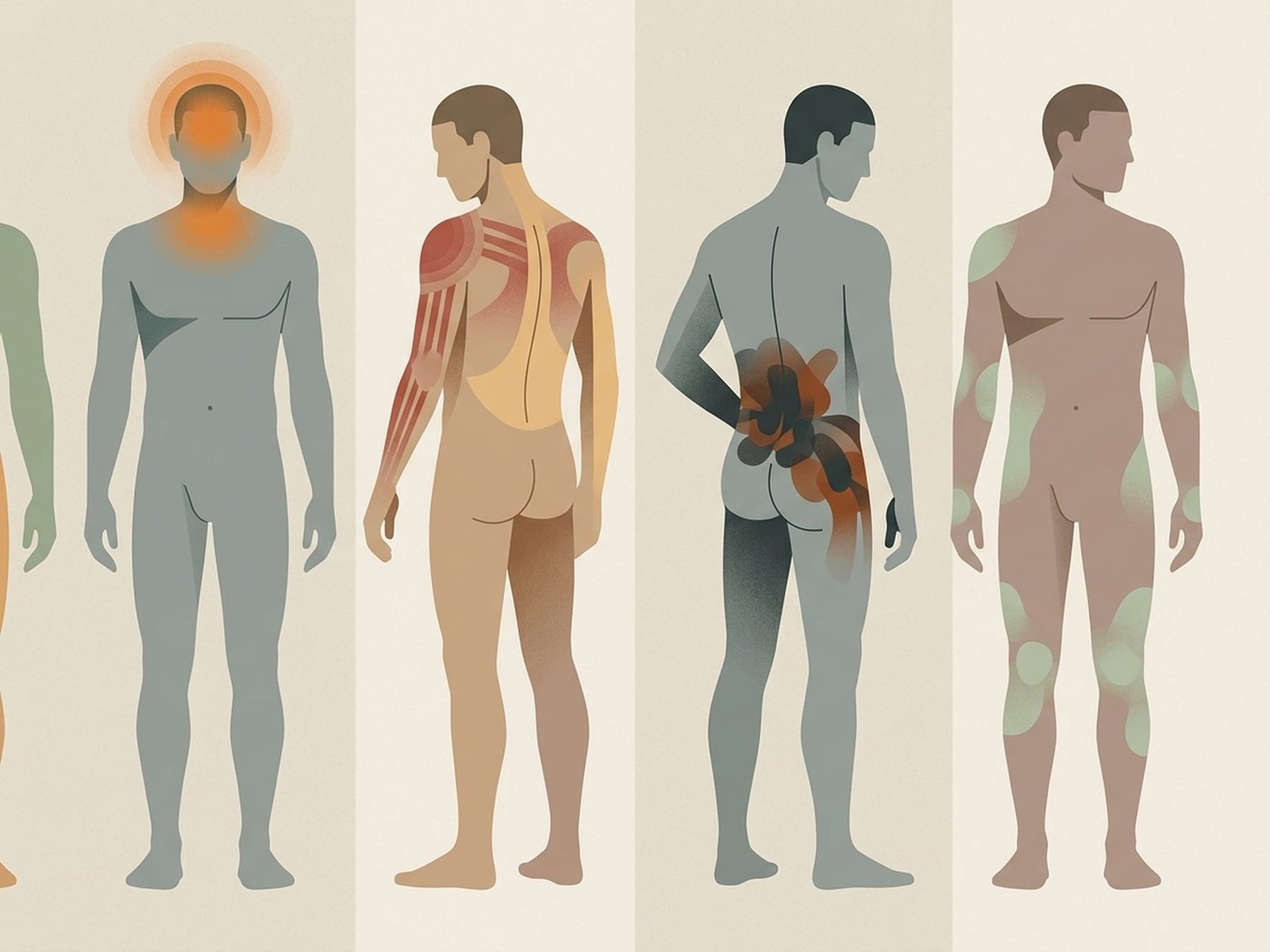
The examples below are organized by body region and context. The purpose is not to stereotype, but to help men and clinicians recognize common communication patterns that may hide a treatable myofascial problem.
Shoulder & Upper Back
Physical labor, overhead work, sports
Key Muscles
How Men Describe It
Many men describe this more as “tightness,” “stiffness,” or “wear and tear” than as pain. They may focus on reduced function or endurance rather than on sensory descriptors.
What May Be Going On
Trigger points and overload in the upper trapezius, levator scapulae, rotator cuff, and scapular stabilizers can contribute to restricted neck motion, headaches, and persistent shoulder girdle discomfort. The problem is often treatable, but it may be minimized for too long because it is framed as a normal consequence of work or training.
Forearm & Hand
Trades work, gripping tools, computer use
Key Muscles
How Men Describe It
Often described as “my grip is gone,” “my forearms burn,” or “my hands just get tired.” Functional language often comes before pain language.
What May Be Going On
Forearm muscle overload and trigger points can contribute to lateral or medial elbow pain patterns, grip fatigue, and local endurance loss. These findings may overlap with classic tendon diagnoses rather than replacing them entirely.
Lower Back
Heavy lifting, prolonged sitting, driving
Key Muscles
How Men Describe It
Commonly framed as “my back is stiff,” “I threw it out,” or “it locks up.” Men may self-manage with rest or OTC medication until function is clearly affected.
What May Be Going On
Myofascial contributors such as the quadratus lumborum, gluteal muscles, and lumbar paraspinals are commonly part of low back pain patterns in men, especially when work or sport loads are high. The key point is not that the pain is “just muscular,” but that muscular contributors are often important and under-addressed.
Jaw & TMJ
Stress clenching, teeth grinding, tension
Key Muscles
How Men Describe It
Men may mention headaches, ear pressure, or facial tension before they mention jaw pain directly. Nighttime grinding is often only recognized after questioning.
What May Be Going On
Jaw-closing muscles can develop trigger points and overload patterns related to clenching, stress, poor sleep, and bruxism. These symptoms may overlap with dental, ENT, and TMJ disorders and often require a broader masticatory-muscle assessment.
Chest & Pectorals
Bench pressing, physical labor, postural stress
Key Muscles
How Men Describe It
Chest pain in men often triggers cardiac concern first — appropriately so. Once cardiac causes are excluded, men may still be left without a clear explanation unless musculoskeletal contributors are considered.
What May Be Going On
Pectoral trigger points and chest-wall myofascial pain can mimic cardiac or thoracic pain patterns. This is clinically important not because chest pain is “usually muscular,” but because musculoskeletal causes should be considered after urgent causes have been ruled out.
Important Distinction
Not all pain in men is muscular. Chest pain, sudden severe pain, progressive weakness, numbness, and worsening pain despite rest still require appropriate medical evaluation before symptoms are attributed to trigger points.
Male Pain Presentation Patterns
Occupational Risk Factors
Many jobs and sports place repeatable stress on the same muscle groups. Understanding those exposure patterns helps make prevention and treatment more specific.
Cultural Barriers to Early Treatment
Cultural expectations around toughness, stoicism, and self-reliance can make it harder for some men to seek help early. The goal here is not to criticize that pattern, but to make it visible so it can be changed when it is getting in the way of recovery.
Why Men Often Delay Seeking Help
Common reasons include assuming the pain is normal, waiting for it to go away on its own, not wanting to seem limited, and feeling too busy to deal with it. These reasons are understandable, but they often prolong the problem rather than solving it.
- "It is just soreness — it will pass."
- "I do not want to overreact."
- "I do not have time right now."
- "I can still function, so it cannot be that bad."
How Pain Can Affect Male Identity
For many men, chronic pain interferes with core identity areas: work, athletic ability, physical competence, sexuality, and being dependable. That makes the emotional burden of pain heavier than the pain itself in some cases.
When that identity threat is not talked about directly, men may default to denial, isolation, irritability, or overuse of self-medication. Pain care works better when these secondary effects are acknowledged instead of treated as unrelated.
Reframing: Treating Pain Is Efficient, Not Weak
A useful reframe is simple: treating a fixable problem early is not weakness — it is efficient problem-solving. Delayed treatment usually costs more time, more function, and more frustration.
The Performance Argument
- Pain and trigger points can reduce strength, endurance, and range of motion
- Compensation from untreated pain often increases injury risk
- Poor sleep from pain reduces recovery and training quality
- Addressing pain early often protects long-term performance
Occupational Trigger Point Risk Factors
Men's Health Intersections
Myofascial pain often overlaps with broader men's health issues such as pelvic pain, sleep apnea, hormonal health, chest-pain anxiety, and sexual function. These intersections matter because the pain is rarely just an isolated muscle problem.
Testosterone & Hormonal Factors
Hormonal status may influence recovery, sleep, mood, body composition, and pain tolerance. In some men, lower testosterone states can coexist with fatigue, reduced exercise tolerance, and poorer recovery — all of which may indirectly worsen chronic musculoskeletal pain.
Key Connections
- Hormonal status is one modifier of pain and recovery, not the sole cause of trigger points
- Poor sleep, inactivity, stress, and chronic pain can affect hormonal health in both directions
- Low testosterone evaluation belongs in the right clinical context, not as a blanket explanation for all pain
- Exercise remains one of the most useful broad-support strategies for both pain and hormonal health
Chronic Pelvic Pain Syndrome (CPPS)
Pelvic floor myofascial pain is increasingly recognized as one contributor to chronic pelvic pain in men, especially when infection-focused treatment has not helped and symptoms are persistent or recurrent.
Key Connections
- Pelvic floor trigger points can refer pain to the perineum, testes, penis, suprapubic region, and low back
- Stress and guarding can perpetuate pelvic floor overactivity
- Pelvic floor physical therapy is an important treatment pathway in selected patients
- Not all “prostatitis” symptoms are infectious or prostate-driven
Sleep Apnea & Pain
Sleep apnea is common in men and can worsen pain through sleep fragmentation, poor tissue recovery, fatigue, and altered pain processing. Poor sleep is one of the strongest perpetuating factors in chronic myofascial pain.
Key Connections
- Untreated sleep apnea may amplify widespread pain and poor recovery
- Improving sleep quality often improves pain tolerance and day function
- Persistent fatigue plus chronic pain should prompt a sleep review, not just more pain medication
- Weight, airway factors, and stress all contribute to the pain-sleep cycle
Cardiac-Like Chest Pain
Chest-wall trigger points and pectoral pain can mimic cardiac or non-cardiac chest pain patterns. This is clinically important because men are often evaluated for cardiac causes first — appropriately — and then may need a musculoskeletal explanation if cardiac workup is negative.
Key Connections
- Chest pain should always be medically evaluated appropriately first
- Pectoral and chest-wall trigger points can reproduce arm, chest, and shoulder referral
- Musculoskeletal chest pain may persist after cardiac causes are excluded
- Correct identification can reduce repeated emergency visits and anxiety
Sexual Function Impacts
Chronic pain can affect sexual function through fatigue, low mood, fear of pain, pelvic floor tension, poor sleep, and hormonal disruption. In men with chronic pelvic or widespread pain, this connection is important and often under-discussed.
Key Connections
- Pelvic floor overactivity can affect pain during or around sexual activity
- Fatigue, low mood, and chronic stress often reduce libido and confidence
- Relationship strain may worsen when pain is not discussed openly
- Treating pain and sleep often improves overall sexual wellbeing indirectly
A Note on Pelvic Pain
If pelvic pain, perineal discomfort, or urinary symptoms have persisted despite repeated infection-focused treatment, ask whether pelvic floor myofascial pain has been considered. This is a common and still under-recognized overlap in men’s pain care.
What Often Works Well for Men
What Works for Men
Mechanism DiagramTreatment approaches that are practical, measurable, and function-focused often fit well. Many men engage better when the plan feels like skill-building and recovery rather than passive dependence on care.
Progressive Strength Training
Function-first and performance-compatible
Many men engage well with rehabilitation when it is framed in terms of strength, durability, performance, and return to activity rather than passive “treatment.” Progressive loading can improve blood flow, restore movement tolerance, correct imbalances, and rebuild confidence.
Action Steps
- Start with movements that are tolerable and measurable
- Progress load gradually rather than jumping back to old training levels
- Use full, well-controlled range as recovery allows
- Track function and strength, not pain alone
Self-Treatment Tools
Supports independence and self-management
Many men respond well to practical self-management tools such as a lacrosse ball, foam roller, or massage gun when they are taught to use them appropriately. The main benefit is increasing autonomy rather than relying entirely on clinic visits.
Action Steps
- Use focused tools for specific trigger point regions
- Use broader tools for larger muscle groups
- Keep pressure moderate rather than aggressive
- Use tools as part of a plan, not as punishment for the body
Measurable Progress Tracking
Objective and motivating
Tracking pain, motion, sleep, strength, and functional milestones often increases adherence because it makes progress visible. Many men respond well to concrete markers rather than vague reassurance.
Action Steps
- Track trends over weeks rather than reacting to every daily fluctuation
- Measure range or function at consistent intervals
- Use specific functional goals rather than only pain scores
- Review the data to guide the next stage of recovery
Activity-Based Rehabilitation
Modify activity rather than stopping everything
Many men do better when rehab is built around meaningful activity rather than blanket rest. The principle is usually not “stop,” but “adjust load, position, volume, and recovery.”
Action Steps
- Identify the activity that aggravates symptoms most clearly
- Modify volume, intensity, or range before eliminating the activity entirely
- Add complementary activities that are easier to tolerate
- Use return-to-full-activity milestones based on function, not just fear
Peer Support & Community
Normalize the conversation
Many men engage more readily when pain is discussed within practical peer settings — training partners, workplaces, team environments, or online communities — rather than only in a medicalized support-group format.
Action Steps
- Talk with a trusted peer or teammate about what is happening
- Use workplace or team health resources if available
- Seek communities that value practical recovery rather than posturing
- Model openness if you are in a leadership role
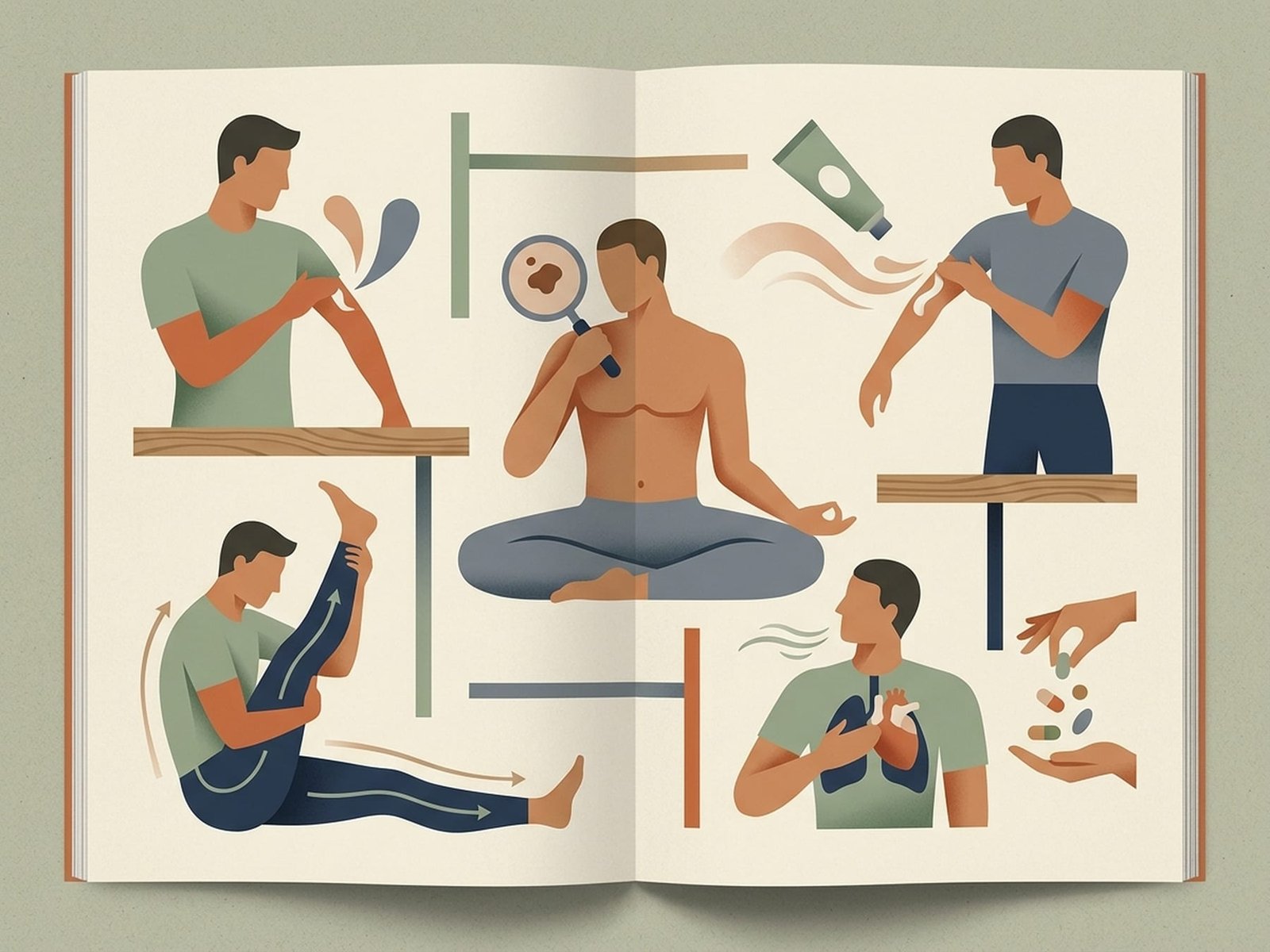
Men Self-Treatment Guide
Starting the Conversation
For many men, the first effective step is simply speaking clearly about what is happening — to a doctor, a partner, a coach, or a therapist. A practical script often makes that easier.
Talking to Your Doctor
- Be specific about location, duration, and aggravating factors
- Mention whether pressing on a specific area reproduces the pain
- Describe what the pain is stopping you from doing
- Ask whether myofascial contributors are part of the differential
- Ask what kind of rehabilitation or specialist would be most appropriate if standard care has not helped
Talking to Partners & Family
- Explain what you can and cannot do right now
- Use concrete examples rather than vague statements
- Accept help when it is offered if pain is affecting function
- Talk about mood, sleep, and irritability as part of the pain picture
- Treat the conversation as teamwork, not confession
Finding the Right Practitioner
- Look for clinicians who examine muscles, movement, and function — not just imaging
- Ask about specific experience with myofascial pain or trigger point treatment
- A good plan usually combines hands-on care with a home program or active rehab
- Ask how progress will be measured
- If care is not moving the situation forward after a reasonable trial, consider a second opinion
A Practical First Appointment Script
This kind of structure helps a clinician understand the problem quickly and take it seriously:
Location: "I have pain or tightness in [specific area] that has been present for [duration]."
Character: "It feels [aching/sharp/deep/burning/stiff] and gets worse with [specific activities or positions]."
Impact: "It is affecting my ability to [work/train/sleep/function] and I have noticed [specific limitations]."
Question: "Could there be a myofascial or trigger point component? What would be the best way to assess that?"
Key Takeaways
Under-Reporting Is Common
Many men minimize or reframe pain as stiffness, tension, fatigue, or loss of function. That communication style can delay diagnosis and treatment.
Occupation Often Shapes the Pattern
Job demands and training style create predictable overload maps. Understanding those patterns makes prevention and treatment more specific.
Delaying Care Usually Makes It Harder
Pushing through for too long often creates compensation, wider pain, and slower recovery. Early treatment is usually easier than late treatment.
Function-Focused Rehab Often Works Well
Strength training, load management, self-treatment tools, and measurable progress often improve engagement and long-term recovery.
Pain Intersects With Broader Health
Sleep, hormones, pelvic pain, mood, relationships, and sexual health may all be affected by persistent pain — and may also feed it.
The Conversation Matters
Clear, practical communication with clinicians, partners, and peers is often the first step toward getting the right diagnosis and treatment.
Continue Learning
Athletes & Pain
Sport-specific overload patterns, prevention ideas, and return-to-training principles for active men.
Exercise Guide
Progressive strength and movement-based strategies that support both treatment and prevention.
Physical Therapy
How myofascial pain is assessed and treated in physical therapy, and what to look for in a clinician.
Stress-Pain Connection
How stress, bracing, poor sleep, and autonomic load can perpetuate muscular pain.
Condition Pathways
Related conditions and body regions commonly linked with persistent myofascial pain.