Why Magnesium for Myofascial Pain?
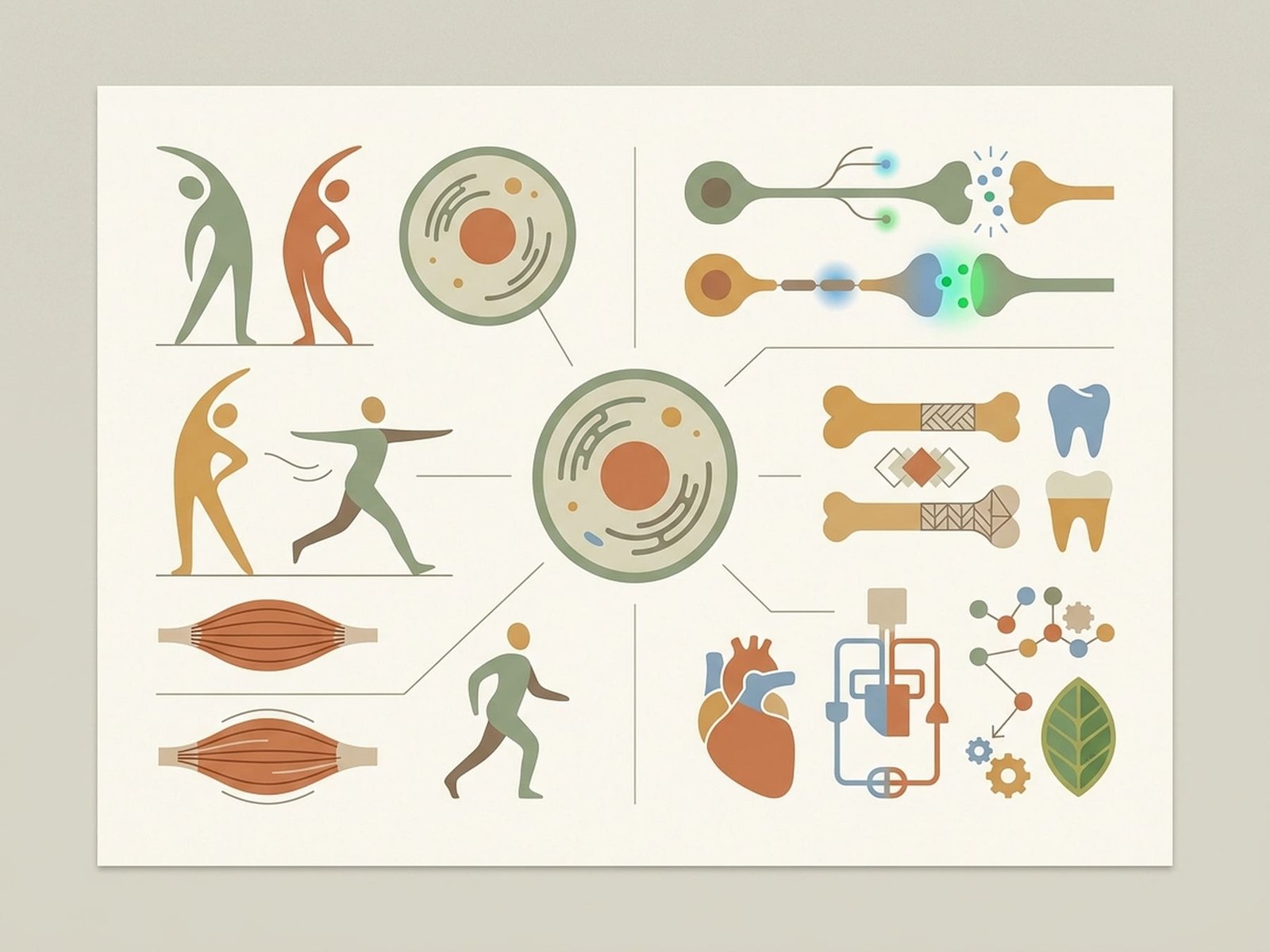
Magnesium Myofascial Pain Mechanism Diagram
Magnesium comes up frequently in chronic pain care because it is involved in muscle contraction, relaxation, sleep physiology, and broader pain-processing pathways. That makes it biologically relevant — but biological relevance is not the same as guaranteed clinical benefit.
The practical reason clinicians consider magnesium is that some chronic pain patients appear to have low intake, poor sleep, high stress, GI factors, or medication patterns that make magnesium status more relevant. In those situations, supplementation may be reasonable as part of broader care.
What should be avoided is exaggerated language. Magnesium is not the hidden answer behind every trigger point, and deficiency should not be treated as a universal explanation for all MPS. The more defensible message is that magnesium may be a useful supportive factor in selected patients.
The form matters because different preparations vary in GI tolerability, absorption, and marketing claims. In practice, the best form is often the one the patient can tolerate, afford, and use consistently if there is a real indication to try it.
Magnesium Forms Compared
Different forms of magnesium are marketed for different goals. The clinically useful distinctions usually come down to tolerability, GI effects, cost, and whether the patient actually notices a benefit over time.

Magnesium forms bioavailability comparison
Magnesium Glycinate (Bisglycinate)
This form is commonly discussed because it is generally well tolerated and is less likely than some other forms to cause loose stools. It is often chosen when sleep, muscle tension, and general tolerability are priorities.
Magnesium Malate
Magnesium malate is sometimes chosen in patients who also report fatigue, because malate is linked conceptually to energy metabolism. The theoretical rationale is appealing, but it should not be marketed as a proven energy-restoring solution for everyone with MPS.
Magnesium L-Threonate
This form is frequently discussed in relation to brain magnesium levels and central nervous system effects. That makes it attractive in people with sleep disturbance, cognitive fog, or central sensitization features, although clinical claims should remain cautious.
Magnesium Citrate
Magnesium citrate is commonly available and reasonably well absorbed, but it also has a more noticeable osmotic effect in the gut. Some patients tolerate this well, while others find it limits regular use.
Magnesium Oxide
Magnesium oxide is widely sold and inexpensive, but it is often considered less useful in practice because absorption is comparatively limited and GI side effects can dominate the experience.
Mechanisms of Action
Magnesium is often discussed in chronic pain through four broad mechanisms: central pain modulation, muscle relaxation, sleep/stress relevance, and broader health effects. These ideas are plausible, but none should be overpromised.
NMDA Receptor Modulation
Muscle Relaxation and Calcium Handling
Sleep and Stress Relevance
Possible Anti-Inflammatory Relevance
Use Principles
These are better thought of as use principles than rigid protocols. Supplement decisions should follow product labeling or clinician guidance rather than self-directed escalation.
General Foundation Approach
- Begin conservatively rather than assuming more is better
- Choose a form that is likely to be tolerated well
- Watch for GI side effects, since these often determine whether the supplement is usable
- Assess sleep, muscle tension, and overall symptom response over time rather than expecting an immediate effect
Fatigue + Pain Overlap Approach
- Some clinicians prefer forms such as malate when fatigue is prominent
- The practical test is whether the patient actually feels better over time
- Do not assume a fatigue-targeted form is automatically superior
- Use overall tolerability and symptom response to guide decisions
Central Sensitization / Sleep-Focused Approach
- Forms discussed for CNS-related goals are sometimes considered when sleep and cognitive symptoms are prominent
- These decisions should remain individualized rather than formulaic
- Do not market any one form as a guaranteed “brain magnesium” solution
- The main goal is whether sleep, comfort, and tolerability improve in real life
Short-Term Higher-Intensity Use
- Short-term higher intake is sometimes discussed in specialist or clinician-guided care
- This should not be self-directed because GI side effects and medical contraindications matter
- Kidney function, medication interactions, and overall medical context still apply
- Longer-term plans should be simplified to the lowest useful burden
Contraindications & Drug Interactions
Oral magnesium is often perceived as harmless, but there are still real contraindications and medication interactions — especially in kidney disease and in patients taking interacting medications.
Magnesium is biologically relevant to muscle function, pain modulation, sleep, and stress physiology, which is why it often comes up in chronic pain care.
No single magnesium form should be presented as universally best for all MPS patients.
Tolerability often matters as much as theory, especially because GI side effects are a common reason people stop supplementation.
The most sensible way to discuss magnesium is as a possible supportive adjunct — not as a cure for trigger points or central sensitization.
Medication interactions and kidney function still matter, so supplementation should not be treated as automatically harmless.