What Is Topical Lidocaine?
Lidocaine Topical
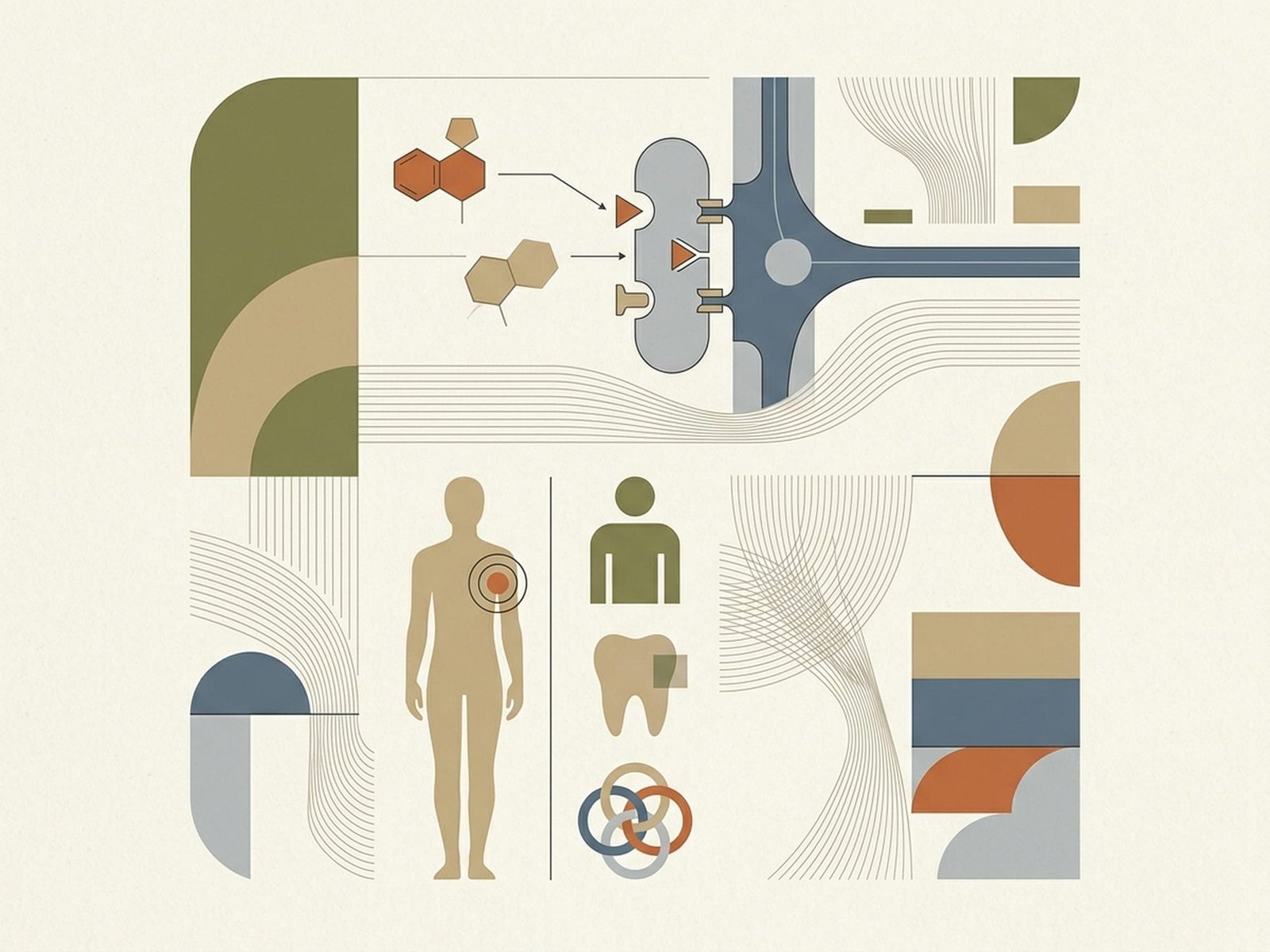
Mechanism of Action DiagramLidocaine is a local anesthetic that can be used topically in patches, creams, gels, and compounded formulations. Its practical role in pain care is localized symptom reduction in a limited area rather than treatment of widespread pain.
The best-known prescription formulation is the lidocaine 5% patch, which is FDA-approved for post-herpetic neuralgia and commonly discussed off-label for some other localized pain conditions. OTC formulations are more accessible but are generally less structured in how they are used clinically.
Topical lidocaine is most useful when the painful area is localized enough that a topical treatment can realistically reach it.
Topical lidocaine has a favorable reputation because it can provide local analgesia without the broader systemic burden of many oral medications. That makes it attractive in older adults, polypharmacy settings, and patients who want a more localized option — but it still requires correct use.
Mechanism of Action
Topical lidocaine is used because it may reduce peripheral nociceptor activity in the treated area. Its clinical role is much more localized than systemic analgesics or infusion therapies.

Mechanism of Action
Mechanism DiagramVoltage-Gated Sodium Channel Blockade
Topical lidocaine is used because it can reduce peripheral nociceptor firing through sodium channel blockade in superficial tissues. In practical terms, it may reduce local pain signaling in a targeted region rather than affecting the whole body like an oral analgesic.
Selective Peripheral Analgesia
When used topically and appropriately, lidocaine is intended to reduce pain more than normal sensation. Many patients describe pain relief or reduced tenderness rather than a dense, “dental-anesthetic” numbness.
Neuronal Membrane Stabilization
Lidocaine is also discussed as a membrane-stabilizing local anesthetic. This broader stabilizing effect may help calm overly sensitive peripheral pain fibers in the treated region.
Reduction of Local Irritability
In selected patients, topical lidocaine may reduce local tenderness or sensitivity around a painful trigger-point region, making movement or follow-up therapy easier to tolerate.
Possible Local Anti-Inflammatory Effects
Lidocaine is sometimes discussed as having local anti-inflammatory effects in addition to its anesthetic action. These effects may be relevant, but they should not be overstated as the main reason it works.
Possible Downstream Effect on Pain Amplification
By reducing peripheral nociceptive input from a painful area, topical lidocaine may indirectly reduce the ongoing pain barrage contributing to symptom amplification. That is a reasonable clinical idea, but it should not be described as a guaranteed reversal of central sensitization.
Analgesia Without Heavy Sedation
One reason clinicians consider topical lidocaine is that it may offer localized relief without sedation or the broader systemic side-effect burden of some oral medications.
Formulations & Use
Lidoderm 5% Patch (Lidocaine Patch 5%)
Most commonly referenced patchPrescription
Lidocaine 4% Cream/Gel (OTC)
Most accessibleOver-the-Counter
EMLA Cream (Lidocaine 2.5% + Prilocaine 2.5%)
Most often used pre-procedurePrescription
Compounded Lidocaine Formulations
Specialist / compounded usePrescription (Compounded)
Clinical Evidence
The evidence for topical lidocaine in chronic pain is supportive but stronger in some conditions than in isolated myofascial pain syndrome. In practice, it is often used because of reasonable plausibility, safety, convenience, and the possibility of helping a patient who has a clearly localized painful area.
That means topical lidocaine is usually best framed as a practical adjunct rather than as a definitive standalone treatment. If it helps, the benefit is usually local and functional rather than transformative.
Argoff et al. (2004) — PMID 15563743
Affaitati et al. (2009) — PMID 19446144
Dalpiaz, Lordon & Lipman (2004) — PMID 15364629
Lin et al. (2012) — PMID 22854911
Gammaitoni et al. (2003) — PMID 12616661
Localized Use
Low Systemic Exposure
Adjunctive
Clinical Use for Trigger Points
Topical lidocaine is most sensible when there is a focal, accessible pain region and a reason to reduce local tenderness so that movement or rehabilitation is easier. It is less compelling when pain is deep, widespread, or poorly localized.
Localized Application
- Most useful when the painful region is well localized and reachable
- Not a reliable solution for deep or diffuse trigger point patterns
- Should be used according to product labeling or prescriber instructions
Pre-Procedure Use
- Some formulations may be used before procedures when directed by a clinician
- This should be treated as procedure-specific, not routine daily use
- Prescription formulations require clinician guidance
Symptom Management
- Some patients use topical lidocaine to reduce pain during periods of increased symptom burden
- Product-specific timing rules still apply
- Use should support broader recovery, not replace it
Combination Therapy
- May be paired with stretching, movement, and rehabilitation
- Can sit within a broader non-opioid pain strategy
- Do not layer multiple local anesthetic products without clinician guidance
Side Effects & Safety
Topical lidocaine is often well tolerated when used appropriately, but local skin reactions are common enough to matter. Systemic toxicity is uncommon with correct use on intact skin, but product limits still exist for a reason.
Local Reactions
Systemic Considerations
Special Populations
- Older adults: Often a reasonable group to consider for localized therapy because systemic drug burden may be lower than with oral analgesics.
- Pregnancy: Pregnancy use should be clinician-guided rather than assumed to be universally safe.
- Liver disease: Topical exposure is generally lower than systemic use, but severe liver disease still warrants clinician review.
Interactions & Precautions
- Other lidocaine products: Using multiple local anesthetic products together can increase risk and should be reviewed carefully.
- Cardiac medications: Medication review still matters, especially in complex cardiac patients.
- Allergy or skin intolerance: True anesthetic allergy is uncommon, but local intolerance or adhesive sensitivity is much more common and still clinically important.
Comparison with Other Approaches
Mechanism
Onset
Invasiveness
Systemic Effects
Best For
Limitations
Practical Application Guide
The practical question is simple: is the pain area localized enough, superficial enough, and accessible enough that a topical anesthetic makes sense? If not, another strategy may be more appropriate.

Practical Application Guide
Step-by-Step IllustrationIdentify the Pain Area
Prepare the Skin
Apply the Product Correctly
Observe Timing and Limits
Pair Relief with Function
Track Response
Topical lidocaine is best understood as a localized analgesic option for selected superficial or well-localized pain areas.
Its main practical advantage is low systemic exposure when used appropriately compared with many oral analgesics.
It is usually most useful as part of a broader plan that includes movement, rehabilitation, and symptom-guided self-care.
It should not be treated as a deep-tissue solution for all trigger points, since penetration depth is limited.
Application limits and product-specific instructions matter. More is not better, and combining multiple lidocaine products can create risk.
Complex or prescription formulations should be clinician-directed rather than self-directed.
Application Limits Matter