Exercise Library
Targeted antagonistic isometrics
What it does
This exercise utilizes the neurological principle of reciprocal inhibition by voluntarily activating the muscles that oppose the dystonic spasm. Isometric contraction of these antagonist muscles reflexively decreases the neural drive to the overactive, spasming tissues. This helps temporarily reduce abnormal neck posturing, alleviate pain, and restore voluntary neuromuscular control.
How to do it
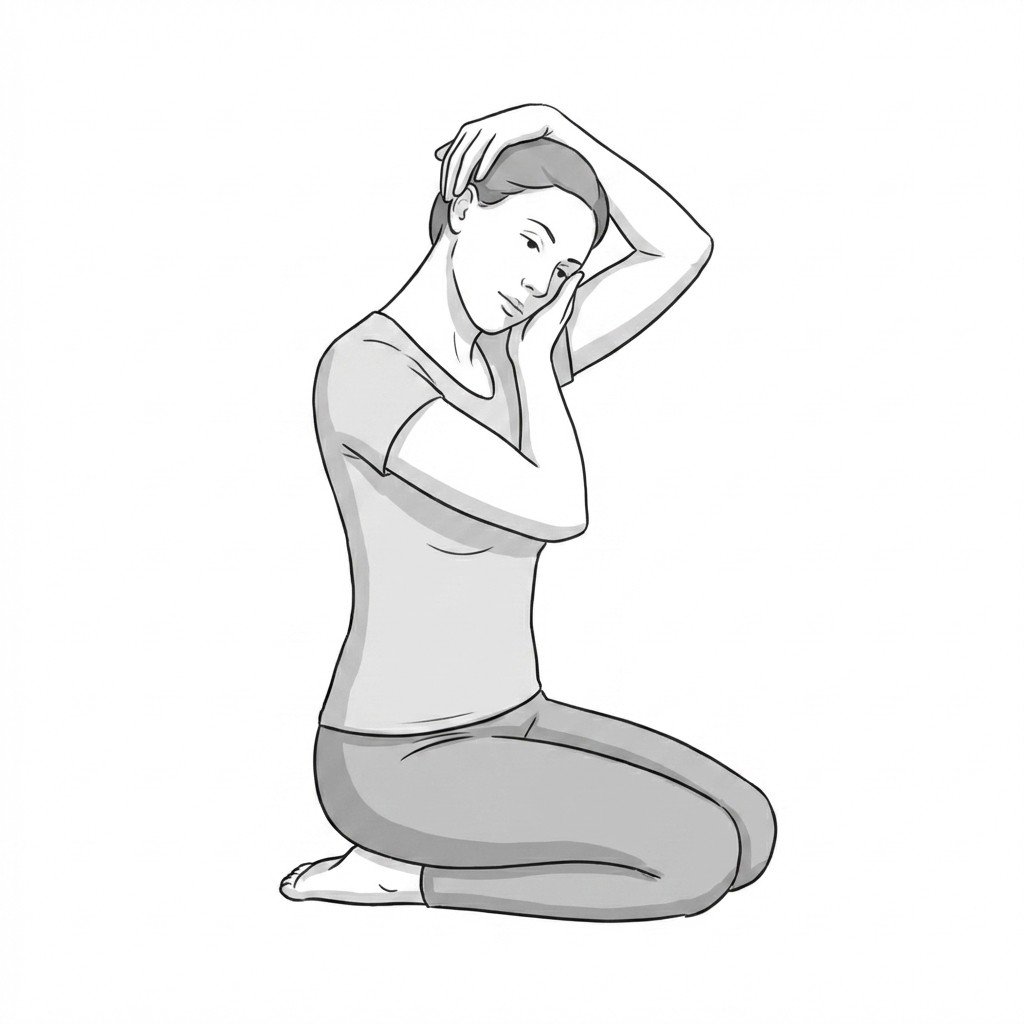
- Sit upright in a supported chair and identify the direction of your involuntary neck pull.
- Place your hand gently against your head to block movement in the direction opposite to the dystonic pull.
- Gently press your head into your hand using 20-30% of your maximum effort, ensuring no actual head movement occurs.
- Hold this isometric contraction for 5 to 10 seconds while maintaining steady breathing.
- Slowly release the tension, relax completely, and allow the neck to rest before the next repetition.
Progression
Integrate small, controlled active movements into the antagonist direction immediately following the isometric hold.
Regression
Perform the exercise while lying supine to eliminate the gravitational demands on the postural neck muscles.