Exercise Library
Sensory trick motor training
What it does
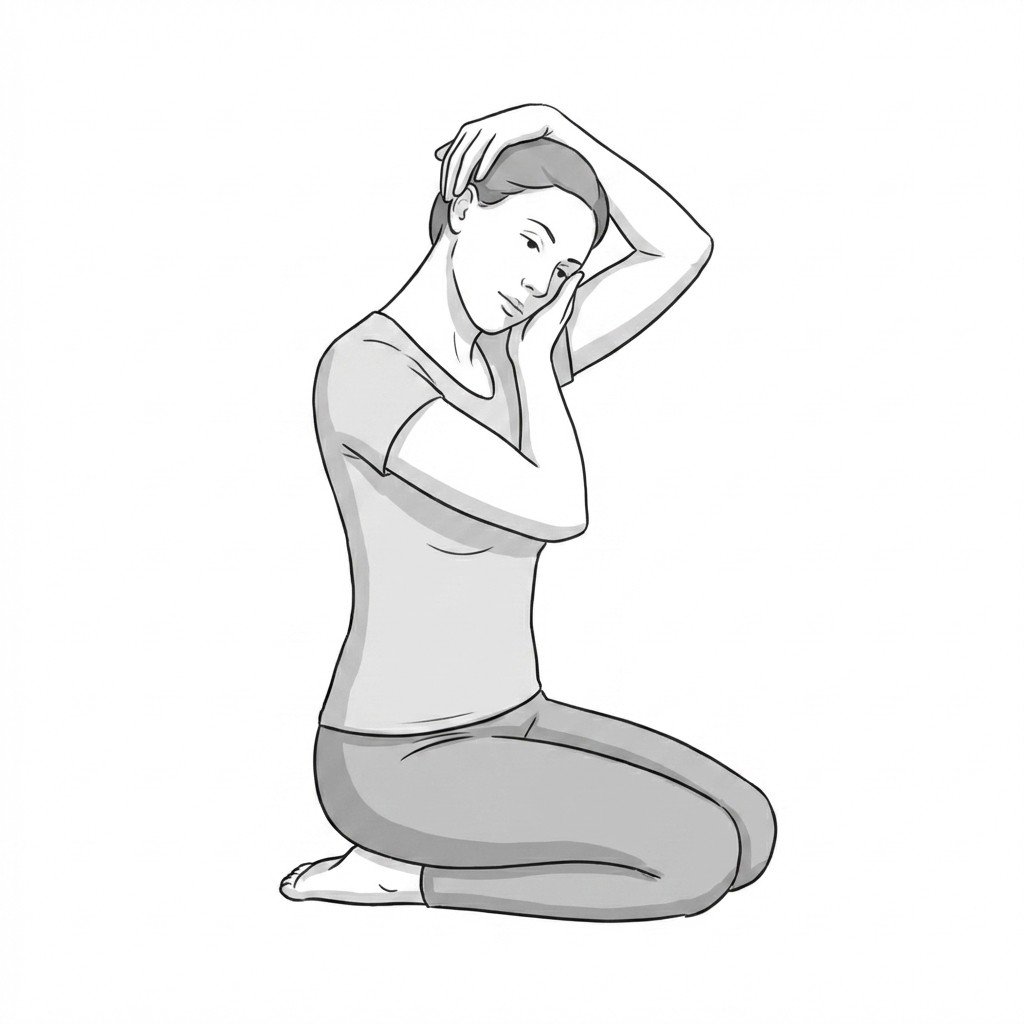
Sensory trick motor training leverages a unique neurological phenomenon in cervical dystonia where a specific tactile stimulus temporarily reduces involuntary muscle spasms. By voluntarily holding the corrected posture while gradually fading the tactile cue, it helps retrain sensorimotor integration in the basal ganglia to improve midline head control.
How to do it
- Sit in front of a mirror to provide visual feedback of your baseline head posture.
- Apply your specific sensory trick (e.g., lightly touching the chin or cheek) to relax the spasm and bring your head into a neutral midline position.
- Consciously engage your neck muscles to hold this corrected posture while slowly pulling your hand away.
- Maintain the midline position for as long as possible until the dystonic pull returns.
- Reapply the sensory trick to reset the posture and repeat the sequence.
Progression
Progress by using only an 'imagined' sensory trick (visualizing the touch) to achieve and maintain midline posture.
Regression
Regress by maintaining constant, light physical contact with the face or chin throughout the entire duration of the hold.