Why Walking Is Underrated
Walking is one of the simplest movement strategies available to pain patients. It requires very little equipment, can be scaled up or down easily, and often improves pain tolerance, stiffness, mood, and confidence in movement. It is frequently undervalued precisely because it looks so simple.
Walking is often most helpful when it feels easy enough to repeat — not when it turns into another challenge to survive.
What Walking Can Do for Pain Patients
Circulation
Walking improves blood flow, which may help stiff or painful muscles feel less guarded and more workable.
Gentle Muscle Activation
It keeps major muscle groups active without the higher forces associated with many formal exercise modes.
Reduced Stiffness
Many patients notice less stiffness and better movement quality after an easy walk than after resting still.
Mood & Stress Support
Walking often helps mood, stress load, and pain tolerance — especially when done consistently.
Confidence in Movement
A repeatable walking habit can reduce fear of movement and rebuild trust in the body.
Long-Term Sustainability
Because walking is simple and flexible, it is one of the most sustainable exercise habits for many patients.
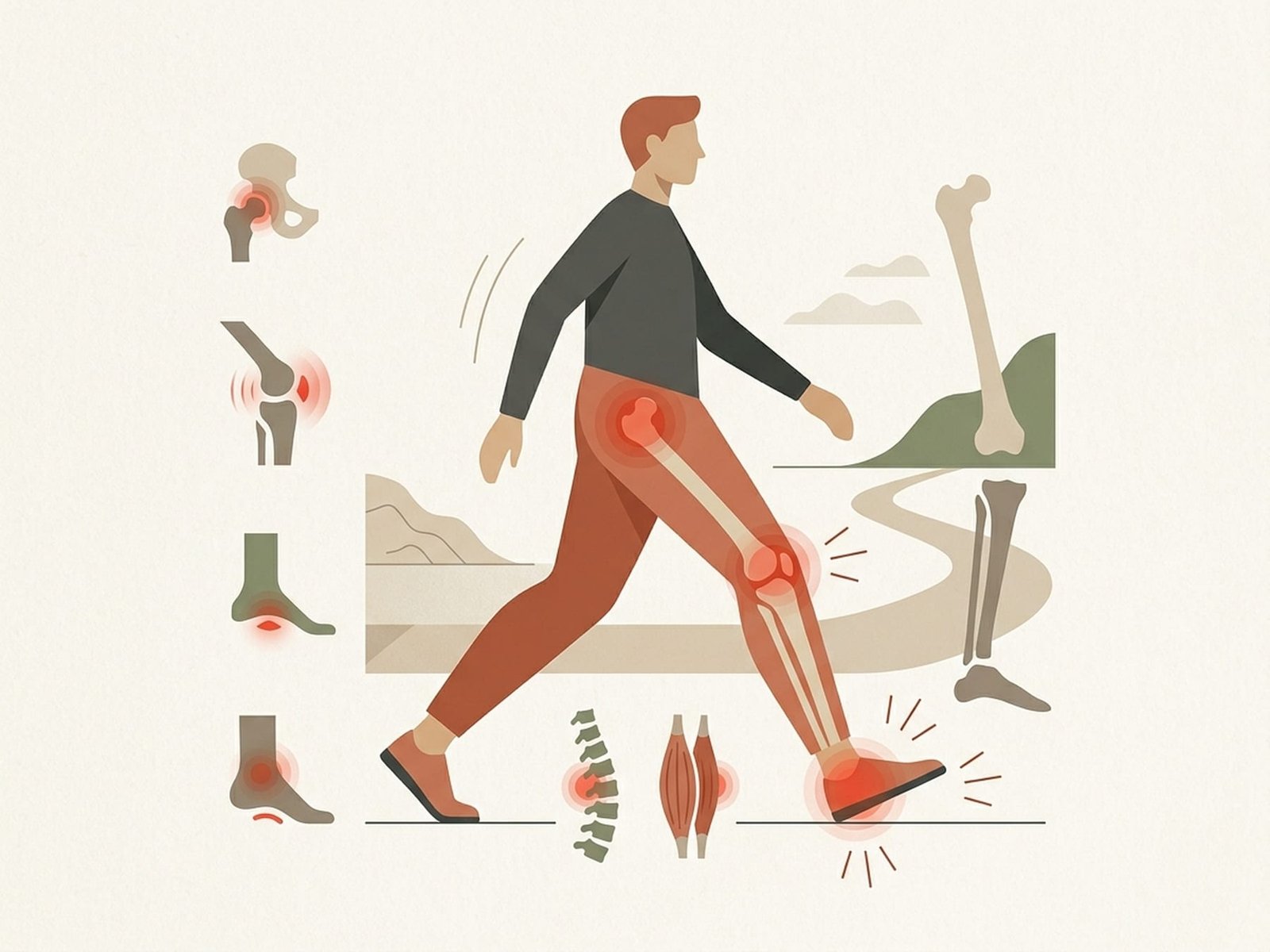
Walking Benefits for Myofascial Health
InfographicWalking Form for Pain Patients
This is not about turning walking into a technical sport. It is about using a few useful cues to reduce unnecessary strain and avoid compensations that make pain worse.
Focus on One Cue at a Time
Do not try to fix everything at once. Choose one cue, practice it for a while, and let the rest stay natural. Overthinking walking usually makes it stiffer, not better.
Head & Neck
- Look forward rather than down whenever possible
- Keep the chin relaxed and the neck relatively long, not rigid
- Avoid a prolonged forward-head posture while walking
- Small improvements in head position usually matter more than “perfect posture”
Shoulders
- Let the shoulders stay relaxed rather than held up toward the ears
- A gentle shoulder roll before walking can help reduce bracing
- Allow the arms to swing naturally within a comfortable range
- Do not force a “military posture” while walking
Core & Trunk
- Stay upright and lightly supported through the trunk without over-bracing
- Try to avoid large side-to-side sway if it clearly aggravates symptoms
- Think “tall and easy” rather than “stiff and perfect”
- Breathing should stay comfortable — if you cannot breathe normally, you are probably over-bracing
Hip & Pelvis
- Try to let the hips move smoothly rather than lurching from side to side
- If one hip drops noticeably, that may be a sign to reduce pace or shorten the walk
- A slight whole-body forward intent is fine, but avoid bending heavily from the waist
- Walking should feel relatively symmetrical, even if not textbook-perfect
Knees & Feet
- Aim for a comfortable, quiet step rather than a hard heel strike
- Avoid obvious overstriding far out in front of the body
- Let the stride length feel natural rather than forced
- Shoe comfort and tolerance usually matter more than trying to “perfect” foot mechanics immediately
Breathing
- Keep breathing regular and comfortable rather than holding your breath
- Nasal breathing can be helpful when comfortable, but do not force it if it makes you tense
- If your breathing becomes strained, you are likely walking too hard for the current goal
- Walking for pain relief usually works best at an effort level where breathing stays relatively easy
Pacing Strategies
Pacing determines whether walking becomes therapeutic or irritating. Most setbacks happen because patients walk too hard, too long, or too inconsistently — not because walking itself is a bad choice.
Walking Programs by Pain Stage
These stage-based suggestions are not rigid prescriptions. They are simply a way to match walking to your current irritability and tolerance.
Acute / Flare-Up
Stage 1
Duration
Short walks only
Intensity
Very easy — more like gentle movement than exercise
Terrain
Flat, predictable surfaces
Frequency
Once or twice daily if tolerated
Warm-Up
Begin with a very easy first minute or two instead of launching straight into a normal pace
Cool-Down
Slow down gradually and stop before the walk becomes clearly aggravating
Warning Signs to Stop
- Pain is clearly climbing during the walk
- You start limping or changing your gait to protect yourself
- You feel dizzy, unwell, or unusually fatigued
- You develop sharp, unfamiliar, or clearly worsening pain
During a flare, the goal is circulation and movement confidence — not fitness. Very short walks are fine if that is all the body tolerates.
Walking Surfaces & Environments
Different surfaces change the demand on the body. The “best” surface is the one that matches your current symptoms, balance, confidence, and recovery goals.
Flat Pavement
Benefits
- Predictable and easy to pace
- Simple to access in many neighborhoods
- Useful in earlier stages when stability matters more than challenge
- Good for consistency and habit formation
Cautions
- Hard surfaces may feel less forgiving for some joints
- Very repetitive terrain can reinforce the same movement pattern over and over
- Road camber can create asymmetrical loading
- Best matched with appropriate shoes and sensible duration
Trails & Paths
Benefits
- Often feel softer and more varied than pavement
- Encourage balance and proprioceptive engagement
- Can reduce monotony and improve enjoyment
- Natural environments may help stress reduction for some people
Cautions
- Uneven surfaces can increase ankle and balance demands
- Not ideal in the most irritable or unstable phases
- Require more visual attention and body control
- Better introduced gradually rather than all at once
Treadmill
Benefits
- Lets you control pace and incline very precisely
- Useful in bad weather or when outdoor walking is impractical
- Can be a good pacing tool for nervous-system-sensitive patients
- Easy to stop or slow down immediately
Cautions
- Some patients dislike the repetitive feeling
- Walking mechanics are not identical to outdoor walking
- May become monotonous for some users
- Best used as a tool, not as the only walking environment if variety matters to you
Beach Walking
Benefits
- Can add variety and sensory enjoyment
- Different surfaces may challenge stabilizers in new ways
- Some people find it calming and restorative
- Shoreline walking may feel more forgiving than deep sand
Cautions
- Soft sand is much more demanding than it looks
- Uneven sloped surfaces can load one side more than the other
- Not ideal for acute flare-ups or unstable lower-limb conditions
- Duration usually needs to be reduced compared with flat ground
Mall Walking / Indoor Corridors
Benefits
- Climate-controlled and predictable
- Good in very hot, cold, or rainy conditions
- Useful when restrooms, seating, or pacing breaks matter
- Can make routine more consistent for some patients
Cautions
- Still usually a hard floor surface
- Offers little terrain variety
- Can become too stop-start if the walk turns into browsing
- Best used as a practical option, not necessarily the only one
Gear That Helps
Walking does not require much gear, but the right shoes and a few practical decisions can make the experience much easier.
Comfortable Walking Shoes
Good shoes matter, but “good” means comfortable, appropriate, and supportive for the individual — not necessarily the most expensive or the most technical.
Key Points
- Replace shoes when they are clearly worn out or no longer feel supportive
- Fit and comfort matter more than brand loyalty
- A specialty fitting can help if walking consistently causes foot or lower-limb symptoms
- Shoes should help you tolerate walking, not become a new source of pressure or stiffness
Insoles & Arch Support
Some walkers benefit from additional support or cushioning, especially if foot mechanics are a clear contributor. Others do better with simpler, comfortable footwear and no extra complexity.
Key Points
- Use added support only if it clearly improves comfort or function
- Do not assume every pain problem needs an orthotic
- Review leg-length difference or foot-loading issues when clearly relevant
- Fit and tolerance matter more than theory
Walking Poles
Walking poles can reduce perceived load for some patients and may improve balance or rhythm. They are especially useful in hill walking, trail walking, or for patients who benefit from upper-body involvement.
Key Points
- Useful in selected patients, not mandatory for everyone
- Technique matters more than simply carrying the poles
- Good option for patients who feel more stable with them
- Can help distribute effort in some lower-limb-dominant pain patterns
Appropriate Clothing Layers
Comfort matters. Being too cold can increase guarding, and overheating can make walking unpleasant or overly fatiguing.
Key Points
- Dress for movement, not for standing still
- Use layers you can remove if you warm up quickly
- Avoid fabrics that stay wet and uncomfortable
- The best clothing is the clothing you will actually walk in consistently
Integrating Walking with Other Treatments
Walking often works best when it supports other treatments — not when it is treated as the only thing you need to do.
Walk After Manual Therapy
A short, easy walk after hands-on treatment can sometimes help reinforce movement and circulation. The key is keeping it gentle enough that it supports recovery rather than becoming another training session.
Walk on Recovery Days
Easy walking can be an excellent active-recovery option between harder exercise sessions, especially when complete rest tends to increase stiffness or apprehension.
Combine with Mindfulness
Some patients find that mindful walking reduces worry, body vigilance, or pain-related rumination. Paying attention to breath, pace, and body sensation can make walking more restorative.
Use Brief Pre-Walk Self-Release If Helpful
If certain muscles repeatedly tighten during walking, a short, low-intensity self-release routine beforehand may help. The goal is not to “fix” the tissue before every walk, but to reduce obvious barriers to a comfortable session.
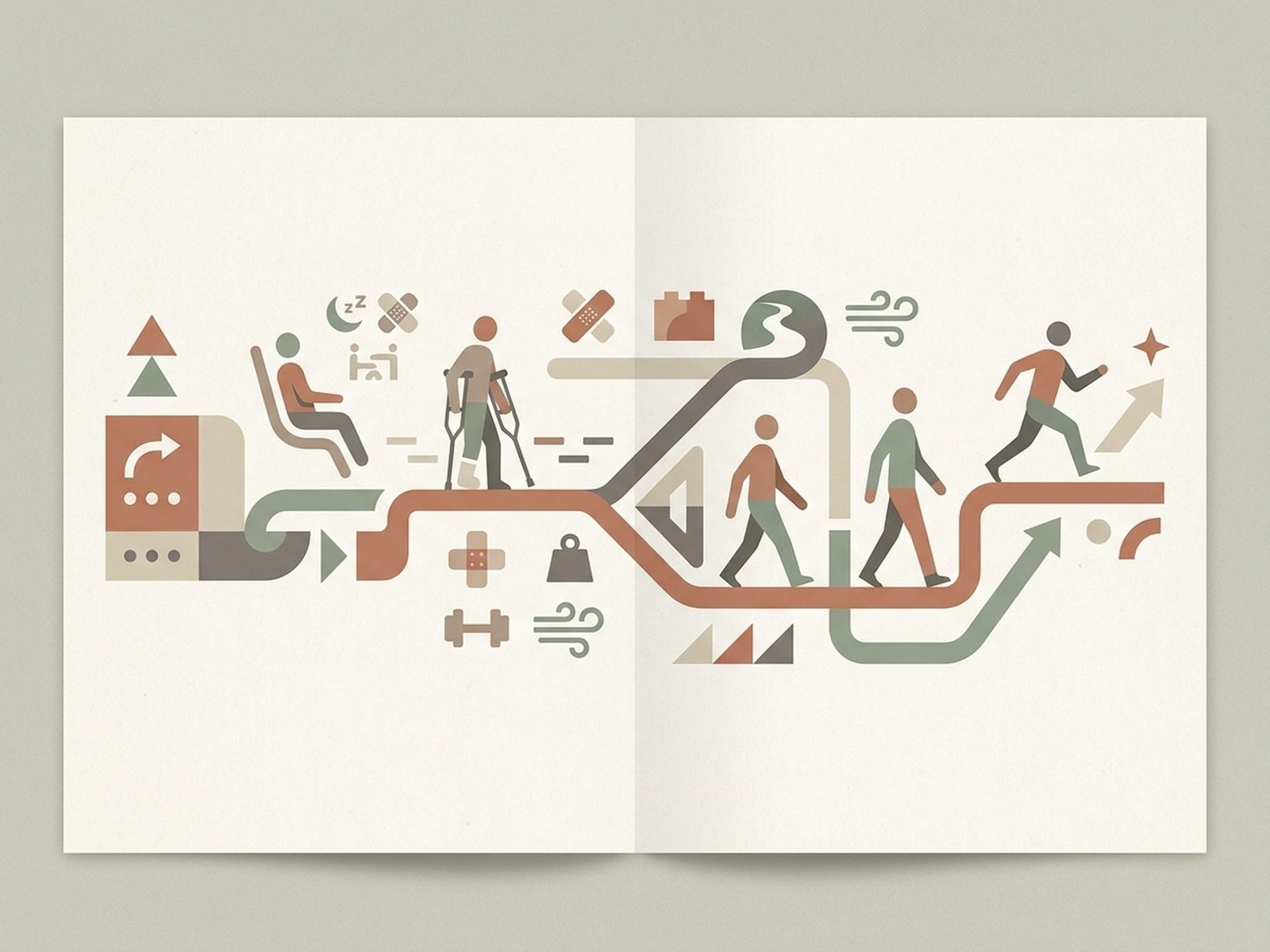
Walking Integration Timeline
When to Walk Relative to Other TreatmentsCommon Mistakes
These are some of the most common reasons walking becomes less helpful than it should be.
Walking Through Clearly Worsening Pain
The Problem
Some patients assume that because walking is healthy, any pain increase should simply be pushed through. That often turns walking from a helpful tool into a flare trigger.
The Fix
If pain is clearly building, slow down, shorten the walk, add a break, or stop. Walking for pain relief should feel sustainable, not punishing.
Overstriding
The Problem
Reaching too far out in front with every step can increase braking forces and make walking feel harsher than it needs to.
The Fix
Use a slightly shorter, quieter step and let speed come more from rhythm than from exaggerated stride length.
Looking Down at Your Phone
The Problem
Walking while staring down often increases forward-head posture and upper-quarter tension, especially in people already prone to neck and shoulder trigger points.
The Fix
Keep the phone away during the walk or stop briefly if you need to use it. Your walking posture will usually improve immediately.
Wearing Unsuitable Shoes
The Problem
Shoes that are unsupportive, worn out, or uncomfortable can make a manageable walk feel much harder on the feet, knees, and hips.
The Fix
Choose shoes that are comfortable and appropriate for the surface and duration you actually walk.
Skipping the Warm-Up Entirely
The Problem
Jumping straight into the walk at your full pace often makes the session feel harsher than it needs to, especially in pain-sensitive or stiff patients.
The Fix
Start a little easier than you think you need to. A gradual first few minutes often changes the whole walk.
Doing Too Much Too Soon
The Problem
Rapid jumps in walking volume, pace, or terrain often lead to setbacks. This is especially common when patients feel good one day and overestimate what is sustainable.
The Fix
Progress slowly and let consistency lead. Small, repeatable increases usually work better than ambitious leaps.
Key Takeaways
Walking Is One of the Most Accessible Recovery Tools
Walking is low-tech, scalable, and often easier to sustain than many formal exercise programs.
Form Matters — But Simplicity Matters Too
A few good walking cues are helpful. Trying to micromanage every body segment at once is usually not.
Pacing Prevents Setbacks
A repeatable, moderate baseline is more therapeutic than occasional overexertion followed by a flare-up.
Progress Gradually
The body usually adapts best to small, consistent increases rather than sudden ambitious jumps.
Walking Works Best as Part of a Bigger Plan
It often complements manual therapy, exercise, sleep work, pacing, and stress reduction rather than replacing them.
Let Walking Support Life — Not Dominate It
The best walking plan is one that improves health, confidence, and function without constantly provoking the pain system.
Continue Learning
Exercise Guide
A broader guide to movement options for myofascial pain, from gentle activity to more structured training.
Aquatic Therapy
Water-based movement for patients who need lower-load, more supported exercise.
Qigong & Tai Chi
Mindful movement approaches that combine gentle exercise with breathing and regulation.
Stretching Fundamentals
A practical guide to stretching in pain care — what helps, what does not, and how to dose it.
Ergonomics & Posture
How daily setup and posture can shape both walking tolerance and trigger point recurrence.