Understanding TMJ & Myofascial Pain

T M J Pain
Anatomy and Pain Pattern OverviewTemporomandibular disorders (TMD) are common and often involve both jaw mechanics and muscle pain. In many patients, the dominant pain generator is muscular rather than purely articular.
The connection between bruxism, psychological stress, poor sleep, posture, and trigger points is central to understanding why jaw pain becomes persistent in some people.
A major diagnostic problem is that masticatory trigger points can mimic dental, ear, sinus, and primary headache complaints. Patients may move through several specialties before the muscular component is recognized.
The jaw is rarely just a jaw problem — sleep, stress, posture, and cervical tension often shape the final symptom pattern.
Anatomy & Key Trigger Points
The masticatory system includes the main jaw-closing muscles, opening-assist muscles, and the cervical muscles that influence jaw mechanics indirectly through posture and motor coupling.
T M J Pain
The superficial masseter is one of the most clinically important jaw muscles. Trigger points here commonly refer pain into the lower jaw, molar region, gums, and sometimes the ear or brow. Because the referral can feel very dental, it is a frequent source of confusion in persistent or shifting tooth pain without clear dental pathology.
The temporalis covers the temporal fossa and is commonly involved in temple headache, jaw clenching, and upper-tooth referral patterns. Trigger points here often overlap with tension-type headache and bruxism-related pain presentations.
A deep jaw muscle on the inner side of the mandible. Trigger points here may contribute to deep jaw pain, ear-related discomfort, throat-related referral, and chewing pain. Because of its depth, it is commonly under-recognized in long-standing TMD.
The lateral pterygoid is closely linked to jaw opening, protrusion, and disc control. It is often discussed in TMJ clicking, painful opening, and jaw deviation patterns, although it should not be treated as the sole explanation for all disc symptoms.
The SCM commonly overlaps with TMD because cervical posture and jaw mechanics are closely linked. SCM trigger points can produce ear pain, frontal headache, dizziness-like symptoms, and facial referral that complicate the clinical picture.
The digastric assists mouth opening and hyoid / swallowing mechanics. Trigger points may contribute to under-chin pain, lower incisor referral, and a feeling of throat or jaw tightness, especially in retruded or guarded jaw patterns.
Upper trapezius dysfunction often accompanies TMD because forward-head posture, cervical bracing, and jaw tension frequently develop together. It may amplify headache and neck–jaw interaction patterns rather than acting as the primary source alone.
Referral Patterns
Masticatory trigger points often refer pain in patterns that feel surprisingly non-jaw-like. This is one of the main reasons TMD is frequently misread early on.
Masseter
- Lower molars, premolars, and jaw-angle pain
- Occasional ear-region or facial referral
- Pain that feels “dental” despite a negative dental workup
- Heavy, tired, or overworked jaw after clenching
Lateral Pterygoid
- Deep preauricular or TMJ-region pain
- Pain with opening, chewing, or protrusion
- Possible overlap with click / pop patterns
- Jaw opening that feels unstable, asymmetric, or effortful
Medial Pterygoid
- Deep ear-area discomfort or fullness sensation
- Diffuse mandibular pain difficult to localize clearly
- Pain or tightness with swallowing or wide opening
- Deep cheek or throat-adjacent referral
Temporalis
- Temple headache
- Upper-tooth or upper-jaw referral
- Pain behind the eye or along the side of the head
- Headache linked to jaw clenching
The Bruxism Connection
Bruxism and clenching are among the most important perpetuating factors in myofascial TMD. The goal is not only to identify them, but to reduce their impact over time.
Nocturnal Clenching
Diurnal Clenching
Stress Amplification Loop
Dental Findings
The Stress-Pain Cycle
Emotional Stress
Jaw Overload
Trigger Point Pain
More Distress
Self-Assessment
These self-checks help identify whether the jaw muscles and habits are likely contributing. They do not replace a full evaluation when symptoms are severe, progressive, or atypical.
Jaw Opening Measurement
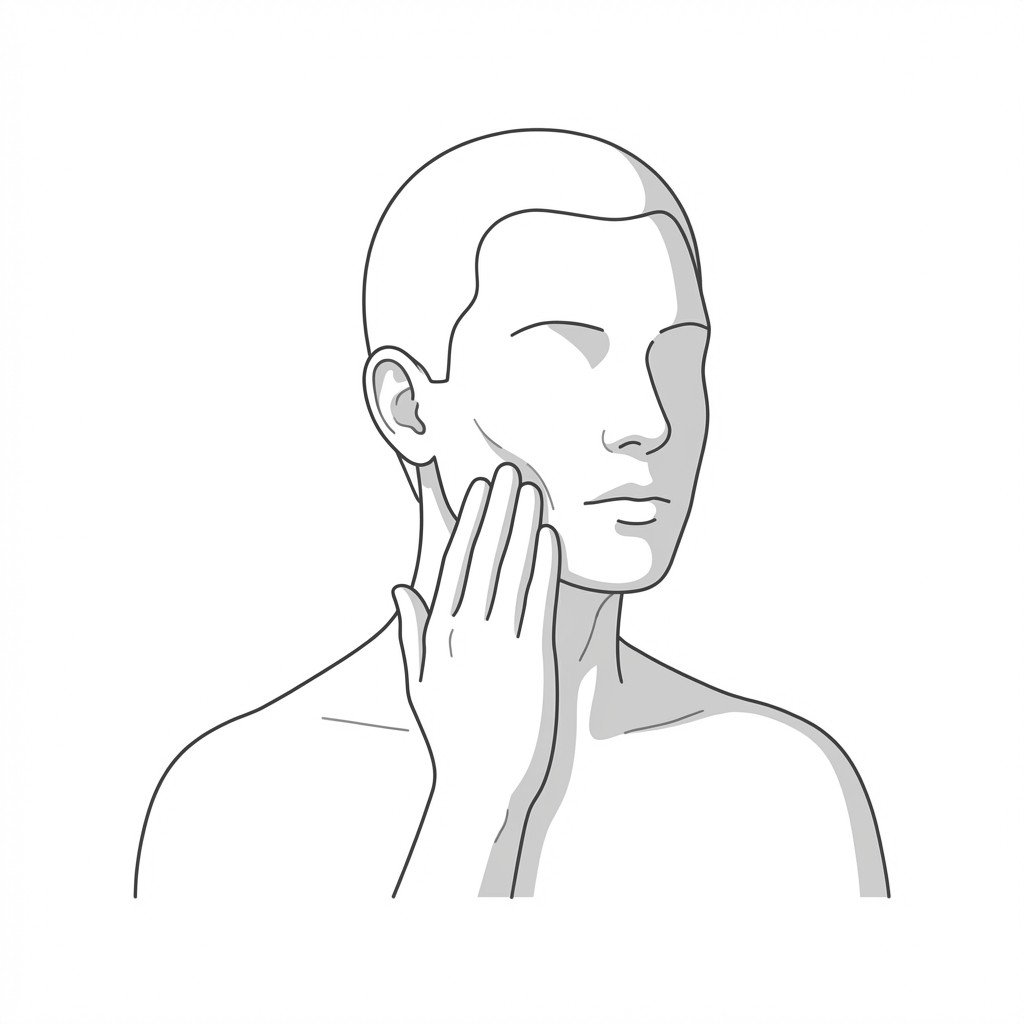
Masseter Palpation
Deviation on Opening
Click and Pop Assessment
Tooth Clenching Awareness Test
Treatment Pathways
Treatment Pathways
Mechanism DiagramSelf-Care & Jaw Relaxation
- Practice a relaxed jaw rest position: lips together, teeth apart
- Use warm compresses when the muscles feel tight or overworked
- Temporarily reduce hard, chewy, or very repetitive chewing loads during flares
- Use gentle jaw opening and lateral-control exercises within a comfortable range
- Review sleep position and nighttime jaw habits if symptoms are worst on waking
- Include stress-regulation work when stress and clenching are clearly linked
Manual Therapy
- External trigger point release for masseter and temporalis
- Intraoral work only by clinicians trained to do it safely
- Treatment of SCM, upper trapezius, and cervical contributors when relevant
- Cervical mobility and postural correction when neck–jaw coupling is clear
- Reassess mouth opening, pain distribution, and jaw control after treatment
Interventional Options
- Dry needling in selected masticatory muscles by trained clinicians
- Trigger point injections when local muscular pain is a major barrier to progress
- Botulinum toxin only in carefully selected cases rather than as a default solution
- Occlusal splint therapy when bruxism protection or load reduction is needed
- Adjunctive topical or local measures as appropriate to the case
Rehabilitation & Long-Term Management
- Jaw coordination and controlled opening exercises
- Forward-head and cervical-posture correction when present
- Behavioral work for clenching awareness and stress-related jaw loading
- Consistent splint use when indicated and prescribed
- Long-term habit change rather than repeated short-term rescue treatment
Red Flags — When to See a Doctor
While many TMJ-region pain presentations are benign and myofascial, some require urgent medical, dental, or ENT evaluation.
Myofascial trigger points in the masticatory muscles are a major contributor to many TMD presentations, but they are not the explanation for every case.
Masseter and temporalis trigger points commonly mimic dental pain and temple headache, especially in patients who clench or grind.
The lateral pterygoid is important in painful opening and clicking patterns, but clicking does not automatically prove one specific muscular cause.
Bruxism and daytime clenching are major perpetuating factors, especially when stress and poor sleep are also present.
Effective TMD care usually needs both peripheral treatment of the painful muscles and work on posture, habits, and stress-related jaw loading.
Movement therapy
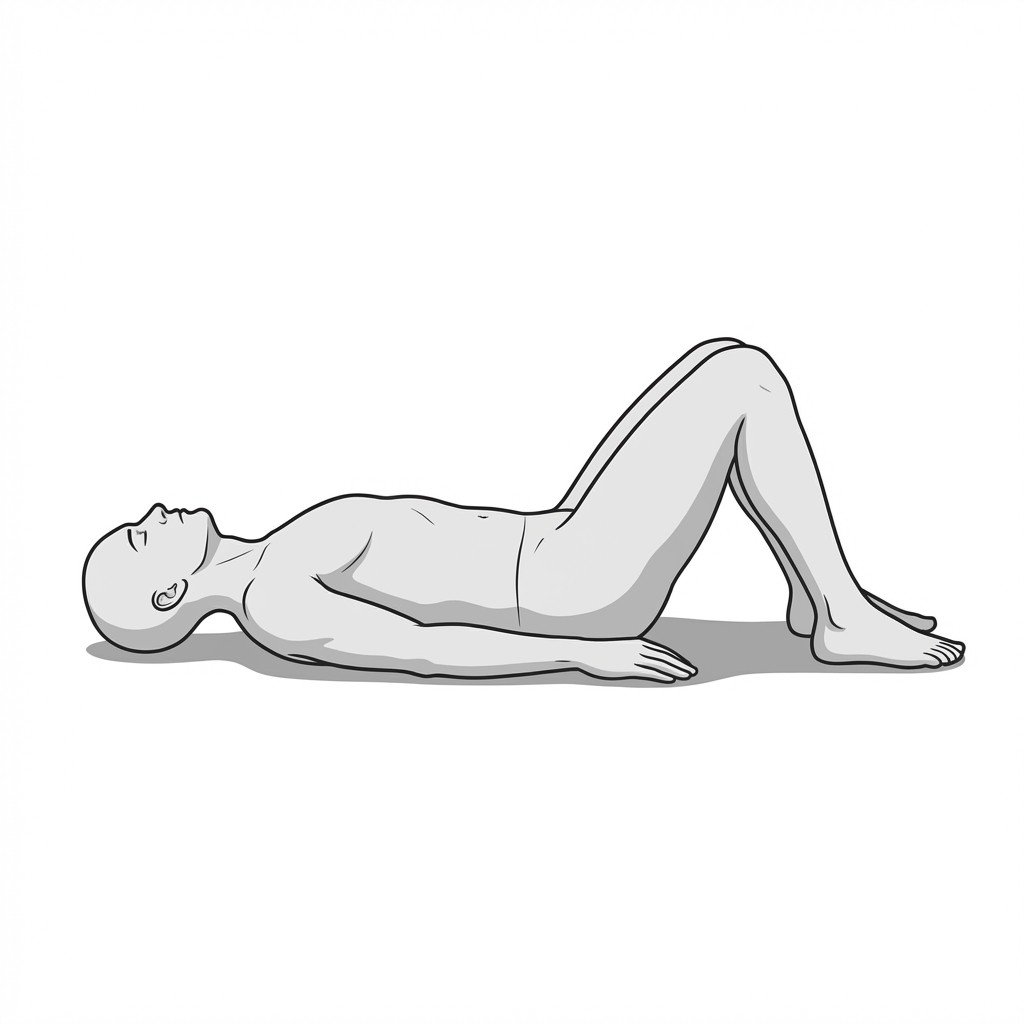
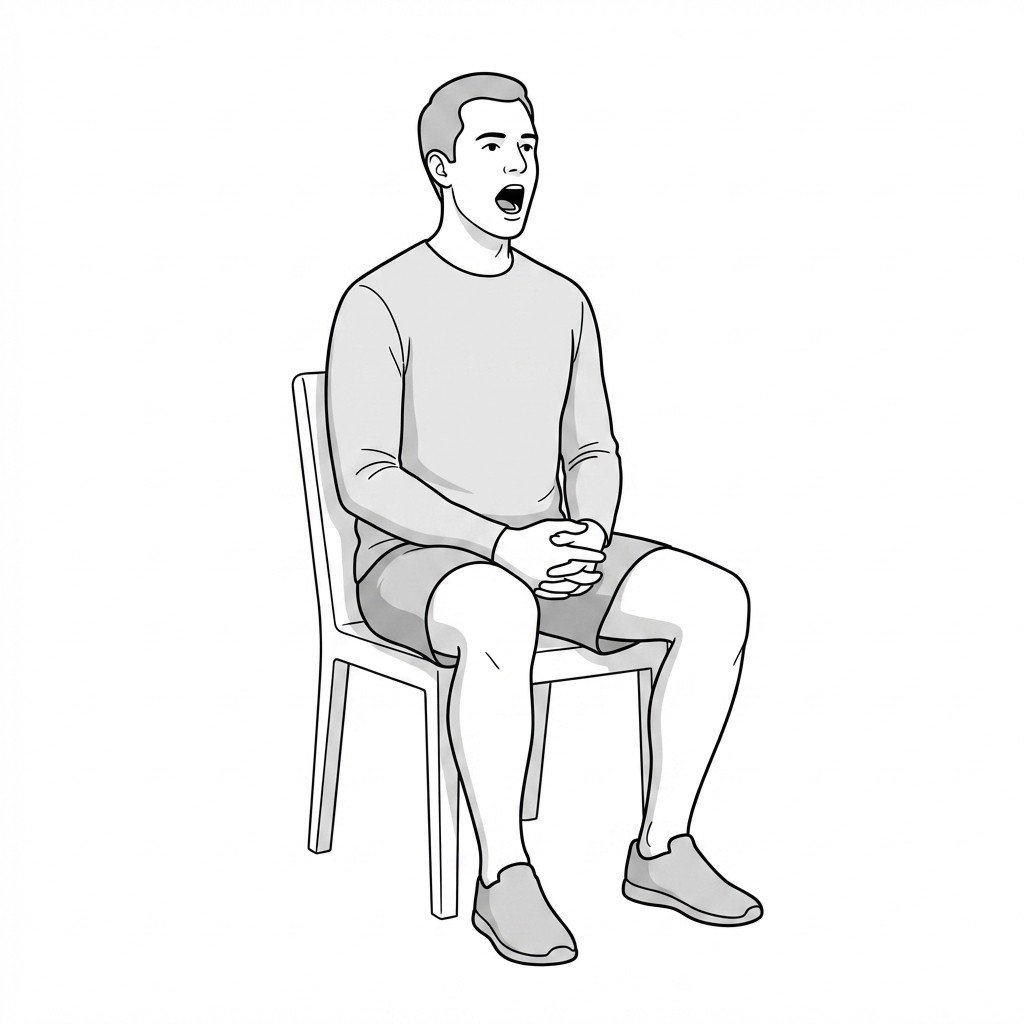
Exercises for TMJ Dysfunction
TMJ dysfunction involves both the masticatory muscles and the upper cervical spine — these exercises restore controlled jaw movement, train a neutral mandibular rest position, and reduce the cervical tension that commonly amplifies joint symptoms. Start with 2–3 and progress as tolerated.