Exercise Library
Isometric cervical side-bending
What it does
Isometric cervical side-bending strengthens the lateral neck musculature without altering joint angles, providing essential stability to the cervical spine. By improving neuromuscular control and isometric endurance, it may help reduce excessive micromotion at the symptomatic segment, which is thought to help alleviate nerve root irritation associated with cervical radiculopathy.
How to do it
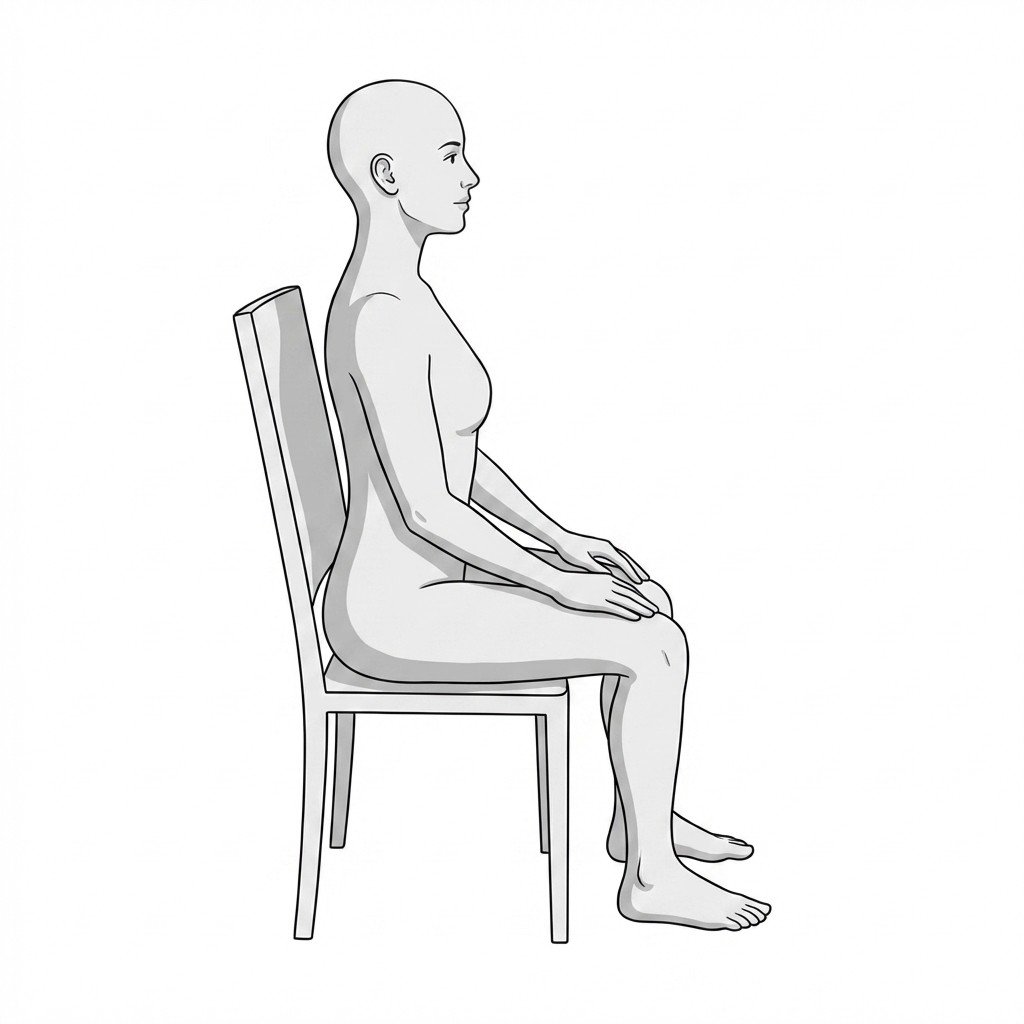
- Sit or stand with an upright, neutral spine and your eyes looking straight ahead.
- Place the palm of your hand against the side of your head, just above your ear.
- Gently press your head into your hand as if trying to bring your ear to your shoulder, while simultaneously resisting with your hand so no actual movement occurs.
- Hold the steady contraction while maintaining normal breathing.
- Slowly release the tension, relax completely, and perform on the opposite side.
Progression
Increase the duration of the isometric hold to 15 seconds or advance to isotonic side-bending using a light resistance band.
Regression
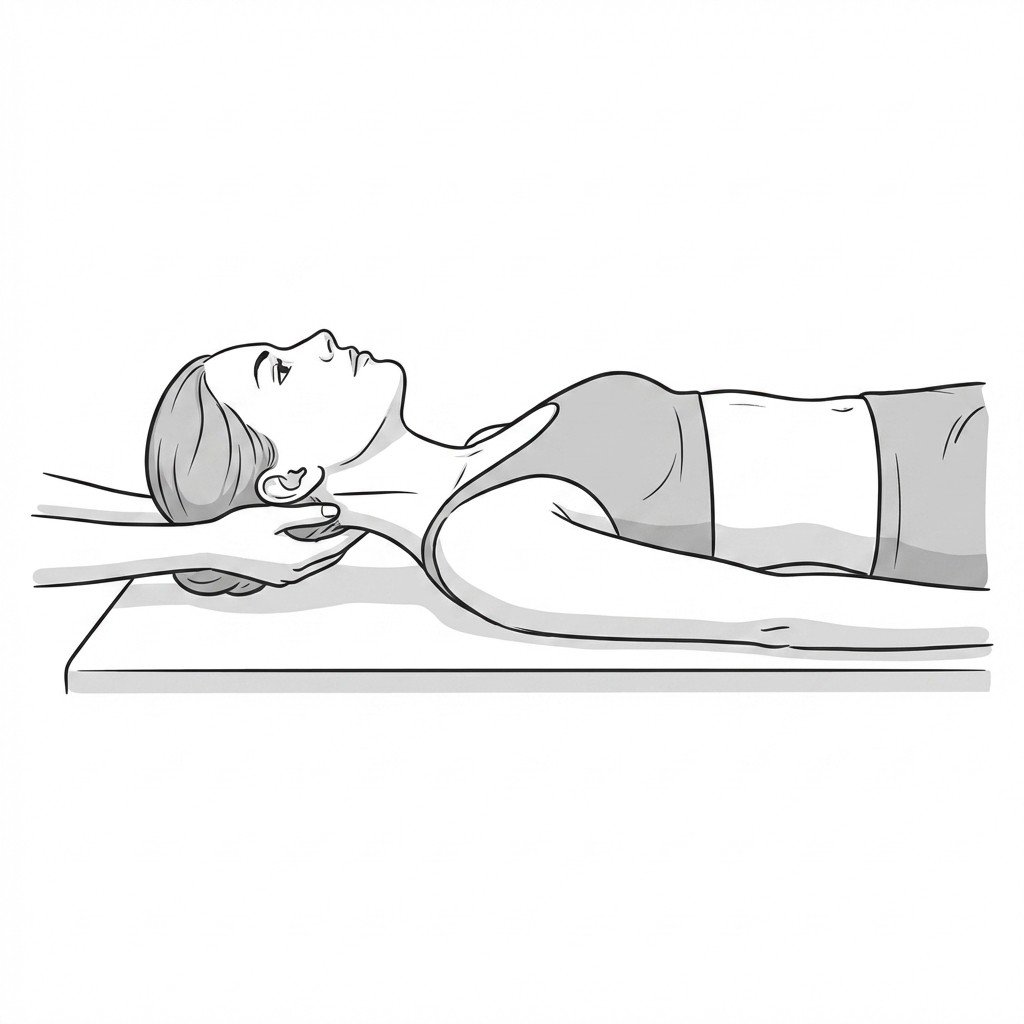
Decrease the intensity of the contraction to 20-30% of maximum effort, or perform the exercise lying supine to reduce postural and gravitational demands.