Understanding Acute Pain
Acute pain is your body's alarm system — and when it works correctly, it is one of the most important protective mechanisms you possess. Imagine touching a hot stove: within milliseconds, specialized nerve endings called nociceptors detect the extreme temperature, send electrical signals through your spinal cord, and reach your brain, which produces the experience of pain. You pull your hand away before you consciously decide to move. This is acute pain doing its job — fast, proportionate, and protective.
The defining feature of acute pain is its relationship with tissue damage or threat. A sprained ankle hurts because ligaments are stressed or torn. A muscle strain hurts because fibers are overloaded or damaged. The pain serves a clear protective purpose and often improves as tissues recover. The alarm quiets because the threat is changing.
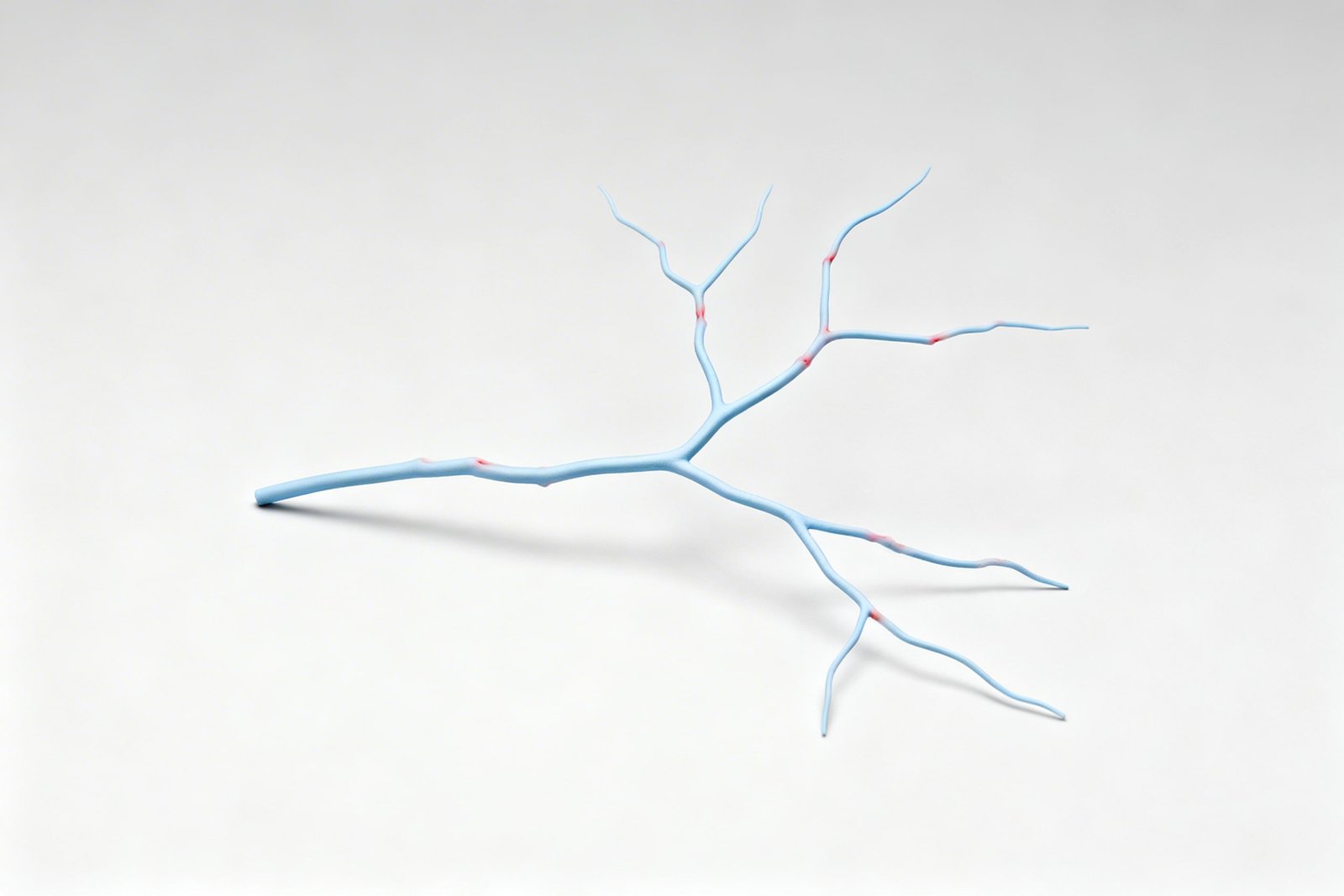
Acute Pain Alarm System Diagram
Protective Alarm
Acute pain functions as your body's alarm system. When you touch a hot stove, step on a nail, or strain a muscle, pain appears quickly to protect you from further harm. This is your nervous system working as designed — detecting a genuine threat and producing a signal that changes your behavior.
Usually Proportional Response
In acute pain, there is often a fairly clear relationship between tissue damage and the pain you feel. A small cut usually produces mild pain. A broken bone usually produces severe pain. The intensity of the alarm often matches the severity of the threat reasonably well, even though pain is never a perfect damage meter.
Tissue Healing Timeline
Most soft tissues follow broadly predictable healing timelines. Inflammation often peaks within several days. Many muscle strains improve over 4-6 weeks. Ligament sprains often take 6-12 weeks or longer depending on severity. Bone healing also commonly progresses over weeks to months. During this time, pain often decreases as healing and recovery advance — the alarm fades because the threat is resolving.
Clear Cause and Effect
Acute pain often has an identifiable trigger. You may know when it started and what caused it — the fall, the twist, the overload, or the sudden strain. This clearer cause-and-effect relationship often makes acute pain more understandable and psychologically easier to orient to.
Nociceptive Signaling
Acute pain is primarily nociceptive — specialized nerve endings called nociceptors detect actual or potential tissue damage and send danger signals through the spinal cord to the brain. The brain evaluates these signals, determines that they represent a genuine threat, and produces pain. In this setting, the system is usually working with reasonably high fidelity: real threat in, protective pain out.
Typical Tissue Healing Timelines
Muscle strain: often 4-6 weeks
Ligament sprain: often 6-12 weeks
Tendon injury: often 6-12 weeks or longer
Bone fracture: often 6-12 weeks
If pain persists well beyond these timelines, the problem may involve more than tissue healing alone.
When Pain Becomes Chronic
Something different can happen when pain persists beyond normal tissue healing time. The alarm system — so useful in acute protection — may begin to malfunction or overprotect. Neurons in the spinal cord may become more excitable, pain-processing networks may become more efficient, and the volume on the pain system may stay turned up.
This is not necessarily acute pain that simply lasted longer than expected. Chronic pain often reflects a shift in the biology and behavior of the nervous system. The International Association for the Study of Pain classifies chronic pain as pain persisting beyond 3 months — roughly the point by which many soft tissues should have completed structural healing. If pain continues past this point, it may represent more than tissue damage alone.
Chronic pain is not always just acute pain that lasted too long — it often reflects changes in how the nervous system processes signals.
This distinction matters for treatment. Treating chronic pain as if it were only prolonged acute pain — more rest, more searching for tissue damage, more waiting — often falls short because the problem may no longer be primarily in the tissue. The original fire may have changed, but the alarm is still active.
The 3-Month Threshold
Pain that persists beyond the expected tissue-healing time — often around 3 months — is commonly classified as chronic. This threshold matters because by that point many soft tissues have had ample time to heal structurally, even if not every case fits a perfect timeline. If pain continues, the problem may no longer be explained by tissue healing alone and the nervous system often deserves more attention in the treatment plan.
Neuroplastic Changes
Chronic pain is often associated with measurable changes in the nervous system. Neurons in the spinal cord may become more excitable, pain-related brain networks may become more efficient at detecting and prioritizing threat, and movement or sensory experiences may start to feel different. These are real biological changes, not imaginary ones, though the exact pattern varies between individuals.
Pain as More Than a Symptom
In chronic pain, pain may no longer function simply as a brief warning about tissue damage. It can become a persistent clinical problem with its own nervous-system, behavioral, and social dimensions. That is why many pain frameworks now treat chronic pain as a condition in its own right rather than only as an extension of an injury.
The Biopsychosocial Reality
Chronic pain is shaped by three interconnected domains: biological factors (nerve sensitivity, muscle tension, inflammation), psychological factors (fear, catastrophizing, depression, beliefs), and social factors (work stress, isolation, relationships). Treating only the biological component while ignoring the psychological and social dimensions often produces incomplete results.
Why Passive Waiting Often Falls Short
Unlike acute pain, chronic pain often does not resolve simply with time and protection alone. When sensitization, fear-avoidance, poor sleep, and deconditioning are contributing, waiting passively may allow the problem to persist. Active, multimodal treatment is often needed to help the system recalibrate.
Critical insight: Chronic pain is not "all in your head" — it involves real nervous-system changes. Those changes are biological and real, but they are also often modifiable. The same neuroplasticity that contributed to the problem can also support recovery.
Acute vs. Chronic: Side by Side
Less than 3 months; often resolves as tissues heal
More than 3 months; persists beyond expected healing time
Protective — warns of actual tissue damage or threat
Often less clearly protective — alarm may continue after the original threat has changed
Usually normal sensitivity — alarm calibrated reasonably well
May be sensitized — threshold lowered, volume turned up
Often a stronger correlation — more damage often equals more pain
Often a weaker correlation — pain intensity may disconnect from current tissue state
Concern, appropriate caution, frustration
Fear, catastrophizing, depression, identity disruption
Address the tissue — protection, symptom control, gradual return
Address the broader system — education, graded activity, multimodal care
Often excellent — many acute pain problems improve substantially
Variable — usually requires active rehabilitation, but meaningful improvement is often possible
Duration
Acute
Less than 3 months; often resolves as tissues heal
Chronic
More than 3 months; persists beyond expected healing time
Purpose
Acute
Protective — warns of actual tissue damage or threat
Chronic
Often less clearly protective — alarm may continue after the original threat has changed
Nervous System State
Acute
Usually normal sensitivity — alarm calibrated reasonably well
Chronic
May be sensitized — threshold lowered, volume turned up
Tissue Damage Correlation
Acute
Often a stronger correlation — more damage often equals more pain
Chronic
Often a weaker correlation — pain intensity may disconnect from current tissue state
Emotional Impact
Acute
Concern, appropriate caution, frustration
Chronic
Fear, catastrophizing, depression, identity disruption
Treatment Approach
Acute
Address the tissue — protection, symptom control, gradual return
Chronic
Address the broader system — education, graded activity, multimodal care
Prognosis
Acute
Often excellent — many acute pain problems improve substantially
Chronic
Variable — usually requires active rehabilitation, but meaningful improvement is often possible
- 010–6 Weeks (Acute)
Normal tissue healing underway. Pain is usually proportional and protective. The alarm system is often working reasonably well.
- 026–12 Weeks (Subacute)
Important transition window. Nervous-system changes may begin, but are often not yet entrenched. Broader intervention here may be especially useful.
- 033–6 Months (Early Chronic)
Pain crosses the chronic threshold. Neuroplastic and behavioral changes may be establishing. A multimodal treatment approach is often needed.
- 046+ Months (Established Chronic)
Sensitization may be more established. Pain often behaves as a broader nervous-system and lifestyle problem rather than a simple tissue issue alone.
The Transition Zone
Acute pain does not become chronic overnight. There is often a transition period — commonly between 6 weeks and 3 months — during which the nervous system is changing but may not yet be fully entrenched in chronic patterns. Understanding the factors that drive this transition is important because many of them are modifiable.
The following factors can increase the risk of acute pain transitioning to chronic pain. They are not character flaws or signs of weakness — they are identifiable, modifiable risk factors that can often be addressed through targeted intervention.
The key takeaway: the transition from acute to chronic pain is not inevitable. Many of these risk factors are modifiable. Early, broader intervention during the subacute window may reduce the risk of chronification.
Why Myofascial Pain Often Becomes Chronic
Myofascial pain syndrome can show a strong tendency toward chronification. Unlike an ankle sprain that heals and stops hurting, trigger points may remain active and continue generating pain unless the broader perpetuating factors are addressed. They may also contribute to overload in adjacent regions and help pain become more diffuse over time.
Understanding why myofascial pain can become chronic helps explain why it often requires a broader treatment approach than many simpler musculoskeletal conditions. This is often not a condition that resolves with time alone.
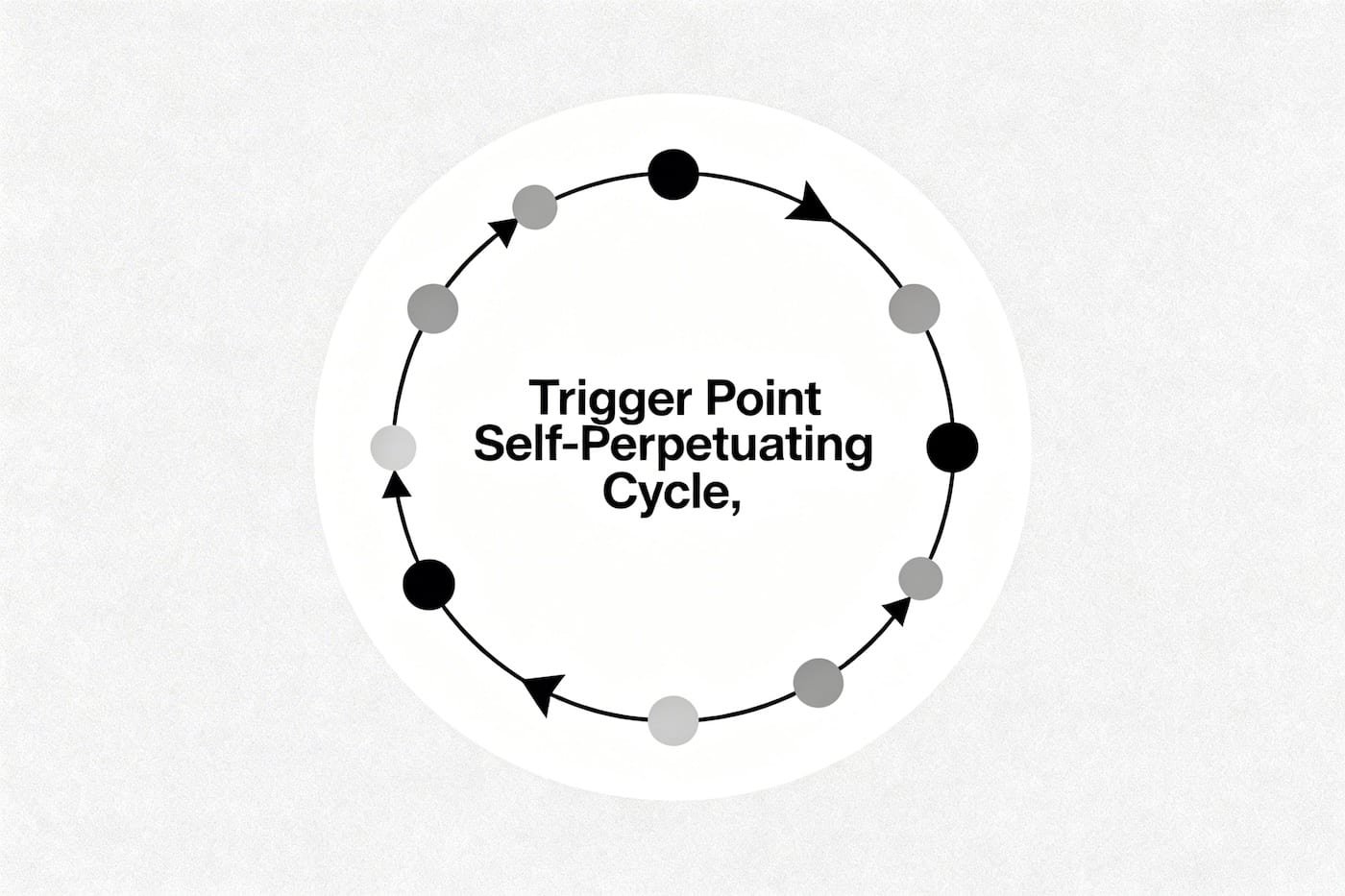
Trigger Point Self-Perpetuating Cycle
The perpetuating factor principle: Treating trigger points without addressing their perpetuating factors is like mopping the floor while the faucet is still running. You may get temporary relief, but recurrence becomes more likely. Longer-term management often requires identifying and correcting nutritional, mechanical, and psychological perpetuating factors.
Breaking the Chronic Pain Cycle
The most important message about chronic myofascial pain is that it is often modifiable. The neuroplastic changes that contribute to chronic pain can also support recovery. Improvement usually requires addressing the problem from multiple angles at once — treating the peripheral trigger points, calming the sensitized nervous system, restoring physical function, optimizing sleep and nutrition, and addressing psychological contributors when present.
No single treatment is sufficient for everyone. But a comprehensive, coordinated approach that addresses multiple contributing factors can produce meaningful improvement in many patients.
Address Peripheral Pain Generators
While central sensitization can become an important part of chronic pain, peripheral input from trigger points may still help drive the system. Treating active trigger points — through manual therapy, dry needling, trigger point injections, or symptom-guided self-release — may reduce one source of ongoing nociceptive input. For myofascial pain, a purely psychological approach is often incomplete if the peripheral generators are ignored.
Calm the Central Nervous System
Central sensitization also deserves direct attention. Pain neuroscience education may reduce fear and catastrophizing. Mindfulness, slow breathing, and other down-regulation strategies may reduce sympathetic arousal and improve symptom tolerance. These approaches are not “alternative” in the dismissive sense — they are nervous-system-focused interventions that can complement physical treatment.
Graded Activity and Exercise
Movement is often a key part of chronic pain recovery, but it usually needs to be introduced gradually. Graded activity means starting below the level that predictably causes a major flare and progressively increasing time, load, or complexity. The goal is to retrain the nervous system that movement can be safe while rebuilding physical capacity.
Optimize Sleep
Sleep is a major recovery variable. It affects nervous system regulation, pain sensitivity, fatigue, and mood. Chronic pain patients who improve sleep quality often report meaningful reductions in pain intensity and disability, even when sleep is not the whole answer.
Nutrition and Metabolic Support
Correcting nutritional deficiencies may remove a perpetuating factor that keeps recovery from progressing. Vitamin D, B12, iron, magnesium, and folate are among the most clinically relevant issues to consider in selected patients. Anti-inflammatory dietary patterns and adequate hydration may also support general recovery.
Psychological Support
Cognitive behavioral therapy (CBT) and acceptance and commitment therapy (ACT) are evidence-based psychological interventions for chronic pain. They can help address catastrophizing, fear-avoidance, depression, and maladaptive coping strategies. Psychological support does not mean the pain is “in your head” — it means you are developing skills that may reduce the patterns keeping the pain amplified.
Pain Timeline Assessment
Select your pain duration and check any characteristics that apply to see where your pain falls on the acute-to-chronic spectrum.
Step 1: How long have you had this pain?
Step 2: Which characteristics describe your pain?
Select all that apply.
Key Takeaways
Pain Has a Purpose — Until It Becomes Less Useful
Acute pain is a protective system. Chronic pain reflects a system that may remain active after its original role has changed. Understanding that distinction helps guide treatment.
The 3-Month Mark Is a Clinical Threshold
After about 3 months, pain is often considered chronic because tissue healing alone is less likely to explain the full picture. Treatment often needs to broaden accordingly.
Trigger Points Can Help Maintain Chronicity
Unlike many straightforward injuries, trigger points can remain active for long periods and continue providing peripheral nociceptive input. That is one reason they may contribute to pain persistence.
Early Intervention Often Helps
The subacute period is an important opportunity to reduce the risk of persistent pain. Multimodal treatment in that window may improve outcomes.
Breaking the Cycle Usually Requires Multiple Strategies
Chronic myofascial pain often responds best to a multimodal approach: treat trigger points, calm the nervous system, restore movement, improve sleep and recovery, and address psychological contributors when present.
Meaningful Recovery Is Common
The same neuroplasticity that contributes to persistent pain can also support improvement. Recovery usually takes time and consistency, but substantial progress is often possible.
The bottom line: Acute pain protects you. Chronic pain persists beyond its original protective role because the nervous system and the broader pain system have changed. Myofascial trigger points can contribute strongly to this transition because they may continue generating pain input and are often maintained by perpetuating factors. But chronic pain is often modifiable. A multimodal approach that addresses trigger points, the sensitized nervous system, deconditioning, sleep, nutrition, and psychological factors can support recovery and restore function over time.
Continue Learning
Pain Neuroscience Education
Learn how understanding pain may reduce threat and support recovery.
Read moreWhy Pain Spreads
Understand referred pain, satellite trigger points, and mechanisms that may contribute to spreading symptoms.
Read moreStress & Pain Connection
Explore how stress may help maintain trigger points and amplify chronic pain.
Read moreSleep Optimization
Break the pain-sleep cycle with evidence-based strategies for restorative sleep.
Read moreCBT Strategies for Pain
Practical cognitive behavioral techniques to address catastrophizing and fear-avoidance.
Read moreExercise Guide
Graded activity programs designed for trigger point patients with chronic pain.
Read more