What Is Central Sensitization?
Imagine your nervous system has a volume knob for pain. Under normal conditions, the knob is set at a reasonable level — you feel pain when something is genuinely harmful, and the intensity broadly matches the situation. A paper cut produces a small sting. A stubbed toe produces a brief, sharp pain. The system is calibrated fairly well.
When the nervous system turns up its gain, even ordinary sensations can begin to feel painful — this is central sensitization.
In central sensitization, someone has turned that volume knob too high — so signals that should produce mild discomfort may produce severe pain, and signals that should not produce pain at all may become painful. The key issue is not necessarily ongoing tissue damage everywhere, but a change in how the central nervous system is processing information.
Peripheral Sensitization
Occurs mainly at the site of injury. Damaged tissues release inflammatory chemicals that lower the firing threshold of local nociceptors. This is usually a normal protective response and often settles as the tissue heals.
Central Sensitization
Occurs in the spinal cord and brain. Persistent nociceptive input can make neurons in the central nervous system more excitable. They may fire more easily, respond more strongly, and begin to amplify incoming signals even after the original tissue problem has partly improved.
A commonly cited formal definition: central sensitization is an increase in the excitability of neurons within the central nervous system, such that normal inputs begin to produce abnormal responses. The concept became especially influential through the work of Clifford Woolf and others and is now central to modern pain science. It helps explain why chronic pain often behaves differently from acute injury — and why treating only peripheral tissues may not be enough in more persistent cases.
The Volume Knob Analogy
Think of a sound system. When you turn the volume knob up, the music itself has not changed — but your experience of it has. A whisper becomes a shout. Static becomes painfully loud. Central sensitization works in a similar way: the incoming signals may be ordinary or only mildly threatening, but the nervous system responds as if they are much more significant. Understanding that distinction is often the first step toward helping the volume come back down.

Central Sensitization Volume Knob Diagram
The Science Behind It
Central sensitization likely involves several interconnected mechanisms operating at molecular, cellular, and systems levels. Understanding them helps explain why different kinds of treatments can matter — from education and exercise to sleep, medication, and peripheral symptom control.
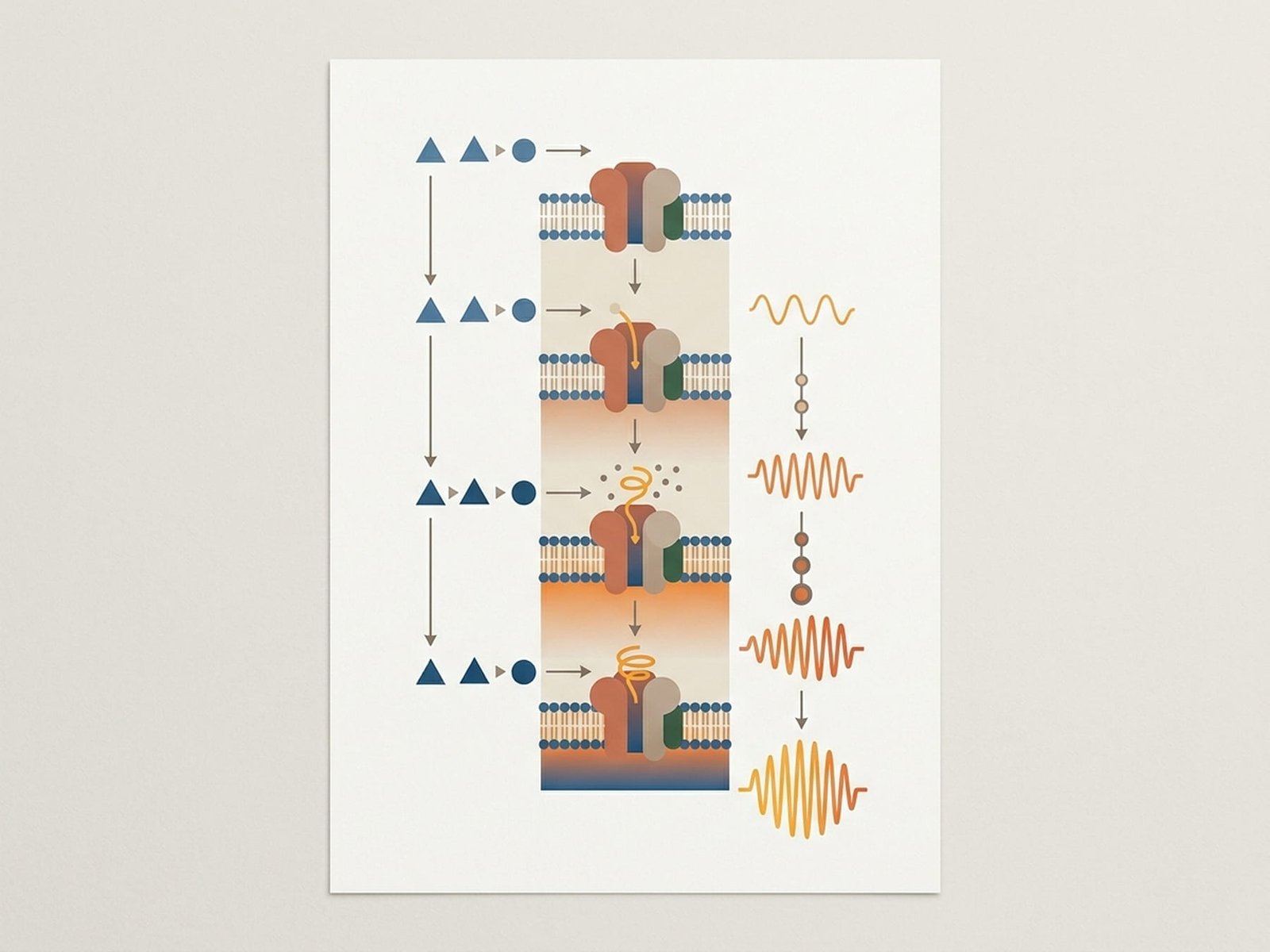
NMDA Receptor Wind-Up Diagram
NMDA Receptor Activation
Persistent pain input may increase dorsal horn excitability through NMDA-related calcium signaling
Glial Cell Activation
Microglia and astrocytes may release inflammatory signals that help maintain sensitization
Descending Inhibition Failure
The brain’s natural pain-dampening systems may become less effective in persistent pain states
Wind-Up Phenomenon
Repeated stimulation can progressively increase dorsal horn neuron firing — each signal can make the next feel stronger
How Central Sensitization Develops
Central sensitization usually does not appear overnight. It develops through a gradual series of neuroplastic changes driven by persistent nociceptive input, stress, poor recovery, and repeated threat signaling. Understanding this timeline helps explain why early treatment matters and why recovery usually takes time.
Acute Injury or Onset
An injury, repetitive strain, or sustained posture activates nociceptors in muscle and soft tissue. Trigger points may form as taut, irritable bands. At this stage, pain is usually more localized and more proportional to the original stimulus.
Persistent Nociceptive Input
If trigger points and other peripheral drivers persist, the spinal cord receives repeated nociceptive input. Over time, this can increase dorsal horn excitability and contribute to heightened sensitivity. NMDA-related mechanisms are often discussed as part of this transition.
Neuroplastic Changes
The spinal cord and brain may undergo functional reorganization. Changes in glial activation, descending modulation, expectation, threat learning, and movement behavior can all contribute. The threshold for pain may drop, and symptoms may become less tied to the original tissue problem.
Amplified Central Processing
The central nervous system now responds more strongly to incoming signals. Normal touch may become painful, mildly painful stimuli may feel much stronger than expected, and symptoms may spread or become accompanied by fatigue, cognitive symptoms, and broader sensory sensitivity.
The Role of Trigger Points
Active myofascial trigger points may serve as one of several ongoing peripheral pain generators that help maintain sensitization. Continued nociceptive input from trigger points can keep the system more reactive, which is one reason treating them early may matter — and why addressing them can still be useful even after central sensitization features are established.
Signs & Symptoms
Central sensitization can produce a recognizable cluster of symptoms that extends beyond one local pain complaint. No single symptom proves the diagnosis, but the pattern can be clinically informative.
Allodynia
HallmarkPain from normally non-painful stimuli
Light touch, gentle pressure, the brush of clothing, or a warm breeze against the skin can feel genuinely painful. The nervous system has lowered the threshold enough that previously harmless stimuli may now activate pain responses.
Hyperalgesia
HallmarkExaggerated pain from mildly painful stimuli
A stimulus that would normally produce mild discomfort — such as firm pressure on a muscle or bumping an arm — instead produces severe, disproportionate pain. This reflects amplification rather than imagination.
Temporal Summation
DiagnosticPain builds with repeated stimulation
When the same mildly painful stimulus is applied repeatedly at regular intervals, each successive stimulus may hurt more than the last. This is a clinically useful sign of heightened central responsiveness.
Expanded Receptive Fields
CommonPain spreads beyond the original site
Pain gradually migrates to areas away from the original trigger point or injury. A problem that started in one region may later involve a broader body area because the nervous system has become more responsive and less anatomically precise.
Diffuse, Widespread Pain
CommonPain that is hard to localize
Rather than pointing to one specific spot, the pain may feel deep, widespread, and difficult to describe. Patients often say it is "everywhere" or "moves around." This pattern is common in more centrally amplified pain states.
Persistent Fatigue
CommonExhaustion that rest does not fully resolve
Persistent pain can consume physical and mental resources. Sleep may become less restorative, and the nervous system may remain on high alert. The result can be fatigue that feels disproportionate to activity level.
Cognitive Dysfunction
Common"Brain fog" — difficulty thinking clearly
Difficulty concentrating, poorer short-term memory, word-finding problems, and reduced processing speed are common complaints in sensitized pain states. Pain, fatigue, poor sleep, and medication effects may all contribute.
Multi-Sensory Sensitivity
CharacteristicHypersensitivity to light, sound, and smell
Central sensitization is not limited to pain pathways. Some patients also become more sensitive to bright light, ordinary sounds, or strong odors, reflecting a generally more reactive sensory system.
Self-Check: Could You Have Central Sensitization?
Important Disclaimer
This checklist is an educational screening tool, not a diagnostic instrument. It is designed to help you recognize patterns that may suggest central sensitization and to support informed conversations with your healthcare provider. It does not replace professional evaluation.
Answer each question based on your experience over the past three months. Select "Yes" if the symptom is present most of the time or often enough to be clearly noticeable.
Does light touch on your skin feel painful or unusually unpleasant?
For example, clothing brushing against your skin, a light pat, or gentle pressure.
Do you have pain in areas that were never clearly injured?
Pain that has spread beyond the original site of your problem.
Are you more sensitive to bright lights than you used to be?
Fluorescent lights, sunlight, or screens seem harsher than before.
Are you more sensitive to sounds than you used to be?
Normal conversations, traffic noise, or music feel uncomfortably loud.
Does mild pressure cause significantly more pain than expected?
For instance, a blood pressure cuff, a massage, or someone squeezing your arm feels disproportionately painful.
Do you experience persistent fatigue even after what should be enough rest?
Waking unrefreshed or feeling exhausted by activities that did not previously tire you.
Do you have difficulty concentrating or experience "brain fog"?
Trouble finding words, poor short-term memory, or difficulty following conversations.
Does repeating a mildly painful stimulus make the pain grow progressively worse?
For example, repeated tapping on your skin becomes increasingly painful with each tap.
Are you sensitive to certain smells or chemical odors?
Perfumes, cleaning products, or exhaust fumes feel overwhelming.
Does your pain persist long after the apparent cause should have settled?
An injury improved weeks or months ago, but the pain continues or has become more widespread.
Questions answered
0 / 10
The Trigger Point Connection
Myofascial trigger points and central sensitization are not separate problems. In many patients they interact in a bidirectional way: trigger points can feed the sensitized system, and a sensitized system can make trigger point pain feel wider, louder, and more persistent.
Trigger Points as Peripheral Pain Generators
Active trigger points release pain-related and inflammatory mediators into local tissue and can maintain ongoing nociceptive input to the spinal cord. This persistent peripheral barrage is one plausible route through which local myofascial pain can help drive broader central amplification.
The Vicious Cycle
Central sensitization can amplify the pain from trigger points, which may increase guarding, fear, poor movement quality, and sympathetic activation. Those changes can then contribute to additional trigger point formation or persistence. This feedback loop helps explain why chronic myofascial pain can spread and become harder to calm over time.
Why Treating Trigger Points Can Help
If trigger points are contributing meaningful peripheral nociceptive input, reducing them may lower one source of ongoing central drive. Some studies suggest that successful trigger point treatment can reduce not only local pain but broader pain sensitivity in selected patients.
This is why trigger point treatment can still matter in patients with established central sensitization. Central strategies may help turn the volume down, while peripheral strategies may help reduce the incoming noise. In many patients, both matter.
Conditions Associated with Central Sensitization
Central sensitization is increasingly recognized as a shared mechanism across several chronic pain conditions. These conditions often overlap in symptoms such as fatigue, cognitive dysfunction, widespread pain, and increased sensory sensitivity.
Fibromyalgia
Very High overlap with MPSWidespread pain, fatigue, and cognitive difficulties. Central sensitization is widely considered an important mechanism in fibromyalgia. Fibromyalgia and myofascial pain syndrome can overlap, and some patients appear to have features of both.
Chronic Migraine
High overlap with MPSA recurrent headache disorder involving progressive sensitization within trigeminal pain pathways. Cervical and cranial trigger points may act as peripheral contributors in some patients, especially when headache becomes more frequent over time.
Irritable Bowel Syndrome (IBS)
Moderate overlap with MPSIBS is often discussed in terms of altered gut-brain signaling and visceral hypersensitivity. Abdominal wall trigger points can coexist and may sometimes mimic or aggravate abdominal symptoms.
Temporomandibular Disorders (TMD)
High overlap with MPSJaw pain, clicking, and limited opening. Masticatory muscle trigger points may contribute to TMD symptoms, and central sensitization may help explain why pain can spread from the jaw into the head and neck in some patients.
Chronic Fatigue Syndrome
Moderate overlap with MPSSevere fatigue, post-exertional symptom worsening, and cognitive dysfunction. There is some mechanistic overlap with central sensitization models, and myofascial trigger points are also common in this population.
Chronic Low Back Pain
Very High overlap with MPSOne of the most common chronic pain conditions worldwide. In some patients, persistent lumbar and gluteal trigger points may contribute ongoing nociceptive input that helps maintain heightened central pain sensitivity.
The Overlap Matters
If you have been diagnosed with one or more of these conditions alongside myofascial pain, central sensitization may be playing a role. A treatment plan that addresses both peripheral drivers and central amplification may work better than one focused on only one side of the problem.
Treatment Strategies
Effective treatment of central sensitization usually requires a multi-modal approach that addresses multiple mechanisms at once. No single intervention is enough for every patient. The best outcomes often come from combining education, movement, symptom-directed peripheral treatment, lifestyle work, and — when appropriate — medication support.
Key Takeaways
Pain Amplification, Not Imagination
Central sensitization is a well-described pain-processing phenomenon in which the central nervous system becomes more reactive. The pain is real — the nervous system has genuinely changed how it processes sensory information.
Reversible Neuroplasticity
The same nervous system plasticity that contributes to sensitization can also support improvement. The goal is usually gradual recalibration rather than instant reversal.
Trigger Points as Peripheral Drivers
Myofascial trigger points can act as ongoing peripheral pain generators in some patients and may help maintain a sensitized system. That is one reason local treatment can still matter even when pain has become more centrally amplified.
Multi-Modal Treatment is Often Best
No single treatment addresses every mechanism. Many patients do best with a combination of education, movement, symptom-directed peripheral treatment, sleep work, stress regulation, and sometimes medication.
Understanding Can Reduce Threat
Pain neuroscience education can reduce fear, catastrophizing, and confusion. For some patients, that alone begins to lower the threat value of symptoms and improve function.
Recovery Takes Time and Consistency
Central sensitization usually develops gradually and often improves gradually. Progress is more often measured in weeks to months than in days, so consistency matters more than intensity.
Continue Learning
Pain Neuroscience Education
Comprehensive guide to understanding how pain works — often a useful foundation for reducing fear and overprotection.
Read moreWhy Does My Pain Spread?
Learn about referred pain patterns and why trigger point pain may appear in unexpected locations.
Read moreVagus Nerve & Pain
How the vagus nerve may influence autonomic regulation and why it is being studied in chronic pain.
Read moreSleep Optimization
Evidence-based strategies for improving sleep quality — an important factor in nervous system recovery.
Read moreStress-Pain Connection
How chronic stress may fuel central amplification and practical strategies for breaking the cycle.
Read moreSelf-Assessment
Interactive tools to evaluate whether trigger points and central sensitization may be contributing to your pain.
Read moreYour Pain Is Real. Improvement Is Possible.
Central sensitization is not a life sentence. It is a real and understandable change in nervous system processing that often responds to targeted treatment. The nervous system that learned to amplify pain can often learn a more regulated pattern again. Improvement usually takes time, repetition, and consistency — but it is possible.