The best myofascial pain plans usually combine symptom relief, movement recovery, and correction of the factors that keep the pain coming back.
Non-Pharmacological Treatments
Category Overview Chart
Non-Pharmacological Treatment Comparison
At a Glance
| Treatment | Evidence | Frequency | Expected Outcome |
|---|---|---|---|
| Trigger Point Pressure Release | Strong | Often used regularly in the early phase, then reduced as self-management improves | Short-term symptom relief with better results when combined with active rehabilitation |
| Myofascial Release | Moderate | Often used intermittently as part of a multimodal plan | Gradual improvement in movement tolerance and subjective tissue stiffness |
| Therapeutic Massage | Strong | Varies by symptom pattern and treatment goals | Often useful for short-term symptom relief and relaxation |
| Dry Needling | Strong | Clinician-directed and based on irritability and response | Often useful in selected patients, especially when paired with exercise and load modification afterward |
| TENS (Transcutaneous Electrical Nerve Stimulation) | Moderate | Varies by product guidance and clinician advice | Temporary symptom relief rather than a lasting correction by itself |
| Therapeutic Ultrasound | Moderate | Clinician-directed | Most useful when integrated with other treatment immediately afterward |
| Heat Therapy | Strong | Often used daily or as needed | Short-term relaxation and improved tolerance for movement |
| Cold Therapy / Cryotherapy | Moderate | As needed | Temporary pain reduction or calming of acute symptoms |
| Contrast Therapy | Limited | As needed | Variable; often highly individual |
| Therapeutic Stretching | Strong | Often daily | Gradual improvement over time when done consistently |
| Corrective Exercise | Strong | Usually several times per week | Stronger long-term gains than passive care alone |
| Yoga & Pilates | Moderate | Often 2-4 times per week | Gradual gains in comfort, control, and flexibility |
| Acupuncture | Moderate | Usually delivered as a series | Gradual improvement in selected patients |
| Trigger Point Injections | Strong | Clinician-directed only | Often short-term local improvement that should be used to support broader rehab |
| Relaxation & Breathing Techniques | Moderate | Often daily | Gradual reduction in baseline tension and improved pain coping |
| Mindfulness & Meditation | Moderate | Often daily or near-daily | Gradual gains in pain coping, reactivity, and distress reduction |
| Cognitive Behavioral Therapy for Pain | Strong | Usually structured over several weeks | Better coping and function, often with reduced pain interference |
| Ergonomic Modification | Strong | Ongoing habit and environment modification | Reduced recurrence when the right aggravators are actually addressed |
| Sleep Optimization | Strong | Daily habits and routines | Gradual improvement in sleep, recovery, and symptom intensity |
Physical Therapy Modalities Overview
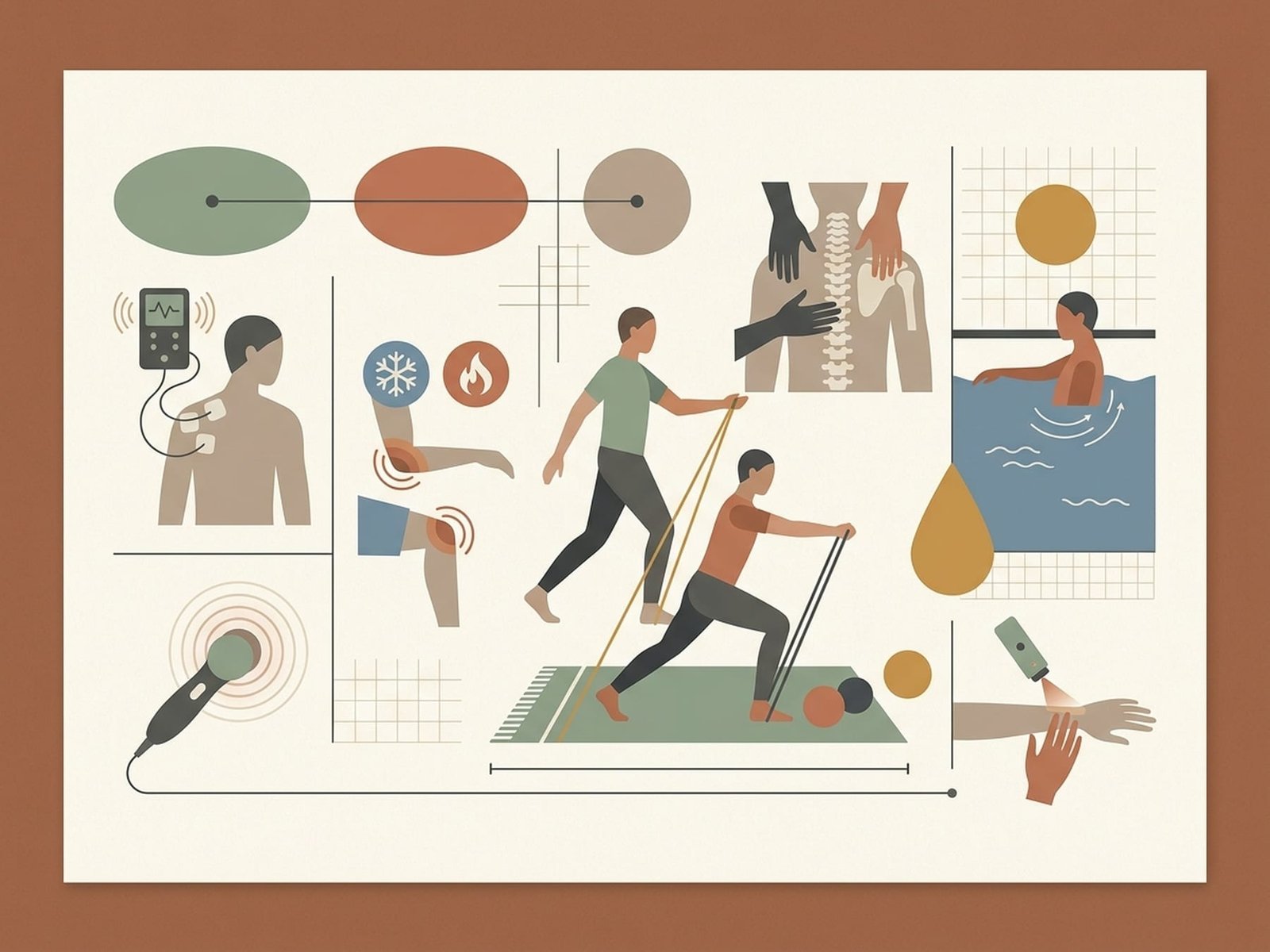
Treatment Categories at a Glance
Manual Therapy
Hands-on approaches that reduce tenderness, guarding, and movement restriction in selected tissues.
Needling & Procedures
Clinician-directed interventions used more selectively when conservative treatment is not enough.
Movement & Exercise
Stretching, strengthening, and movement retraining that support longer-term recovery and prevention.
Lifestyle & Mind-Body Care
Sleep, stress, ergonomics, and coping strategies that reduce the factors keeping pain active.
Key Treatment Principles
- 1Start with the least invasive effective option before escalating
- 2Combine approaches when they clearly complement each other
- 3Consistency usually matters more than treatment intensity
- 4Address perpetuating factors alongside symptom relief
- 5Match the treatment plan to the actual pain pattern and stage of recovery