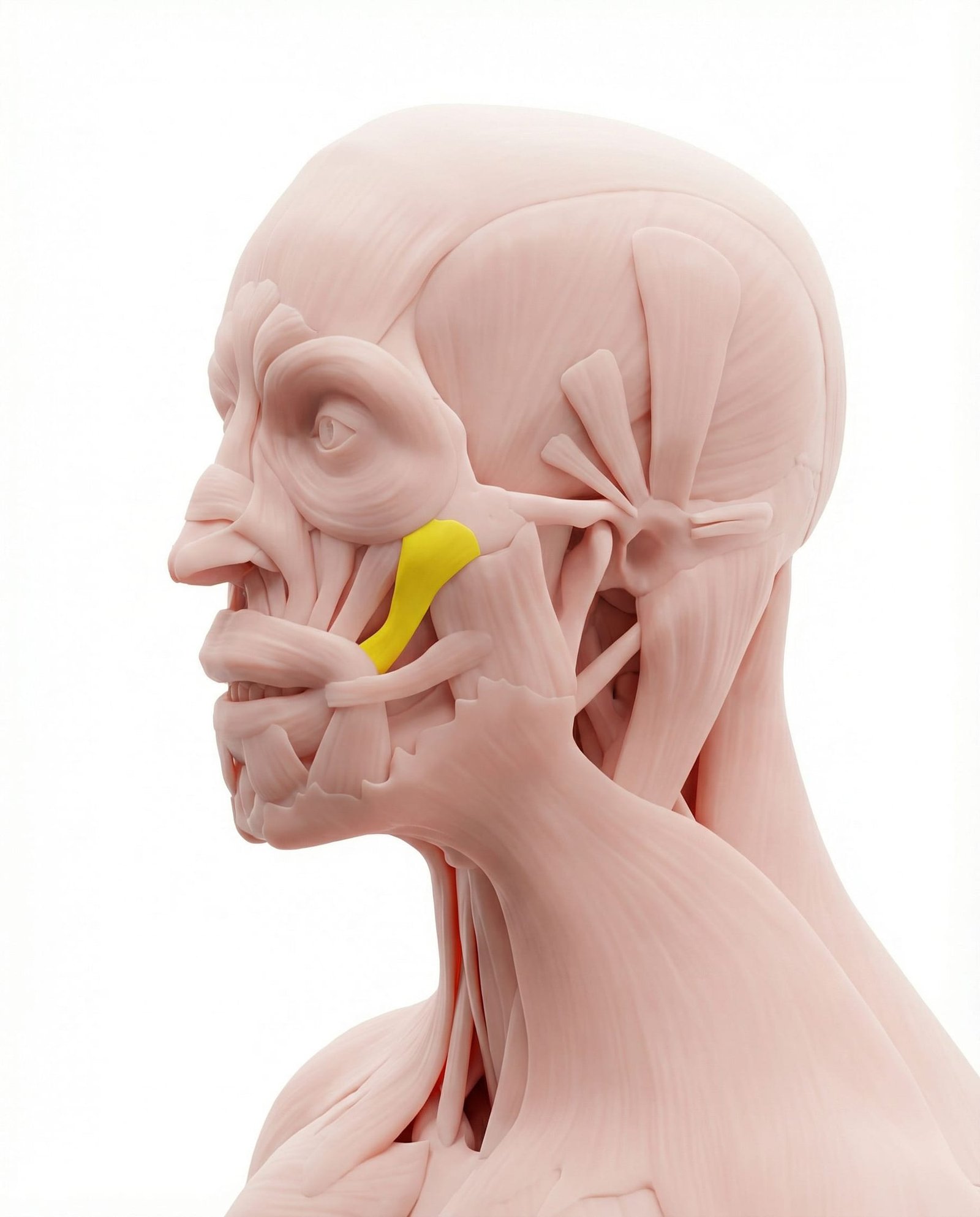
TrP 1
TrP1
Location. Cheek area
Pain referral. Cheek, side of face
- Cheek
- Side of face
- Near mouth
Cheek and mid-face aching from zygomaticus trigger points in facial expression muscles
Location. Cheek area
Pain referral. Cheek, side of face
Location. Near nasolabial fold insertion
Pain referral. Nasolabial fold and mid-face
Facial pain. Cheek and mid-face aching from zygomaticus trigger points in facial expression muscles
Cheek discomfort. Localized malar region tenderness from trigger point taut bands in cheek musculature
Pain when smiling. Smiling contracts zygomaticus directly loading trigger point fibers during facial expression
Mid-face aching. Zygomaticus trigger points near the nasolabial fold create diffuse aching across the mid-face region
Pain along nasolabial fold. Taut bands at the insertion create localized tenderness and aching along the smile line crease
Discomfort when smiling. Smiling contracts the zygomaticus against trigger point resistance creating pain at the nasolabial fold
Upper lip stiffness on one side. Trigger point-mediated zygomaticus dysfunction creates perceived unilateral upper lip stiffness
Sensation of facial heaviness. Sustained trigger point referral creates a dull heaviness sensation across the ipsilateral mid-face
Excessive facial expressions. Sustained or repetitive smiling and laughing overloads zygomaticus facial expression muscles
Stress. Emotional tension causes involuntary facial muscle bracing creating sustained cheek muscle contraction
Teeth grinding. Nocturnal bruxism creates jaw tension that spreads to adjacent facial expression muscles
Facial trauma. Direct impact to cheek area damages zygomaticus muscle fibers initiating trigger point formation
Sustained or forced smiling (service industry). Prolonged obligatory smiling sustains zygomaticus contraction creating occupational trigger points
Playing brass or woodwind instruments. Embouchure demands sustained zygomaticus activation for cheek control during instrument playing
Dental appliances pressing on cheek. External compression from dental devices irritates zygomaticus fibers near the nasolabial fold insertion
Facial nerve irritation. Facial nerve dysfunction can create abnormal zygomaticus activation patterns and secondary trigger points
Cold wind exposure to face. Cold air triggers reflexive facial muscle contraction activating latent zygomaticus trigger points
Using your index and middle fingertips, apply gentle circular pressure along the cheekbone from just beside the nose outward toward the ear. When you find a tender spot, hold steady pressure for 15-20 seconds until the tenderness begins to ease. Keep your jaw relaxed and mouth slightly open during the massage.
Close your lips gently and let your teeth separate so your jaw hangs loose. Place the tip of your tongue lightly on the roof of your mouth behind your front teeth. Breathe slowly through your nose and consciously relax your cheeks, jaw, and forehead. Hold this relaxed position for 1-2 minutes, checking that no facial muscles are clenching.
Open your mouth wide and smile as broadly as you can, stretching the cheek muscles fully. Hold the exaggerated smile for 5 seconds, then let your face go completely slack with your mouth slightly open. Repeat the cycle, alternating between maximum stretch and full relaxation. Follow with gentle side-to-side jaw movements.
Soak a washcloth in comfortably warm water (not hot) and wring it out. Drape it over the affected cheek and hold it in place for 10-15 minutes. The moist heat relaxes the zygomaticus muscle fibers and increases local blood flow. You can reheat the cloth as needed. Do this while seated in a comfortable position with your jaw relaxed.
Set periodic reminders throughout the day to perform a facial tension check. When the reminder sounds, scan your face from forehead to chin and consciously release any tightening you notice. Practice diaphragmatic breathing for 5-10 slow breaths while letting your entire face go soft. Consider keeping a stress journal to identify situations that trigger facial bracing.
If cheekbone pain persists beyond 2-3 weeks of self-care, or if you experience jaw clicking, locking, or ear symptoms, consult a dentist specializing in TMJ disorders or an orofacial pain specialist. They can evaluate for TMJ dysfunction, trigeminal nerve involvement, or sinus pathology through clinical examination and imaging. Targeted intraoral massage and dry needling can be effective for persistent zygomaticus trigger points.