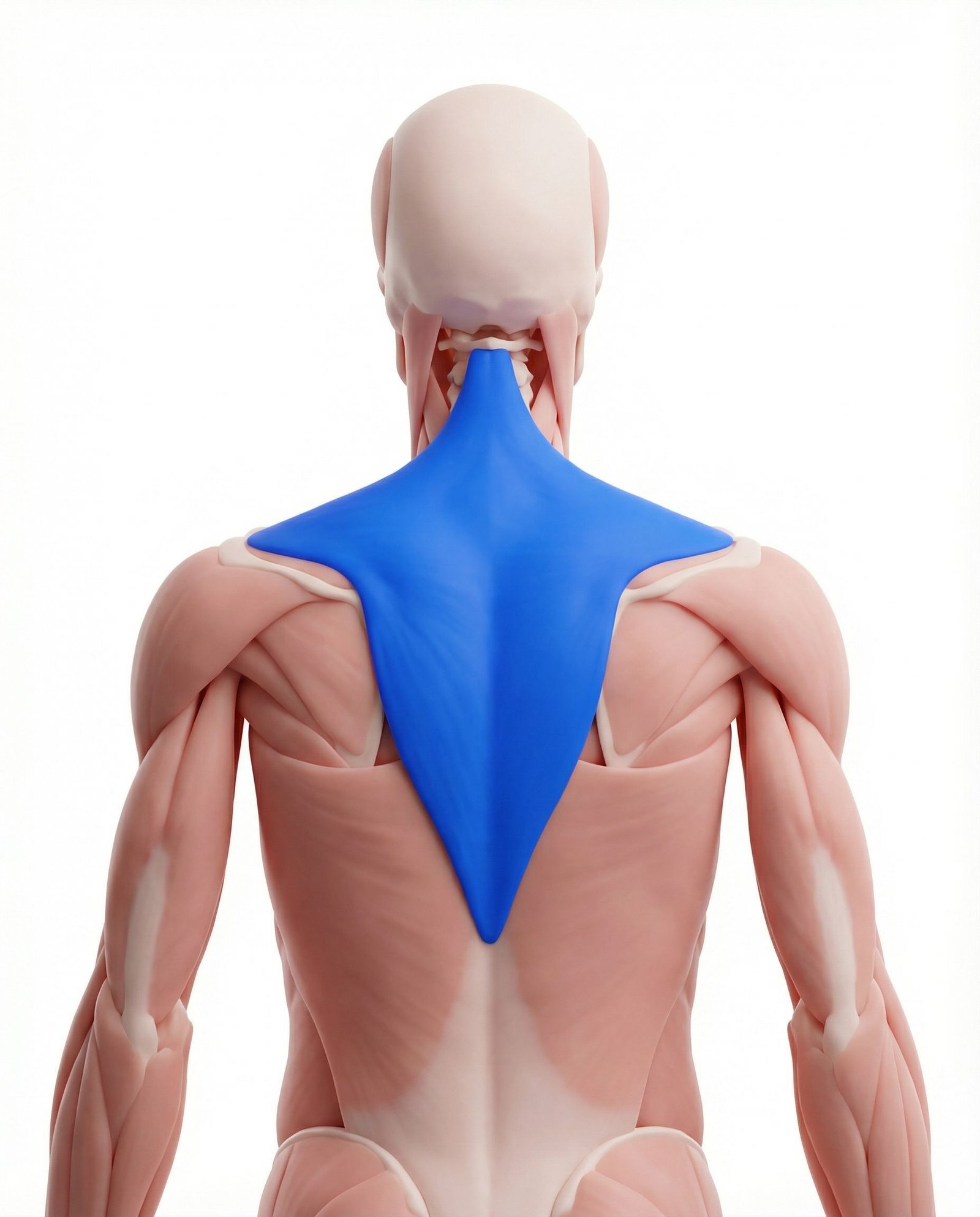
TrP 1
TrP1 (Upper Fibers)
Location. Neck to shoulder, upper back
Pain referral. Neck, shoulder, side of head
- Back of head
- Side of head
- Temple
- Jaw
- Neck
- Shoulder
- Back of eye
Lateral cervical aching from taut band tension in upper trapezius muscle fibers
Location. Neck to shoulder, upper back
Pain referral. Neck, shoulder, side of head
Location. Across upper back, between shoulders
Pain referral. Upper back, between shoulder blades
Location. Lower upper back, T-spine to scapula
Pain referral. Upper back, base of neck
Location. Between spine and medial scapular border at upper thoracic level
Pain referral. Between the shoulder blades and upper back
Location. Shoulder-neck junction, upper trapezius where it crosses the shoulder
Pain referral. Top of shoulder and angle of neck
Location. Mid-fiber of upper trapezius, lateral to C7 spinous process
Pain referral. Mastoid process, temporal region, behind the ear
Location. Near acromion insertion of upper trapezius
Pain referral. Acromion process and lateral deltoid
Location. Mid-belly of upper trapezius near levator scapulae overlap zone
Pain referral. Medial scapular border with burning quality
Location. Fibers near medial border of scapula
Pain referral. Burning superficial pain near spine between scapulae
Location. Lateral fibers near acromion
Pain referral. Supraspinatus region and top of shoulder
Location. Near inferior angle of scapula
Pain referral. Upper cervical paraspinals and mastoid area
Location. Mid-lower trapezius fibers near T12
Pain referral. Mid-scapular region with burning quality
Neck pain. Lateral cervical aching from taut band tension in upper trapezius muscle fibers
Tension headache. Band-like head pain referred from upper trapezius trigger point to temporal region
Shoulder pain. Deep ache at the angle of neck and shoulder from sustained muscle guarding
Limited neck movement. Restricted cervical rotation and lateral flexion from protective muscle splinting
Pain behind eye. Retroorbital ache referred from upper trapezius along the occipital nerve pathway
Upper back pain. Interscapular aching from sustained eccentric loading in protracted shoulder postures
Shoulder blade pain. Medial scapular border tenderness from taut bands in middle trapezius fibers
Postural ache. Fatigue-related thoracic discomfort developing progressively during prolonged desk work
Neck base pain. Cervicothoracic junction discomfort referred upward from lower trapezius taut bands
Scapular pain. Inferior scapular angle aching from lower trapezius attachment site trigger points
Burning pain between shoulder blades. Interscapular burning from eccentrically overloaded middle trapezius fighting protracted shoulder posture
Postural ache in upper back. Fatigue-like upper thoracic discomfort developing progressively through sustained desk work hours
Scapular border pain. Medial scapular margin aching from middle trapezius trigger points along its scapular attachment
Pain with prolonged sitting. Progressive upper back discomfort during extended sitting from sustained middle trapezius eccentric load
Difficulty maintaining upright posture. Postural fatigue from weakened middle trapezius unable to sustain scapular retraction against gravity
Neck and shoulder pain. Cervicohumeral junction aching from upper trapezius trigger points at the shoulder-neck angle
Jaw tightness. Referred mandibular tension from upper trapezius trigger points radiating to the jaw angle
Difficulty turning head. Restricted cervical rotation from taut upper trapezius bands limiting contralateral head turning
Shoulder elevation and tension. Chronic shoulder hiking from upper trapezius hypertonicity maintaining elevated scapular position
Temporal headache. Referred pain from upper trapezius TrP2 ascends to temporal region mimicking tension headache
Pain behind the ear. Trigger point refers posteriorly along occipital ridge to retroauricular mastoid region
Mastoid tenderness. Referred tenderness at mastoid process from upper trapezius mimicking mastoiditis
Neck stiffness on affected side. Taut band restricts ipsilateral cervical lateral flexion and rotation range
Difficulty tilting head. Shortened upper trapezius fibers resist contralateral head tilting creating motion restriction
Lateral shoulder pain. Acromion insertion trigger point refers aching to lateral shoulder and deltoid region
Shoulder heaviness. Fatigue in upper trapezius creates sensation of heavy weighted shoulder girdle
Aching at acromion. Localized tenderness at upper trapezius acromion insertion from periosteal irritation
Difficulty reaching overhead. Upper trapezius dysfunction impairs scapular upward rotation needed for overhead reaching
Shoulder fatigue with arm use. Weakened scapular elevation from trigger point causes rapid arm use fatigue
Burning pain along medial scapula. Upper trapezius TrP4 refers burning dysesthetic pain to medial scapular border tissues
Upper back tension. Sustained trapezius hypertonicity creates persistent upper thoracic muscular tension
Interscapular aching. Referred aching between shoulder blades from upper trapezius overlap zone trigger point
Postural fatigue. Chronic upper trapezius trigger point reduces endurance for maintaining upright posture
Shoulder blade soreness. Scapular border tenderness from referred trigger point tension in overlapping muscle fibers
Superficial aching near spine. Paravertebral superficial pain from middle trapezius fibers near medial scapular border
Top of shoulder aching. Lateral middle trapezius trigger point refers to acromion and shoulder top mimicking rotator cuff pathology
Pain mimicking supraspinatus tendinitis. Supraspinous fossa referral from lateral middle trapezius creates false impression of supraspinatus pathology
Shoulder fatigue with arm elevation. Middle trapezius dysfunction impairs scapular retraction creating premature arm elevation fatigue
Tenderness at acromion. Referred tenderness at acromion from lateral middle trapezius trigger point activation
Difficulty with overhead activities. Impaired scapular control from middle trapezius trigger point restricts efficient overhead movement
Neck stiffness near base of skull. Lower trapezius trigger point refers pain upward to cervical paraspinals through fascial chain connections
Pain at mastoid process. Surprising distant upward referral from lower trapezius to mastoid region via kinetic chain
Upper neck ache with unexpected source. Cervical pain originating from lower trapezius trigger point at inferior scapular angle
Headache at base of skull. Occipitocervical junction referred pain from lower trapezius through ascending myofascial connections
Persistent upper cervical tension. Chronic lower trapezius dysfunction creates compensatory upper cervical muscle guarding and tension
Burning mid-back pain. Lower trapezius TrP3 produces burning dysesthetic pain in mid-thoracic region near scapular level
Scapular border aching. Referred aching along medial scapular border from lower trapezius mid-fiber trigger point
Postural fatigue in mid-thorax. Chronic trigger point reduces lower trapezius endurance causing mid-thoracic postural breakdown
Pain with deep breathing. Thoracic expansion during deep inspiration moves scapula stressing lower trapezius trigger point
Difficulty sitting upright for long periods. Lower trapezius weakness from trigger point impairs sustained erect thoracic posture maintenance
Forward head posture. Anterior head position increases upper trapezius load to support head weight
Stress. Emotional tension causes habitual shoulder elevation and sustained trapezius contraction
Holding phone between ear and shoulder. Sustained lateral flexion and elevation overloads upper trapezius unilaterally
Heavy bag on one shoulder. Asymmetric load forces sustained upper trapezius contraction to prevent strap slippage
Computer work. Prolonged arms-forward desk posture sustains upper trapezius shoulder elevation guarding
Driving. Arms-up steering position with tension maintains chronic upper trapezius contraction
Cold drafts. Cold exposure triggers protective shoulder shrugging and sustained trapezius activation
Rounded shoulders. Chronic scapular protraction eccentrically overloads middle trapezius resisting forward pull
Weak upper back muscles. Insufficient scapular retractor strength increases middle trapezius compensatory workload
Poor posture. Thoracic kyphosis places middle trapezius under constant eccentric strain resisting protraction
Weak lower traps. Insufficient scapular depression strength increases demand on remaining lower trap fibers
Overhead activities. Prolonged arm elevation requires sustained lower trapezius scapular upward rotation control
Swimming. Repetitive overhead strokes demand continuous lower trapezius activation for scapular control
Prolonged computer work. Sustained forward reach position eccentrically overloads middle trapezius holding scapulae retracted
Poor posture (forward head, rounded shoulders). Kyphotic posture with protraction creates constant eccentric middle trapezius loading throughout the day
Carrying heavy backpack. Shoulder strap weight pulls scapulae into protraction eccentrically overloading middle trapezius fibers
Driving for extended periods. Arms-forward steering position maintains middle trapezius in sustained lengthened contraction state
Stress and tension. Emotional stress creates reflexive shoulder elevation and scapular retraction muscle guarding patterns
Weak scapular stabilizers. Insufficient scapular retractor strength forces middle trapezius to compensate beyond its endurance
Emotional stress. Psychological tension manifests as reflexive upper trapezius contraction and shoulder elevation guarding
Phone held between ear and shoulder. Sustained lateral cervical flexion with shoulder elevation maximally shortens upper trapezius unilaterally
Computer work with poor ergonomics. Elevated arm position and forward head posture chronically overload upper trapezius during desk work
Whiplash. Rapid cervical acceleration-deceleration traumatically overloads upper trapezius muscle fibers acutely
Cervical spine stiffness. Restricted cervical mobility forces upper trapezius to compensate with increased muscular effort
Stress and anxiety. Psychological tension drives habitual shoulder elevation via sympathetic upper trapezius activation
Phone cradling between ear and shoulder. Sustained unilateral shoulder elevation to hold phone shortens upper trapezius fibers
Sleeping on high pillow. Excessive lateral cervical flexion during sleep shortens upper trapezius in sustained position
Prolonged computer use. Static seated posture with forward head creates sustained upper trapezius isometric contraction
Carrying heavy bags on shoulder. Direct compression of upper trapezius under bag strap creates sustained ischemic loading
Overhead arm work. Prolonged scapular elevation demands sustained upper trapezius contraction near acromion insertion
Side-sleeping on affected shoulder. Lateral compression of acromion insertion area during sleep maintains sustained trigger point pressure
Repetitive shoulder elevation. Repeated shrugging movements fatigue upper trapezius fibers near acromion attachment
Keyboard use with elevated shoulders. Habitual shoulder hiking during typing sustains upper trapezius in shortened contracted position
Driving with arms raised on steering wheel. Prolonged shoulder elevation holding steering wheel fatigues upper trapezius insertion fibers
Rounded shoulder posture. Protracted scapulae stretch upper trapezius fibers creating tension at levator scapulae overlap zone
Prolonged desk work. Static seated posture sustains isometric upper trapezius load at scapular stabilization zone
Carrying heavy backpacks. Bilateral shoulder loading compresses upper trapezius against scapula creating ischemic trigger points
Emotional stress causing shoulder elevation. Stress-driven shoulder hiking chronically activates upper trapezius in overlap zone region
Cold exposure. Cold-induced shivering and protective posturing sustains upper trapezius in contracted state
Prolonged slouching at desk. Chronic slouching eccentrically overloads middle trapezius as scapulae protract forward
Weakness of scapular retractors. Insufficient retractor strength forces middle trapezius to work beyond capacity during daily activities
Excessive computer use. Sustained forward-reaching arm position during computing overloads middle trapezius eccentrically
Carrying heavy shoulder bags. Shoulder bag strap compresses lateral middle trapezius creating localized ischemic trigger points
Prolonged arm elevation. Sustained arm elevation demands continuous lateral middle trapezius scapular stabilization
Repetitive overhead work. Repeated overhead tasks fatigue lateral middle trapezius fibers near acromial region
Poor scapular mechanics. Scapular dyskinesis alters lateral middle trapezius loading patterns creating trigger points
Sleeping on one side consistently. Habitual side sleeping compresses lateral middle trapezius against acromion creating ischemia
Backpack with one strap. Single-strap backpack asymmetrically loads lateral middle trapezius on loaded side
Prolonged slouching posture. Chronic thoracic kyphosis eccentrically overloads lower trapezius at inferior scapular angle
Weak lower trapezius. Insufficient lower trapezius strength creates compensatory overwork during scapular depression demands
Scapular dyskinesis. Abnormal scapular movement patterns overload lower trapezius as it attempts to control motion
Rounded upper back (kyphosis). Thoracic kyphosis places lower trapezius in chronically lengthened position creating eccentric overload
Chronic forward head posture. Forward head creates compensatory thoracic flexion overloading lower trapezius at scapular insertion
Chronic poor posture. Habitual thoracic flexion posture eccentrically overloads mid-lower trapezius fibers chronically
Heavy rowing exercises with poor form. Improper rowing technique overloads mid-lower trapezius with excessive scapular depression force
Overuse in pulling activities. Repeated pulling demands cumulative lower trapezius loading exceeding recovery between sessions
Prolonged sitting without back support. Seated posture without thoracic support increases mid-lower trapezius demand for postural control
Thoracic kyphosis. Increased thoracic curve places mid-lower trapezius in chronically lengthened overloaded position
Stand with your back against a wall and place a tennis ball between the wall and your upper trapezius (the fleshy area between your neck and shoulder). Lean into the ball with comfortable pressure and slowly roll it around the muscle by bending and straightening your knees. When you find a tender spot, hold sustained pressure for 30-60 seconds until you feel a release.
Drape a warm, damp towel or a microwaveable heat wrap across both shoulders and the back of the neck. The heat should feel comfortably warm, not hot. Sit in a relaxed position with shoulders dropped while applying. For best results, combine with gentle breathing exercises.
Sit upright in a chair. Tilt your head so your right ear moves toward your right shoulder. Place your right hand gently on the left side of your head and apply light overpressure — just the weight of your hand, do not pull. You should feel a stretch along the left side of your neck. Hold for 30 seconds, then switch sides. Keep your opposite shoulder down by gripping the chair seat.
Sit or stand with good posture. Without tilting your head up or down, draw your chin straight back as if making a double chin. Hold for 5 seconds, then relax. Imagine a string pulling the back of your head upward and back. You should feel a gentle stretch at the base of the skull and slight engagement of the deep neck flexors.
Raise both shoulders up toward your ears as high as they will go. Hold the shrug for 5 seconds, squeezing tightly. Then let the shoulders drop completely — do not lower them slowly, simply let gravity pull them down. Repeat 10 times. The sudden release helps reset the muscle tone in the upper trapezius.
Position your monitor so the top of the screen is at eye level, about an arm's length away. Keep your keyboard and mouse close to your body so your elbows remain at 90 degrees and your shoulders stay relaxed. Use a chair with armrests to support your forearms. Take a 30-second movement break every 30 minutes — stand, roll your shoulders, and do 3 chin tucks.
If neck pain, headaches, or shoulder tension persist beyond 3-4 weeks of consistent self-care, consult a physiatrist or pain specialist experienced with myofascial pain. They can perform targeted trigger point injections, assess for cervical spine involvement, and develop a comprehensive treatment plan. Mention that the pain starts in the neck-shoulder area and radiates to the head.
Lie on your back with a foam roller across your mid-back. Cross your arms over your chest or clasp behind your head. Roll slowly up and down between the shoulder blades by bending and straightening your knees. Pause on tender areas for 20-30 seconds.
Apply a warm, damp towel or heat pack across the mid-back between the shoulder blades. Sit back in a supportive chair or lie on your back with the heat pack underneath. Allow the warmth to relax the middle trapezius fibers for the full duration.
Sit or stand with good posture. Squeeze your shoulder blades together as if gripping a pencil between them. Hold for 5 seconds, then slowly release. Focus on pulling the shoulder blades together and down, not shrugging upward.
Lie face down on the floor or a bench with arms hanging toward the ground. Raise both arms out to the sides into a T position, squeezing the shoulder blades together. Hold for 3-5 seconds at the top, then lower slowly. Keep thumbs pointing toward the ceiling.
Take a movement break every 30 minutes during desk work. Stand, roll your shoulders back, and do 5 scapular retraction squeezes. Position your monitor at eye level and close enough that you do not need to lean forward. Use a chair with mid-back support.
If mid-back pain persists beyond 3-4 weeks despite consistent exercise and postural changes, consult a physiatrist. They can assess for thoracic spine stiffness, scapular dyskinesis, or other contributing factors and provide targeted trigger point treatment.
Lie on your back with a foam roller positioned horizontally across your mid-back at about the level of your lower shoulder blades. Support your head with your hands and gently roll up and down over the tender area. Pause on any sore spots for 20 to 30 seconds, breathing deeply to allow the muscles to release.
Apply a moist heat pack or a warm damp towel to the area between and below your shoulder blades. Make sure the heat is comfortably warm but not hot enough to burn. Lie on your back or recline in a chair and let the heat soak in while you relax.
Lie face down on the floor or a bench with your arms hanging down. Slowly raise both arms overhead in a Y position with your thumbs pointing toward the ceiling. Focus on squeezing your lower shoulder blades down and together as you lift. Lower slowly and repeat.
Sit or stand with good posture. Actively pull your shoulders down away from your ears, feeling the lower trapezius muscles engage between your shoulder blades. Hold the depressed position for 5 seconds, then relax. You can also perform this while holding light dumbbells at your sides for added resistance.
Incorporate lower trapezius strengthening into your regular workout routine to counter upper trapezius dominance. Set reminders to check your posture throughout the day and avoid prolonged slumping or rounded-shoulder positions. Use an ergonomic chair or lumbar support to help maintain thoracic extension while seated.
If your mid-back pain persists for more than 4 to 6 weeks despite consistent self-care, or if pain worsens or spreads, schedule an appointment with a physical therapist or musculoskeletal specialist. They can perform a detailed assessment of your thoracic spine, scapular mechanics, and postural alignment to create a targeted rehabilitation plan.
Stand with your back against a wall and place a tennis ball between the wall and the tender area between your spine and shoulder blade. Lean into the ball with comfortable pressure. Slowly move your body up, down, and side to side to roll the ball across the middle trapezius. When you find a particularly sore spot, hold steady pressure for 60-90 seconds until you feel the tension release.
Stand in a doorway with your forearms on the door frame, elbows at shoulder height and bent to 90 degrees. Step one foot forward through the doorway until you feel a stretch across the chest. While holding this position, actively squeeze your shoulder blades together and hold for 10 seconds. Relax the squeeze but maintain the stretch. Repeat the squeeze 5 times within the stretch.
Lie face down on the floor or a bench with arms hanging down. Raise both arms overhead in a Y-shape with thumbs pointed toward the ceiling. Squeeze the shoulder blades together at the top and hold for 3 seconds before slowly lowering. Focus on the muscle contraction between the shoulder blades rather than lifting the arms high. Start without weight and progress to 1-2 pound dumbbells.
Sit on the floor with legs extended and loop a resistance band around your feet. Hold the ends of the band with both hands. Pull the band toward your lower chest, driving the elbows back and squeezing the shoulder blades together at the end of each row. Hold the retracted position for 2 seconds before slowly releasing. Keep the trunk upright and avoid leaning backward.
Position your monitor at eye level and arm's length distance. Keep the keyboard and mouse close to your body to minimize forward reach. Set a timer for every 30 minutes to stand, roll your shoulders back 10 times, and perform 5 scapular retractions. Consider a standing desk for part of the day. When reading on a phone, hold it at eye level rather than looking down.
If interscapular burning persists despite 4 weeks of ergonomic changes and strengthening, consult a physiotherapist or physiatrist. They can evaluate thoracic spine mobility, costovertebral joint function, and cervical contributions (C5-C6 radiculopathy can mimic middle trapezius trigger point pain). Targeted dry needling or manual trigger point release of the middle trapezius combined with a structured postural rehabilitation program is highly effective.
Sit upright in a chair and reach down with the affected side hand, gripping the edge of the seat. Gently tilt your head away from the affected side, bringing the opposite ear toward the opposite shoulder. Use your free hand to apply very light overpressure on the side of the head to deepen the stretch slightly. You should feel a comfortable pull along the top of the shoulder and into the side of the neck. Hold for 20-30 seconds while breathing deeply. Return to center and repeat 3-4 times. Perform on both sides.
Sit or stand with your arms relaxed at your sides. Deliberately shrug both shoulders up toward your ears as high as possible and hold the maximum contraction for 5 seconds. Then suddenly and completely let the shoulders drop, allowing them to fall under their own weight. Focus on the sensation of release as the upper trapezius relaxes fully. Repeat 8-10 times. This contract-relax technique exploits post-isometric relaxation to reduce chronic upper trapezius hypertonicity. Finish by consciously checking that your shoulders are resting in a low, relaxed position.
Stand with your back against a wall, arms at your sides with palms facing forward. Gently draw your shoulder blades down and back toward your back pockets without arching the lower back. Hold this scapular depression for 8-10 seconds, then release. You should feel the muscles between and below the shoulder blades engage while the upper trapezius relaxes. Perform 12-15 repetitions for 2-3 sets. Progress by performing the exercise with arms raised to 90 degrees against the wall. This strengthens the lower and middle trapezius to counterbalance the overactive upper trapezius.
Lie face down on the floor or on an incline bench with your arms hanging toward the floor, thumbs pointing upward. Slowly raise both arms in a Y position overhead, squeezing the lower trapezius between the shoulder blades. Lift only until the arms are parallel with the torso — do not hyperextend. Hold the top position for 3-5 seconds, then slowly lower. Perform 10-12 repetitions for 2-3 sets. Focus on initiating the movement from the lower scapular muscles rather than the upper trapezius. Use light dumbbells only after mastering the bodyweight version.
Identify and address primary stress sources that contribute to habitual shoulder elevation. Practice diaphragmatic breathing for 5 minutes twice daily — inhale through the nose for 4 seconds, hold for 4 seconds, exhale through the mouth for 6 seconds. Set up your workstation with the keyboard and mouse close to the body to prevent forward reaching, armrests adjusted so the forearms are supported with shoulders relaxed, and the monitor at eye level. Avoid carrying bags on one shoulder — use a backpack with both straps or a cross-body bag. Set hourly reminders to check and consciously lower your shoulders.
If shoulder tension, tension headaches, or jaw tightness persist beyond 3-4 weeks of self-care, consult a physiotherapist or massage therapist experienced in cervicogenic headache and myofascial trigger point management. They can perform targeted upper trapezius release, assess for associated levator scapulae and SCM trigger points, and evaluate cervical joint involvement. Treatment may include deep tissue massage, dry needling of the upper trapezius trigger points, and an integrated neck-shoulder rehabilitation program. TMJ involvement may require co-management with a dentist or orofacial pain specialist.