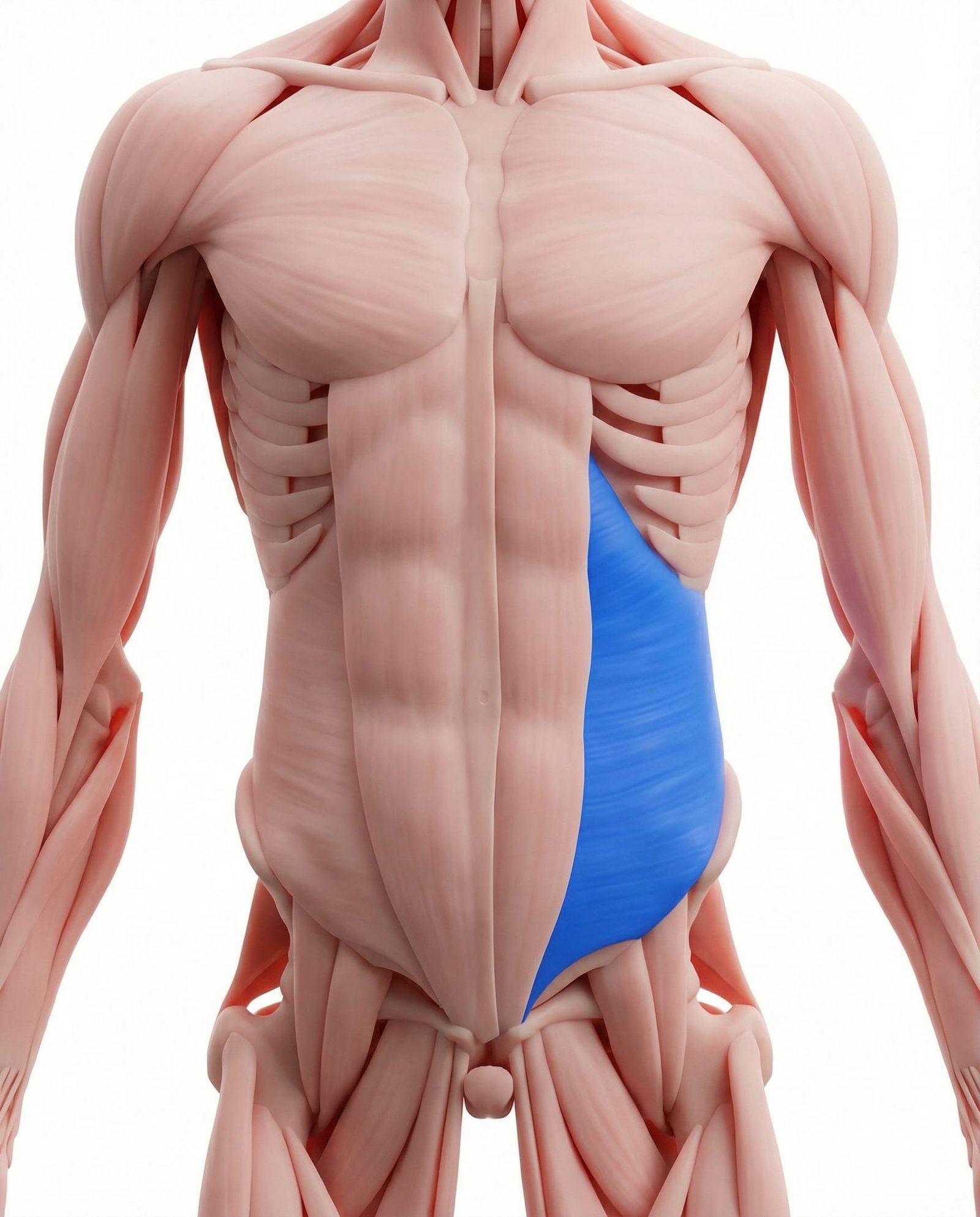
TrP 1
Transversus Abdominis
Location. Deep abdominal wall
Pain referral. Deep abdomen, lower back
- Deep abdomen
- Lower back
- Pelvic area
Visceral-like deep aching in the abdominal wall from transversus trigger point activation
Location. Deep abdominal wall
Pain referral. Deep abdomen, lower back
Deep abdominal pain. Visceral-like deep aching in the abdominal wall from transversus trigger point activation
Lower back pain. Referred lumbar aching from impaired transversus abdominis stabilization of the lumbopelvic region
Core instability. Sensation of trunk weakness and lack of support from inhibited deep core muscle function
Weak core. Deconditioned transversus abdominis fails to provide adequate spinal stabilization under load
Pregnancy. Abdominal wall stretching during pregnancy weakens and lengthens transversus abdominis fibers
Poor posture. Sustained flexed postures inhibit transversus abdominis feed-forward activation patterns chronically
Previous surgery. Abdominal surgical incisions disrupt transversus fibers and alter motor control recruitment patterns
Lie on your back with knees bent and feet flat on the floor. Place one hand on your chest and one on your lower abdomen. Breathe in deeply through your nose, directing the breath into your belly so the lower hand rises while the chest hand stays still. As you exhale slowly through pursed lips, gently draw your lower abdomen inward toward your spine without flattening your back or holding your breath. This reactivates the transversus abdominis through its natural coordination with the diaphragm.
Lie on your back with knees bent. Using your fingertips, gently press into the lower abdominal wall about 2 inches inward from the hip bones, where the transversus abdominis lies deepest. Apply slow, sustained pressure at a tolerable level and hold on tender areas for 30-60 seconds. Breathe deeply while maintaining pressure. Work systematically across the lower abdomen from one hip bone to the other, avoiding direct pressure on the midline or any surgical scars.
Lie on your back with arms reaching toward the ceiling and hips and knees bent at 90 degrees. Engage your deep core by gently drawing the lower abdomen inward. Slowly extend your right arm overhead and your left leg toward the floor simultaneously, maintaining a completely stable lower back against the floor. Return to the starting position and repeat with the opposite arm and leg. If your back arches off the floor, reduce the range of motion.
Begin on your forearms and knees in a modified plank position. Focus on drawing your belly button gently toward your spine to activate the transversus abdominis before holding the position. Maintain a neutral spine alignment without sagging or piking the hips. Hold for 10-15 seconds initially, breathing normally throughout. Progress to a full plank on toes once you can hold the modified version for 30 seconds with proper deep core engagement.
Before any lifting task, consciously engage the transversus abdominis by gently drawing the lower belly inward and exhaling as you initiate the lift. Log-roll out of bed by turning onto your side first rather than performing a sit-up motion that bypasses the deep core. When coughing or sneezing, brace your abdomen with your hands to support the weakened transversus. Avoid breath-holding during exertion, which increases intra-abdominal pressure without proper muscular support.
Consult a physiotherapist specializing in core rehabilitation if deep abdominal pain and instability persist beyond 4 weeks of self-care. They can assess for diastasis recti, pelvic floor dysfunction, and impaired motor control patterns that commonly accompany transversus abdominis trigger points. Real-time ultrasound imaging biofeedback can help you visualize and retrain proper transversus contraction, which is particularly valuable after pregnancy or abdominal surgery.