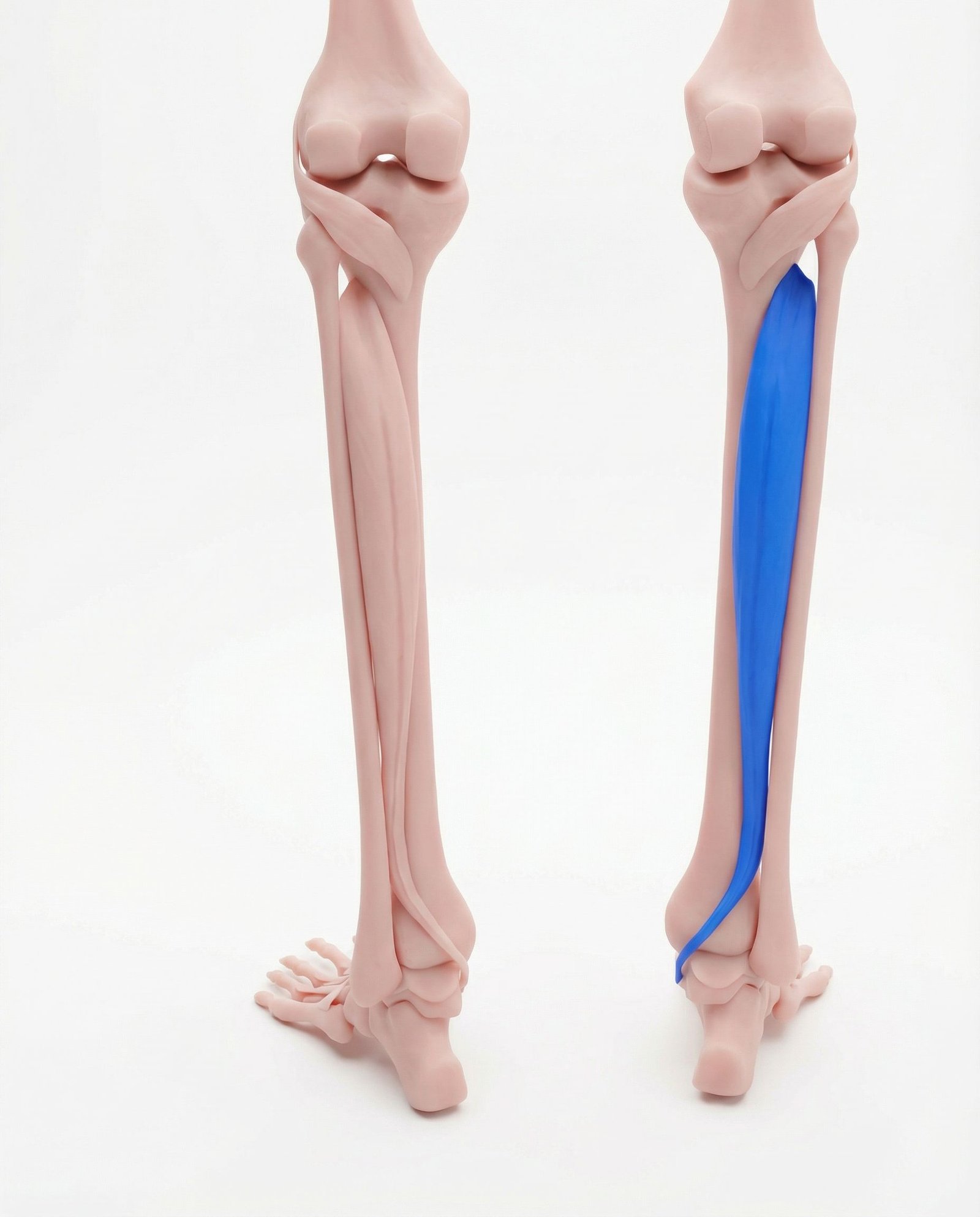
TrP 1
Tibialis Posterior
Location. Deep back of leg, behind tibia
Pain referral. Back of leg, inner ankle, arch of foot
- Posterior leg
- Inner ankle
- Arch of foot
- Calf
Referred pain along medial malleolus from deep posterior compartment trigger points
Location. Deep back of leg, behind tibia
Pain referral. Back of leg, inner ankle, arch of foot
Inner ankle pain. Referred pain along medial malleolus from deep posterior compartment trigger points
Arch pain. Pain in medial longitudinal arch from tibialis posterior tendon referred pain pathway
Posterior leg pain. Deep aching in posterior calf from compromised deep compartment muscle fibers
Flat foot symptoms. Trigger point weakness impairs dynamic arch support causing functional pronation collapse
Pain when walking. Loading during midstance phase aggravates dysfunctional tibialis posterior muscle fibers
Running. Repetitive eccentric loading during pronation control overloads deep posterior compartment
Walking. Cumulative midstance loading demands sustained tibialis posterior contraction during every step
Overpronation. Excessive foot pronation forces tibialis posterior into prolonged eccentric overload each stride
Flat feet. Collapsed medial arch creates chronic mechanical overload on tibialis posterior muscle
Overuse. Exceeding tissue recovery capacity creates persistent metabolic stress in deep compartment fibers
Poor footwear. Lack of medial arch support shifts excessive stabilization demands onto tibialis posterior
Sit with the affected leg crossed over the opposite knee. Use your thumbs to apply deep pressure along the inner edge of the shinbone, working from mid-calf down toward the ankle. Press firmly for 10-15 seconds on each tender spot. Then use a lacrosse ball under the arch of your foot, rolling slowly from heel to ball of foot with moderate pressure.
Stand on one foot on the edge of a step with the heel hanging off. Rise up onto your toes, then at the top of the movement, gently shift your weight slightly toward the inner edge of your foot (inversion) to specifically target the tibialis posterior. Lower slowly over 3-4 seconds. Hold a railing for balance.
Sit in a chair with a small towel flat on the floor. Use your toes to scrunch the towel toward you, then spread it back out. Repeat 10-15 times. Progress to picking up marbles or small objects with your toes and placing them in a cup. These exercises strengthen the intrinsic foot muscles that support the tibialis posterior.
Use semi-rigid orthotic insoles with medial arch support in all shoes to reduce tibialis posterior workload. Avoid going barefoot on hard surfaces. Choose motion-control or stability shoes if you overpronate. When transitioning to new orthotics, wear them for increasing periods (2 hours the first day, adding 1-2 hours daily) to allow adaptation.
Stand facing a wall with the affected foot back and knee slightly bent. Lean forward until you feel a stretch deep in the calf, closer to the ankle than the upper calf. Keep your heel on the ground and your foot pointing straight ahead — do not let the foot roll inward. The bent knee position targets the deeper tibialis posterior.
Consult a podiatrist or sports physiotherapist for a formal gait analysis if arch or inner ankle pain persists despite 4-6 weeks of self-care. They can assess for posterior tibial tendon dysfunction, overpronation patterns, and determine whether custom orthotics or structured rehabilitation is needed.