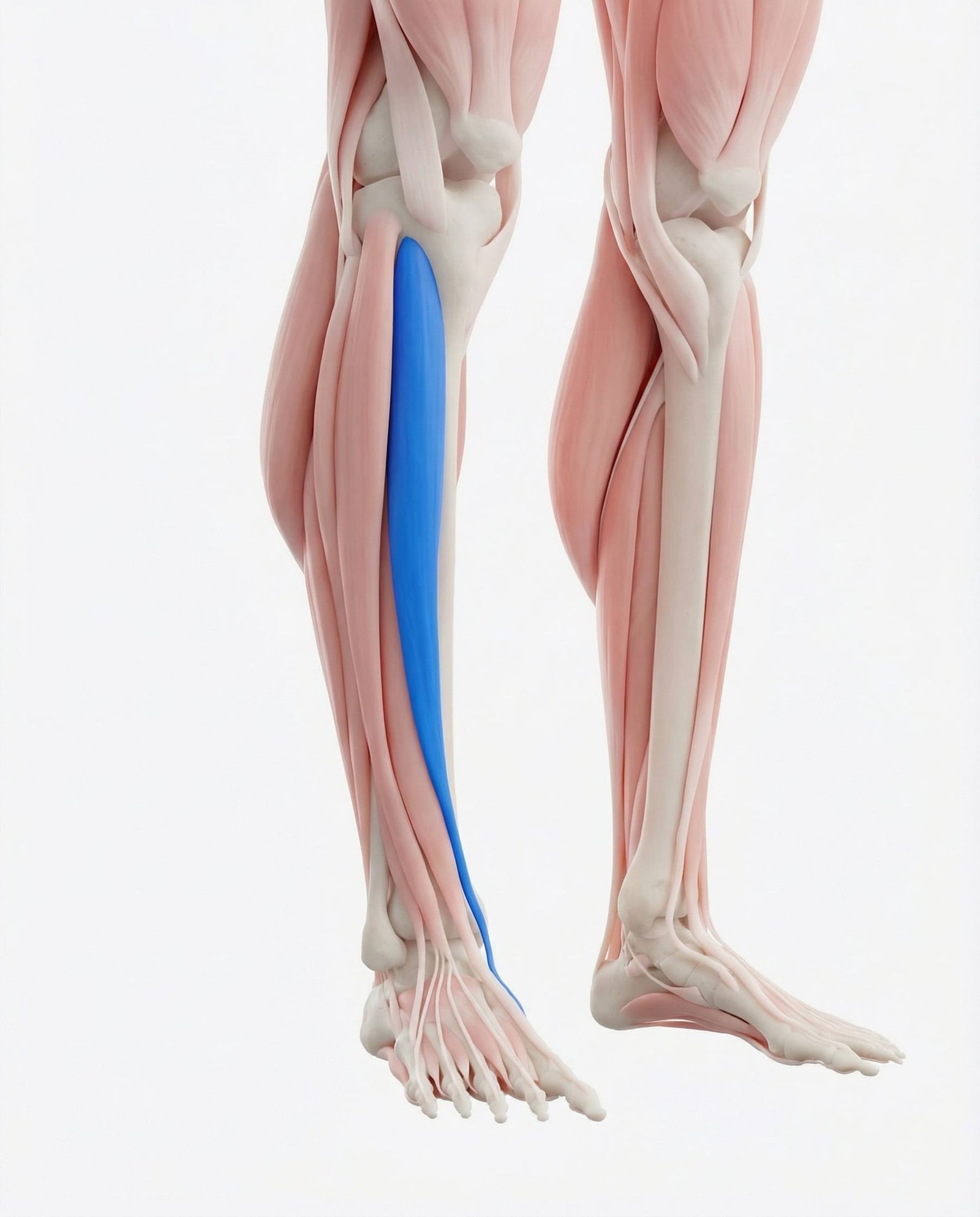
TrP 1
TrP1
Location. Front of shin
Pain referral. Front of shin, ankle, big toe
- Front of shin
- Ankle
- Big toe
- Anterior leg
Aching along anterior tibial compartment from overloaded dorsiflexor muscle fibers
Location. Front of shin
Pain referral. Front of shin, ankle, big toe
Location. Mid-belly of tibialis anterior, proximal shin
Pain referral. Anterior ankle and great toe mimicking gout
Location. Distal tibialis anterior near ankle
Pain referral. Dorsum of foot
Shin pain. Aching along anterior tibial compartment from overloaded dorsiflexor muscle fibers
Ankle pain. Referred pain to anterior ankle joint from tibialis anterior trigger point zone
Big toe pain. Distal referral pattern projecting pain to dorsal hallux along extensor pathway
Foot drop sensation. Perceived weakness in dorsiflexion from trigger point inhibition of tibialis anterior function
Pain when walking. Eccentric loading during heel strike aggravates compromised anterior compartment fibers
Great toe pain mimicking gout. Tibialis anterior trigger point refers to first MTP joint closely mimicking gouty arthritis presentation
Anterior ankle ache. Referred pain from mid-belly trigger point to anterior ankle crease and dorsal talocrural region
Pain with walking. Heel strike and swing phase dorsiflexion activate tibialis anterior loading trigger point each step
Foot drop tendency. Tibialis anterior weakness from trigger point inhibition reduces dorsiflexion during swing phase
Big toe stiffness. Referred tension to first MTP joint from tibialis anterior trigger point creates toe rigidity sensation
Top of foot pain. Distal tibialis anterior trigger point refers pain to dorsal foot surface along tendon course
Dorsal foot ache. Referred aching across dorsum of foot from distal tibialis anterior trigger point activation
Pain lacing shoes tightly. Tight shoe lacing compresses dorsal foot tissues over irritated tibialis anterior tendon pathway
Discomfort with ankle movement. Ankle dorsiflexion and plantarflexion glide distal tibialis anterior across trigger point
Foot heaviness sensation. Distal trigger point weakness creates subjective foot heaviness from impaired dorsiflexion control
Running. Repetitive dorsiflexion during swing phase creates cumulative strain on anterior compartment
Walking. Sustained eccentric control during heel strike gradually overloads tibialis anterior fibers
Hiking downhill. Prolonged eccentric dorsiflexion control on decline dramatically increases anterior compartment load
Soccer. Repetitive kicking and ball contact creates direct mechanical stress on anterior shin muscles
Shin splints. Periosteal irritation from excessive tibialis anterior traction on tibial attachment sites
Overuse. Training volume exceeds anterior compartment recovery capacity causing persistent fiber dysfunction
Poor footwear. Inadequate support forces compensatory dorsiflexor overactivation during gait cycle phases
Running (especially downhill). Eccentric dorsiflexion during downhill running overloads tibialis anterior braking function
Hiking. Prolonged walking on varied terrain demands sustained tibialis anterior dorsiflexion activity
Shin splint condition. Anterior compartment overload from shin splints creates secondary tibialis anterior trigger points
Tight-fitting shoes. Constrictive footwear compresses dorsal foot restricting tibialis anterior tendon gliding
Walking on icy or slippery surfaces (guarding pattern). Protective dorsiflexion guarding on slippery surfaces sustains tibialis anterior in heightened contraction
Ankle dorsiflexion restriction. Limited ankle mobility increases tibialis anterior effort to achieve functional dorsiflexion range
Tight shoe lacing. Constrictive lacing compresses distal tibialis anterior tendon against underlying structures
Running and jogging. Repetitive dorsiflexion during running gait cyclically loads distal tibialis anterior region
Hiking in stiff boots. Rigid boot restricts ankle mobility increasing distal tibialis anterior tendon friction and stress
Prolonged ankle dorsiflexion. Sustained dorsiflexion maintains distal tibialis anterior in contracted shortened position
Skiing (boot pressure). Ski boot tongue compresses distal tibialis anterior creating sustained localized pressure ischemia
Walking barefoot after wearing shoes. Transition from shoes to barefoot increases distal tibialis anterior demand for foot control
Kneel on a padded surface with the tops of your feet flat on the floor and toes pointing behind you. Slowly sit back onto your heels until you feel a gentle stretch across the front of your shins and ankles. If too intense, place a rolled towel under your ankles for support.
Kneel and place a foam roller under both shins, just below the knee. Support your weight with your hands and slowly roll from just below the knee to above the ankle, pausing on tender spots for 10-15 seconds. You can shift weight to one leg at a time for deeper pressure.
Sit in a chair with feet flat on the floor. Lift your toes and forefoot off the ground while keeping your heels down, then slowly lower back down over 3-4 seconds. Progress by placing a light resistance band over the top of your foot or by standing and performing heel walks for 20-30 steps.
Sit with your leg extended and loop a resistance band around the ball of your foot, anchored to a stable object in front of you. Slowly point your toes away from you against the band resistance over 4 seconds, then quickly pull your toes back up. This strengthens the muscle through its most vulnerable range.
Choose shoes with adequate cushioning and a modest heel-to-toe drop (8-10mm) to reduce dorsiflexion demand. When starting a running or hiking program, increase distance by no more than 10% per week. Limit downhill walking duration initially and use trekking poles on steep descents to reduce anterior compartment load.
Consult a sports medicine physician or physiotherapist if shin pain persists beyond 3-4 weeks of self-care, especially if accompanied by numbness on the top of the foot, visible swelling, or pain that worsens with every activity session. They can differentiate trigger point pain from stress fractures, anterior compartment syndrome, or other conditions requiring specific treatment.