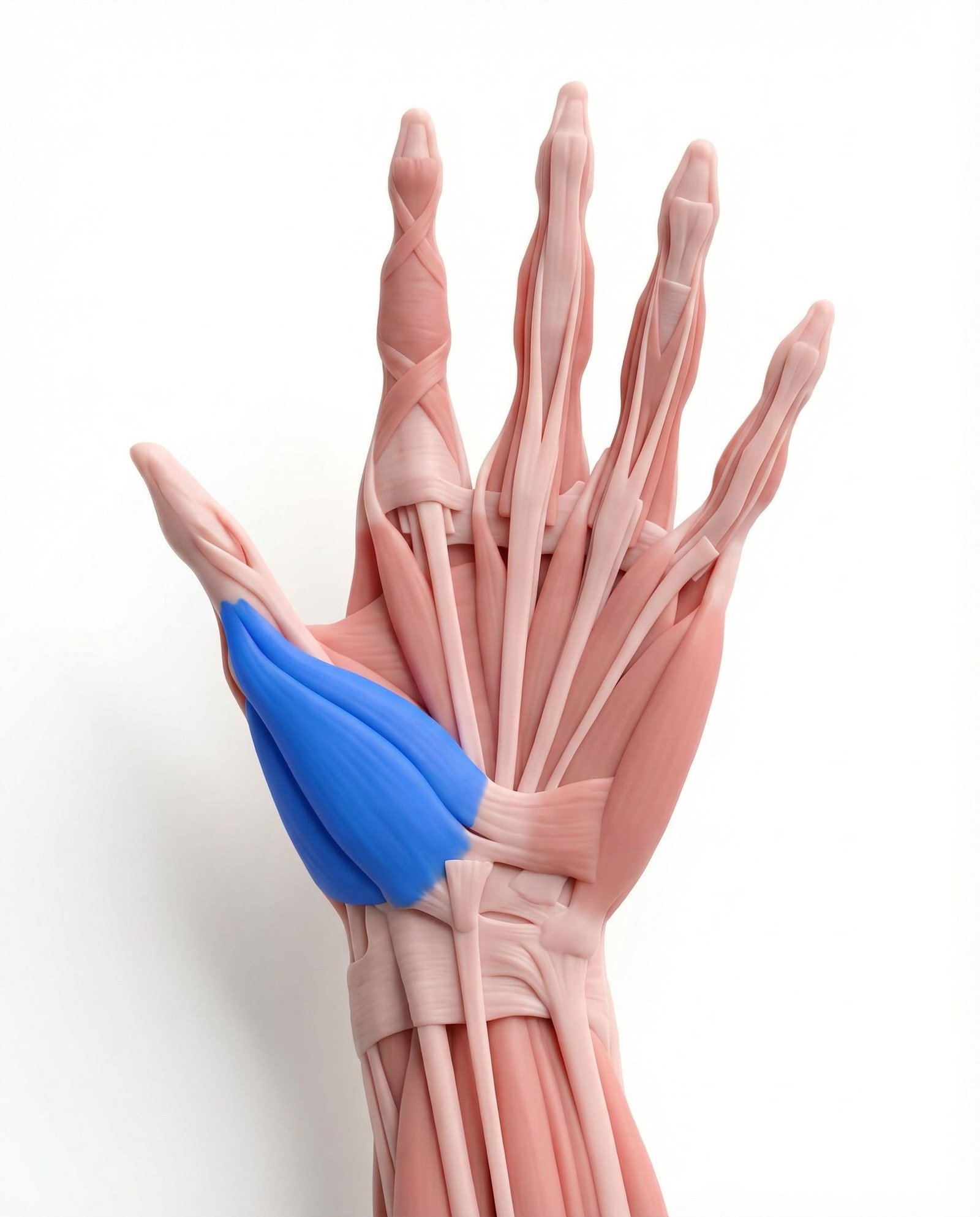
TrP 1
Thenar Eminence Muscles
Location. Base of thumb, palm
Pain referral. Base of thumb, thumb
- Base of thumb
- Thumb
- Thenar area
Aching at the first carpometacarpal joint area from thenar muscle trigger points
Location. Base of thumb, palm
Pain referral. Base of thumb, thumb
Thumb base pain. Aching at the first carpometacarpal joint area from thenar muscle trigger points
Weakness in grip. Reduced pinch and grip strength from pain inhibition of thenar muscle contraction
Difficulty with fine motor tasks. Impaired thumb opposition limiting buttoning, writing, and precision manipulation tasks
Repetitive thumb use. Sustained thumb opposition and pinching movements overload thenar muscles causing fatigue
Texting. Prolonged rapid thumb movements on touchscreens fatigue thenar eminence muscles chronically
Gaming. Sustained controller grip with rapid thumb button pressing overloads thenar muscles
Writing. Prolonged pen grip creates sustained thenar contraction causing ischemia and trigger points
Tool use. Forceful gripping of tools demands sustained thenar activation for thumb stabilization
Playing instruments. Sustained thumb pressure during instrument play chronically overloads thenar eminence muscles
Using the thumb and index finger of your opposite hand, firmly squeeze and massage the fleshy web space between your thumb and index finger. Work in small circular motions over any tender spots for 30-60 seconds, applying steady pressure that produces a satisfying ache without sharp pain.
Gently pull your thumb away from your palm using your opposite hand, stretching the web space open. Hold for 15-20 seconds. Then touch your thumb tip to the base of your little finger and hold for 10 seconds. Alternate between these two positions smoothly.
Using therapeutic putty or a soft stress ball, practice pinching the putty between your thumb and each fingertip in turn. Squeeze and hold each pinch for 5 seconds, then release. Complete 10 repetitions per finger. Start with soft resistance and progress gradually.
Set a timer to take a 2-minute break every 20 minutes during activities that load the thumb, such as texting, gaming, or prolonged tool use. During breaks, gently shake out your hands and perform a quick thumb stretch.
Replace thin or hard tool handles with padded, ergonomic grips that distribute pressure across the whole hand. Use built-up pen grips for writing, cushioned handles on kitchen tools, and ergonomic phone holders to reduce sustained thumb gripping.
Consult a certified hand therapist or occupational therapist for a thorough assessment of your thumb pain. They can perform specific tests to differentiate trigger points from De Quervain's tenosynovitis or basal joint arthritis, and provide a customized splinting and rehabilitation program.