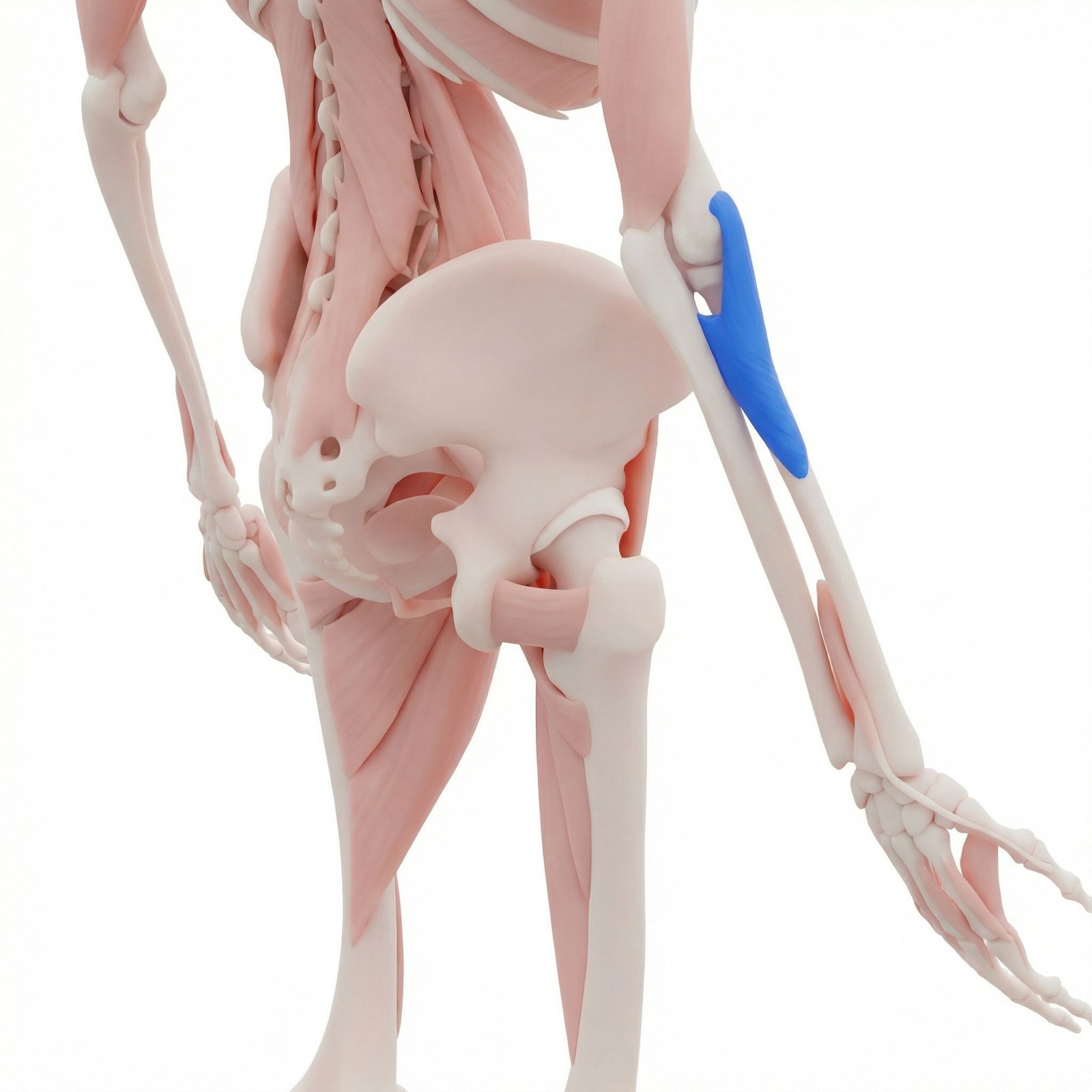
TrP 1
Supinator
Location. Deep outer forearm, near elbow
Pain referral. Outer elbow, back of hand
- Lateral elbow
- Back of hand
- Thumb web area
- Lateral forearm
Deep aching near the lateral epicondyle worsened by forceful supination movements
Location. Deep outer forearm, near elbow
Pain referral. Outer elbow, back of hand
Lateral elbow pain. Deep aching near the lateral epicondyle worsened by forceful supination movements
Pain with supination. Sharp pain during palm-up turning motions from supinator trigger point contraction
Back of hand pain. Referred ache across the dorsum of the hand and thumb web space area
Weakness turning palm up. Reduced supination strength impairing tasks like turning doorknobs or using screwdrivers
Screwdriver use. Repetitive forceful supination during screw driving chronically overloads supinator muscle fibers
Turning doorknobs. Frequent rotational gripping movements create cumulative supinator fatigue and trigger points
Tennis. Forehand and backhand strokes demand repeated supination effort straining the supinator
Using tools. Sustained gripping with rotational force overloads the supinator during manual work
Repetitive supination. Any continuous palm-up turning activity fatigues the supinator causing ischemic trigger points
With your affected arm resting on a table palm-down, use the thumb of your opposite hand to press firmly into the outer forearm muscle just below the elbow crease. Locate tender spots and hold sustained pressure for 20-30 seconds on each one. Work methodically around the outer forearm from the elbow crease to about 3 inches below it.
Wrap ice or a cold gel pack in a thin towel and apply it to the outer elbow and upper forearm. Hold in place while resting the arm in a comfortable position. Do not apply ice directly to the skin.
Extend your affected arm in front of you with the elbow straight. Turn your palm to face downward (pronation). Use your opposite hand to gently press the back of your hand further into pronation until you feel a stretch on the outer forearm near the elbow. Hold at a comfortable stretch without forcing.
Rest your forearm on a table with your wrist hanging over the edge, palm facing down, holding a light weight (1-2 lbs). Use your other hand to help lift the weight up by extending the wrist, then slowly lower it over 5 seconds using only the working forearm. Perform 3 sets of 10 repetitions. Progress weight gradually.
Replace standard tool handles with padded, larger-diameter grips to reduce the force needed for rotation. Use ratcheting screwdrivers and wrenches instead of manual ones. When turning doorknobs, use both hands or install lever-style handles. Avoid sustained gripping and take frequent breaks during manual work to stretch the forearms.
Consult a sports medicine physician or physical therapist if lateral elbow pain persists beyond 4 weeks despite self-care measures. A thorough evaluation can differentiate supinator trigger points from lateral epicondylitis, radial tunnel syndrome, or cervical radiculopathy. Diagnostic imaging or nerve testing may be recommended if symptoms include weakness or numbness.