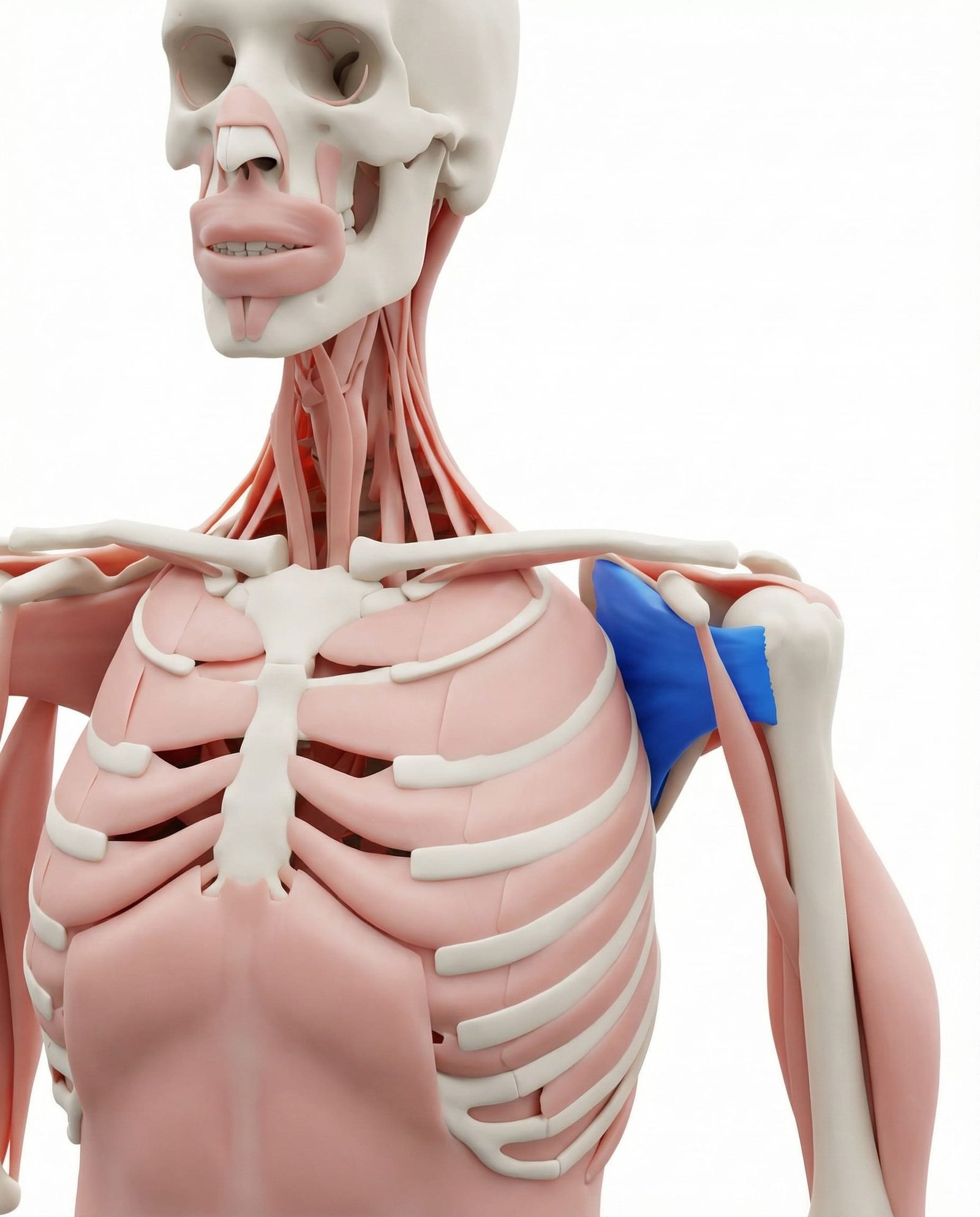
TrP 1
TrP1
Location. Front of shoulder blade (deep)
Pain referral. Back of shoulder, wrist
- Back of shoulder
- Wrist
- Posterior shoulder
Sharp posterior shoulder pain during horizontal adduction and cross-body reaching movements
Location. Front of shoulder blade (deep)
Pain referral. Back of shoulder, wrist
Location. Mid-belly on costal surface of scapula
Pain referral. Posterior wrist (dorsal wrist band pattern)
Location. Near axillary border of scapula at subscapularis margin
Pain referral. Posterior deltoid and down triceps
Pain when reaching across body. Sharp posterior shoulder pain during horizontal adduction and cross-body reaching movements
Difficulty with internal rotation. Restricted internal rotation range prevents reaching behind back or tucking shirt
Posterior shoulder pain. Deep aching at posterior glenohumeral joint often mistaken for rotator cuff pathology
Wrist pain on back of hand without wrist injury. Subscapularis trigger point uniquely refers pain distally to dorsal wrist in band-like pattern
Dorsal wrist aching. Posterior wrist aching from subscapularis referral through upper extremity neural convergence pathways
Grip weakness. Wrist pain from subscapularis referral inhibits grip strength through pain avoidance mechanism
Pain when rotating forearm. Forearm rotation alters shoulder internal rotator tension aggravating subscapularis trigger point
Wrist stiffness. Protective guarding at wrist from referred subscapularis pain creates functional wrist rigidity
Upper arm ache in triceps area. Referred pain travels distally along posterior arm following triceps muscle territory
Pain reaching behind back. Hand-behind-back motion requires internal rotation stretching the irritated subscapularis trigger point
Restricted internal rotation. Subscapularis taut band limits shoulder internal rotation range creating functional restriction
Posterior arm heaviness. Sustained referred tension to posterior arm creates sensation of upper extremity heaviness
Throwing sports. Forceful internal rotation during acceleration phase overloads subscapularis muscle fibers
Swimming. Repetitive internal rotation propulsion strokes cause sustained subscapularis demand and fatigue
Overhead activities. Prolonged arm elevation requires continuous subscapularis stabilization of humeral head anteriorly
Falling on outstretched hand. Sudden eccentric loading of subscapularis during fall-arrest strains muscle fibers acutely
Repetitive internal rotation. Continuous inward turning motions without recovery cause subscapularis trigger point activation
Repetitive internal rotation activities. Chronic internal rotation demands overload subscapularis fibers on costal scapular surface
Swimming (especially breaststroke). Breaststroke requires forceful shoulder internal rotation overloading subscapularis mid-belly
Wrestling. Forceful shoulder internal rotation during grappling exceeds subscapularis capacity creating trigger points
Sleeping with arm pinned under body. Sustained shoulder compression during sleep maintains subscapularis ischemia on costal surface
Chronic shoulder instability. Compensatory subscapularis overactivation to stabilize unstable glenohumeral joint creates trigger points
Immobilization after shoulder surgery. Post-surgical immobilization causes subscapularis adaptive shortening with trigger point development
Frozen shoulder. Adhesive capsulitis creates secondary subscapularis trigger points from restricted motion compensation
Rock climbing. Pulling and internal rotation demands during climbing overload subscapularis margin fibers
Sleeping with arm in awkward position. Sustained awkward shoulder position during sleep maintains subscapularis in compromised state
Stand next to a wall and place a tennis ball between the wall and the front of your armpit on the affected side. Lean gently into the ball with your arm slightly raised. Roll the ball slowly around the front of the armpit and along the inner edge of the shoulder blade. When you find a tender spot, hold gentle pressure for 20-30 seconds. Keep the pressure moderate since this area can be sensitive.
Apply a warm, damp towel or microwavable moist heat pack to the front of the shoulder and armpit area. Sit or lie in a comfortable position with the arm slightly away from your body. The warmth helps increase blood flow to the deep subscapularis muscle, which is difficult to reach with surface treatments. Keep the heat comfortably warm for the full duration.
Stand in a doorway with your forearm placed against the door frame at shoulder height, elbow bent to 90 degrees. Step forward through the doorway until you feel a stretch across the front of the shoulder and chest. Hold for 20-30 seconds. To target the subscapularis more specifically, repeat with your arm at different heights on the door frame. Keep your body upright and avoid arching your back.
Hold one end of a towel in the hand of your unaffected arm and drape it over the same shoulder so it hangs down your back. Reach behind your back with the affected arm and grasp the lower end of the towel. Gently pull upward with the top hand to guide the affected arm further up the back. You should feel a stretch in the front of the shoulder. Hold for 15-20 seconds, then slowly release.
Avoid sleeping with your arm overhead or tucked under the pillow, as this position shortens and compresses the subscapularis overnight. Instead, sleep on your back with arms at your sides or on your unaffected side with a pillow hugging the affected arm. At your desk, keep your elbows close to your body and forearms supported to prevent the shoulder from internally rotating under sustained load.
If your shoulder rotation remains severely restricted despite 3-4 weeks of consistent self-care, or if you are unable to reach behind your back or overhead at all, consult a physical therapist or orthopedic specialist. Describe the restricted internal and external rotation and the deep shoulder pain. A professional can perform targeted subscapularis release techniques and determine if adhesive capsulitis (frozen shoulder) has developed.