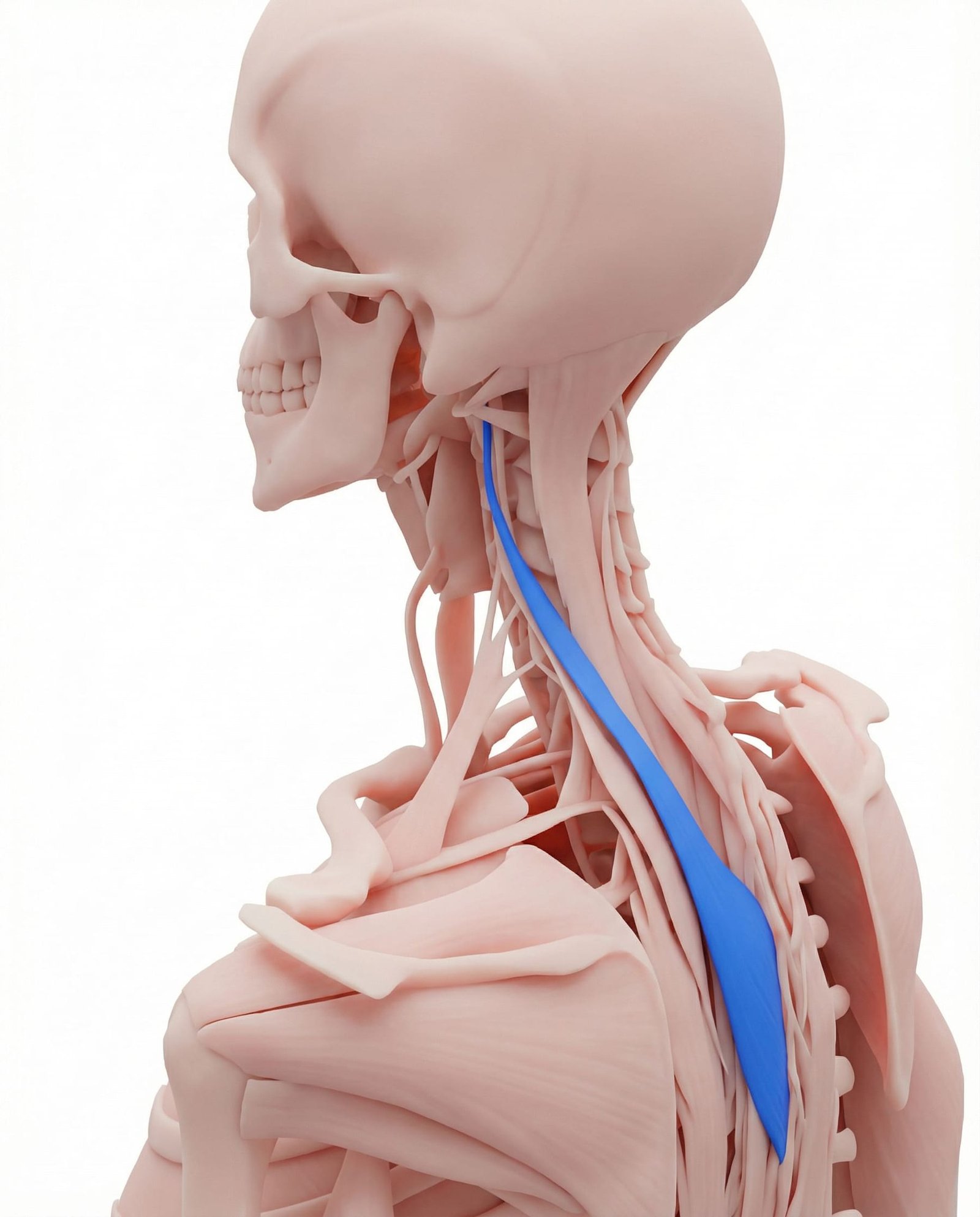
TrP 1
TrP1
Location. Back of neck, lower cervical
Pain referral. Neck and upper back
- Neck
- Upper back
- Shoulder
Deep cervical aching in the lower posterior neck from splenius cervicis taut bands
Location. Back of neck, lower cervical
Pain referral. Neck and upper back
Location. Upper thoracic region, T3-T6 spinous processes to transverse processes of C1-C3
Pain referral. Upper back and back of neck
Location. Upper attachment near C1-C3 transverse processes
Pain referral. Upper posterior neck and occiput
Neck pain. Deep cervical aching in the lower posterior neck from splenius cervicis taut bands
Upper back pain. Referred ache into the upper thoracic region from lower cervical trigger points
Stiffness. Restricted cervical rotation and lateral flexion from protective muscle guarding
Upper back and neck stiffness. Cervicothoracic junction restriction from splenius cervicis taut bands limiting rotation range
Headache at the back of the head. Occipital headache from splenius cervicis trigger point referral to the suboccipital region
Pain turning the head. Unilateral cervical rotation pain as contracted splenius cervicis resists contralateral head turning
Eye pain on one side. Ipsilateral retro-orbital pain from splenius cervicis trigger point referral through orbital pathway
Blurred vision (occasionally). Transient visual disturbance from splenius cervicis trigger point affecting cervical proprioceptive input
Upper neck stiffness. Splenius cervicis trigger points at C1-C3 restrict upper cervical rotation creating localized stiffness
Ipsilateral eye pain (referred). Upper cervical referral follows pathways through the trigeminocervical nucleus to the orbital region
Blurred vision on affected side. Cervicogenic trigger point referral to the orbit can disrupt visual accommodation on the affected side
Neck pain with rotation. Cervical rotation loads the splenius cervicis provoking trigger points at its upper attachment
Occipital headache radiating to eye. Referral from C1-C3 splenius cervicis travels from the occiput through to the ipsilateral orbit
Poor posture. Chronic thoracic kyphosis increases cervical extensor workload including splenius cervicis
Whiplash. Cervical acceleration-deceleration injury acutely damages splenius cervicis muscle fibers
Stress. Emotional tension produces sustained posterior cervical guarding and splenius cervicis contraction
Computer work. Prolonged forward head position overloads splenius cervicis as cervical stabilizer
Forward head posture. Anterior head carriage overloads posterior cervical extensors including splenius cervicis chronically
Prolonged computer work. Sustained forward gaze position fatigues splenius cervicis maintaining head against gravitational pull
Sleeping in awkward positions. Sustained cervical rotation during sleep creates unilateral splenius cervicis shortening and trigger points
Cold drafts on the neck. Cold exposure causes reflexive cervical muscle guarding and vasoconstriction activating trigger points
Whiplash injury. Rapid cervical hyperextension-flexion sequence traumatically overloads splenius cervicis muscle fibers acutely
Holding phone between ear and shoulder. Sustained lateral cervical flexion asymmetrically shortens ipsilateral splenius cervicis creating trigger points
Sustained neck rotation (e.g., turned monitor). Chronic rotational posture from asymmetric monitor placement overloads the ipsilateral splenius cervicis
Cold drafts on exposed neck. Cold air exposure triggers reflexive splenius cervicis contraction activating latent trigger points
Sleeping with neck twisted. Prolonged cervical rotation during sleep maintains splenius cervicis in a shortened contracted state
Prolonged overhead work with neck extension and rotation. Combined extension and rotation maximally loads the splenius cervicis at its upper cervical attachment
Apply a moist heat wrap or microwavable heat pack to the back and side of your neck on the affected side. The wrap should cover from the base of the skull down to the upper shoulder area. Sit or recline in a comfortable position and allow the heat to penetrate deeply into the cervical muscles. Keep the temperature warm but comfortable to avoid burning the skin. Moist heat is preferred over dry heat as it penetrates deeper into muscle tissue.
Sit tall in a chair with your shoulders relaxed and level. Gently tilt your head to the unaffected side, bringing your ear toward your shoulder until you feel a comfortable stretch on the affected side of your neck. For a deeper stretch, gently place your hand on top of your head and apply light overpressure. To specifically target the splenius cervicis, slightly rotate your head to look toward the floor on the stretching side. Hold each stretch for 20-30 seconds.
Sit upright and place your hand against the side of your head above your ear. Gently try to turn your head into your hand while your hand resists the movement, creating an isometric contraction. Push with about 25-50% effort and hold for 5-10 seconds. Relax and repeat. Perform on both sides to maintain balanced cervical muscle strength. Progress to gentle active rotation through the full range of motion as pain allows.
Sit or stand tall with your shoulders back. Without tilting your head up or down, gently draw your chin straight back as though creating a double chin. Focus on the sensation of lengthening the back of your neck. Hold for 5 seconds then relax. This exercise retrains proper cervical alignment and reduces the forward head posture that chronically overloads the splenius cervicis muscle.
Position your monitor directly in front of you at eye level so you do not need to rotate or tilt your neck to view the screen. If you use dual monitors, place the primary one directly ahead and angle the secondary one close beside it. Position your keyboard and mouse so your elbows are at your sides. Ensure your chair supports the natural curve of your lower back, which helps maintain proper cervical posture. If you frequently talk on the phone, use a headset rather than cradling the phone between your ear and shoulder.
If neck stiffness and pain persist beyond 2-3 weeks of self-care, or if you experience blurred vision, dizziness, or radiating arm symptoms, consult a physical therapist or physician. A professional can perform manual cervical mobilization, targeted myofascial release, and dry needling of the splenius cervicis. They can also assess for cervical disc issues or facet joint dysfunction that may be contributing to the problem. Bring notes about your symptoms, aggravating activities, and what treatments you have tried.
Sit upright with your shoulders relaxed. Slowly turn your head toward the restricted side as far as comfortable, keeping your chin level. Place the fingertips of the same-side hand on the chin and apply very gentle overpressure to increase the rotation slightly. Hold for 15-20 seconds while breathing slowly. Return to center and repeat 3-4 times. Then perform the same stretch to the opposite side. This targets the splenius cervicis fibers that control cervical rotation from the upper thoracic spine.
Apply a moist warm towel or microwavable heat wrap to the area from the upper thoracic spine to the base of the skull. Ensure the heat covers the region between the shoulder blades and extends upward along both sides of the neck. The temperature should be comfortably warm, not hot. Lie on your back or sit in a reclined position and allow the heat to penetrate for 15-20 minutes. Combine with slow, gentle neck rotations during the last 5 minutes of the heat application to take advantage of improved tissue extensibility.
Sit on a chair with your back straight. Perform a chin tuck by drawing the chin directly backward to create a double chin, keeping the eyes level. While maintaining the chin tuck, clasp your hands behind the upper thoracic spine and gently extend the upper back over your hands, opening the chest. Hold this combined position for 5-8 seconds, then relax. Repeat 10-12 times. This exercise stretches the splenius cervicis while improving upper thoracic mobility and correcting forward head posture.
Lie on your back with your knees bent and a small folded towel under your head. Gently nod your chin toward your chest using only the deep front-of-neck muscles, not the superficial muscles. You should feel a subtle engagement at the front of your throat. Hold this gentle contraction for 10 seconds, then release. Perform 10-15 repetitions. Progress by increasing the hold time to 15-20 seconds. This strengthens the deep cervical flexors that counterbalance the overworked splenius cervicis.
Position your computer monitor directly in front of you at eye level to eliminate sustained neck rotation or flexion. If you use multiple monitors, place the primary one centered and angle the secondary toward you. Avoid holding the phone between your ear and shoulder — use a headset or speakerphone instead. Protect the neck from cold drafts by wearing a scarf or adjusting air conditioning vents away from the neck. For sleeping, use a contoured cervical pillow and avoid sleeping on your stomach, which forces the neck into extreme rotation.
If neck stiffness, occipital headaches, or retro-orbital eye pain do not respond to 3-4 weeks of self-care, consult a physiotherapist or chiropractor experienced in cervicogenic headache management. They can perform specific splenius cervicis release techniques, cervical joint mobilization at C1-C3 and T3-T6, and assess for upper cervical instability. Treatment may include dry needling of the splenius cervicis, manual traction, and a progressive cervical stabilization program.