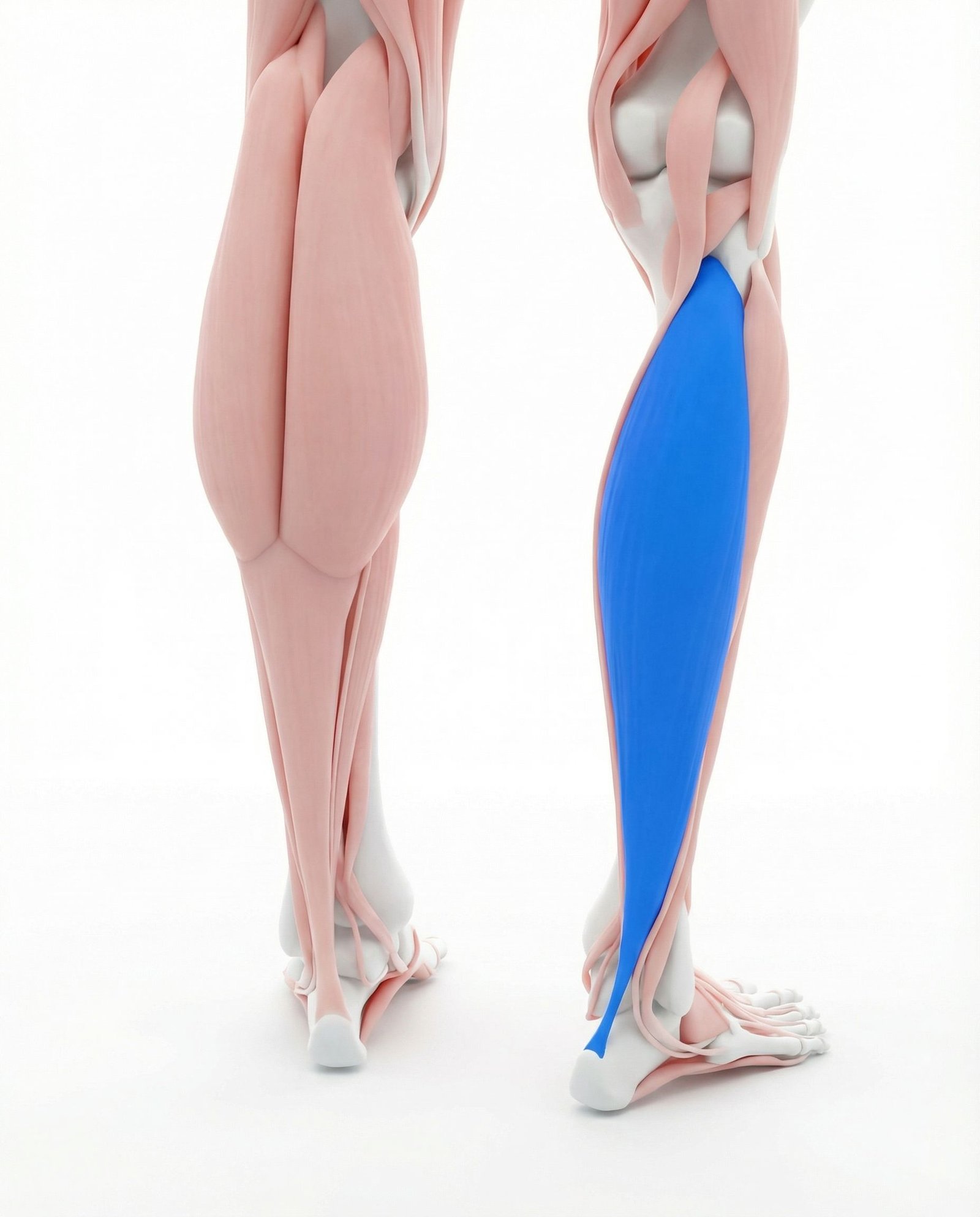
TrP 1
TrP1
Location. Deep calf, under gastrocnemius
Pain referral. Calf, heel, Achilles, sacroiliac area
- Calf
- Heel
- Achilles
- Sacrum/SI joint
- Jaw (rare)
Dull aching in deep posterior calf distinct from superficial gastrocnemius pain pattern
Location. Deep calf, under gastrocnemius
Pain referral. Calf, heel, Achilles, sacroiliac area
Location. Deep inner calf
Pain referral. Inner calf, heel, Achilles
Location. Deep outer calf
Pain referral. Outer calf, heel, Achilles
Deep calf pain. Dull aching in deep posterior calf distinct from superficial gastrocnemius pain pattern
Heel pain. Referred pain to calcaneus mimicking plantar fasciitis or heel spur symptoms
Achilles pain. Pain projected to Achilles tendon region from soleus trigger point referral zone
SI joint pain. Unusual distant referral pattern to sacroiliac joint via posterior kinetic chain connection
Plantar fasciitis-like pain. Heel and arch pain mimicking plantar fasciitis from soleus distal referred pain pattern
Deep inner calf pain. Deep aching beneath the gastrocnemius in the medial soleus aggravated by walking
Achilles discomfort. Aching along the Achilles tendon from soleus tension transmitted through the shared insertion
Plantar-like pain. Sole pain pattern closely mimicking plantar fasciitis originating from medial soleus referral
Deep outer calf pain. Deep lateral calf aching beneath the gastrocnemius worsened by prolonged weight-bearing
SI pain. Distant referred pain to sacroiliac region from lateral soleus trigger point activation
Running. Repetitive propulsive loading during stance phase overloads the deep calf compartment
Walking. Cumulative low-grade loading during prolonged ambulation fatigues slow-twitch soleus fibers
Prolonged standing. Sustained postural contraction creates venous pooling and local ischemia in deep calf
High heels. Chronic plantarflexion maintains soleus in shortened position causing adaptive fiber changes
Poor footwear. Inadequate arch support alters biomechanics increasing compensatory soleus loading patterns
Overuse. Exceeding tissue recovery capacity causes accumulated metabolic waste and fiber damage
Standing. Sustained isometric soleus contraction during prolonged standing creates chronic muscle ischemia
Poor biomechanics. Foot supination or lateral weight bearing preferentially overloads the lateral soleus fibers
Stand facing a wall in a staggered stance. Bend BOTH knees while keeping the back heel on the ground. Lean forward. The bent knee is key — this shifts the stretch from the gastrocnemius to the deeper soleus. You should feel the stretch low in the calf, near the Achilles.
Sit on the floor with one leg extended. Place a tennis ball under the lower calf (between the mid-calf and Achilles). Cross the other leg on top for pressure. Roll slowly to find tender spots and hold for 30-60 seconds. The soleus is deep, so firm pressure is needed.
Sit in a chair with feet flat on the floor. Place a weight or heavy book on your knees for resistance. Raise your heels as high as possible, hold for 2 seconds, then lower slowly. The seated position with bent knees specifically isolates the soleus.
Stand on a step on the balls of your feet. Bend your knees slightly (about 20-30 degrees). Slowly lower your heels below the step edge over 3-5 seconds. Rise back up on both feet. The bent-knee position ensures the soleus, not the gastrocnemius, does the work.
Avoid standing in one position for more than 20-30 minutes. Shift your weight regularly and do mini-calf raises throughout the day. Wear supportive shoes with cushioned heels. Avoid flat shoes or going barefoot on hard surfaces. Consider heel cups or cushioned insoles.
If heel or deep calf pain persists beyond 3-4 weeks despite calf stretching and footwear changes, consult a physiatrist. Soleus trigger points are a commonly overlooked cause of heel pain misdiagnosed as plantar fasciitis. Targeted treatment can resolve heel pain that has failed conventional plantar fasciitis treatments.
Stand facing a wall with the affected leg behind you. Bend the back knee while keeping the heel firmly on the floor to target the soleus rather than the gastrocnemius. Lean into the wall until you feel a deep stretch in the lower inner calf. Keep the foot slightly turned out to emphasize the medial soleus fibers.
Sit on the floor with the affected leg extended. Place a lacrosse ball under the inner lower calf just above the ankle. Gently roll the ball along the medial soleus, pausing on tender spots and applying sustained pressure for 20-30 seconds. Use your body weight to control the intensity.
Stand on the affected leg with your knee bent approximately 20-30 degrees. Hold a wall or chair for balance. Rise onto the ball of the foot, hold for 2 seconds, then lower slowly over 3 seconds. The bent knee ensures the soleus is the primary working muscle. Progress to performing on a step edge for greater range.
Place gel or silicone heel cushion inserts in your everyday shoes. The insert should provide even cushioning under the entire heel to reduce impact forces transmitted through the Achilles and soleus complex. Ensure the shoe still fits comfortably without crowding the toes.
Limit continuous standing to 30-minute intervals, then sit or walk briefly before resuming. Use a cushioned anti-fatigue mat when standing is unavoidable. Avoid standing on concrete, tile, or other hard surfaces without supportive footwear. When possible, alternate between sitting and standing throughout the day.
If heel pain persists beyond 3-4 weeks of self-care, consult a sports medicine physician or physical therapist. They can differentiate between medial soleus trigger points, Achilles insertional tendinopathy, retrocalcaneal bursitis, and plantar fasciitis using clinical examination and ultrasound imaging if needed.
Stand facing a wall with the affected leg behind you. Bend the back knee while keeping the heel flat on the floor — this shifts the stretch from the gastrocnemius to the deeper soleus. Lean gently into the wall until you feel a deep stretch in the lower calf. Hold without bouncing.
Sit on the floor with a foam roller under the lower outer calf of the affected leg. Cross the opposite leg on top for added pressure. Slowly roll the area from mid-calf down to just above the ankle, pausing on tender spots for 20-30 seconds until the tenderness begins to release.
Sit on a chair with feet flat on the floor and knees bent at 90 degrees. Place weight across your knees (a loaded backpack or dumbbells work well). Raise both heels as high as possible, hold for 2 seconds, then lower slowly. The bent-knee position isolates the soleus muscle.
Stand in a lunge position facing a wall with the affected foot forward. Keeping the front heel on the ground, gently drive the knee forward over the toes toward the wall. You should feel a deep stretch at the back of the ankle. Hold for 5 seconds, return to start, and repeat.
If you stand for prolonged periods at work, use a cushioned anti-fatigue mat under your feet. Alternate between standing and sitting every 30-45 minutes. When standing, shift weight between feet and perform gentle heel raises periodically to promote calf blood flow.
Consult a sports medicine physician or physical therapist if deep outer calf pain persists beyond 3-4 weeks of self-care. They can differentiate between soleus trigger points, Achilles tendinopathy, chronic compartment syndrome, and vascular issues using clinical tests and imaging as needed.